847. ‘Rise’, by Gabrielle

If there was an award for the artist that has flirted most with the number one spot on the UK charts without ever getting a date – the ‘nearly number one’ award – then Bob Dylan would be hot favourite to win. ‘Mr. Tambourine Man’ and ‘The Mighty Quinn’ were written by him, he sang a couple of lines on ‘We Are the World’, while ‘Knockin’ on Heaven’s Door’ made it in a cover version. All we need now is for someone to sample Dylan on a chart-topping single…

Rise, by Gabrielle (her 2nd and final #1)

2 weeks, from 30th January – 13th February 2000

Well wouldn’t you know… Here is the Bob Dylan-sampling number one. He liked this record so much that he allowed Gabrielle to use the sample – the guitar chords and his vocal harmonies from ‘Knockin’ on Heaven’s Door’ – free of charge. This sample adds a certain excitement to ‘Rise’, but I’m not quite sure what about the song convinced the often cantankerous Dylan to donate his work for gratis.

It’s a delicate, pretty ballad, nicely sung and sparingly arranged, with the gentlest of garage beats. In the ultra-processed, ultra-poppy early days of the 21st century it is a pleasant change of pace at the top of the charts. But ‘Rise’ never quite, ahem, rises above that word: ‘pleasant’. It’s nice enough to hear when it comes on Smooth FM (it has probably been on their playlists for twenty-five years straight), but I’d never rush to search it out.

I’m pretty sure I wrote much the same about Gabrielle’s first #1, ‘Dreams’ (in fact, I gave that a ‘Meh’ Award). There is something safe and very mum-leaning about her two biggest hits. I’ll argue that ‘When a Woman’ (the retro-pop follow-up to ‘Rise’), ‘Out of Reach’ (the ‘Bridget Jones’ soundtrack hit from 2001), or 1996’s big, brassy ‘Give Me a Little More Time’ – would have been worthier number ones.

As much as neither particularly excites me, it is worth noting the near seven-year gap between Gabrielle’s two number one singles. So much musical water has gone under the bridge since 1993 (for a snapshot: ‘Dreams’ knocked UB40 off the top, while ‘Rise’ displaces Britney Spears) that it is impressive how she managed to come back with such a big hit. She would go on scoring Top 20 hits until 2004, and released her most recent album just last year.

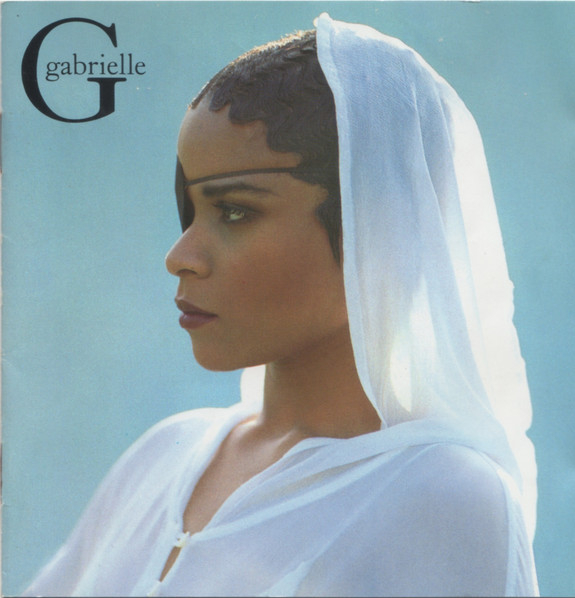
So, two number ones for Gabrielle, the most famous eye-patch wearing pop star since Johnny Kidd. And only ten letters between both titles, ‘Dreams’ and ‘Rise’. Has any singer managed to get more success out of even shorter song names? Nichest of niche pop knowledge, but let me know in the comments if you can think of one!

809. ‘Chocolate Salty Balls (P.S. I Love You)’, by Chef

Falling short behind the Spice Girls in Christmas-week, but thrusting to number one for the new year… A funky ode to some sweet, yet salty, confectionary.

Chocolate Salty Balls (P.S. I Love You), by Chef (his 1st and only #1)

1 week, from 27th December 1998 – 3rd January 1999

Part-recipe, part funk-soul masterpiece… Could we argue that ‘Chocolate Salty Balls’ is the first and perhaps only true funk song to make number one in the UK? Naturally everyone came for the innuendo, but they stayed for the fact this is actually a great song, with a nasty funk riff. Plus, the voice is Isaac Hayes – soul, funk, Stax Records legend – becoming one of the oldest chart-topping artists, aged fifty-five.

In all honesty, these balls do be sounding delicious. Cinnamon, butter, brandy, vanilla, and chocolate (though, interestingly, no salt)… Grease up the cooking sheet, (Cause I hate when my balls stick)… Then pre-heat the oven to 350, And give that spoon a lick…! It all leads to a frenzied ending, in which Chef’s balls start to burn, and a piano takes a pounding like nothing we’ve heard since Jerry Lee Lewis was at number one.

If you’re going to do a novelty song – if you really must – then use records like this as your ‘How To’. Ridiculous innuendo, a genuinely good tune, and a proper singer that doesn’t mind taking the mickey out of themselves. Some might blanche at a soul legend like Hayes only making number one by growling Now suck on my balls! I am not one of those people. And it’s not like he’d come especially close in the previous three decades: a #10 in 1975 with ‘Disco Connection’, after a #4 in 1971 with the iconic ‘Theme from ‘Shaft’’.

Chef was of course a character in 1998’s breakout cartoon, ‘South Park’. I was slap-bang in the middle of the show’s target demographic, and the playground that year had been full of kids shouting ‘Oh my god, you killed Kenny!’ (though I wasn’t allowed to watch the show myself). ‘Chocolate Salty Balls’ had featured in an episode a few months earlier, and proved memorable enough to be released as a single, pushing the actual Spice Girls all the way in the race for Christmas number one, and finishing only eight thousand copies behind them. (In doing so it recorded the highest weekly sale for a #2 since 1984.)

‘Chocolate Salty Balls’ isn’t the only chart hit to come from South Park. The following year ‘Mr. Hankey The Christmas Poo’ made the festive charts, peaking at #4. A funny postscript to this record, though, is the fact that Isaac Hayes had joined the Church of Scientology in the 1990s, and left South Park in 2005 after an episode satirising said Church. He also presumably disowned his sole British chart-topper. Hayes died in 2008, following a stroke.

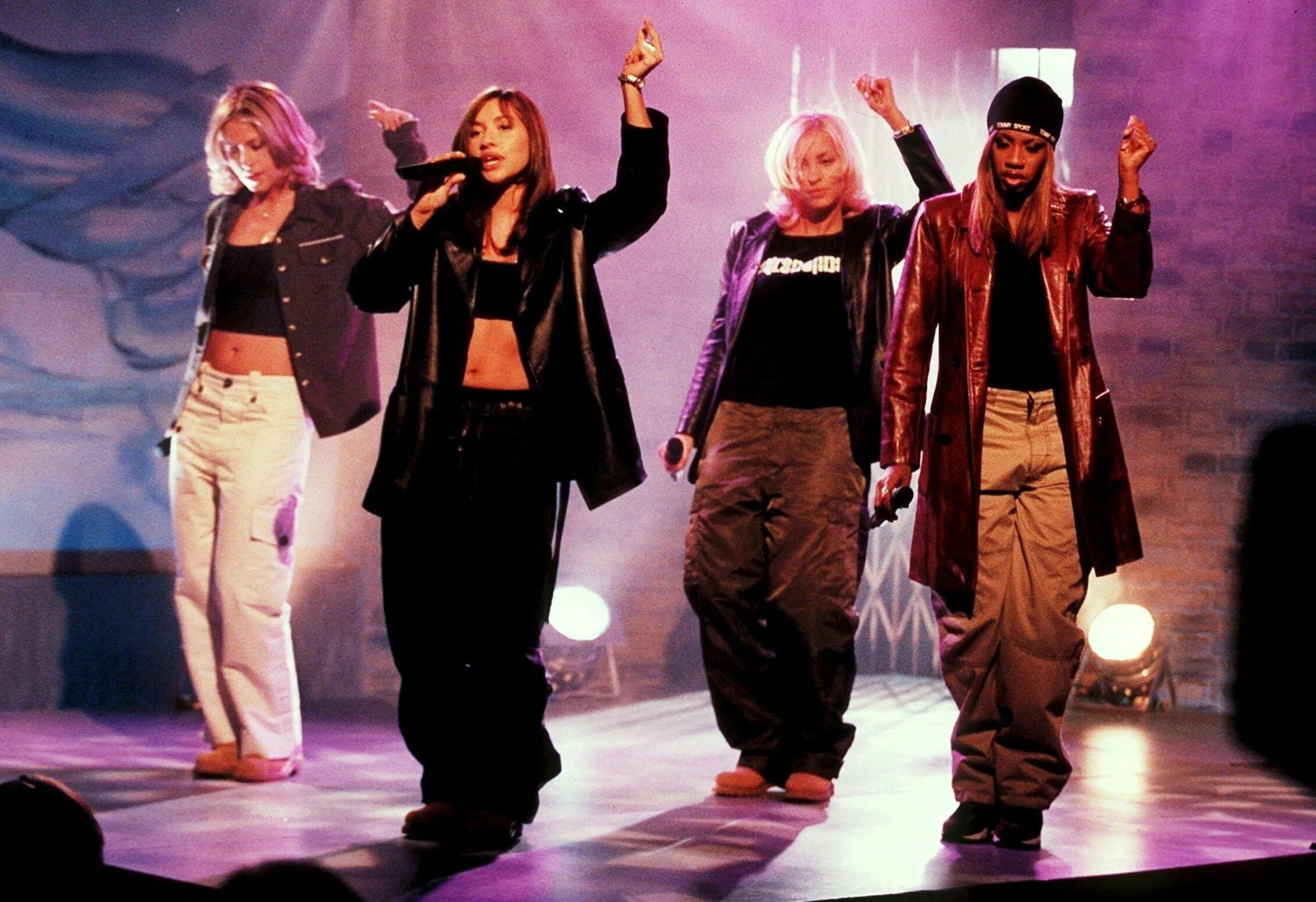
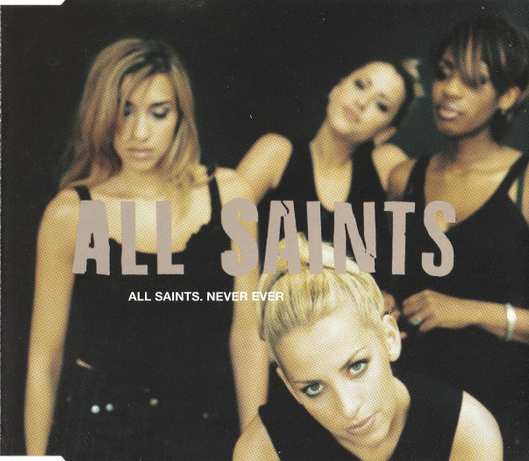
780. ‘Never Ever’, by All Saints

Into 1998, then. The penultimate year of the century, the 46th year of the UK singles charts, and one with a thus-far record thirty number ones. And to start off, there are a few questions that I need to know…

Never Ever, by All Saints (their 1st of five #1s)

1 week, from 11th – 18th January 1998

To be honest, an opening line that clunky could kill lesser songs off before they’ve started. A few answers that I need to know, surely, scans just as well. Anyway, ‘Never Ever’ quickly recovers from that shaky start, by bringing us one of the great spoken word sections. Anyone of my vintage can probably still recite it word for word…You can tell me to my face, Or even on the phone… as well as adding all the backing harmonies.

It takes the sassy soul vibe of 1997’s final chart-topper, the Spice Girls’ ‘Too Much’, and ups both the sass and the soul. All Saints have very good voices, and great harmonies, to the point where you’re tricked into misremembering this as an a cappella track. But their voices are also flawed, like the Spice Girls’, so that you can hear their accents and dropped consonants.

‘Never Ever’ isn’t a cappella, of course, and the production is period-perfect late-90s R&B squelch (this is what we must refer to it as from now on, and we’ll be hearing it a lot as the century winds down). It’s also let down slightly by further clunky lyrics (flexin’ vocabularythe alphabet runs right from A to Z) and simplistic rhymes: Free from pain/ Goin’ insaneSo low/ Black holeSo sad/ Feelin’ really bad… But hey, at least the words stick with you. And by the end, as the harmonies build and the organs start to swirl, you forgive it. The outro is just as good as the famous intro, slipping into a hip-hop beat as the girls’ voices are filtered and distorted.

Having a pop single run over five minutes (six and a half in its album version) is always a risk, spreading a few decent lines and a hook too thin. But ‘Never Ever’ lasts the distance, thanks to the strength of the voices and the melodies, and the way that they continue to build. And talking of being long-running, the song had a particularly slow journey to the top of the charts by 1998’s standards. It first charted in November, then hung around the Top 10 for seven weeks before finally reaching the top in the post-Christmas lull. It set a record for the highest ever sales before making #1 (770,000), and it’s current total stands at 1.5 million. It is the 3rd biggest-selling girl group single of all time in the UK. (You can guess the top two in the comments below…)

It feels simplistic to call All Saints the female East 17 to the Spice Girls’ Take That, but I’m going to do it anyway. The Spice Girls were chaotic and silly, whereas All Saints were all glowering stares, pierced tongues and nose-studs, shacking up with Gallaghers. They were the girls a couple of years above you in the corridor at school, definitely not to be approached under any circumstances. ‘Never Ever’ was only their second single, but it established them as the ‘other’ girl group of the day. In 1998, they’ll even have one more #1 than the Spice Girls. In fact, they’ll have five chart-toppers in just under three years, and all but one of them will be great.

If you’ve been paying attention, you might be expecting a recap in my next post. However I’ve decided that as the turnover of #1s is ever-increasing, and to stop my all-time awards getting too skewed towards the late-‘90s/early-‘00s, I’m going to do recaps after every fiftieth chart-topper until things slow down a bit, sometime around 2003.

768. ‘I Wanna Be the Only One’, Eternal ft. BeBe Winans

Ooh Lordy. Hallelujah! When I listened to this gospel-pop classic for the first time in absolute yonks, I was dragged off on a wave of nostalgia. I struggled to make any notes. It was the biggest Proustian rush I’ve experienced yet, as we delve further into the chart-toppers of my childhood.

I Wanna Be the Only One, by Eternal ft. BeBe Winans (their 1st and only #1s)

1 week, from 25th May – 1st June 1997

But for a nostalgic moment like this to really hit home, the memory needs to be a good one. Proust loved his madeleines, and I realised how much I enjoy this record, one of 1997’s best #1s. It’s a perfect blending of soul, R&B, and gospel, with enough sass and enough honesty, enough fun and enough seriousness… I may be waffling slightly, but the point stands.

In fact, this song survived the moment that I found out that it had religious connotations (well, I mean, it is a gospel song). Aged eleven, I was beginning to question why I had to tag along with my mother to church every Sunday. It wasn’t so much that I was questioning the theology as much as I just wanted a lie-in but my mum, to her credit, let me make my own decision. By twelve I had stopped going. If any of the hymns we sang had had the heft of this tune, however, I’d have been in the front pew every week, hands to the sky.

The key changes at the end, for example, could convert the most atheist of hearts. In my mind I remembered at least five as the song soars to a conclusion, but there’s actually only two. The one complaint you could make about this tune is that it’s not exactly subtle, that it sledgehammers its point home. But honestly, that’s what a song like this needs. The start of the second verse, for example: Now you deserve a mansion… My Lord, you too… is a bizarre line – clunky almost – a ridiculous call and response moment; but also the best bit of the song.

Eternal were probably the biggest British girl group in the first half of the 1990s. The only British girl group of the time, really, until the Spice Girls came along and opened the floodgates for the final years of the decade. They were a sort of British answer to En Vogue, two sisters and two others. Louise Nurding had left in 1995 to start a middling solo career, and to become one of the original WAGs by marrying Liverpool midfielder Jamie Redknapp. This was their 11th Top 10 hit since 1993, and they would only have one more before splitting in 1999. Fair to say, although they had some good pop singles, they peaked with this – a fitting record to become their only chart-topper.

Helping in that regard was BeBe Winans, an American soul and gospel singer, who had written and produced two of Eternal’s earlier hits. He provides the perfect counterpoint to the girls’ harmonies, giving the lyrics much more meaning than if they had been sung by just female voices. I’m not sure I’ve ever heard another song by him, but he left his mark.

‘I Wanna Be the Only One’ was the 2nd most played song on British radio for the year, meaning that plenty of people surely got sick of it. One of my key memories of the record is hearing it in a car park while eating an ice-cream, presumably sometime in May or June 1997, just at the moment I was getting interested in the charts (I believe that this was Track 1 on ‘Now 37’). Soon after that I would start faithfully writing the Top 40 down every week, trying to keep up with the live radio countdown in those pre-internet days. It’s not an exaggeration to say that if it hadn’t been for songs like this grabbing my attention at that formative age, I might not be writing this blog now.

766. ‘Love Won’t Wait’, by Gary Barlow

I was nonplussed when Gary Barlow launched his solo career with the dreary ballad ‘Forever Love’. Nonplussed, and bored. Was that it, from the man meant to be the next George Michael?

Love Won’t Wait, by Gary Barlow (his 2nd of three solo #1s)

1 week, from 4th – 11th May 1997

I was also surprised that I had no recollection of ever hearing what must have been a hugely anticipated record. Almost a year later, Barlow’s debut album was ready, and his second single was released ahead of it. ‘Love Won’t Wait’ also doesn’t ring a bell, but at least it’s relatively up-tempo. There’s a hint of disco in the beat, and the bridge has a soaring chord progression. This might be… fun?

And then we reach the chorus, and I do recognise this one! Love won’t wait, Forever and a day… It’s a pretty basic, soul-pop song with some nice seventies touches. One reviewer compared it to Cliff Richard’s output from that time, and now I can’t un-hear that. It also sounds like the sort of song Take That would have chucked out as the third or fourth single from one of their earlier albums. It’s no great shakes, is what I’m saying; but it’s much better than ‘Forever Love’.

It also has an interesting back-story. It was written by none other than Madonna, during sessions for her ‘Bedtime Stories’ album in 1994. I couldn’t imagine something this unremarkable coming from Madge, but someone’s uploaded the demo onto YouTube. It feels more Motown than disco, and even in its rough form it sounds better than Barlow’s version. That’s true star quality, I suppose.

And I also suppose we can claim this as a belated second ‘90s #1 for Madonna, her first since ‘Vogue’. She will be back soon, though, with a chart-topper under her own steam. Did anyone at the time imagine that we would have to wait so much longer for another Gary Barlow chart-topper, though? The album, ‘Open Road’, produced just one further Top 10 hit, while his second solo album in 1999 produced none. He won’t trouble the top spot for a decade, until Take That have their spectacular comeback, and won’t manage his final solo #1 for another fifteen years.

I have been, and probably still am, a bit harsh on Gary Barlow. Yes, he’s written some great pop songs. But though he’s finally achieved his goal, and ascended to the British pop pantheon, better late than never, he’s no Cliff, Elton, or George Michael. No Robbie Williams either, the man who will be taking the mantle of Britain’s Biggest Pop Star from under his former bandmate’s nose, very soon.

738. ‘Fastlove’, by George Michael

George Michael bows out from chart-topping duty, after eleven #1s – both solo and with Wham! – in just under twelve years. And dare we say he bows out with his best…?

Fastlove, by George Michael (his 7th and final solo #1)

3 weeks, from 28th April – 19th May 1996

I doubt many other people would name ‘Fastlove’ as Michael’s best chart-topper, but it’s my favourite. As worthy, and lyrically beautiful, as ‘Jesus to a Child’ was; I’m glad that he wraps up with this banger. Gotta get up to get down… And if his number one from earlier in the year was an ode to a lost love, then this is an ode to getting over a lost love. An ode to anonymous and fleeting satisfaction, as Cher once memorably put it.

I ain’t mister right, But if you’re looking for fast love… he purrs, over a funky bassline and some contemporary disco beats. All that bullshit conversation, Baby can’t you read the signs… I also love the line about all his friends having babies, while he’s just wanting to have fun, which is something every gay man in their thirties can relate to. In the background we can hear ‘interpolated’ – as we must always refer to sampling from hereon in – the hook from 1982 hit ‘Forget Me Nots’ by Patrice Rushen (which Will Smith will soon ‘interpolate’ even more blatantly).

I called this a ‘banger’, but it’s actually quite smooth and slinky. The melody and the groove wrap themselves around you like a particularly sexy snake, and don’t let go. There are still some of the over-indulgences that, for me, always mark George Michael’s work down a notch: the muzaky saxophones, and the fact that it goes on for over five minutes. A three-minute quicky would have been more appropriate here, especially given the subject matter. But the funky break in the middle is a thing of beauty.

Like all great pop songs, though, there is more going on under the surface. The lyrics aren’t just celebratory, they reveal a pain behind all the sex. George needs affirmation, needs someone to ease his mind. In the absence of security, I made my way into the night… Which sounds quite dark, until a few lines later he proposes a quick shag in his BMW. But there’s enough here to suggest that his need for ‘fastlove’ isn’t an entirely healthy thing, and may be linked to the loss in ‘Jesus to a Child’. The most telling line is surely I miss my baby… It’s admirable that he made a very catchy pop song out of such personal issues.

Post-‘Fastlove’, George Michael would remain a fairly regular presence in the UK charts, including four more #2s. One of which is the truly glorious, and definitely worthy of the term ‘banger’, ‘Outside’ – a brilliant middle-finger to all the fuss over his sexuality. He died in 2016, aged just fifty-three, and took his place in the highest-echelons of dead pop superstars. I have my opinions on his current standing among the greats, but it seems churlish to drone on about them here.

And, of course, he isn’t actually done with chart-topping, as the streaming era has given ‘Last Christmas’ – for years the highest-selling #2 hit of all time – a new lease of life. But that’s something that we’ll get to, again, and again, and again, in due course…

728. ‘Fairground’, by Simply Red

By late-1995, a decade into their chart careers, were Mick Hucknall and Simply Red overdue a massive, chart-topping hit, or would it be better for all if this had never happened…?

Fairground, by Simply Red (their 1st and only #1)

4 weeks, from 24th September – 22nd October 1995

I can’t say I’m a huge fan of, or much of an expert in, Simply Red’s music. It’s always seemed a little too glossy, a little too smooth… Blue-eyed soul in its slickest form. But the verses here are not what you might expect, from Simply Red or indeed from any number one single. There’s a hypnotic samba beat, trippy flutes, and Hucknall trilling about pleasure at the fairground, almost freestyling. It’s odd, slightly haunting; but captivatingly so.

And then comes the chorus, the most famous chorus of the band’s long career, and it’s such a sledgehammer that it obliterates the rest of the song. The subtle verses are overwhelmed by Mick Hucknall belting out the And I love the thought of coming home to you…! line. An ear-catching piece of music for sure, and in the moment you can hear why this record went on to become their biggest hit. Certain songs have moments where you can pinpoint exactly why they become huge smashes, and this is one.

 It was the lead-single from Simply Red’s fifth album, and was so highly anticipated that it crashed straight in at #1, with weekly sales beaten only by 1995 juggernauts Blur, Take That, and, of course, Robson & Jerome. What’s interesting is that the distinctive samba drumbeat that forms the backbone to ‘Fairground’ had featured in the UK Top 5 less than two years before, it being a sample of the largely instrumental ‘Give It Up’, by The Good Men.

 Another reason I’ve long been suspicious of Simply Red’s music, aside from the glossiness, and the reliance on overwrought covers of soul classics, is Mick Hucknall himself. Pop music’s most famous ginge (until you-know-who came along) was someone that I, as a fellow ginger, felt a little embarrassed by. Growing up, it was either him, or Chris Evans, and neither did much for our reputation. Take the ‘Fairground’ video as an example: the shades, the awkward dancing… And yet it did him no harm. He claims to have slept with a thousand women, including Catherine Zeta-Jones, and Helena Christensen. Maybe I should be embracing him, then, as there are shockingly few ginger sex symbols…? My conflict is encapsulated in the fact that his band name may be a reference to his hair colour (cool! represent!), or to the fact that he’s a Manchester Utd fan (aw, man…)

I mentioned the video to ‘Fairground’ a moment ago, and watching it back just now I was hit by a huge wave of nostalgia. Hucknall larking around Blackpool Pleasure Beach… For a moment I was in my family living room, post-dinner, curtains drawn, on our old brown sofa watching Top of the Pops. A memory I didn’t even know I had before writing this post. I expect even more Proustian reactions to coming number ones, as we march on through my childhood.

691. ‘Dreams’, by Gabrielle

It’s a low-key way to kick off the next thirty tunes, a run of chart-toppers that will take us right into the heart of darkness… the mid-nineties.

Dreams, by Gabrielle (her 1st of two #1s)

3 weeks, from 20th June – 11th July 1993

Looking back, Tasmin Archer was the forerunner of this sort of soul-lite, dinner-party-background-music peddling female singer, who will be very popular for the rest of the decade and beyond. Think Heather Small, Des’ree, and the doyenne of the genre: Gabrielle.

It’s light and airy, like a breeze stirring your curtains on a summer’s day – acoustic chords, springy strings, and Gabrielle’s gentle voice. One of the hallmarks of this genre is the uplifting lyrics – its fans don’t much want to linger on the fact that life is a crushing march towards oblivion – and ‘Dreams’ delivers fully on that front…

Dreams can come true… You know you got to have them, You know you got to be strong… (Except, the impossible ‘dream’ that came true is that she’s got a boyfriend, so…) Anyway, I can enjoy it, to a point. The problem is that it remains with you for just as long as the summer’s breeze it resembles. You hear it, think it’s pleasant enough, and then you move on.

It’s too controlled, too tidy. Precision-drilled pop. To me, it’s got #8 hit written all over it. But this record meant Gabrielle’s first ever release went to the top, and in debuting at #2 it became the highest charting debut single ever, so what do I know? It didn’t quite appear out of nowhere, though, as an earlier version had been doing the rounds for a year or two. It featured a sample of Tracy Chapman’s ‘Fast Car’ that the label which signed her couldn’t clear, so a re-record was ordered.

So maybe the earlier version had laid the groundwork for this to become a massive hit. Or maybe there’s something in the chorus that lingers after all (not for nothing does this remain Gabrielle’s signature song)? Or maybe it’s her voice, distinctive but pleasant, husky but warm. Or maybe it was nothing to do with the music… For when I think of Gabrielle the first word that springs to mind is ‘eyepatch’. She wears it due to a condition called ptosis, which causes drooping of the eyelid, and the sparkly model she sports in the video to this song is a real treat.

It might be stretching it a bit to claim that Gabrielle’s debut success is the start of a line of British female singers that stretches past Dido, Amy Winehouse, all the way to Adele. A stretch not least because ladies like the aforementioned Tasmin Archer, not to mention Lisa Stansfield, have already scored big soul-lite #1s. But this was certainly a type of singer that came of age in the 1990s, and none were bigger back then than Gabrielle. ‘Dreams’ set her up for a decade of consistent Top 10s, including one further chart-topper that we’ll meet in the early weeks of the new millennium.

683. ‘Would I Lie to You?’, by Charles & Eddie

Well, would you look at that. We’ve literally just had the 1990’s biggest R&B/pop/soul hybrid act at number one – Boyz II Men with ‘End of the Road’ – but it turns out that they were but a warm-up act for… checks notes… the decade’s greatest soul single.

Would I Lie to You?, by Charles & Eddie (their 1st and only #1)

2 weeks, from 15th – 29th November 1992

Usually I see a great song coming, and semi-prepare what I’m going to write in advance. You don’t want to do the classics wrong, do you? But despite ‘Would I Lie to You?’ being on the horizon for a while now, and despite me being pretty familiar with it, I was caught off guard by how good it actually is.

The main reason it’s an improvement on ‘End of the Road’, is that it doesn’t go down the default drippy approach of so much ‘90s soul and R&B. The sort of slushy sentiment that Boyz II Men excelled at. No, Charles & Eddie keep things sassy and upbeat in the verses: Everbody’s got their history, On every page a mystery…  Before switching to a heartstring-tugging bridge: I’m tellin’ you baby, You will never find another girl, In this heart of mine…

And OK, the lyrics in the chorus are stock-standard love song: Don’t you know it’s true, Girl there’s no-one else but you… but they’re wrapped up in such a timeless melody that you don’t really notice. Plus, whether or not Charles and Eddie are indeed telling the truth is never established. Part of this song’s attraction, to a cynical mind like mine anyway, is that behind their honeyed voices and gorgeous harmonies they could be full of shit…

But back to that word ‘timeless’. That’s the other, even greater, attraction that this record has. It borrows the best of sixties and seventies soul, of Motown and the Temptations (and with the gospel backing, the organ and the near calypso-sounding drum break it is pretty much a soul music ‘How To…’ guide), but it still sounds perfectly placed in the early ‘90s. It’s authentic enough to stand up on its own, and to not sound like a well-intentioned pastiche. In short, it’s a brilliant record.

Charles Pettigrew and Eddie Chacon met on the New York subway in 1990, when one spotted the other carrying a Marvin Gaye LP. Which for an origin story sounds as great as it does unlikely. Members of twelve-year-old Chacon’s first band, interestingly, went on to join Metallica and Faith No More. He and Charles are, like Tasmin Archer a couple of posts previously, marked down as one-hit wonders, despite producing two studio albums, and three further Top 40 hits.

They split in 1999, with Chacon continuing to work intermittently, and he has released two well-received solo albums in the 2020s. Sadly, Pettigrew died of cancer two years after their split, aged just thirty-seven. This post then can hopefully serve as a tribute, to him, and to the greatest soul chart-topper of the decade.

682. ‘End of the Road’, by Boyz II Men

Things are getting very nineties around here: from iconic dance hits, to adult, dinner-party pop, to this… Yes, it’s time to sound the boyband klaxon!

End of the Road, by Boyz II Men (their 1st and only #1)

3 weeks, from 25th October – 15th November 1992

When I think of ‘90s boybands’, the first ones that spring to mind are all homegrown: Take That, East 17, 5ive, Boyzone (OK, Irish but still…) Yet all four of the boyband #1s that we’ve covered so far have been by Americans. And they’re getting progressively more sophisticated and mature – from NKOTB, to Color Me Badd, and now Boyz II Men. So much so that it feels slightly unfair to label these dudes as a ‘boyband’.

Except, the name, Boyz II Men, is pure ‘90s Boyband. Is there a ‘z’ in place of the ‘s’…? Check. Are there numbers and/or symbols…? Check. Is it memorably cheesy…? Check check check. Still, musically, this is a big improvement on ‘I Wanna Sex You Up’. It’s an update on the classic sixties/seventies vocal group sound: great voices, and great harmonies, with bass, tenors and baritones swooping all around one another.

If this was a one-off smash by a one-hit wonder, then I might be more effusive in praising it. It is a good record, a well-produced, well-written, well-performed pop song with a soaring bridge, and a catchy chorus: Although we’ve come, To the end of the road… It also has a great spoken word section (and intro, on the album version) in which bass vocalist Michael McCary does his best Barry White: All those times… You ran out with that other fella, Baby I knew about it…

The reason why I’m feeling a bit down on this record is because I know that this was not Boyz II Men’s only hit. And most of those other hits sound very much like ‘End of the Road’. They had a sound, and they rinsed the arse off it: ‘One Sweet Day’, ‘On Bended Knee’, ‘Water Runs Dry’… The one Boyz II Men song that I like more than ‘End of the Road’ is the preposterous ‘I’ll Make Love To You’, which basically sounds like someone doing a Boyz II Men parody.

At least in the UK this was the Boyz only visit to the top of the charts, and the first of just three Top 10 hits. Compare and contrast this with their complete domination of the Billboard charts in the mid-nineties. Two of their singles (including this one) set records for most consecutive weeks at #1. They were the first act since The Beatles to replace themselves at the top. Their five chart-toppers spent a combined 50 (fifty!) weeks at number one…

Thank God, then, for their less-fanatic British fans. They sent the band’s (second) best single to number one, for a perfectly sensible three weeks. And we can appreciate it for the fine piece of soul/R&B that it is. Plus, it was technically a Motown release, giving that legendary label its first UK #1 since ‘I Just Called to Say I Love You’ and, unless anyone wants to tell me otherwise, its last.