Should Have Been a #1…? ‘Common People’, by Pulp

Often when I’ve done a ‘Should Have Been a #1…’ post, it’s because the song featured was particularly unlucky when being deprived of top spot. ‘God Save the Queen’ may have been the victim of a political manoeuvre, ‘Happy Xmas (War Is Over)’ the victim of the festive holidays, and ‘Groove Is in the Heart’ runner up in the closest sales race ever…
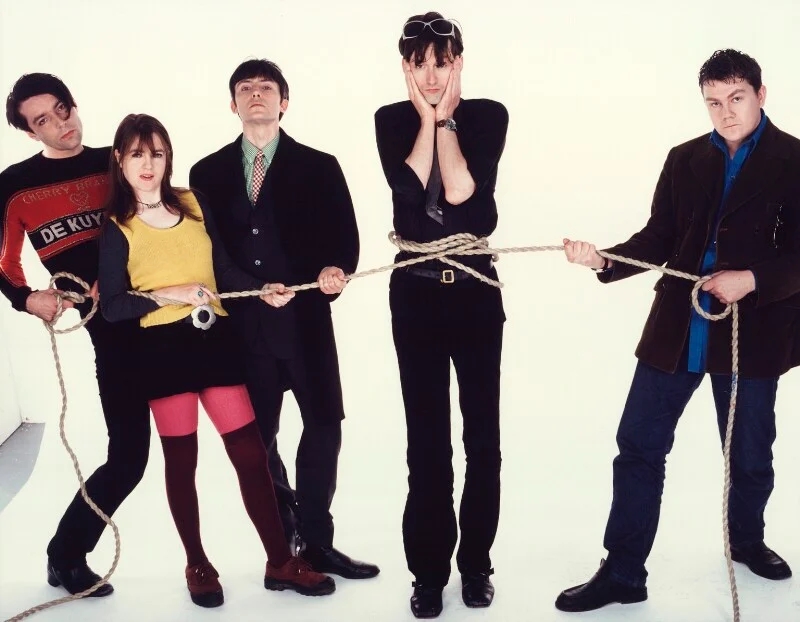
But ‘Common People’ was beaten fair and square, by the more popular, better-selling record: Robson & Jerome’s double-‘A’ of ‘Unchained Melody’ and ‘White Cliffs of Dover’. Still, I do think that this was the biggest chart travesty ever… A travesty of public taste. But this post isn’t just a lamentation on Pulp’s poor fortune; it’s a tribute to all the Britpop records that never made number one. (Robson & Jerome did the double a few months later, also keeping Oasis’s ‘Wonderwall’ in second place behind their cover of ‘I Believe’.)

If our journey through 1995 has taught us anything, it’s that Britpop was badly served at the top of the singles chart. Few big musical movements are less well-represented at the top – maybe punk, and heavy metal. Oasis and Blur have had a #1 each, and they’ll have more going forward. In the weeks and months to come we’ll meet the Prodigy, the Verve, and the Manic Street Preachers (none of whom can truly be defined as ‘Britpop’) as well as a remixed Cornershop, and a dubious one from the Lightning Seeds. Maybe that’s the problem: what was Britpop? Blur were around way before the term was coined. Pulp had been going since the early eighties. Maybe true ‘Britpop’ is literally just Oasis…

Anyway, Pulp may precede and post-date Britpop, but ‘Common People’ is the ultimate Britpop anthem. It’s confident, cocky, clever, and very British. It condenses centuries of class history into four minutes, plus you can dance to it. It bestrides British pop culture to this day, cropping up most recently in a funny reference in ‘Saltburn’. It came from the ‘Different Class’ album – by my money the best Britpop LP – which also featured another #2: ‘Sorted for E’s & Whizz’ / ‘Mis-Shapes’… (kept off top by Simply Red).

‘Sorted…’ had some rock ‘n’ roll controversy about it, getting the Daily Mirror’s knickers in a twist about its ‘pro-drugs message’. (Even the most perfunctory listen to the song reveals a distinctly non-positive drugs message…) ‘Mis-Shapes’ meanwhile is an outsiders anthem – You could end up with a smack in the mouth, Just for standing out, now, really… – the antithesis to some of the more laddish elements of Britpop.

Away from Pulp, the second biggest Britpop #2 (from a band that didn’t otherwise make #1) is the evergreen, ever-perky ‘Alright’, by Supergrass – kept off top by the dreaded Outhere Brothers. An ode to being young – the band were still teenagers when it was recorded – it’s impossible not to feel cheered when you hear it, with lyrics like: We wake up, We go out, Smoke a fag, Put it out, See our friends, See the sights, Feel alright… (I’m a big Supergrass fan, and can confirm that ‘Alright’, as fun as it is, isn’t even close to being their best song. Do a deep dive!) They made #2 again in 1997, with the thumping ‘Richard III’.

Another close call came in January 1996, when the Bluetones took the jangly, Stone Roses leaning ‘Slight Return’ to #2. And the oft-maligned Kula Shaker were the other Britpop runners-up, their lightly psychedelic rockers ending up in 2nd place twice: ‘Hey Dude’, and a cover of sixties classic ‘Hush’.

And I’ll end with the band many claim kicked off the entire Britpop genre: Suede. They never managed even a #2; but here’s their biggest hit, from their biggest album – 1996’s #3 smash ‘Trash’.

‘Trash’ is another song – like ‘Alright’ and ‘Common People’ – that celebrates people’s weirdness, their exuberance, their individuality. Britpop, for all it’s Blur Vs Oasis boorishness, was often more concerned with everyone getting along, and having a good time. The perfect musical movement, perhaps, as we charged towards the end of the 20th Century, and the dark unknown of the Y2K. I was just a little too late to enjoy it fully (I turned twelve in early 1998, as the genre began to dissipate) but the shadows of it reached deep into the music of my teens, the Stereophonics and the Coldplays and the Travises, and on into the indie-rock revival of 2003-2007.

But at the same time, perhaps it’s difficult to define what Britpop is, and why so many of its biggest names pre-dated and then outlasted it, because it was the first big musical movement to rely heavily on sounds that had gone before. Britpop was essentially a ‘Best Of’ British rock, taking everything from the Beatles to the Stone Roses, and all that came inbetween – the Kinks, the Small Faces, Slade, the Jam – distilling it into great pop songs. It was the last big evolution of rock music in the 20th century, the century that birthed rock and roll, but perhaps it was so backward-facing, so reverential to what had gone before, that it was also the last evolution of rock music, full stop. Like a Greatest Hits tour before the end of the rock ‘n’ roll century. Post-Britpop, guitar-led music never again dominated the pop charts. In 2024, the dominant British stars are rappers, DJs, female pop singers, and scruffy singer-songwriters types. And while I’m not such a rock snob that I can’t enjoy other types of music – hopefully I’ve made that clear plenty of times on the blog – I also can’t help looking back nostalgically to a time when guitar bands were the sound of the pop charts (though not the sound of the number one spot…)

Should Have Been a #1…? ‘Groove Is in the Heart’, by Deee-Lite

In this intermittent series on songs that should have been number ones, we’ve met songs that were classics, deserving of chart glory; songs that may well have been secretly denied top spot; and songs that topped the wrong chart

But the record I’m featuring today may well have the strongest case to argue in the ‘should have been a #1’ stakes. For no song has ever gone closer…

‘Groove Is in the Heart’, by Deee-Lite – reached #2 in September 1990, behind ‘The Joker’

First up, the song itself. And it’s a classic. Is it disco? Funk? Hip-hop? All of the above? Or does anyone really care, when it makes you move like it does? Linked in spirit to the big dance hits of the time, but a world away from them, there are few songs that sound this fun, so full of a joie de vivre that you wish you could bottle and use to live forever. The little touches – the bubble popping, the horns, the looped intro – add to its appeal, and never grate. Deee-Lite were from NYC, and comprised an American singer, a Ukrainian DJ and a Japanese producer (as unusual a mish-mash as their genre-bending hit) plus contributions from rapper Q-Tip and legendary bassist Bootsy Collins.

So, ‘Groove Is in the Heart’ should have been a number one on merit, because it’s great and I said so. And, for the week beginning 9th September 1990, it was. At least, it was in a tie for number one with the Steve Miller Band’s re-released ‘The Joker’. In the 1950s, when sales data was pretty patchy, tied chart positions were commonplace. Since 1973, however, a rule had been in place which stated that the record with the bigger increase in sales week-on-week would ‘win’. Both records had climbed that week, but ‘The Joker’ had done so with a 57% increase. Deee-lite had only improved their sales by 37%. Steve Miller took the #1.

There was consternation, not least from Deee-Lite’s record label, who felt that the new, up-and-coming act (this was their first ever chart hit) should get preference. ‘The Joker’, as fun as it is, was just so 1973. ‘Groove Is in the Heart’ was fresh and funky, and the future. Except, that’s sadly not how the charts work. They’re all about cold, hard sales figures. And The Steve Miller Band’s victory was confirmed once and for all when it turned that the tied position had been down to a rounding error, and that ‘The Joker’ had sold a whopping eight more copies than ‘Groove…’

The next week, ‘The Joker’ remained at #1 fair and square, and ‘Groove…’ started to slip down the chart. Deee-Lite never made it back into the Top 20, and split up in the mid-90s. Still, they leave quiet the legacy: one of the classic wedding disco floor-fillers, and the unluckiest #2 single of all time…

Should Have Been a #1…? ‘Fairytale of New York’, by The Pogues ft. Kirsty MacColl

Back in the good old days, before Spotify and Alexa turned the December charts into a Christmas nightmare, back when you had to actually download (or even physically purchase! from a shop!) a song to get it into the charts, there were three hardy festive perennials that returned, year after year… Mariah and Wham! have since streamed their way to becoming belated chart-toppers, leaving behind ‘Fairytale of New York’ as the biggest Christmas song never to have made #1.

Fairytale of New York, by The Pogues ft. Kirsty MacColl – reached #2 in 1987, behind ‘Always on My Mind’

And I have to admit… It’s never been my favourite Christmas tune. For a while, in the ’90s and early ’00s, it was the edgelord’s choice of Xmas tune. Swearing, Shane McGowan’s teeth, no sleigh bells in sight… blah blah blah. You’re a bum, You’re a punk, You’re an old slut on junk… I was put off it for this reason. I enjoyed Mariah, Wizzard and Slade because Christmas music was meant to be upbeat, cheesy and unashamedly fun. Until, as I mentioned, streaming came along and listening to Michael Buble suddenly became mandatory, and ‘All I Want for Christmas Is You’ became so overplayed that I would happily lose a finger (I mean, you could live without a pinkie…) if it meant I never had to hear it again.

(I suppose I also have to mention that it is now a bona-fide festive tradition for there to be a furore over the fact that ‘Fairytale of New York’ contains the F-word. (But not that F-word.) What version is Radio 1 playing? Radio 2? What does Piers Morgan have to say about it? Who is most purple in the face with outrage this year?? The songwriters claim that ‘faggot’ was being used as Irish slang for a lazy person – which is much more conducive to the theme of the song than accusing the male lead of being gay – but as early as 1992 Kirsty MacColl was changing it to ‘haggard’ in live performances. For what it’s worth, I don’t think it was intended as a homophobic slur in 1987, but at the same time it’s probably not OK to be broadcasting that word on national radio in 2022.)

And yet, despite the growing controversy around the song (which means it probably will never make #1 now) I’ve actually grown to enjoy it more as the years progress. Perhaps it’s the ultimate middle-aged Christmas song: a tale of two over-the-hill drunkards, bawling at one another, blaming each other for all their ills, all the while hoping that this Christmas will be their last… Their last together? Their last, ever? It peaks when Shane McGowan groans I could have been someone… and MacColl replies with Well so could anyone… and you feel nothing but sympathy for these two sad junkies. Suddenly Shaky, Mariah and Slade sound trite and tacky.

I couldn’t listen to it too many times a year – to be honest most of the Christmas music I hear is forced on me in shops and bars – but it would have been a worthy Number One. I’ll leave you with the video below, and wish all my readers a merry Christmas (and a much happier one than the protagonists of this song enjoy!) I’ll be back before the new year, resuming the regular countdown.

Should Have Been a #1…? ‘Happy Xmas (War is Over)’, by John & Yoko with The Plastic Ono Band

So this is Christmas… And what have you done?

‘Happy Xmas (War Is Over)’, by John & Yoko with The Plastic Ono Band & The Harlem Community Choir

reached #4 in December 1972 / #2 in January 1981

Not many festive hits start in such an accusatory tone. Not many festive hits sound like this classic, though. Yes, there are jingling bells and a choir. But there’s no talk of Santa, or snow, or stockings stuffed with presents. This record has it sights set higher: peace on earth.

In my post on ‘Imagine’, which hit #1 shortly after Lennon’s murder, I said that nowadays it could feel a little too idealistic, and a little preachy. Why, then, can I tolerate this song year after year? Is it just because I’m more receptive to songs about war being over, if I want it, when I’m stuffed full of mulled wine and mince pies? Maybe…

I think actually that it’s Phil Spector’s production: taking Lennon’s song and giving them his full Christmas treatment. Strings, chiming bells, beefy drums… It may not have worked on ‘Let It Be’, but it really does here. Despite not actually being much about Christmas, this song sounds like Christmas should.

I’m not posting this song just because I really like it, though. I do, but I also think there’s a chance that it genuinely should have been #1. In its first chart-run, in 1972, it made #4 fair and square, behind the likes of T. Rex and Little Jimmy Osmond. But in 1980, re-released in the wake of Lennon’s death, it also made #4 for Christmas, while the delights of St. Winifred’s School Choir wafted down from top-spot.

Back in those pre-computer days, when everyone at the chart-keeping company was on Christmas holiday, the post-Xmas chart was usually a copy-paste of the previous week’s. St. Winifred’s remained top, John and Yoko at #4. The week after, though, it rose to #2, behind the also re-released ‘Imagine’. I wonder… If the sales of the ‘Happy Xmas’ – which was presumably selling very well in the days leading up to Christmas – were counted, and the chart hadn’t simply been repeated… Could it have been a number one? I guess we’ll never know.

Though it never made #1, ‘Happy Xmas (War Is Over)’ makes the chart every year now thanks to festive streaming. It’s currently perched at #34 in the charts, and will presumably rise even higher next week. With that, I’d like to wish all my readers a very merry Christmas, and a happy new year… Let’s hope it’s a good one… wherever this holiday season finds you. (I’d also like to wish for war to be over, but I think I may be overreaching…)

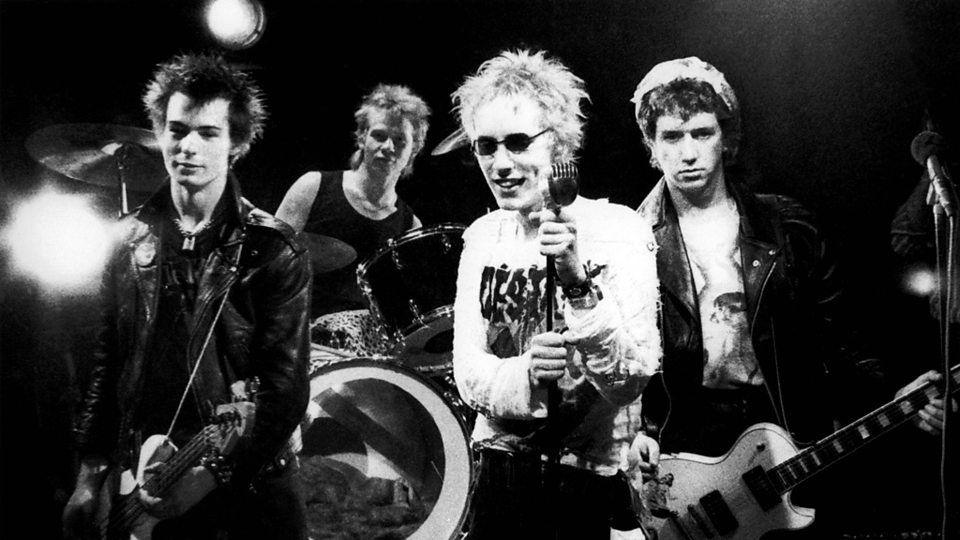
Should Have Been a #1…? ‘God Save the Queen’, by The Sex Pistols

I’ve done a few of these posts before: songs what should have been #1s, for a variety of reasons. Songs that missed top spot because of inconsistencies in chart compilation methods (‘Please Please Me’), songs that were way better than an act’s actual chart toppers (‘Crazy Horses’), songs that are just really, really good (Wizzard). Here, though, we arrive at a record which many allege was kept from reaching number one in the charts because the moral fibre of the British nation depended on it…

‘God Save the Queen’, by The Sex Pistols – #2 in June 1977

June 1977 marked Queen Elizabeth II’s Silver Jubilee. Royal tours were planned, street parties were to be held, bunting was being strung from lampposts, Rod Stewart was keeping things sedate and acoustic at the top of the charts… But a gang of snotty, upstart kids calling themselves The Sex Pistols and playing an aggressively simple new style of rock music called ‘punk’ had other ideas.

They had only had one chart hit: ‘Anarchy in the UK’ which reached #38 at the end of 1976. But they had a reputation – which was probably more important than the music – having caused outrage when they called a TV host a ‘dirty sod’ and a ‘fucking rotter’ during a live interview. (Legend has it they were booked last-minute as a replacement for Queen, as Freddie Mercury had a dentist’s appointment. They were then plied with alcohol and goaded into saying something salty.)

In March 1977 they added Sid Vicious to their line-up, after original bassist Glen Matlock left following one argument too many. ‘God Save the Queen’ was one of only two songs Vicious stayed sober long enough to play on. Meanwhile, the conservative press and commentariat were working themselves into quite the tizz at this bunch of louts: “My personal view on Punk Rock is that it’s disgusting, degrading, ghastly, sleazy, prurient, voyeuristic and nauseating. I think most of these groups would be vastly improved by sudden death,” opined a Tory at the time.

Come the release of their second single, the band were already on their third record label. ‘God Save the Queen’ (she ain’t no human bein’) wasn’t written with the jubilee in mind, according to lead-singer Johnny Rotten (named for his rotten teeth), but the band’s manager Malcolm McLaren couldn’t pass up on the publicity. He organised a flotilla down the Thames, with the Pistols playing the song outside Westminster, and which ended in eleven arrests being made.

By that point, the band were riding high in the charts, with ‘God Save the Queen’ having risen from #11 to #2 just in time for Liz’s big day. The BBC had banned it, some magazines refused to acknowledge the song’s existence – preferring to mark its position on the charts with a dash – and various record stores refused to stock it. Virgin, the Pistol’s new label, were selling twice as many copies of ‘God Save the Queen’ as they were of Rod Stewart’s incumbent chart-topper. However, the BMRB, the company behind chart compilation, ordered that for one week and one week only… shops couldn’t sell their own records. No matter how many copies Virgin Records sold, they wouldn’t count.

Should it have been a #1, if every single had been counted? Possibly. Will anyone ever prove it? Probably not. It’s a bit like the Loch Ness Monster… The last thing the tourist industry of Inverness want is definitive proof that there’s no Nessie. The last thing ageing punks want is proof that they weren’t really denied a chart-topper. It is a hundred times more punk to believe you were silenced. Listening today, forty-five years on, ‘God Save the Queen’ sounds raw and thrilling, but lyrically pretty tame. I love the way Rotten rolls the word ‘Mo-ron’ around, and the refrain of No Future! is fairly iconic. (‘No Future’ was the song’s original title.) Essentially, it’s not so much an attack on the Queen as it is on Britain’s rigid class system: a fascist regime. However, there are far more shocking songs on their debut album, ‘Never Mind the Bollocks (Here’s the Sex Pistols)’ – try ‘Bodies’ and its tale of a teenage abortion for a start.

Then again I wasn’t around in 1977. Maybe punk was genuinely thrilling, or terrifying, depending on your viewpoint. And for an older generation who had gone through the war, rock ‘n’ roll, the swinging sixties, and David Bowie’s drag, perhaps these uncouth, uncivil, ill-mannered upstarts were the final straw. I never thought to ask my grandpa what he made of The Sex Pistols, before he passed away… Though he would get very exercised at the sight of men with stubble, earrings and untucked shirts, so I can probably imagine where he stood on Rotten, Vicious and co.

The Pistols enjoyed several more Top 10 hits after this huge breakthrough, but by January 1978 they had disbanded. By February 1979, Sid Vicious had been accused of murdering his girlfriend Nancy, and had died of a heroin overdose. They burned brightly but briefly, a fleeting menace to the establishment. As I write this, Queen Elizabeth has just celebrated her 95th birthday, and will celebrate 70 years on the throne next year. While the Sex Pistols have long since disintegrated, only briefly reforming for money-spinning tours in the decades since their heyday. Last I heard, Johnny Rotten was wearing MAGA-hats, and endorsing Brexit, still winding everyone up in his role as the grandfather of punk.

Should’ve Been a #1… ‘I Wish It Could Be Christmas Everyday’, by Wizzard

Are you ready children…? (*Fart noise*)… Ladies and gentlemen, I give you a Christmas classic.

‘I Wish It Could Be Christmas Everyday’, by Wizzard – #4 in December 1973

People complain that few good Christmas pop hits are written these days – though I would argue that The Darkness, Kelly Clarkson, Gwen Stefani (and even Miss Britney Spears) have all added their own classics to the canon this century – and then they look wistfully back to 1973, when two of the most enduring Christmas songs of all time raced up the singles chart.

Slade made #1 – and you can read all about that here – while an even better record got stuck at number four. (I always knew that they came out at the same time, but for years I assumed that Wizzard were runners-up.) Roy Wood’s band had already scored two superlative chart-toppers in ’73 – ‘See My Baby Jive’ and ‘Angel Fingers’ – when they turned on the snow machine and went even heavier on the French horns.

While Slade went quite tongue in cheek – with talk of drunken Santas and dancing grandmas – Wizzard lay the traditional Christmas tropes on thick: When the snowman brings the snow, Well he might just like to know, He’s put a great big smile on somebody’s face… And while Slade toned down the glam, for a Beatlesy ode to the season, Wood chucks everything at this one. It’s every bit as OTT, if not more, than their earlier #1s. And why not? When has Christmas ever been a time for subtlety?

By the end, if the two drummers and multiple brass instruments weren’t enough, the sweet, sweet voices of the Stockland Green School choir are added into the mix. Ok, you lot… Take it! (The full credit for the single is: ‘Wizzard ft. vocal backing from the Suedettes plus the Stockland Green Bilateral School First Year Choir with additional noises by Miss Snob and 3C’, which is every bit as extra as the song itself.) And for the last line, Roy earnestly implores us: Why don’t you give, Your love, For Christmas…?

See, it’s not as wild and anarchic as it sounds. Except, when you actually stop to imagine it being Christmas every single day, when the kids start singing and the band begins to play, and it quickly becomes a dystopian nightmare vision of never ending lights, noise, gift giving and turkey…. Still, I can forgive them, for this is a classic. A song that has been played every December since, but that somehow doesn’t ever inspire in me the feelings of irritation that, say, Slade, the Pogues and Mariah Carey do. As I write this, ‘I Wish It Could Be Christmas Everyday’ sits at #16 in the UK Singles charts, and will probably climb even higher next week.

All that’s left for me to do is to wish everyone who reads and follows the UK Number 1s Blog, a very merry Christmas. It doesn’t come everyday – and this year might be different than most – but, still, make it a good one!

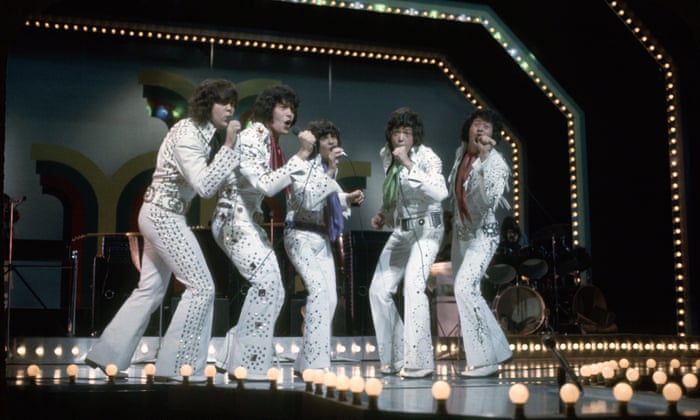
Should’ve Been a #1… ‘Crazy Horses’, by The Osmonds

I’ve done a few posts like this before, but thought I’d start making it more of a regular feature. Having just featured Donny and co’s sole UK chart-topper – the decidedly so-so ‘Love Me For a Reason’ – we might as well visit their first big British hit.

‘Crazy Horses’, by The Osmonds – #2 in November 1972

I had heard of ‘Crazy Horses’ long before I ever listened to it. Aged twelve or so, I was the proud owner of the ‘A-Z of Behaving Badly’, a spin-off book from the ’90s sitcom ‘Men Behaving Badly’ (Wiki link provided, if you have no idea what I’m on about). Said book named ‘Crazy Horses’ as one of the best songs for singing loudly on your way home from the pub…

In those pre-internet, iTunes, Spotify days… amazing to think of it actually… I went years without ever knowing what the song sounded like. It sounded cool: ‘Crazy Horses’. But it was by The Osmonds, who were lame, so it mustn’t have been that good…

How wrong I was. ‘Crazy Horses’ is brilliant. One of the catchiest, zaniest, most enjoyable hits of the early seventies. Just watch the video below. How much fun is Jay Osmond having on lead vocals, doing the funky chicken! How much fun is Merrill having shrieking his way through the bridge! How much fun is Donny having making horsey noises on his keyboard! A lot of fun, is the correct answer.

I’ve seen ‘Crazy Horses’ described as metal. It’s not, but for The Osmonds it might as well have been. Their one, minor hit as a group before this had been the catchy-but-super-cheesy ‘Down by the Lazy River’. Just a few months before this made #2, lil’ Donny had scored his first chart-topper with the cloying ‘Puppy Love’.

Not only is ‘Crazy Horses’ ridiculous, and ridiculously catchy, it also has a message behind it. What a show, There they go, Smokin’ up the sky… ‘Crazy horses’ being cars, whose fumes are destroying the planet: Crazy horses all got riders and they’re you and I…! How woke is that, for 1972!

Unfortunately, some countries banned the record, as they thought all the talk of ‘horse’ and ‘smokin’ were… gasp… drug references! Which simply makes it even more rock ‘n’ roll, and even more amazing that The Osmonds were behind it.

So there you have it. After sitting through all the middling to awful #1 singles involving the Osmond brothers, we desperately needed to give their best song a moment in the sun. ‘Crazy Horses’ should definitely have been a number one!

Songs That Should Have Been #1… ‘Be My Baby’, by The Ronettes

The Stargazers, Don Cornell, The Johnston Brothers, The Dream Weavers, Jerry Keller…? Nope, me neither. But they’ve all had the honour of topping the UK singles chart.

How well a single performs in the charts can be influenced by various things… promotion, star power, tastes and trends, time of year… pure luck. And that most fickle, unpredictable of  factors: the general public. Do enough of them like your song to make it a smash? Or will they ignore it, and let it fall by the wayside?

I’m taking a short break from the regular countdown to feature five discs that really should have topped the charts. Be it for their long-reaching influence, their enduring popularity or for the simple fact that, had they peaked a week earlier or later, they might have made it. (I’ll only be covering songs released before 1964, as that’s where I’m up to on the usual countdown.)

Last up…? Why, if it isn’t the best pop song of all time!

image

Be My Baby, by The Ronettes

Reached #4 in November 1963

Not sure I have to write much more than that… But I’ll try.

Why is it such a classic? Well… There’s the intro, THE crashing, smashing Wall of Sound, the cascading drums, the melodramatic handclaps, the horns, the over-dubbing, the full-on orchestra in the background, the lyrics that range from girlishly submissive (I’ll make you happy, baby…) to flirty ( …just wait and see) in the space of one line…

Phil Spector may be a terrible person; yet against the backdrop of his crimes, and his truly messed-up relationship with Ronette’s lead singer Veronica ‘Ronnie’ Bennett (the only member of the group to actually sing on this song – every voice in the record is hers) ‘Be My Baby’ shines out even more brightly as a slice of pop perfection. Beauty out of something, or someone, awful.

Put simply, this is an amazing song, and it is a crime that it never topped the charts. I’ll end this mini-countdown imagining a parallel universe, where ‘Be My Baby’ sat astride the UK singles chart for a good month or two…

The usual #1s countdown will resume in a couple of days…

https://www.youtube.com/watch?v=ZV5tgZlTEkQ

Songs That Should Have Been #1… ‘Please Please Me’, by The Beatles

The Stargazers, Don Cornell, The Johnston Brothers, The Dream Weavers, Jerry Keller…? Nope, me neither. But they’ve all had the honour of topping the UK singles chart.

How well a single performs in the charts can be influenced by various things… promotion, star power, tastes and trends, time of year… pure luck. And that most fickle, unpredictable of  factors: the general public. Do enough of them like your song to make it a smash? Or will they ignore it, and let it fall by the wayside?

I’m taking a short break from the regular countdown to feature five discs that really should have topped the charts. Be it for their long-reaching influence, their enduring popularity or for the simple fact that, had they peaked a week earlier or later, they might have made it. (I’ll only be covering songs released before 1964, as that’s where I’m up to on the usual countdown.)

Next up… A record that changed the course of popular music?

s-l300

Please Please Me, by the Beatles

Reached #2 in February 1963

As with Elvis, I don’t need to go giving The Fab Four any extra number one singles. By the end of their chart careers, they’d had seventeen of them. And as much as I love this single (if it had been one of their #1s it would probably be in my Top 5) , and as much as I wish that this had been their first ever chart-topper, that isn’t why I’m including ‘Please Please Me’ in this mini-countdown.

I touched on it in my last post, on the mega-long running #2 hit ‘Stranger on the Shore’, but the charts of the 1950s and ’60s were a tad confused. There wasn’t just one of them, for a start. You had the ‘Melody Maker’ chart, the ‘NME’ chart, and the ‘Record Retailer’ chart. None of which offered a complete overview of a week’s sales – they all conducted ‘surveys’ of selected record stores over the phone…

‘Please Please Me’ hit #1 in the NME chart (which had the largest circulation) and ‘Melody Maker’ chart, but it only reached #2 in ‘Record Retailer’, which was the one that the UK Singles Chart chose to follow. So, it may well have been the biggest selling single at some point; we’ll just never know for sure… The history books record it as having stalled behind Frank Ifield’s dull-as-dishwater ‘The Wayward Wind’ for two weeks.

It’s far from the only single to have suffered this unfortunate fate – it wasn’t until 1969 that the UK charts were unified into one – but it’s a landmark single from the biggest pop group in history, with one of the very best middle-eights, ever… So enjoy.

Songs That Should Have Been #1… ‘Stranger on the Shore’, by Mr. Acker Bilk

The Stargazers, Don Cornell, The Johnston Brothers, The Dream Weavers, Jerry Keller…? Nope, me neither. But they’ve all had the honour of topping the UK singles chart.

How well a single performs in the charts can be influenced by various things… promotion, star power, tastes and trends, time of year… pure luck. And that most fickle, unpredictable of  factors: the general public. Do enough of them like your song to make it a smash? Or will they ignore it, and let it fall by the wayside?

I’m taking a short break from the regular countdown to feature five discs that really should have topped the charts. Be it for their long-reaching influence, their enduring popularity or for the simple fact that, had they peaked a week earlier or later, they might have made it. (I’ll only be covering songs released before 1964, as that’s where I’m up to on the usual countdown.)

Next up… a song that I have to admit I don’t know terribly well. In fact, I listened to it for the very first time just before typing these words…

ackerbilk-mr.ackerbilk

Stranger on the Shore, by Mr. Acker Bilk

reached #2 in January 1962

It’s a pleasant enough instrumental, by a clarinetist from Somerset… The theme to a TV programme of the same name. It sounds slightly dated, even for a record released in 1961. Not the type of song I’d usually rush to listen to… I’m including this disc in this mini-countdown for exactly the opposite reasons I included ‘Tutti Frutti’ and ‘Heartbreak Hotel’. ‘Stranger on the Shore’ isn’t revolutionary, or life-changing, or any of that…  But it was a bloody persistent record.

It entered the Top 10 in December of 1961, and it remained, with a couple of drops and re-entries, a Top 10 record in the following… July! Over six months! It remained in the charts for a year. It was the first British single to hit #1 in on the Billboard Hot 100, two years before the British Invasion. It was also the biggest selling hit of 1962 in Britain, and is the biggest selling instrumental record in chart history. It was played in Apollo 10, on its way to the moon…

All the figures suggest that this should have been massive chart-topping smash… except the one that matters most. It never got higher than number two, held off in the most part by Cliff & The Shadows, ‘The Young Ones’. It did top the NME chart, but that wasn’t the official chart, and a lot more on that tomorrow, in my next shoulda-been-number-one post…