932. ‘Colourblind’, by Darius

We’ve had the ‘Pop Idol’ winner, and the runner-up. Why not have the bronze medallist…?
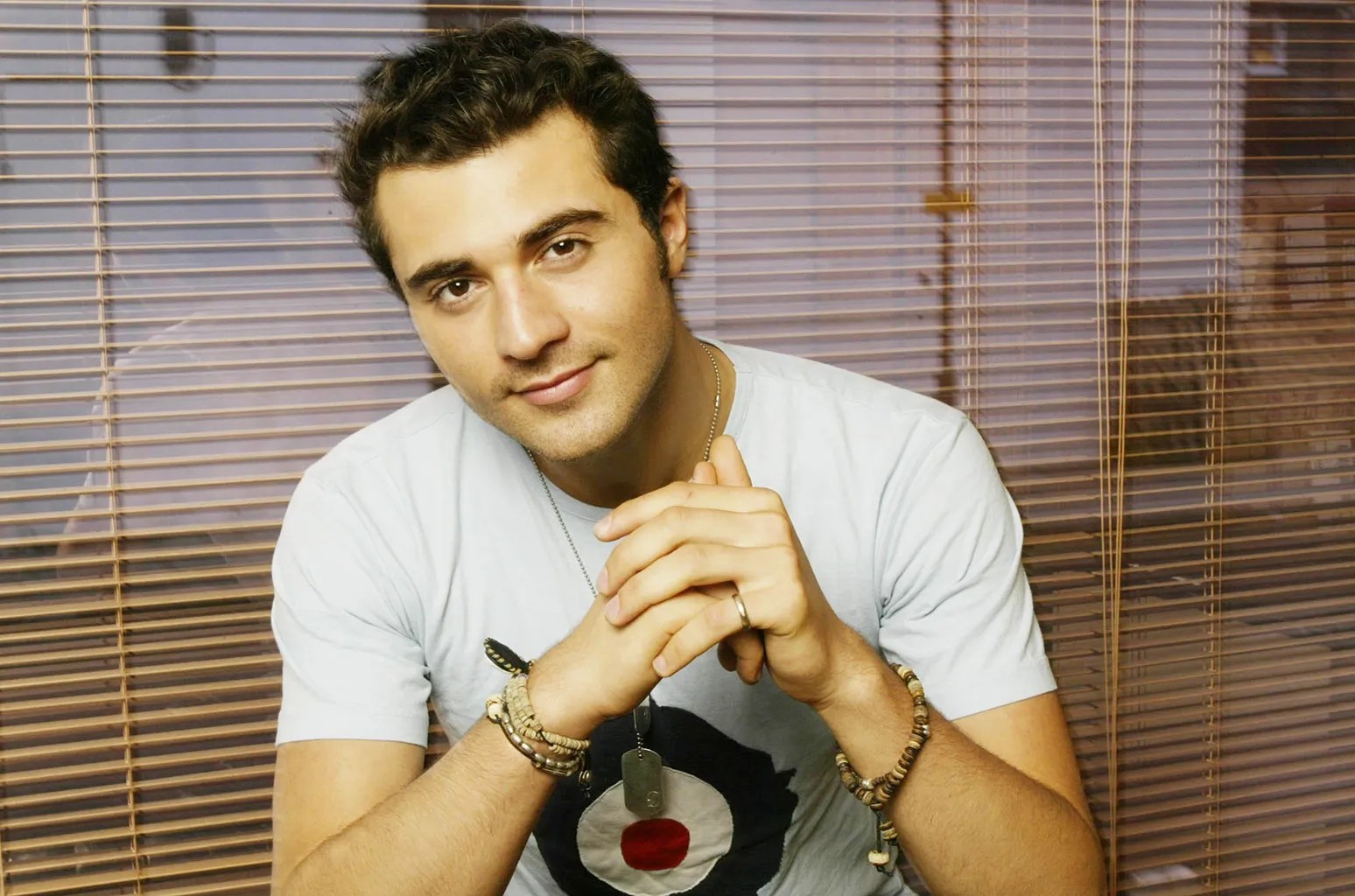
Colourblind, by Darius (his 1st and only #1)

2 weeks, from 4th – 18th August 2002

Darius Danesh had never really been in the running to win the contest against the big two, but he made it to the penultimate round. Then he did the unimaginable, turning down an offer from Simon Cowell and striking out alone. Which means we have the first self-penned reality TV chart-topper.

Under the guise of authenticity, we’re often encouraged to approve more of music that is written by the people singing it. When I was a teen it was a big indicator of an artist or groups’ talent. “Yes, but do they write their own songs…?” Yet, every song is written by someone. There is no such thing as a song tree. And nobody criticises actors for reading somebody else’s lines. Why does it matter if you sing someone else’s song? It worked for Dusty Springfield, the greatest singer Britain has ever produced. It worked for Elvis, who wrote about three songs in his lifetime.

All that is a roundabout way of saying “well done Darius” on writing a number one single; but also of saying that the song is no better than Will Young’s version of ‘Light My Fire’, and is not as good as Gareth Gates’ ‘Anyone of Us’. It has a big pop chorus – You’re the light when I close my eyes, I’m colourblind… – and a modern, very pop-rock feel. This is the future of rock music, really. For guitars to appear at the top of the charts later in the 21st century, they’ve had to soften their edges and exist in songs like this, or by One Republic, or (shudder) The Script…
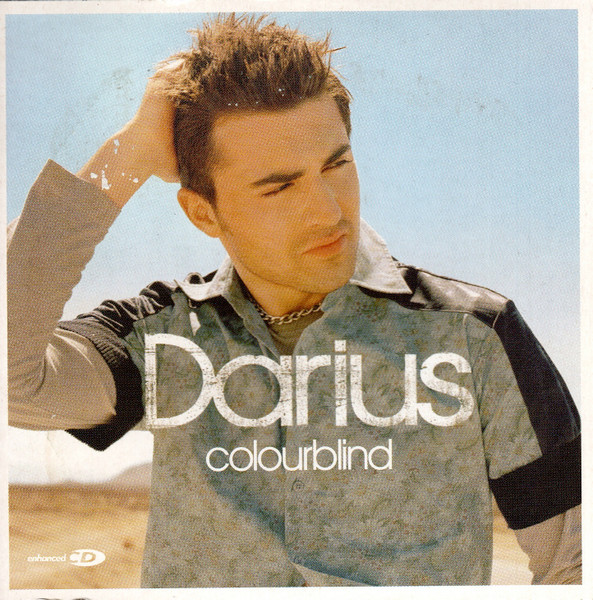
But it’s let down by the fact that it sounds written-to-order for a rom-com (a 54% on Rotten Tomatoes sort of rom-com), and by the gauche lyrics, in which Darius lists all the colours he feels when he sees the girl he fancies. Feeling black, When I think of all the things that I feel I lack…

Darius was born in Glasgow (in Bearsden, the posh bit) to a Scottish-Iranian family. Post-singing career I remember him always popping up on Scottish TV, as we do love a local kid done good (see also: Michelle McManus). Following ‘Colourblind’ he managed two albums, and four more Top 10 singles, before moving into both said TV career, and a successful stint in musical theatre. The fact he had any sort of career at all is testament to his perseverance, after his legendarily bad performance of ‘…Baby One More Time’ while auditioning for Popstars in 2000. He died very young, aged just forty-one, in 2022, from a suspected accidental overdose.

894. ‘What Took You So Long?’, by Emma Bunton

Finally! Ten-year-old me’s OG favourite Spice Girl gets her solo number one…

What Took You So Long?, by Emma Bunton (her 1st and only solo #1)

2 weeks, from 8th – 22nd April 2001

We’ve had rapping Spices, banging trance Spices, Latina Spices… Emma meanwhile goes down a very nice, very drive-time radio, soft-rock route. This is classy, grown-up pop.

There are lots of digital swishes and swirls, especially in the dream-pop middle eight (where the producers were reaching for a ‘Pure Shores’ feel), but at its heart this is an acoustic guitar led song, accompanied by tambourines and handclaps and what a middle-class mum might think of as a hippyish atmosphere. It sounds like it was recorded on real instruments at least, and isn’t the sort of thing that we’ve heard on top of the charts recently.

Is it an exaggeration to say that I could hear Sheryl Crow releasing something not a million miles away from this? Or maybe Natalie Imbruglia. The bridge in particular is lovely, with Emma’s vocals coming through pure and clear. If Mel C was the Spice who could sing, Emma was the one who could give her a run for her money.

Compared to her bandmates, Baby was slow to launch a solo career. She’d featured on the one-off #2 hit ‘What I Am’ with Tin Tin Out in 1999, but this was her official solo launch. And it is to her – and the Spice Girls’ – credit that there was still enough interest in them as artists for her to make the top of the charts. And, impressively, to become the first Solo Spice to remain at #1 for a second week.

It is also to their credit that across their eight solo number ones (there’s still one more from Geri to come) there has been such a variety of styles. They’ve been of varying quality, but there have been no real clunkers. You can argue that they would have had the very best producers and songwriters queuing up to work with them, but I think the Girls also had some musical nous about them. They wouldn’t have become such global superstars otherwise.

Although this is her only solo number one, Emma Bunton managed seven Top 10 hits in total, one behind Geri’s eight, making her the second most successful Solo Spice. She can also claim the most recent Top 10 of any of the Girls, with her 2006 cover of ‘Downtown’ which made #3.

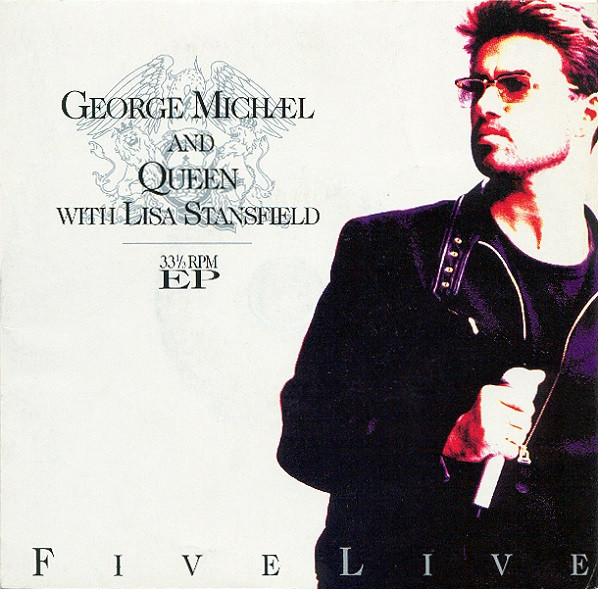
688. ‘Five Live E.P.’, by George Michael & Queen with Lisa Stansfield

I have to admit my heart sinks each time I see an EP coming along. It’s hard enough writing about double-‘A’s (in fact, it can be hard writing about some of the standalone number ones…), but when it’s four songs to get through? Cancel my three o’clock…

Five Live E.P., by George Michael (his 5th of seven #1s) & Queen (their 5th of six #1s) with Lisa Stansfield (her 2nd and final #1)

3 weeks, from 25th April – 16th May 1993

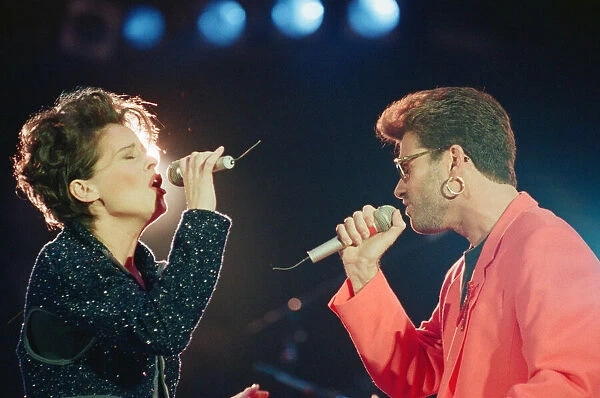
Luckily for me, the final EP to top the British singles chart has five whole tracks to get through! Five live tracks (hence the name) by George Michael, with assistance from Queen on two of them, and Lisa Stansfield on one. Let’s not tackle them in order, but take the two Queen covers first, recorded at the famous Freddie Mercury Tribute Concert a year earlier.

First up, George has a good old crack at ‘Somebody to Love’. It’s a thankless task, trying to do Freddie Mercury, singing one of his signature songs. But GM gives it a bloody good go. It might be the most impressive vocal performance of all seven of his solo #1s, especially given that it was recorded live. It’s a straightforward cover, but a decent one. And it takes to number one a Queen song that should, like many of their post-Bo Rap singles, have got there first time around. One wonders if this was where Brian May got the idea to start touring again, eventually, with the likes of Paul Rodgers and Adam Lambert.

The other Queen cover is ‘These Are the Days of Our Lives’, the track that had made #1 in the immediate wake of Mercury’s death. George is joined by Lisa Stansfield, who he welcomes on stage remarking that she hasn’t any hoover or curlers (presumably referring to her performance of ‘I Want to Break Free’ earlier that night, and not just being sexist…) Again it’s fine, excellently sung – particularly by Stansfield, who didn’t really get to show off her vocal chops on ‘All Around the World’. I don’t imagine it was easy going on stage with George Michael in full flow and holding your own, but she manages. Yet this track isn’t as enjoyable, because a) it was #1 barely a year before and b) it’s not as good as ‘Somebody to Love’ in the first place.

The three other tracks are George Michael solo efforts, recorded in March 1991, again at Wembley (from the same tour that gave us his ‘Don’t Let the Sun Go Down on Me’ duet with Elton John). According to the records, he covered both Adamski’s ‘Killer’ and The Temptations’ ‘Papa Was a Rolling Stone’, but both tracks are hard to, well, track down. Luckily on the British version of the EP he used a shortened, medley version, and again it’s… OK. You’d need a good ear to hear these tracks as a medley, but it works.

However, I refer you back to my comments on Michael’s earlier live #1: live versions being rarely better than the originals and, unless you were actually at the concert, the crowd noises are little more than a distraction. It’s like modern-day shaky camera phone footage, but better produced. Still it was for charity, which is always good, benefiting the Mercury Phoenix Trust, an AIDS fund set up by the remaining members of Queen, their manager Jim Beach, and Mercury’s former partner Mary Austin.

Did we need a fifth track though, making this the longest record to ever make #1 (a milestone that is now almost impossible to break)? Not really. This is where we tip into real self-indulgence, something that George Michael was always prone to, with a cover of ‘Calling You’, originally recorded by soul singer Jevetta Steele for the film ‘Bagdad Café’. I hadn’t heard of it, although the crowd’s reaction suggests that some of them had, at least. And in fairness it did win the Best Original Song Oscar for 1988. The vocals are amazing, from both George and his backing singers, especially again considering it was recorded live. But… It does go on. It unfolds at a snail’s pace, over five minutes. My patience is well and truly tried.

The history of EPs – longer than singles but shorter than LPs – on the UK singles chart is hard to pin down. In the sixties, their heyday, they sold very well and had their own chart. Between the 70s and 90s they fell out of fashion, but could chart alongside the singles. We’ve had three earlier EP #1s, from Erasure, The Specials and Demis Roussos. ‘Five Live’ was the last one to make the top, and maybe this sprawling beast of a record helped to kill them off. Nowadays the closest we’ve got to an EP is a Maxi-CD, or a digital bundle, but since the download/streaming era individual tracks can simply chart in their own right. The same fate has also befallen the double-‘A’ record, though we’ve still got a few more of them to come before then…

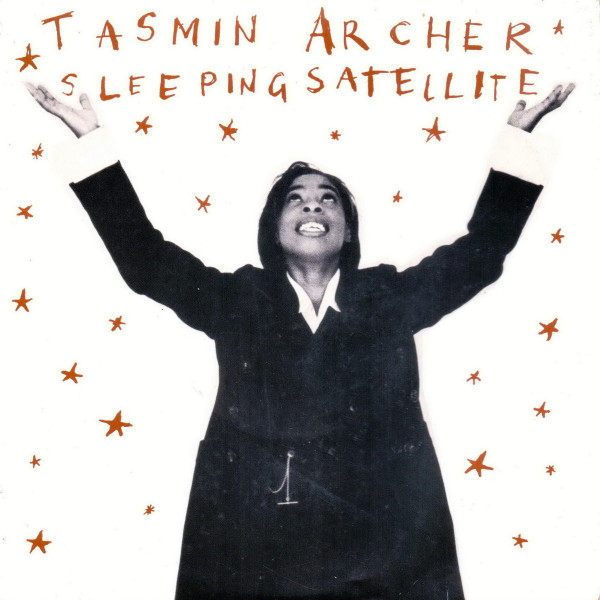
681. ‘Sleeping Satellite’, by Tasmin Archer

It’s fair to say we needed a bit of a chillout, after cutting all those mad shapes to our past couple of chart-toppers, ‘Rhythm Is a Dancer’ and ‘Ebeneezer Goode’. Enter Tasmin Archer then, with ‘Sleeping Satellite’.

Sleeping Satellite, by Tasmin Archer (her 1st and only #1)

2 weeks, from 11th – 25th October 1992

First things first, this is just as ‘nineties’ as the rave anthem that preceded it. The trip-hop drums and light guitars, for a start, and the way Archer sings the verses quietly before ending them LOUDLY. It’s very nu-soul, in the same vein perhaps as Lisa Stansfield’s semi-recent #1, and the lyrics are quite new-age – a genre that’s been popping up ever since Enya in 1988. It’s grown up, is what it is. Your mum might say she’d heard it on the radio the other morning, and quite liked it. Certainly no schoolboy innuendo about class-A drugs here.

Archer has a great voice, with a rasp that kicks in on those loud bits. You could perhaps accuse her of over-singing, but she gives the song an energy that stops it from becoming too MOR (you know, ‘mum oriented-rock’…) Because, let’s be honest, the lyrics are wishy-washy. I blame you for the moonlit sky, And the dream that died, With the eagles’ flights… She’s referencing the moon landings – the ‘Sleeping Satellite’ of the title is our very own moon – and the fact that we’re neglecting Earth in favour of space adventure. Though, to be fair, the lines in which she seems to be predicting an apocalypse don’t seem too far off, thirty years on…

I like the organ that kicks in, and the power chords that offer some oomph as the song grows. It goes on a bit too long, though, and ultimately the message gets lost in the perfectly pleasant melody. It’s one of those songs, outside Christmas classics, and the various summer-themed number ones, that perfectly suits the time of year that it reached top spot. This was an autumn #1, ideal as the nights started to draw in. I’d also suggest that it joins the likes of ‘Baby Jump’, Slik, and Boris Gardner, as one of the most-forgotten number ones of its time.

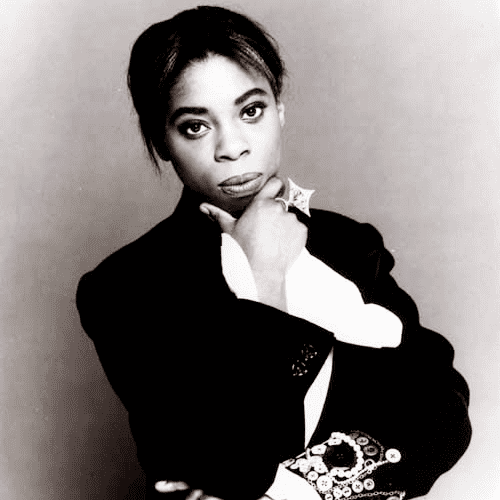
‘Sleeping Satellite’ was Tasmin Archer’s debut release, with her having previously worked as a backing singer and recording studio assistant in Bradford. She’s labelled as a one-hit wonder, which is unfair as her follow-up single made the Top 20. In fact she has five Top 40 hits, and a 1993 Brit Award for Best Breakthrough Act. She released her most recent album in 2006, before announcing that she was going into TV and film soundtrack work.

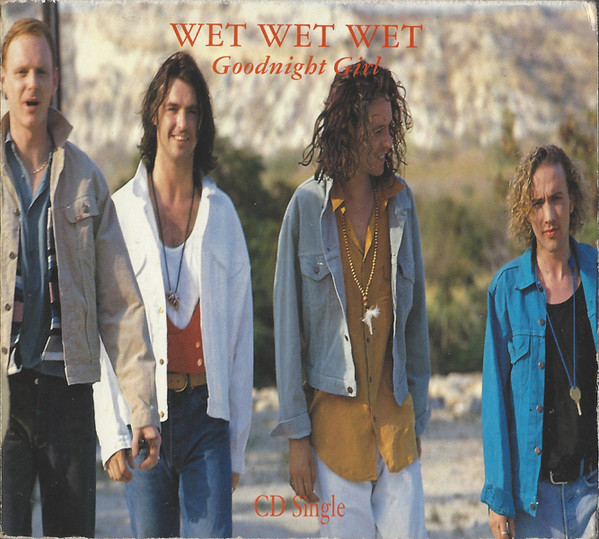
673. ‘Goodnight Girl’, by Wet Wet Wet

Into 1992 we go, then. A year that it won’t take us long to get through, as it only has twelve #1s – the lowest turnover of chart-toppers for thirty years. Why the charts slowed down so much as we move towards the mid-‘90s is something we might chat about in the coming posts…

Goodnight Girl, by Wet Wet Wet (their 2nd of three #1s)

4 weeks, from 19th January – 16th February 1992

We kick off with Clydebank lads Wet Wet Wet, last heard four years ago singing a peppy cover of ‘With a Little Help from My Friends’ for charity. Since then they’ve grown up: the hair is longer, the mood much more serious… Was this the original boy-band to man-band transition, a path since followed by Take That, Westlife and more…?

It’s a nice enough ballad. Lots of strings, a bit of piano, and an almost a cappella feel to the vocals. Marti Pellow takes the lead of course, but the three others whose names I don’t know weave themselves around him. It could have crumpled into bland, MOR mush; but the chorus is an earworm, with real purpose to it: Caught up in your wishing well, Your hopes inside it…

The video is very 1992, and not nearly as clever as it thinks it is. Why is there a priest swinging on a pendulum? Why indeed? The same applies to the lyrics, really, but if you allow them to just wash over you then the melodies, and Pellow’s voice, are enough to make this an enjoyable, if low-key, start to the year. It seems that Wet Wet Wet had managed to grow old(er) gracefully. It was also my 6th birthday #1, and perhaps that means I give it extra fondness points.

‘Goodnight Girl’ is a bit of an anomaly in the Wet Wet Wet discography. As well as being their only self-penned number one, it was the only Top 10 hit the band managed between 1989 and 1994. It’s pleasant enough, but I’m not sure I can explain why it so spectacularly broke their slump. Was it as simple as it being released in January, traditionally the quietest time for new singles? Anyway, they’ll come back properly in a couple of years, with an (almost) record-breaking mega-hit that will set them up for the rest of the decade, and beyond.

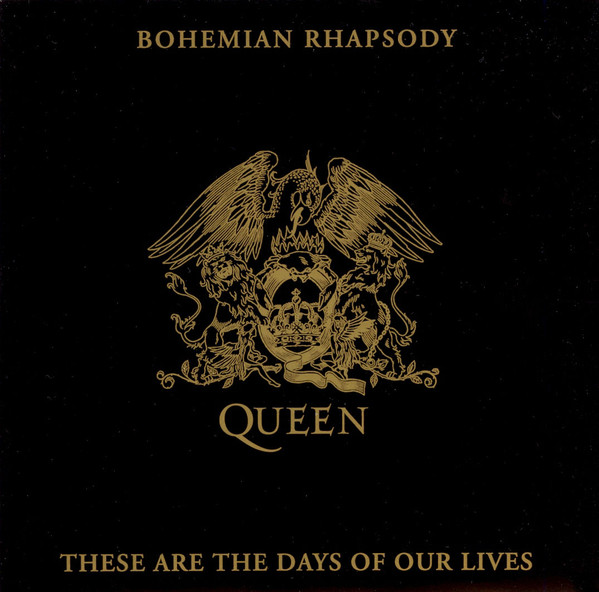
672. ‘Bohemian Rhapsody’ / ‘These Are the Days of Our Lives’, by Queen

On November 23rd 1991, Queen frontman Freddie Mercury released a statement announcing that he was HIV positive, and had developed AIDS, confirming years of speculation about his ailing health. Barely one day later another announcement followed: Mercury was dead, aged just forty-five.

Bohemian Rhapsody / These Are the Days of Our Lives, by Queen (their 4th of six #1s)

5 weeks, from 15th December 1991 – 19th January 1992

Which brings us to the final #1 of the year – the Christmas Number One – and the first time a song has re-topped the charts. How to deal with this? Write about ‘Bohemian Rhapsody’ all over again? I’d rather not… Or just provide a link to my original post on the song, back when it was a nine-week chart-topper (and another Xmas #1) back in 1975-76? Neither seems the perfect solution… ‘Bo Rap’ may well be one of the best-loved, most innovative, outré pop songs of all time; but it has been played to death. We all know what it sounds like. Luckily, Queen twinned it with a song from ‘Innuendo’, their latest album, and gave us something else to talk about!

‘These Are the Days of Our Lives’ couldn’t be more different from its re-released partner. A lounging, glossy soft-rock tune, with a gentle Bossa nova beat. It’s not classic Queen – it sounds more like a Freddie Mercury solo record – until Brian May’s trademark guitar come chiming in towards the end. Lyrically, though, it’s the perfect swansong.

It was written by Roger Taylor, but lines like You can’t turn back the clock, You can’t turn back the tide, Ain’t that a shame… are sung ruefully by Mercury, in what many have claimed were the final vocals he ever recorded. It’s unashamedly sentimental, and usually that would have me running a mile, but when lyrics like Those days are all gone now, But one thing is true, When I look, And I find, I still love you… are sung by a dying man then they hit much harder.

The video – filmed in black and white to hide just how gaunt Mercury was – is certainly the last thing he filmed, six months before his death. Ever the showman – behold the cat waistcoat! – he asked for the closing shot to be re-filmed, in which he chuckles to himself, looks down, then whispers I still love you… Not a dry eye left in the house.

The lyrics shift from ‘those were’ the days of our lives to ‘these are…’, in a positive message, a sign that even in the shadow of death each day is a gift. Again, this is something I might balk at if it weren’t for the fact that a dying man is singing it. If he believes it then who am I to judge? Personally, I’d have liked ‘The Show Must Go On’ as the posthumous single – much more dramatic, much more Queen – but that had been released a couple of months earlier, making #16.

For sure ‘These Are the Days of Our Lives’ wouldn’t have made number one on its own, without either Mercury’s death or ‘Bo Rap’s re-release. A certain run-of-the-mill Elton John song will suffer a similar fate a few years later, caught up in another famous death, becoming one half of the highest-selling single ever in the process. ‘Bohemian Rhapsody’ meanwhile added five more weeks in top spot to its original nine, becoming the third longest-running #1 ever. And this isn’t the end of the chart-topping story for either Queen or Freddie. But it is the end for 1991, one of the more interesting years for chart-topping singles, with Gregorian chants, rapping cartoon characters, sixteen-weekers, Bono in character as ‘The Fly’, Vic Reeves (because why not?), and it all ending on a farewell to the greatest frontman who ever strutted the stage.

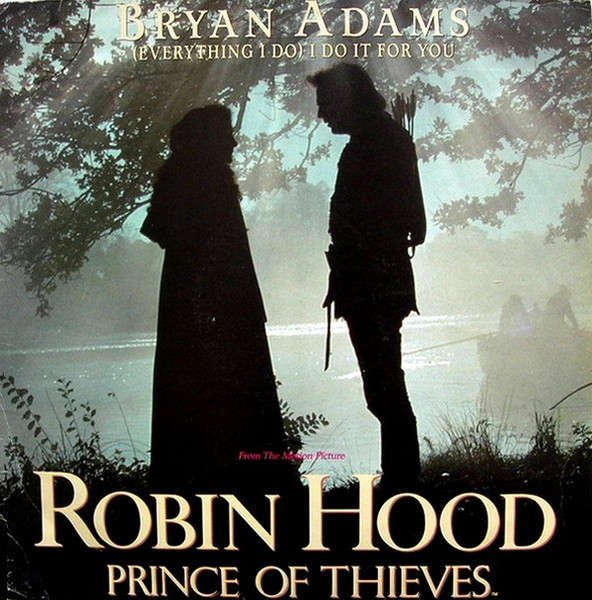
667. ‘(Everything I Do) I Do It for You’, by Bryan Adams

Oh Lordy, here we go…

(Everything I Do) I Do It for You, by Bryan Adams (his 1st of two #1s)

16 weeks, from 7th July – 27th October 1991

The 1980s gets the rep as the era of the power-ballad, when big drums and even bigger hair stalked the pop landscape. And yes, the ‘80s gave us ‘Total Eclipse of the Heart’, ‘Take My Breath Away’, ‘The Power of Love’… All gigantic anthems. All of them, to me at least, pretty good. But the 1990s was when power ballads really started to bulk up, to hit the gym, to mutate, Jurassic World-style, into the beast that stands before us now…

Everything about this record is colossal. The slow-build intro, the strained vocals, the sentiment, the production… Nothing is subtle, nothing left to chance. The title, even, tells you exactly what sort of song this will be before you even press play. The listener is not required to think; they merely have to submit to its awesome power. I bet very few of the couples who’ve chosen this as a first dance at their wedding actually like the song; they’ve just been bludgeoned into submission, a sort of musical Stockholm syndrome.

I could pick any line from ‘(Everything I Do…)’ and bask in its cliched stupidity. It’s all the sort of the stuff even a lovestruck fourteen-year-old would think was too overwrought. Take me as I am, Take my life, I would give it all, I would sacrifice… Bryan Adams growls. I get that we live nowadays in a more cynical age, but did anyone actually take this seriously at the time?

Well, probably. Because a record this overblown couldn’t just have a couple of weeks at #1. Not even a couple of months would suffice. No, ‘(Everything I Do) I Do It for You’ needed sixteen long weeks at the top to get its message across. It famously holds the record for the most consecutive weeks at number one (though not the most weeks in total: Frankie Laine’s ‘I Believe’ racked up eighteen over three different runs in 1953). And the UK wasn’t alone in suffering through a summer (and autumn) of Adams. It was #1 for seven weeks in the US, nine in his homeland of Canada, eleven in Australia, and twelve in Sweden.

But there’s a reason why this record, despite its success, has been semi-forgotten, and earlier power ballads by Bonnie Tyler and co remain well-loved. ‘(Everything I Do)…’ just isn’t fun. There’s nothing here that isn’t full-on, one-hundred percent sincerity. And for a power ballad to truly work, you need to feel that the singer is aware, on some level, that what they’re singing is ridiculous. And yet here’s this behemoth, with all the charm of a constipated brontosaurus. Adams isn’t an insufferable guy – he’s recorded plenty of fun, upbeat songs – but this one…? It’s way too earnest.

It’s also probably an indicator of where we are, in pop music terms. The fun of glam metal has fizzled out, and grunge hasn’t quite broken through yet. (Symbolically, ‘Nevermind’ was released right in the middle of this record’s long, long run at the top…) Glam metal hadn’t made much impact at the top of the British charts (neither would grunge for that matter), but it did mean that guitars slowly returned to the mainstream and allowed huge hit singles like this. (Compare this with a power-ballad from the mid-eighties, and it’s much more ‘rock’.)

This single was of course from the soundtrack to ‘Robin Hood: Prince of Thieves’, the ginormous box-office hit of that summer. Chart-toppers from movie soundtracks have been around since the dawn of the charts, but it does feel as if they are taking over in the early nineties. Of the last five #1s, all have been from soundtracks (if we count stage shows as well as films). And this won’t be the last theme song to make it to double-figures at the top of the charts. We’ve got plenty more of these mutant power-ballads to come soon… Brace yourselves.

(For some reason, the single-edit version of the video to ‘(Everything I Do)…’ seems to have been erased from history in favour of the six and a half minute album version.)

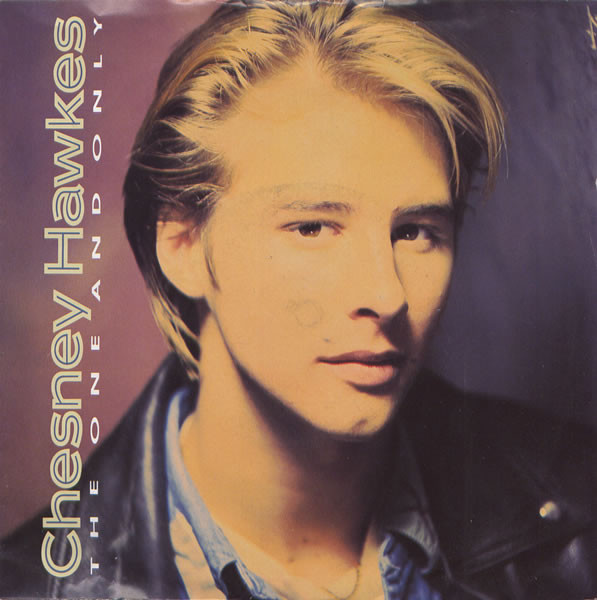
663. ‘The One and Only’, by Chesney Hawkes

Next up, a beloved nineties classic…

The One and Only, by Chesney Hawkes (his 1st and only #1)

5 weeks, from 24th March – 28th April 1991

…which I’ve never understood the love for. It does have a fun intro, I will admit, with what sounds like guitars fed through a motorbike engine. And at the time, the first appearance of the soaring title line: I am the one and only… must certainly have caught the ears.

But beyond that, and with the benefit of hindsight and over-saturation, this is a very middling effort. As Chesney Hawkes moves into the first verse, things settle down into run of the mill power balladry. It’s not helped by the fact that the lyrics read like a self-help book: No one can be myself like I can, For this job I’m the best man… And while this may be true, You are the one and only you… It’s all pretty lame: ‘rock’ music for people who don’t quite know what rock music is.

And yet, it is rock. Ok, pop rock. Guitars feature prominently, though, and there’s a solo – one that fades in comparison to those we’ve heard recently from Queen and Iron Maiden, but still. It’s another tick in the ‘rock is making a comeback’ box as we move deeper into the 1990s. My problem is that this was played to death in nightclubs when I was a student, and the chorus is up there with ‘Sweet Caroline’, or ‘Livin’ on a Prayer’, for punchable ubiquity. No amount of alcohol can make me enjoy it these days, and I’m not sure I ever did. (God, with this and ‘The Stonk’, I’m sounding quite the curmudgeon recently…)

Chesney Hawkes was just nineteen when this, his debut single, made number one. His boy-next-door charms are undeniable – outrageously floppy hair and cute mole on the upper lip – but no self-respecting rock star pronounces ‘rather’ like he does. He came from chart-topping stock, though: his father was Len ‘Chip’ Hawkes of The Tremeloes, who played on their 1967 number one ‘Silence Is Golden’. (Nowadays Chesney acts as lead-singer when the Tremeloes go on tour.) And that’s not the only sixties link we can make here, as ‘The One and Only’ came from the soundtrack to ‘Buddy’s Song’, a film starring Hawkes as a wannabe rock star and none other than Roger Daltrey as his dad. In fact, this is possibly as close as a member of The Who ever came to featuring on a number one single… (though to be fair did Pete Townshend play bass on ‘Something in the Air’)

Chesney failed to repeat the success of his debut single, and has never charted higher than #27 with any of his subsequent releases. He’s still active in the public eye, appearing on various reality TV shows and, of course, the nineties nostalgia circuit. He’s only fifty one, despite his biggest hit coming thirty two years ago, which is suddenly making me feel very old as well…

652. ‘A Little Time’, by The Beautiful South

Let’s slow things down, with a little saloon-bar crooning…

A Little Time, by The Beautiful South (their 1st and only #1)

1 week, from 21st – 28th October 1990

1990 certainly is taking a mellower turn. After a spring of dance… I won’t say bangers, because I’m not sure that they were… but classics at least, we’ve arrived in an autumn of lower-case rock. ‘The Joker’, ‘Show Me Heaven’, and now the year’s most low-key hit, from The Beautiful South.

It’s a duet in the classic sense, as the male and the female vocals bounce off one another, telling a story. The guy is trying to wriggle his way out of a relationship: I need a little time, To think it over… A little space, Just on my own… His girlfriend is having none of it: Need a little room for your big head, Don’t ya, Don’t ya…?

Meanwhile a piano rolls, and some horns softly toot, and you’re left to wonder how this record found itself on top of the charts. A quiet week? The Beautiful South had already had hit singles, and this was the lead from their second album, so perhaps demand was there. And it’s far from unwelcome: it’s just very understated, and short, so that it’s over before you really start to appreciate how good it is.

By the end, the man has had the little time that he wanted, but the girl’s moved on. The freedom that you wanted bad, Is yours for good, I hope you’re glad… It’s sort of an earlier version of Beyonce’s ‘All the Single Ladies’; in sentiment, if not in sound. There’s a good amount of humour here too, while Briana Corrigan’s voice reminds me, somehow, of Cyndi Lauper.

Is this another late eighties’ ‘indie’ hit, to file alongside Fairground Attraction and The Housemartins? Or is it – bold statement incoming – the first Britpop #1? It’s probably the former, as it sounds nothing like your average Britpop hit (it’s got a woman on it, for a start) and the only reason I’m suggesting otherwise is due to the change of decade. But rock will be a constant, if never quite dominant, chart-topping force in the nineties, which it never really was for much of the eighties.

Speaking of The Housemartins, this record gives the second and third former members of the band a 1990 #1, after Beats International’s Norman Cook. Paul Heaton and Dave Hemingway (the wantaway male singer here) had formed The Beautiful South in 1988 after their former band split. Their debut single ‘Song for Whoever’ had made #2 the year before this, their only chart-topper.

The reason I suggest this as ‘Britpop’, is that The Beautiful South had definitely been lumped in with that scene come the middle of the decade, when they were scoring hits like ‘Rotterdam’, ‘Don’t Marry Her’ and ‘Perfect 10’. All of which were pop culture touchstones, a statement I’m basing on the fact that they were all popular in my school playground (especially ‘Don’t Marry Her’, with its incongruous swearing in the chorus). They would continue to have decent chart success until their split in 2007.

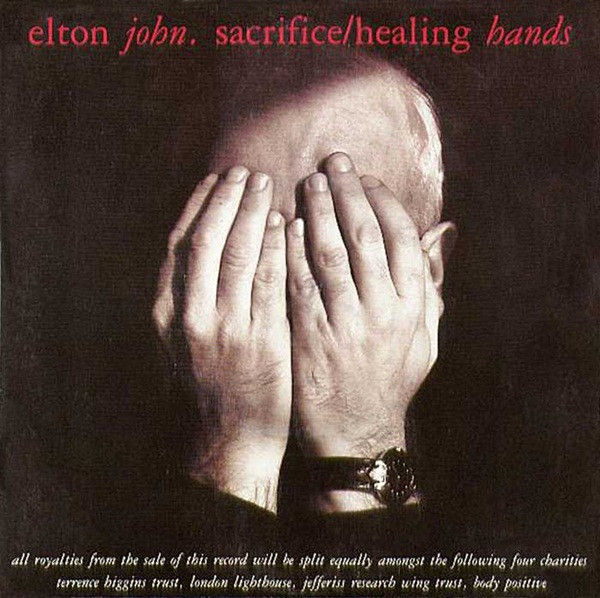
647. ‘Sacrifice’ / ‘Healing Hands’, by Elton John

It’s amazing to think that Elton John went the entirety of the eighties without a number one single. It’s amazing to think that, twenty years into a stellar career, this was his first solo UK chart-topper. But perhaps most surprisingly, it’s amazing that this particular record was a hit at all.

Sacrifice / Healing Hands, by Elton John (his 2nd of ten #1s)

5 weeks, from 17th June – 22nd July 1990

It’s a decent enough song. Elton and Bernie could still knock out a good tune, even this far into their partnership. But it’s very middle-of-the-road, very made-for-Radio-2, very much Elton John reinventing himself for middle age (he was approaching forty-five when it eventually made #1).

And, given that this is adult-oriented soft rock, the lyrics are on a fittingly grown-up theme. Into the boundary, Of each married man, Sweet deceit comes calling, And negativity lands… Ergo, men are men, and they all cheat. I’m pretty sure he blames the frigid woman: Cold, cold heart, Hard done by you… Bernie Taupin was coming to the end of his second marriage at the time of writing, and you do wonder if that might have been an influence.

Away from the lyrics, this has all the glossy touches you’d expect of a soft rock ballad in 1990. I don’t dislike it – in many ways it’s a sophisticated piece of song writing befitting of the nation’s (second?) most prolific hit making partnership – but it also gives me the feeling of mineral water poured over ice: crisp, and clear, and pretty cold. Yet it’s lingered on in the Elton John canon, seemingly held in higher regard than I afford it, and the Cold, cold heart line formed the basis of a 2021 #1, thirty-one years on…

The flip side of this double-‘A’, ‘Healing Hands’, is a bit more lively. It’s a bouncy rocker: a little bluesy, a little gospel. It was apparently inspired by the Four Top’s ‘Reach Out, I’ll Be There’, and you can hear it in the chorus: Reach out, For her healing hands… Is it just me, or is he suggesting that God is a woman…? Anyway, it’s a great vocal performance from John and, while he gets plenty of praise for his showmanship and his presence, I’m not sure he always gets enough credit for his voice.

Again, though, it’s very mum-friendly. Why now? Why, on the verge of being a very old man (in pop star terms) did Elton score the biggest British hit of his career? We have time to ponder this as ‘Healing Hands’ meanders towards its conclusion (seriously, it has one of the longest fade-outs ever). ‘Sacrifice’ had been released nine months before, making a lowly #55. Steve Wright then started playing it on Radio 1 (crushing my Radio 2 theory from four paragraphs ago), it was re-released with ‘Healing Hands’, and the rest was history. Proceeds from the record’s sales went to four different AIDS charities, which again probably help boost sales.

We can perhaps see this record as a dividing point in Elton John’s career. Long gone were the hit-filled, rhinestoned, giant spectacled days of the seventies. The eighties had brought addiction, rehab, a doomed marriage, fewer hits… By 1990, he’d had one Top 10 single in five years. If this hadn’t caught fire, would Elton have faded into obscurity and the nostalgia circuits? Maybe that’s a stretch, but it definitely set him up for a huge career renaissance in the 1990s. Superstar duets, Disney themes, and the planet’s biggest-selling single of all time, were all about to follow…