930. ‘A Little Less Conversation’, by Elvis Vs JXL

No song conjures up the year 2002 more than this tune, that year’s song of the summer.

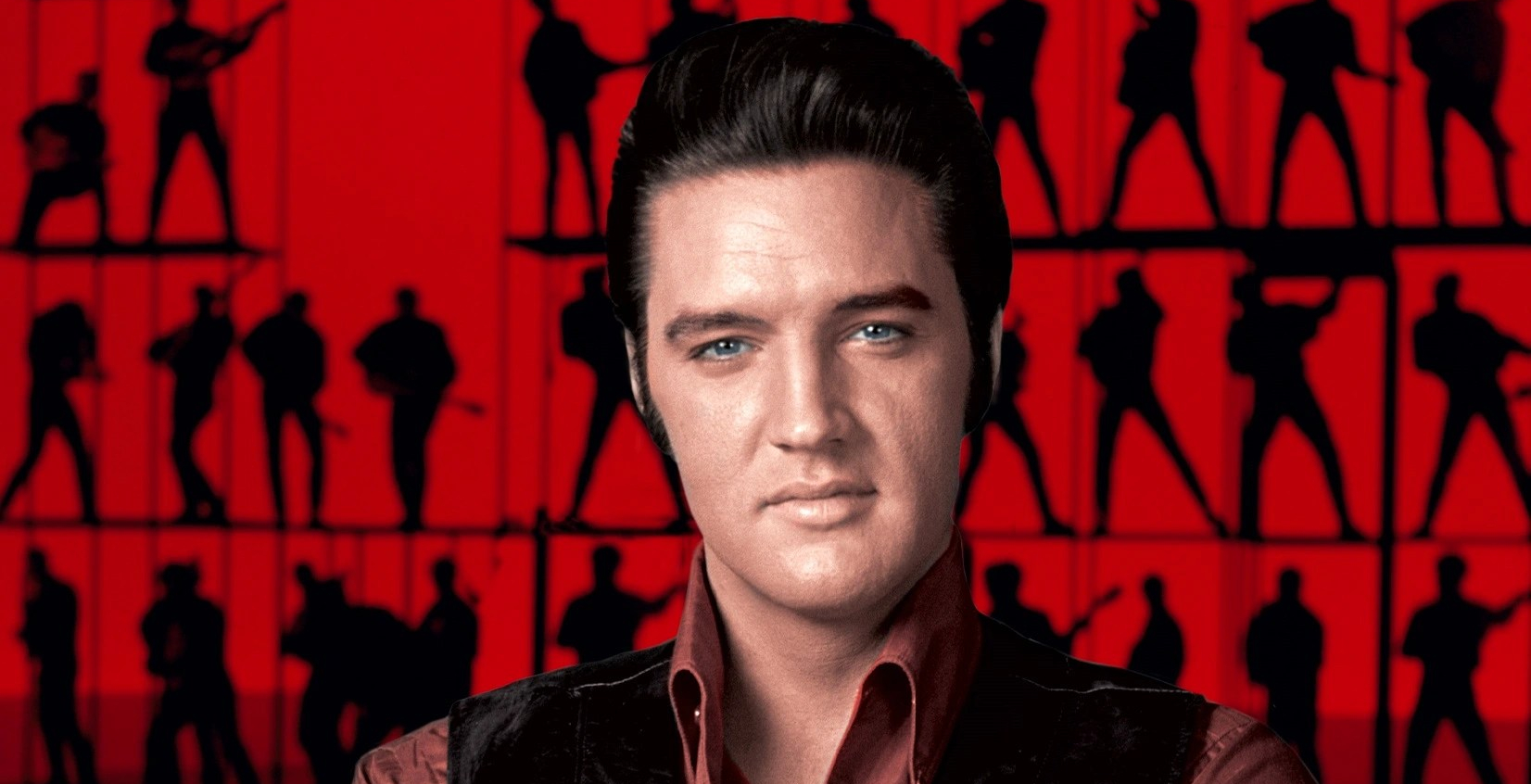
A Little Less Conversation, by Elvis (his 18th of twenty-one #1s) Vs. JXL

4 weeks, from 16th June – 14th July 2002

It sounds curious, and potentially disastrous: a little known Dutch DJ remixing a little known Elvis track from one of his long-forgotten late sixties movies. But, through some strange alchemy, the original’s brassy swagger mixes nicely with JXL’s big, accessible beats, and creates a great pop song.

What remains is Elvis-enough for people who were around when he was alive, and modern enough for those who weren’t. It helps that few people probably knew the original, but also that it was recorded in 1968, around the time of the comeback special, when what is now Elvis’s most familiar pop culture persona was born. Elvis sounds like Elvis, deep voiced and lip curled, and the added echo makes it sound like he’s coming live from the other side. All that’s missing is a thank you very much to finish.

JXL (officially Junkie XL, though that was presumably shortened to keep things family-friendly) was Tom Holkenberg, a DJ active since the late-eighties. He had worked as a producer with several punk and metal bands, as well as becoming big on the rave scene and touring with the Prodigy. None of which sounds like the guy who came up with this super-mild, catchy, chart-friendly hit. As much as I like the record, I’d sooner call it cheesy than cool, and do wonder if Norman Cook considered lining up any plagiarism suits against all the Fatboy Slim style drum-breaks and goofy fills.

The original ‘A Little Less Conversation’ had featured on the ‘Ocean’s Eleven’ soundtrack in 2001, presumably bringing it to the attention of Nike. They then commissioned JXL to remix the song for an advert to tie in with the 2002 World Cup, in which the world’s best footballers competed in a first-goal-wins tournament in a cage. Maybe I’m of the perfect age to get swept up in the nostalgia of it, but watching that advert again, much like hearing this song, feels so ‘2002’ that it hurts.

The single followed a few months after the advert, and was sitting at #1 as Brazil won a record fifth world title. Equally record-breaking was the fact that, after a twenty-five year tie, Elvis moved ahead of the Beatles and onto eighteen UK #1 singles. It kicked off a bit of a renaissance for the King, and a collection of his number one hits (including this remix) became a huge seller that autumn. I’d credit this single, and the album, for getting me into Elvis, and enjoying his music to this day. In 2003 another Elvis remix, this time of ‘Rubberneckin’’ by Paul Oakenfold, made #5.

JXL meanwhile, while not quite a one-hit wonder, never made it higher than #56 without Elvis’s help. Still, he was the first person to be allowed by Elvis’s estate to remix one of his songs, which is an honour of sorts. And he is responsible for introducing many youngsters (me included) to The King, and to one of the greatest ever rhyming couplets in chart-topping history. A little less conversation, A little more action please, All this aggravation ain’t satisfactioning me… Thank you very much, indeed.

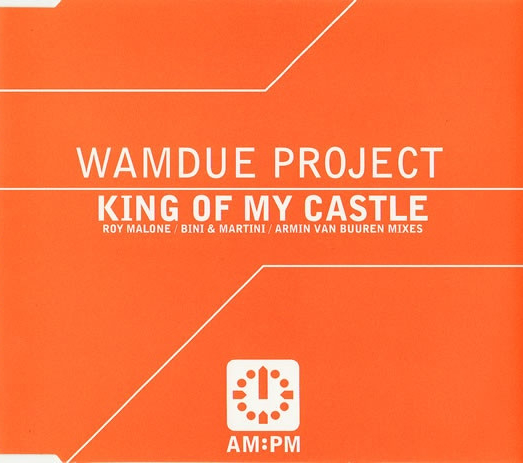
842. ‘King of My Castle’, by Wamdue Project

Suddenly we’re at the pre-penultimate number one of the 1990s. The third last chart-topper of the decade, and the last good one…

King of My Castle, by Wamdue Project (their 1st and only #1)

1 week, from 21st – 28th November 1999

There’s something deeply cool about this record, something that I recognised aged thirteen but that put me off it. It sounded scary, somehow, a song that people much older than me danced to, in dark, misty nightclubs, grinding against one another as the bass pulsed through them…

Now that I’m a grown man, and have been to plenty of nightclubs, in time getting over my fear of grinding up against strangers, I can appreciate this alluring one-hit-wonder. The throbbing, disco beat. The purred uh-humms. The very of-its-time Balearic riff, but one that sounds as if it’s being played from speakers dropped in the deep end of a swimming pool. The kitschy little flute motif.

I’d say, though, that the biggest selling point of this record are the lyrics. The fact a woman sings Must be the reason why I’m king of my castle… The fact I always thought she was free in her ‘trestle’ (it’s ‘trapped soul’)… The wonderful insouciance of the line: Must be a reason why I’m making examples of you…It’s to do with Freud’s theory of the unconscious – as all the best dance hits are – while the video featured scenes from anime ‘Ghost in the Shell’, in which cyborgs are controlled by a hacker. That video featured too many hand drawn boobs for daytime screening, so a more generic second was made.

Wamdue Project were the brainchild of producer Chris Brann, with vocals from deep-house singer Gaelle Adisson. ‘King of My Castle’ had originally been released and recorded in an eight-minute downtempo version in 1997. This remix was helmed by Italian DJ producer Roy Malone, and it became a hit all around Europe. One-off dance tracks feel like a summer phenomenon, therefore it feels a little odd for a dance track to take off so well in late-November. But if ever there was is such a thing as a moody, winter dance smash then this is it.

I’m at the natural end of this post, but would like to linger a little longer in Wamdue World, knowing the horrors that are about to come. (The 20th century does not end on a high note, musically speaking.) This is the sort of dance music I can really get behind, one with a genuinely weird edge, one that I can see working as a grungy rock song. One with easily misheard lyrics based on Freud, and his ego. Wamdue Project are not quite one-hit wonders – I lied earlier – as follow up ‘You’re the Reason’ scraped to #39 the following April, but they remained such a mystery that Chris Brann was nominated for Best British Newcomer at the 2000 Brit Awards, before being hastily withdrawn when the judges discovered he was American.

The ‘Ghost in the Shell’ video:

The ‘official’ video:

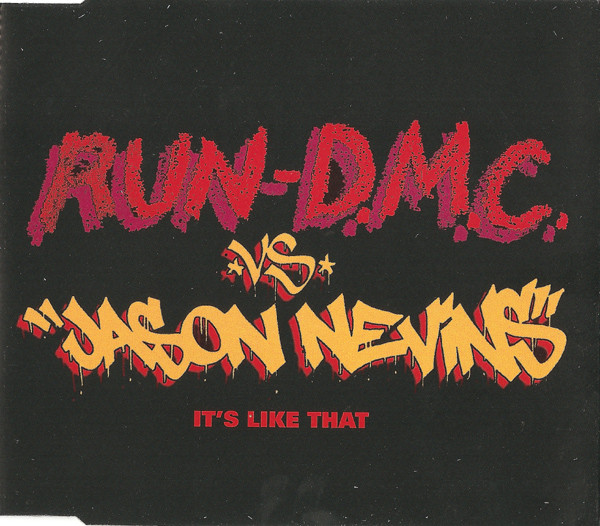
787. ‘It’s Like That’, by Run-D.M.C. vs Jason Nevins

Check this out… Just a couple of weeks after Norman Cook worked his magic on Cornershop’s ‘Brimful of Asha’, American house DJ Jason Nevins has his wicked way with a hip hop golden oldie…

It’s Like That, by Run-D.M.C. vs Jason Nevins (their 1st and only #1s)

6 weeks, from 15th March – 26th April 1998

I remember this being huge, an omnipresent hit that spring. And six weeks at number one is a very impressive run for the late-nineties (only one song will beat that total in 1998). But listening now, I’m a bit stumped trying to work out why it was quite so popular… It’s a bit repetitive, a sledgehammer beat that goes on, and on, with a less stardust sprinkled by Nevins compared to Fatboy Slim. Some of the transitions are predictable, and the original Run-D.M.C. vocals feel off in the mix.

Not that it’s bad, or that I don’t enjoy it on a certain level, or that it doesn’t unleash a heady wave of nostalgia listening to it again in 2024. I just mean that I can’t really locate the reason that it became the year’s 3rd best-selling single and – even more impressively – the only record to ever hold a Spice Girls’ song off number one in the UK (this was released in the same week as ‘Stop’, which it beat to the top by well over 100,000 copies).

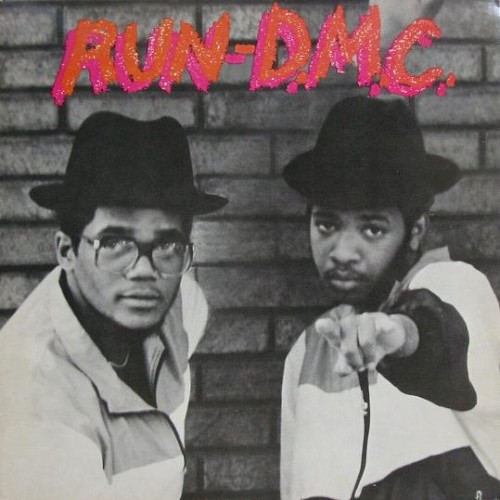
The original ‘It’s Like That’ had featured on Run-D.M.C.’s debut album in 1984, and was released as the LP’s first single. It’s a call-to-arms – a spikier, more cynical ‘What’s Going On’ for a new decade: Unemployment at record highs, People coming, People going, People born to die… Don’t ask me because I don’t know why, It’s like that, And that’s the way it is… What’s interesting about the original is that the 1998 hit is there, fully formed. If anything, the beat is even heavier. Nevins does little more than tart it up with a standard dance rhythm and some up-to-date flourishes (which admittedly is also what Norman Cook did on ‘Brimful…’, I just like that song better).

The one notable thing that Nevins does add is the sped-up Run DMC and Jam Master Jay! break, along with a bit off beatboxing. That’s the part I most remember, perhaps the hook that sold this as a hit. But in actual fact it last barely ten seconds, before that relentless beat comes slamming back in. (I always assumed that ‘Jam Master Jay’ was Jason Nevins, but he was actually the DJ in Run-D.M.C, who was sadly shot dead in 2002.)

Not surprisingly, this would be both Run-D.M.C.’s and Jason Nevin’s biggest ever hit. Nevins has only returned to the Top 10 one further time, although he’s gone on to work with stars like Nelly and Ariana Grande. For Run-D.M.C., this was their second Top 10, a decade on from ‘Walk This Way’ – in which they and Aerosmith fused rap with rock, much like Nevins was fusing rap and dance on this record.

Is it too early to call this the Age of the Remix? It is true that we’ve had two in quick succession, and that remixed hits will be more noticeable at the top of the charts as the century turns. I think it’s the fact that this is the first ‘versus’ record to make #1, as opposed to a plain old ‘featuring’ or an understated ‘&’. It feels so very turn of the twenty-first century (though a quick scan has shown me that there will actually only be a couple of other ‘someone versus someone else’ number ones between now and 2005.)

785. ‘Brimful of Asha’, by Cornershop

Up next, a quirky little number one. An indie-pop tune about classic Indian movies, by a band who had never previously been higher than #60 in the charts…

Brimful of Asha, by Cornershop (their 1st and only #1)

1 week, from 22nd February – 1st March 1998

‘Brimful of Asha’ had originally been released in 1997, in a more pedestrian, lo-fi version. It’s nice – a different angle on British rock in the late-Britpop years – but it needed a sprinkling of stardust to turn it into a hit. Enter Norman Cook, AKA Fatboy Slim. This is already Cook’s third chart-topping persona, following a spot as a member of the Housemartins in 1986, and with Beats International in 1990.

Compared to some of the other big dance acts of the time – think Prodigy or the Chemical Brothers – Cook’s work as Fatboy Slim has a much poppier, more accessible style. The production on this record – the chunky drum fills, the loops – is very late nineties. But it probably sounds ‘very late nineties’ because Fatboy Slim was one of the defining sounds of that era. ‘Brimful of Asha’ was the launchpad for him to enjoy several years of hits.

And while it does sound rooted in the late-90s, ‘Brimful of Asha’ also has nods back to the sixties in the guitar line, and the fact that Cook added a sample from ‘Mary, Mary’, by the Monkees. The ‘Asha’ in the title refers to Asha Bosle, a famous soundtrack singer and one of the most influential names in Bollywood. And of course there’s the famous hook: Everybody needs a bosom for a pillow, Everybody needs a bosom… It all comes together to create an intoxicatingly catchy song.

Cornershop were from Wolverhampton, and had been ploughing an alt-indie furrow since 1991. Their references to Indian cinema came from founders and brothers Tjinder and Avtar Singh (though Avtar had left in 1995), and the band’s name is a tongue-in-cheek reference to the stereotypical line of work that Indian immigrants tended to take up in the UK. It’s actually quite a big cultural moment, this: British Indians topping the charts with a song celebrating their ancestral country. It’s also a surprisingly early nostalgic tribute to vinyl records (Brimful of Asha on the ’45…) just after the format had been largely killed off, and before hipsters rediscovered it.

Sadly, Cornershop would struggle for hits when Norman Cook wasn’t involved. The follow-up, ‘Sleep on the Left Side’, made #23, and their last Top 100 appearance came in 2004. They remain active, though, both recording and touring. Norman Cook, meanwhile, went from strength to strength after this. In the months following ‘Brimful of Asha’s success, he had his first hit as Fatboy Slim with ‘The Rockafeller Skank’, setting him up for several years of solo success. I have a feeling that his poppy, Big Beat style might have been looked down upon in more fashionable dance circles, but he was always undeniably catchy. And he’ll be back along with his own solo #1 very soon!

The 1997 original:

The Norman Cook Remix:

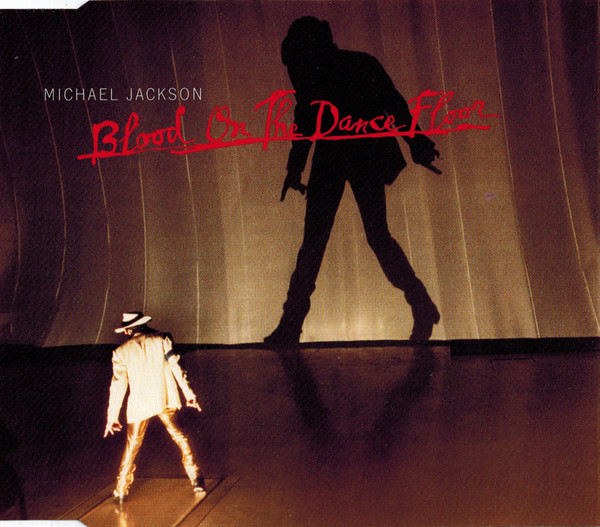
765. ‘Blood on the Dance Floor’, by Michael Jackson

And so Michael Jackson ends a twenty-year run of chart-toppers, with another of 1997’s curios…

Blood on the Dance Floor, by Michael Jackson (his 7th and final solo #1)

1 week, from 27th April – 4th May 1997

Throughout his career, it hasn’t been the MJ classics that have made #1. The Jacksons’ only made it there with ‘Show You the Way to Go’. Solo-wise, ‘One Day in Your Life’, ‘I Just Can’t Stop Loving You’, and ‘You Are Not Alone’ all made it, while ‘Bad’, ‘Beat It’, and ‘Smooth Criminal’ fell by the wayside. Only ‘Billie Jean’, and maybe ‘Black or White’, came close to popular ubiquity.

So what of his final #1? Well, at least it’s not a syrupy ballad, or one of his God-complex blockbusters. Actually, it’s much more reminiscent of his heyday. It isn’t up there quality-wise, but there are flashes. The bridge and chorus, the growl in his voice, and the dangerous woman in the lyrics, all feel very ‘Bad’-era. We can add Suzie (Suzie’s got your number, Suzie ain’t your friend…) to Billie Jean and Dirty Diana in Jackson’s list of ladies best avoided. Interestingly, some sources claimed that ‘Suzie’ was a metaphor for AIDS – giving a horrific double meaning to the line Look who took you under with seven inches in… – but Jackson denied it.

Elsewhere, the New Jack Swing production sounds quite dated, and away from the chorus he barely sings. The verses are a series of vocal tics strung together; sounding more like dolphins communicating, and just as indecipherable. When you learn that it was written originally back in 1991, during sessions for the ‘Dangerous’ album, the sound makes sense. The song was dusted off and tarted up ahead of Jackson’s remix album ‘HIStory in the Mix’.

In some ways, this is an underwhelming way for MJ to bow out. But then, several of his six other solo #1s have been underwhelming. And actually, compared to some of his nineties hits, this is a decent, if dated, dance tune with a fairly killer, funky beat. It was his 36th UK Top 10 hit, since his solo debut in 1972, and he still had a few more to come.

In fact, since his death he has featured on big hits with Akon, Justin Timberlake, and Drake, and so you wouldn’t count against him adding to his total in the years to come. Quite why records featuring Michael Jackson are still allowed to flourish while those featuring the man who preceded ‘Blood on the Dance Floor’ at number one – R. Kelly – have been buried in quicklime is a discussion for another day… Is it as simple as one having a court conviction? Or does musical snobbery come into play…? And I’ll end with an equally pressing question: am I the only person who just now realised that ‘dance floor’ is not one word…?

756. ‘Professional Widow (It’s Got to Be Big)’, by Tori Amos

1997, then. The late ’90s! And we get off to a banging start…

Professional Widow (It’s Got to Be Big), by Tori Amos (her 1st and only #1)

1 week, from 12th – 19th January 1997

‘Professional Widow’ was a track from singer-songwriter Tori Amos’s third studio album, ‘Boys for Pele’, which had made #2 exactly a year before this. It had been released as the album’s third single, making #20. It’s a woozy, rude, barroom stomper of a song, driven by a harpsichord, and Amos’s Kate Bush like vocals. It’s ear-catching, but it does nothing to prepare you for the remix that would eventually top the chart.

The word ‘remix’ doesn’t feel sufficient here. A remix is a song rearranged, extended, or stretched out over a new beat. This is a song completely reimagined, huge chunks chopped off it, with very little of the original remaining. One line is repeated over and over: Honey bring it close to my lips… while the other line – It’s gotta be big – must be somewhere in the original, even if I can’t quite hear it.

It’s amazing how Armand Van Helden, the DJ responsible, could hear the opening harpsichord riff and reimagine it as a modern disco bassline. Some remixes are fairly lazy, with few changes of any note; but not this. It almost samples the original, the riff and the two lines, and creates a completely different song. Van Helden is American, and the track is more house-influenced than our recent dance #1s, but there’s hints of the Prodigy and the Chemical Brothers in the big chunky beats, in the creepy background noises, and the sudden break halfway through.

The ‘Professional Widow’ of the title is apparently a snide reference to Courtney Love, something that Amos has neither confirmed nor outright denied. She had nothing to do with the remix – she was contractually obliged to approve them – but in interviews she has said she enjoys Van Helden’s version. It brought about the biggest hit of her long career, anyway – surpassing the #4 peak of the folksy ‘Cornflake Girl’ from 1994 – and is, to date, Amos’s last visit to the UK Top 10. Armand Van Helden was just getting started, and will go on to be one of the biggest dance producers of all time. He’ll be back at number one, fully credited, fairly soon.

We can’t finish without mentioning the misheard lyric – one of pop’s filthiest mondegreens – where It’s gotta be big becomes… Well, I won’t write it out. Safe to say, once you hear it you can’t unhear it. Misheard or not, it does fit in fairly well with the bawdy original.

You could say that this is a classic January #1 – a fairly random remix sneaking a week at the top in the post-Christmas lull. In fact, January 1997 is one of the best examples the phenomenon, with a run of fun and quirky one-weekers coming up that I’m looking forward to getting into.