269. ‘Israelites’, by Desmond Dekker & The Aces

Every so often in this countdown – and quite frequently during the fertile late-sixties – we come across a record that sounds like a huge leap forward. This next chart-topper is one such song…
1b705762e5f49e7321dfa5dd6d437e0e

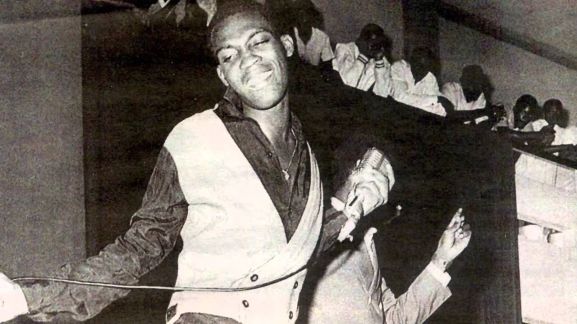
Israelites, by Desmond Dekker & The Aces (their 1st and only #1)

1 week, from 16th – 23rd April 1969

It starts with a chant: Get up in the morning, Slaving for bread… accompanied by some doo-wop harmonising. So that every mouth can be fed… Pretty bleak stuff. Oh-poor, me Israelites… Then in comes a jaunty, bouncy riff. There’s a big contrast here between the lyrics and the tune, but it works.

I have to admit – channelling my dear departed Gran here – that I have no idea what Desmond Dekker is singing for most of this disc. His Jamaican accent is uncompromising. You can picture fathers up and down the land frowning at Top of the Pops. ‘What is this nonsense? It seems that his wife and kids have left him, he has no money, and he may have to turn to a life of crime: I don’t want to end up like Bonnie and Clyde…

The title refers to Rastafarianism, which has its roots in Israel. (I never thought that I’d be getting into theology, but here goes…) Rastafarians were 2nd class citizens in a predominantly Christian Jamaica, and often had to struggle to make ends meet. But, like all the best songs-with-a-message, ‘Israelites’ doesn’t forget to be catchy. It works as well on a basic level, one that you can shake your body to, as it does as a social commentary.

We’ve had a couple of reggae false-starts over the past year. The Equals were reggae-tinted rock. Marmalade aped The Beatles aping reggae – the ‘Desmond with a barrow in the market place’ from ‘Ob-La-Di, Ob-La-Da’ was based on Desmond Dekker – but it is now official. Reggae has arrived at the top of the British charts. I have to admit that it’s a genre I struggle to enjoy – even more so when it comes to ska and two-tone – but I love this record. It’s raw, it’s cool and authentic.

unnamed

Coming as it does after Marvin Gaye, ‘Israelites’ also marks the first time we’ve had consecutive chart-toppers by black artists (I’m deliberately not counting the time in 1959 when The Platters replaced Shirley Bassey). While we’ve had plenty of black artists hit the top-spot, ‘Israelites’ feels different. It was written, produced and performed by black Jamaicans. It doesn’t sound like it’s had its edges softened to sell more. It is – I’ve used this word already but it fits very well here – uncompromising in its sound.

Desmond Dekker and The Aces enjoyed a few more chart hits in the UK. ‘You Can Get It If You Really Want’ – a much more accessible record than ‘Israelites’ – made #2 the following year. He was also one of the first people to spot and promote a young Jamaican by the name of Bob Marley. He passed away in London, in 2006.

Just as interesting – if less important in the grand scheme of things – is the fact that this record marks eleven chart-toppers in a row that have been their artists one and only #1. (Do you get what I mean? I couldn’t think of a better way to phrase that sentence.) From Mary Hopkin through to The Aces, we’ve had half a year of artists enjoying their one and only moment at the top. Which I think must be – or be close to being – a record. Bringing that run to an emphatic end, however, are The Beatles, an act that have enjoyed a few more number one singles than most…

263. ‘Ob-La-Di Ob-La-Da’, by The Marmalade

Our first #1 of 1969, which hit the top just as the New Year’s bells rang out. Throughout January it was locked in a bit of a jig with our last chart-topper, ‘Lily the Pink’. Both records replaced one another at the summit. And when you listen to this disc, that makes sense…

c27629b64f9be56ecf844e470e622c78

Ob-La-Di Ob-La-Da, by The Marmalade (their 1st and only #1)

1 week, from 1st – 8th January / 2 weeks, from 15th – 29th January 1969 (3 weeks total)

For ‘Ob-La-Di, Ob-La-Da’ is cut from the same silly, music-hall cloth as Lily and her medicinal compounds. This is another strange tale – the tale of Desmond, Molly and their market stall. Desmond says to Molly girl I like your face, And Molly says this as she takes him by the hand…

You probably know what comes next, because this is a song by a very famous band, from a very famous album. Ob-la-di, Ob-la-da, Life goes on, Wo-oah… La-la how the life goes on… Yep, it’s the fifth cover of a Beatles’ song to make #1 in the UK, following on from ‘Bad to Me’, ‘A World Without Love’, ‘Michelle’, and hitting the top only a couple of months after the last one, ‘With a Little Help From My Friends’. Add these to the Beatles’ fifteen #1s, and that’s a cool twenty chart-toppers for Misters Lennon and McCartney. (Listen to the original here – John apparently hated it.)

Out of the previous covers, I’d say that this has most in common with The Overlanders’ ‘Michelle’. It’s a perfectly functional copy of the original, one that adds nothing new into the mix. It still bounces along on the same ska-ish beat, Desmond still buys Molly a diamond ring, Molly still does her pretty face and sings with her band in the evening – they still have the drag verse at the end – but it’s basically karaoke.

marmalade-ob-la-di-ob-la-da-beatles-song-n-mint-cbs-7-inch-45-rpm

In fact, the bits I like about the original ‘Ob-La-Di…’ are the cut from this. They don’t shout ‘Bra!’ in the chorus, instead changing it to ‘woah’. There’s no ‘ha ha ha ha’ between the bridge and the third verse, no plinky-plonky piano. Plus, at the end they change So if you want some fun… to So if you want some jam… Because, I’m guessing, they were called The Marmalade. So actually, they’ve taken an average song, and made it worse. Oh well.

And it’s sung in a very strange, slightly Indian, slightly Scouse, slightly Fagin from ‘Oliver!’ accent. The Marmalade were from Glasgow, but that ain’t no Glaswegian… It’s tough, I know, to assess a song like this on its own merits, having been familiar with The Beatles’ version since I was about eight. It’s fine, but coming so soon after Cocker’s outrageous interpretation of ‘With a Little Help…’ it falls pretty flat. The Marmalade would, to be fair, have several other, self-written Top 10 hits through to the early seventies. They were no one-hit wonders.

P.S. Before we finish, it’s worth noting the reggae-ish undertones in this disc. Last year we had the first ska-tinted number one from The Equals, while the ‘Desmond’ in this song was apparently inspired by Desmond Dekker, one of the first reggae stars to make it big in the UK. The ‘Bra!’ in the original was apparently meant to be more like ‘Brah!’ – ‘brother’ or ‘friend’ in West Indian patois. Nowadays Paul McCartney would probably get savaged for such cultural appropriation… What it all means is that reggae has arrived at the top of the charts, just in time to add yet another layer to an amazingly diverse musical decade.

P.P.S. This is the 19th disc to have two (or more) separate runs at the top since the charts began sixteen years ago. Amazingly, it will be the last disc to have a return to number one (without being re-released) until 1993!

252. ‘Baby Come Back’, by The Equals

I can remember very precisely the moment that I first heard this next number one, playing on our car radio when I was about fourteen. I remember it so specifically because when the DJ announced that he was about to play The Equals, my mum thought he had said The Eagles.

The_Equals_(1968)

Baby Come Back, by The Equals (their 1st and only #1)

3 weeks, from 3rd – 24th July 1968

She then spent a very confused three minutes wondering why she had never heard this Eagles’ song before, and how she had managed to miss out on the band’s short-lived reggae phase. My mum can be quite dramatic when confused. Anyway… This is definitely not The Eagles. It’s The Equals, with ‘Baby Come Back.’ And we do welcome reggae to the top of the British singles charts!

Except, is this really reggae? Or is it rock? Reggae-rock? Or am I just assuming it’s some kind of reggae because it’s sung with a Jamaican-sounding accent? The opening, cut-glass riff is very rock, while the bouncy rhythm is – to my ears at least – quite reggae. Ding-ding-dinding-dung-ding! It’s a great intro, and it’s probably the best thing about the entire record.

Not that it’s a bad song other than that. It’s simple enough – a song in which a man implores a woman to not leave him. Come back baby don’t you leave me, Baby baby please don’t go… he sings. Come back, I said baby come back… goes the chorus. It all sounds very heartfelt until you listen carefully to the second verse, and notice that he admits to flirting around behind her back.

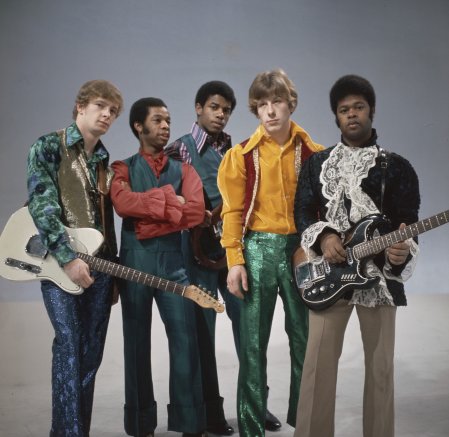
The Equals were a London-based band cut from the same interracial cloth as The Foundations. They had two white and three black members, the foremost of which was one Eddy Grant! I knew of him as an eighties star – he’ll feature again on the countdown in around fourteen years – but had no idea he was around in the sixties, until today. And he doesn’t have a Jamaican accent, as I suggested above – he’s originally from Guyana, in South America.

SAS2271

This is a fun record, one that bounces along and stays buried in your head for a while after. I like the asides as the band build towards each chorus – Hey! (Alright!) – and the free-styling towards the end, especially when one member shouts out Rude Boy! It might have stood out as even more new and refreshing, had the chart-toppers of 1968 not already been so bloody strange…

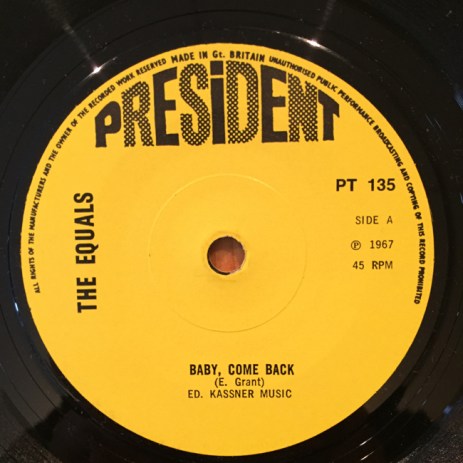
The Equals had been releasing singles since 1966 – ‘Baby Come Back’ had been released once already and done nothing. They would have a couple more Top 10s following this; but ‘Baby Come Back’ was their biggest hit by far. Not only will we meet Eddy Grant again in this countdown, but this song will top the charts again in a very different-sounding nineties version. Much more for another day, then.

I really struggled to find the original recording of this disc. YouTube has it – I think – and you can listen to it below. Spotify has every re-recording under the sun but not, as far as I’m aware, the original. Which is of no concern to anyone but me, as it has spoiled the perfection of my UK #1s Blog Playlist…

Follow my playlist below, with (almost) all the original versions of the 252 #1s encountered so far: