Our first #1 of 1969, which hit the top just as the New Year’s bells rang out. Throughout January it was locked in a bit of a jig with our last chart-topper, ‘Lily the Pink’. Both records replaced one another at the summit. And when you listen to this disc, that makes sense…

Ob-La-Di Ob-La-Da, by The Marmalade (their 1st and only #1)
1 week, from 1st – 8th January / 2 weeks, from 15th – 29th January 1969 (3 weeks total)
For ‘Ob-La-Di, Ob-La-Da’ is cut from the same silly, music-hall cloth as Lily and her medicinal compounds. This is another strange tale – the tale of Desmond, Molly and their market stall. Desmond says to Molly girl I like your face, And Molly says this as she takes him by the hand…
You probably know what comes next, because this is a song by a very famous band, from a very famous album. Ob-la-di, Ob-la-da, Life goes on, Wo-oah… La-la how the life goes on… Yep, it’s the fifth cover of a Beatles’ song to make #1 in the UK, following on from ‘Bad to Me’, ‘A World Without Love’, ‘Michelle’, and hitting the top only a couple of months after the last one, ‘With a Little Help From My Friends’. Add these to the Beatles’ fifteen #1s, and that’s a cool twenty chart-toppers for Misters Lennon and McCartney. (Listen to the original here – John apparently hated it.)
Out of the previous covers, I’d say that this has most in common with The Overlanders’ ‘Michelle’. It’s a perfectly functional copy of the original, one that adds nothing new into the mix. It still bounces along on the same ska-ish beat, Desmond still buys Molly a diamond ring, Molly still does her pretty face and sings with her band in the evening – they still have the drag verse at the end – but it’s basically karaoke.

In fact, the bits I like about the original ‘Ob-La-Di…’ are the cut from this. They don’t shout ‘Bra!’ in the chorus, instead changing it to ‘woah’. There’s no ‘ha ha ha ha’ between the bridge and the third verse, no plinky-plonky piano. Plus, at the end they change So if you want some fun… to So if you want some jam… Because, I’m guessing, they were called The Marmalade. So actually, they’ve taken an average song, and made it worse. Oh well.
And it’s sung in a very strange, slightly Indian, slightly Scouse, slightly Fagin from ‘Oliver!’ accent. The Marmalade were from Glasgow, but that ain’t no Glaswegian… It’s tough, I know, to assess a song like this on its own merits, having been familiar with The Beatles’ version since I was about eight. It’s fine, but coming so soon after Cocker’s outrageous interpretation of ‘With a Little Help…’ it falls pretty flat. The Marmalade would, to be fair, have several other, self-written Top 10 hits through to the early seventies. They were no one-hit wonders.
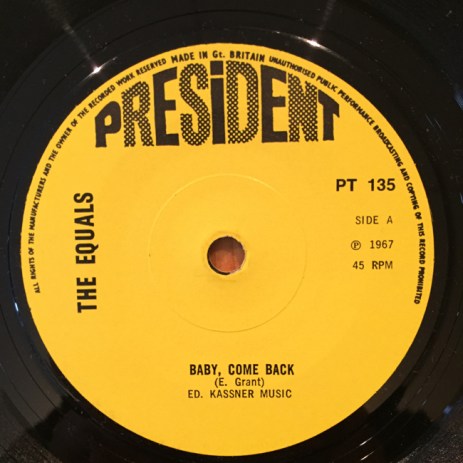
P.S. Before we finish, it’s worth noting the reggae-ish undertones in this disc. Last year we had the first ska-tinted number one from The Equals, while the ‘Desmond’ in this song was apparently inspired by Desmond Dekker, one of the first reggae stars to make it big in the UK. The ‘Bra!’ in the original was apparently meant to be more like ‘Brah!’ – ‘brother’ or ‘friend’ in West Indian patois. Nowadays Paul McCartney would probably get savaged for such cultural appropriation… What it all means is that reggae has arrived at the top of the charts, just in time to add yet another layer to an amazingly diverse musical decade.
P.P.S. This is the 19th disc to have two (or more) separate runs at the top since the charts began sixteen years ago. Amazingly, it will be the last disc to have a return to number one (without being re-released) until 1993!
 The UK Number Ones Blog