768. ‘I Wanna Be the Only One’, Eternal ft. BeBe Winans

Ooh Lordy. Hallelujah! When I listened to this gospel-pop classic for the first time in absolute yonks, I was dragged off on a wave of nostalgia. I struggled to make any notes. It was the biggest Proustian rush I’ve experienced yet, as we delve further into the chart-toppers of my childhood.

I Wanna Be the Only One, by Eternal ft. BeBe Winans (their 1st and only #1s)

1 week, from 25th May – 1st June 1997

But for a nostalgic moment like this to really hit home, the memory needs to be a good one. Proust loved his madeleines, and I realised how much I enjoy this record, one of 1997’s best #1s. It’s a perfect blending of soul, R&B, and gospel, with enough sass and enough honesty, enough fun and enough seriousness… I may be waffling slightly, but the point stands.

In fact, this song survived the moment that I found out that it had religious connotations (well, I mean, it is a gospel song). Aged eleven, I was beginning to question why I had to tag along with my mother to church every Sunday. It wasn’t so much that I was questioning the theology as much as I just wanted a lie-in but my mum, to her credit, let me make my own decision. By twelve I had stopped going. If any of the hymns we sang had had the heft of this tune, however, I’d have been in the front pew every week, hands to the sky.

The key changes at the end, for example, could convert the most atheist of hearts. In my mind I remembered at least five as the song soars to a conclusion, but there’s actually only two. The one complaint you could make about this tune is that it’s not exactly subtle, that it sledgehammers its point home. But honestly, that’s what a song like this needs. The start of the second verse, for example: Now you deserve a mansion… My Lord, you too… is a bizarre line – clunky almost – a ridiculous call and response moment; but also the best bit of the song.

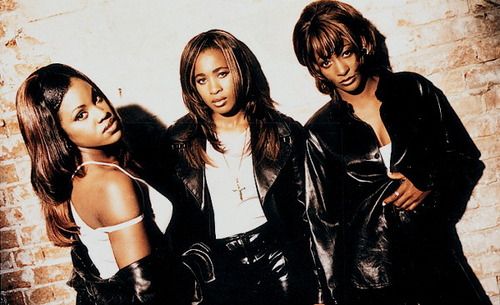
Eternal were probably the biggest British girl group in the first half of the 1990s. The only British girl group of the time, really, until the Spice Girls came along and opened the floodgates for the final years of the decade. They were a sort of British answer to En Vogue, two sisters and two others. Louise Nurding had left in 1995 to start a middling solo career, and to become one of the original WAGs by marrying Liverpool midfielder Jamie Redknapp. This was their 11th Top 10 hit since 1993, and they would only have one more before splitting in 1999. Fair to say, although they had some good pop singles, they peaked with this – a fitting record to become their only chart-topper.

Helping in that regard was BeBe Winans, an American soul and gospel singer, who had written and produced two of Eternal’s earlier hits. He provides the perfect counterpoint to the girls’ harmonies, giving the lyrics much more meaning than if they had been sung by just female voices. I’m not sure I’ve ever heard another song by him, but he left his mark.

‘I Wanna Be the Only One’ was the 2nd most played song on British radio for the year, meaning that plenty of people surely got sick of it. One of my key memories of the record is hearing it in a car park while eating an ice-cream, presumably sometime in May or June 1997, just at the moment I was getting interested in the charts (I believe that this was Track 1 on ‘Now 37’). Soon after that I would start faithfully writing the Top 40 down every week, trying to keep up with the live radio countdown in those pre-internet days. It’s not an exaggeration to say that if it hadn’t been for songs like this grabbing my attention at that formative age, I might not be writing this blog now.

759. ‘Ain’t Nobody’, by LL Cool J

Five weeks into 1997, and we’ve had five different number ones (if you count ‘2 Become 1’, leftover from the year before). Dance, indie, rock, and now…

Ain’t Nobody, by LL Cool J (his 1st and only #1)

1 week, from 2nd – 9th February 1997

One of hip-hops OGs. Ladies Love Cool James, or just LL Cool J to his friends. I’m the best when it comes to making love all night… LL announces in this record’s opening lines… Go deep till the full moon turns to sunlight… before commencing on a four-minute rap Kama Sutra, full of lines about bodies intertwining, animal attraction, all that jazz.

It’s based around ‘80s classic ‘Ain’t Nobody’, and I did wonder if it was a full-blown sample, meaning that Chaka Khan could grab a second #1 by association. But no, it’s an interpolation (one day I’ll have to work out the difference). The chorus is sung by an uncredited lady, who doesn’t have Chaka’s pipes, but LL does a neat little reference to ‘I Feel for You’, as he freestyles towards the end.

I’ve talked for a long time about hip-hop gradually coming of age, especially in recent years with hits from Coolio and the Fugees. I’d add this one to the pile. The rapping is tighter, faster, and obsessed with sex. Still no swearing (the Outhere Brothers remain an outlier), though we’re slowly getting saucier: see the lines above, as well as treats like I’m exploring your body and your erogenous zones, Like a black tiger caged up till you come home… And I’m sure he didn’t mean it, but the refrain of You can take it girl, Stop runnin’, Uh… sure does sound a bit dubious to today’s ears.

Other than that, the sample (sorry, interpolation!) works well. I don’t love the song as a whole, and it’s not a patch on the original, but wouldn’t leave the dancefloor if it came on. Plus it sounds like a modern pop song, once again, furthering my argument that late ’96 / early ’97 marked one of those shifts that pop music goes through every decade or so.

This record, standard 90s hip-hop that it is, came from the unlikely source of the soundtrack to ‘Beavis and Butt-head Do America’, which I haven’t seen, and cannot imagine how it fits into the plot. The ‘B’-side was called ‘Come to Butt-head’, which seems much more appropriate.

Despite rap still being a relatively new chart-topping genre, LL Cool J had been around since the early ‘80s, which is seriously early in hip-hop terms. ‘I Need Love’, his slow-jam from 1987, was one of the first fully-rapped songs to be a chart hit in the UK, reaching #8 (meaning LL had a UK Top 10 several years before he managed one on the Billboard 100). ‘Ain’t Nobody’ was his third, and it set him up for a decade’s worth of regular hit making. And before I go, I’ll give a shout out to one of his other 1997 hits, which should have been the #1, ‘the frenetically funky ‘Phenomenon’.

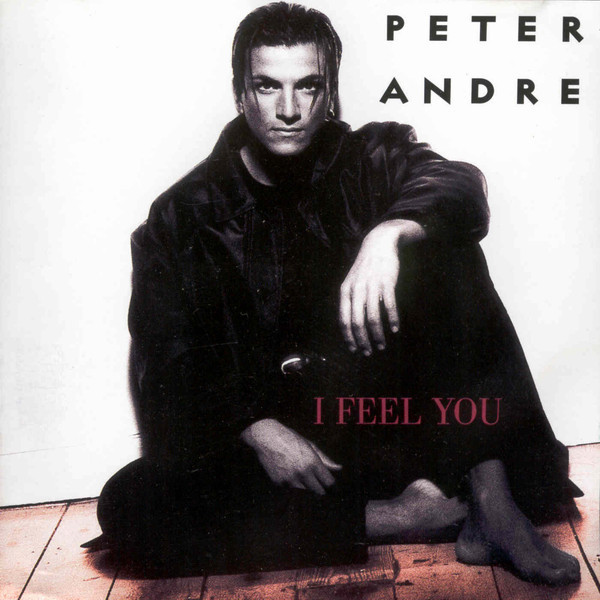
752. ‘I Feel You’, by Peter Andre

After partying all night on ‘Flava’, Peter Andre aims for the flip-side of ‘90s R&B: a sickly slow-jam…

I Feel You, by Peter Andre (his 2nd of three #1s)

1 week, from 1st – 8th December 1996

I assumed that by late-1996, as we near my eleventh birthday, there wouldn’t be any number ones that I’d never heard before. But I reckoned against the fact that, as chart-topping turnover increases, there will be lots of one-week wonders to contend with. Like this.

‘I Feel You’ has some nice Boyz II Men style chord changes, a funky bassline and, if you squint your ears (you know what I mean…) you could just about mistake Andre for Michael Jackson. It also has, as most songs of this ilk do, some unintentionally stomach-turning lyrics: I’m thinking about the bedroom, baby, We’d be making love…Making love! As well as a very steamy video featuring, naturally, Andre’s six-pack as one of the main characters.

By and large, though, this song is dull. Spotify only hosts an extended five-minute mix, which is a slog when it comes to a song of this quality. And it’s sexiness is so forced, that anyone who isn’t Pepe Le Pew will be turned off. It’s custom made for horny teenagers to put on their make-out mixtapes, and they were presumably one of the song’s main customer bases in getting it to the top.

This should have been the last we hear from Peter Andre. His star shone brightly, but briefly: seven Top 10 hits between 1996 and 1998. Fate had different ideas, however. It does mean that, in seven years or so, he will reappear, and his best single will belatedly make #1… But at what cost?

Since this is looking like being a very short write-up, I’ll mention something that I’ve hinted at in earlier posts. Late-’96 is the moment that the singles chart became the chart I grew up with – not just in terms of the songs sounding like modern pop, as I’ve discussed before, but in the way they started entering at #1, and staying there for just seven days at a time. As I said above: ‘one-week wonders’, like this one, and the next song we’ll be featuring…

744. ‘Flava’, by Peter Andre

Straight after the ‘90s most famous five-piece, the decade’s most famous six-pack arrives on the scene…

Flava, by Peter Andre (his 1st of three #1s)

1 week, from 8th – 15th September 1996

To be fair to this record, we have to try forget what Peter Andre is now – the butt of a million jokes, basically – and cast our minds back over a quarter of a century (gulp!) to when he was hot property. And if we are being fair, this record is a perfectly serviceable slice of mid-nineties dance/pop/R&B. Listening to it, you’d assume that Andre was American, especially when singing lines like Can’t bring myself to sleep, So I get the keys to my Jeep…

Except Mark Morrison recently proved that Brits (or British-Australians in Andre’s case) could do these sort of new-jack swing, R&B jams as well as, if not better than, the Americans. Not that ‘Flava’ is in the same street as ‘Return of the Mack’, but they do share the same postcode. And interestingly, Andre also sings in the chorus that the Mack’s back with the flava of the year… (Since writing my post on Mark Morrison, I’ve learned that ‘Mack’ is US slang for ‘a confident, successful man who has many sexual partners’, according to the OED, possibly stemming from the blaxploitation movie of the same name.)

The weakest link here is Peter Andre himself, and his reedy voice which never quite convinces that he is someone who parties all night, or who gets drunk as hell blazin’ up with the smoke, as the uncredited Cee raps in his verse. But this leads us on to what the legacy of ‘Flava’, an otherwise average, throwaway tune, is… The fact that it is a completely and utterly modern pop song.

There’s that beat that Max Martin would be rinsing the life out of by 1999, there’s a synth riff that I’m pretty sure was used by both the Backstreet Boys and 5ive (if not several others), and there’s a rent-a-rapper brought in for the middle eight. This is how pop music will sound for the next twenty-odd years, and here it first appears on top of the charts. With Peter Andre, musical trailblazer…

Or maybe it’s because I can remember 1996, and so my subconscious is forcing me to hear it as modern. It’s either that, or accept that I’m old… Anyway. I made a big play of Peter Andre’s six-pack in the intro, but in the ‘Flava’ video he keeps it fairly well hidden behind an array of baggy shirts. This was probably a reaction to the ‘Mysterious Girl’ video, which had made #2 earlier in the year and in the video for which he spent most of his time topless, under a waterfall. He clearly wanted to be known for his art, dammit, not his body! I won’t link to ‘Mysterious Girl’ – his one true classic – as that makes #1 eventually, under circumstances that will lead to Peter becoming the boob he is nowadays

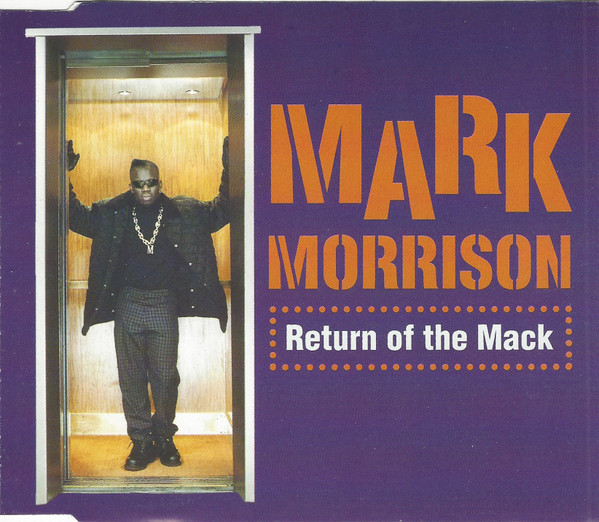
737. ‘Return of the Mack’, by Mark Morrison

I did say, a post or two ago, that we were hitting a golden vein of chart-toppers. In fact, Take That’s feeble swansong aside, 1996 has already been a vast improvement on the year before, and we’re only in April…

Return of the Mack, by Mark Morrison (his 1st and only #1)

2 weeks, from 14th – 28th April 1996

‘Return of the Mack’ is completely different from our last number one – the Prodigy’s searing ‘Firestarter’ – but it’s every bit as catchy. It’s slick, very mid-nineties R&B; but I don’t mean slick in a boring way. More in a supremely confident, honeyed, knows exactly what it’s doing sort of way.

You could easily believe that this was being sung by a US soul superstar, a Boyz II Men-Bobby Brown hybrid of some sort, apart from one detail: it’s actually quite fun, and doesn’t take itself too seriously. A lot of US R&B at this time was spotlessly honed to the point of being completely transparent and unmemorable. We had a taster of it when Michael Jackson’s ‘You Are Not Alone’ was at #1, but thankfully this sound never dominated the British charts like it did the Billboard.

I assume that the ‘Mack’ in the chorus is supposed to be Mark Morrison himself, and this self-referencing adds another layer of braggadocio to what is already a swaggering tune. He’s back, feeling better than ever, and ready to lord it over his ex… So I’m back up in the game, Running things to keep my swing, Letting all the people know, That I’m back to run the show… It’s not harsh to suggest that Morrison has a unique singing voice – high-pitched and nasal – and the way he enunciates certain words, like ‘swing’, adds another hook to the record.

We’re getting deep into the pop stars of my childhood now, and two things I remember about Mark Morrison were his very cool slanted mohawk hairdo, and the fact that ‘Return of the Mack’ was about his release from jail. Except, my mind is playing tricks on me… Morrison did do jailtime, for the always inadvisable crime of trying to take a gun onto an aeroplane, but not until a year after ‘Return of the Mack’ made number one.

Although he was released from his three month stretch just as the song started to climb the US charts, eventually settling at an impressive #2, so I wasn’t completely wrong. The fact that this up-tempo R&B did so well in the land of down-tempo R&B suggests that even Americans might have been growing weary of all the syrupy ballads. It was the first of an impressive five Top 10 UK hits from the one album (though, in the States, Morrison remains a one-hit wonder).

Gun-toting on aircraft wasn’t Morrison’s only brush with the law, and he’s also been in trouble for affray, assault, driving without a licence, suspected kidnapping, and for paying a lookalike to do his community service. An eventful life, then, though he has remained active in the music industry throughout. More recently, he seems to have been rediscovered by modern rap and R&B stars, being sampled by Chris Brown and working with Post Malone.

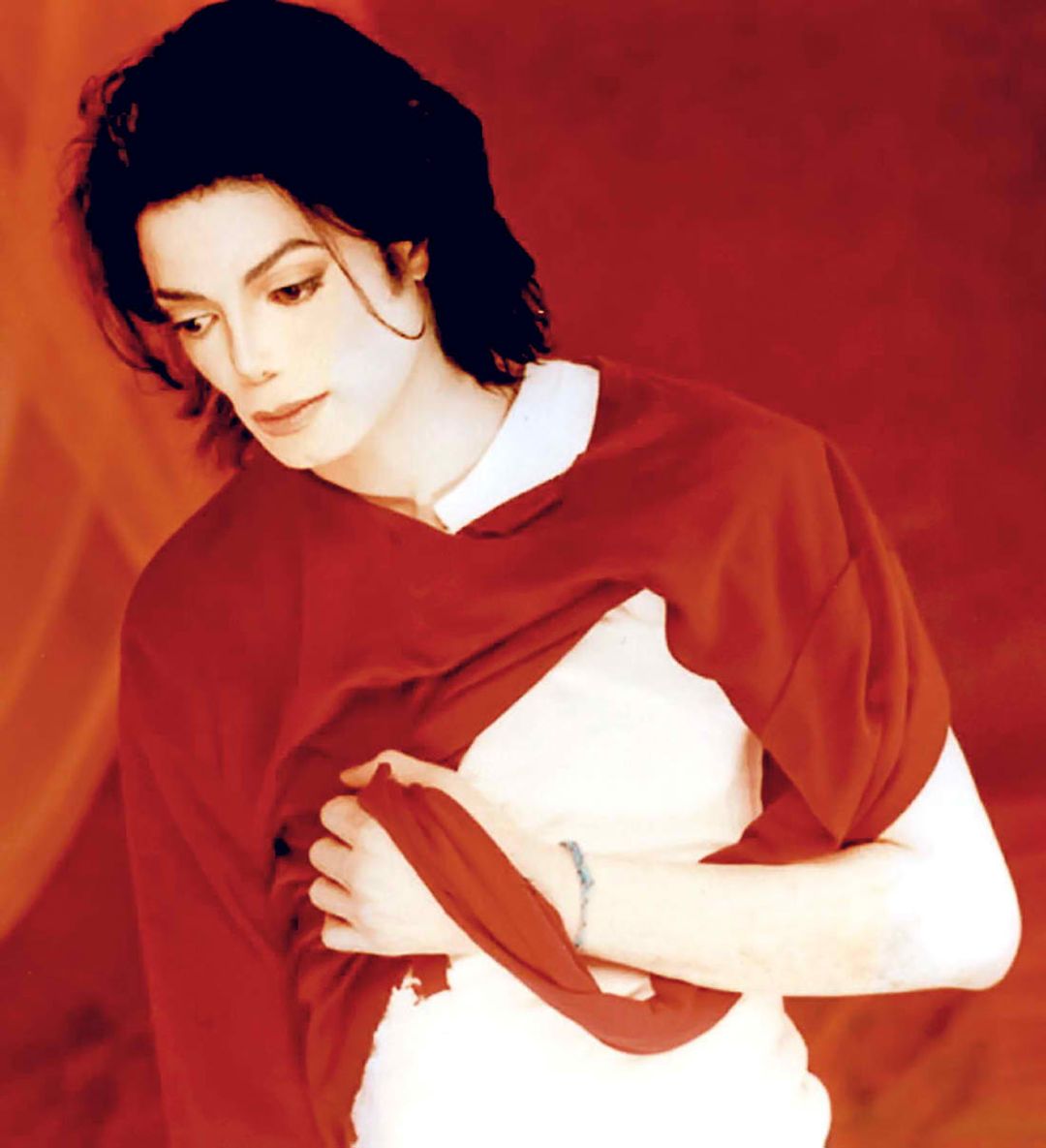
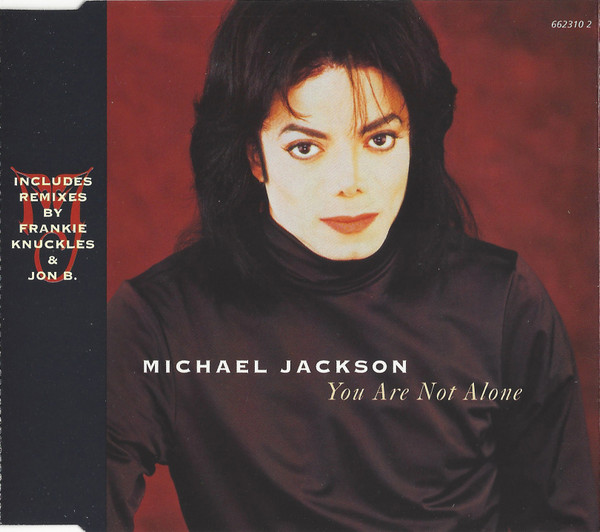
726. ‘You Are Not Alone’, by Michael Jackson

And so we arrive at yet another staging-post on the long, but thinly spread, chart-topping career of Michael Jackson. One number one with his brothers, and seven solo, stretched out over two decades. Interestingly, and perhaps aptly, he only ever made #1 in odd numbered years…

You Are Not Alone, by Michael Jackson (his 5th of seven #1s)

2 weeks, from 3rd – 17th September 1995

’77, ’81, ’83, ’87, ’91 and now 1995. And this is just what we’ve been missing on our 1995 bingo card. After all the dance, the Britpop and the power balladry, what we really needed was some slow and syrupy, mid-nineties R&B. This sound was (thankfully) much more prevalent on the Billboard charts, possibly the sound of US pop at the time, and few acts would have had the star power to drag this sludge to the top spot in the UK.

Trust MJ, though. It was the second single from the ‘HIStory’ album, following ‘Scream’, the duet with sister Janet, more famous for its record-breakingly expensive video. And there is a sweet simplicity to this song. The chorus plays almost like a lullaby: You are not alone, I am here with you, Though you’re far away, I am here to stay… Like a lullaby in that it’s pretty, and in that it may send you to sleep.

Jackson puts in a pretty strong vocal performance as well, limiting the ticks and the gulps that have marked most of his music since ‘Bad’ (there’s not a single ‘eeeh hee’ either). He gives the lungs a workout towards the end, post key-change, reminding us that underneath it all he was always a fine singer.

And yet… Watch the video, and it’s easy to become distracted from the actual song. He is now fully white, and very plastic-looking. We’re almost treated to a full-frontal from the King of Pop, as he smooches with then wife Lisa Marie Presley, wrapped only in a towel. It’s all pretty icky. Of course, knowing what we know now means that any Jacko love song comes with its own in-built ick-factor. (‘You Are Not Alone’ was also written by R Kelly, just in case we needed any extra ickiness.)

So, in summary, this is a sweet enough, well-performed ballad, your enjoyment of which depends on how much you can block out thoughts of what we know now, and of a near-naked MJ canoodling with Elvis’s daughter. 1995 will actually turn out to be Jackson’s most successful year, in terms of chart-toppers. He still has a massive Christmas #1 to come, in which he puts his clothes back on and returns to his usual preposterous, overblown nonsense.

711. ‘Sure’, by Take That

Any act that racks up twelve number ones is going to have some chart-toppers that are better remembered than others… May I present to you, then, Take That’s all-but-forgotten #1.

Sure, by Take That (their 5th of twelve #1s)

2 weeks, from 9th – 23rd October 1994

I’m ‘sure’ I’ve heard this somewhere – the sure, so sure hook in the chorus was familiar – but the rest was a surprise. A pleasant surprise at that. The intro fools you, with lullabying chords suggesting that a syrupy ballad is on its way. But then everything goes a bit funky: with a squelchy bass, and lots of horns and scratchy turntables. If Take That’s previous hits had relied on retro, disco influences – ‘Relight My Fire’ and ‘Everything Changes’ – then ‘Sure’ sees the band turn to modern, American R&B.

Though, in fairness, this new jack swing beat had been around for a while, so they were actually quite late to the party. Still, it’s a solid pop song, and boybands are always at their most bearable when they’re keeping things upbeat. The lyrics are a bit PG, compared to similar acts – it’s been well over three years since Color Me Badd wanted to sex us up. Though there is a reference here to Gary Barlow’s relationship checklist: It’s got to be social, compatible, sexual, irresistible… (Take That’s big ‘rivals’ East 17 were a lot steamier on hits like ‘Deep’, but then they weren’t scoring #1 after #1. Definitely something to be said for keeping it family-friendly.)

Speaking of Mr Barlow, I do wish he’d relinquished lead vocal duty for this one. As fun a song as it is, he just doesn’t convince as a sexy alpha on the record, or when the lads cut a slick dance routine in the video. I’ve written in my previous posts on Take That that he clearly had ambitions above ‘boyband star’ – ambitions that will come to fruition with their next number one – and on the basis of their first five chart-toppers he was clearly the dominant force. Possibly too dominant. Small wonder Robbie wanted to break free…

‘Sure’ was the lead single from the band’s third album, and so was guaranteed to be a massive hit. It got the epic, seven-minute video treatment too. Though in truth half the video tells a very dull story in which the boys babysit a little girl while also trying to get ready for a house party. (Skip forward three and a half minutes if you just want to hear the actual song.) And yet, like I said in the intro, this record feels forgotten among their more famous hits. None more so than their sixth chart-topper: a genuinely huge pop-culture moment, coming along very soon.

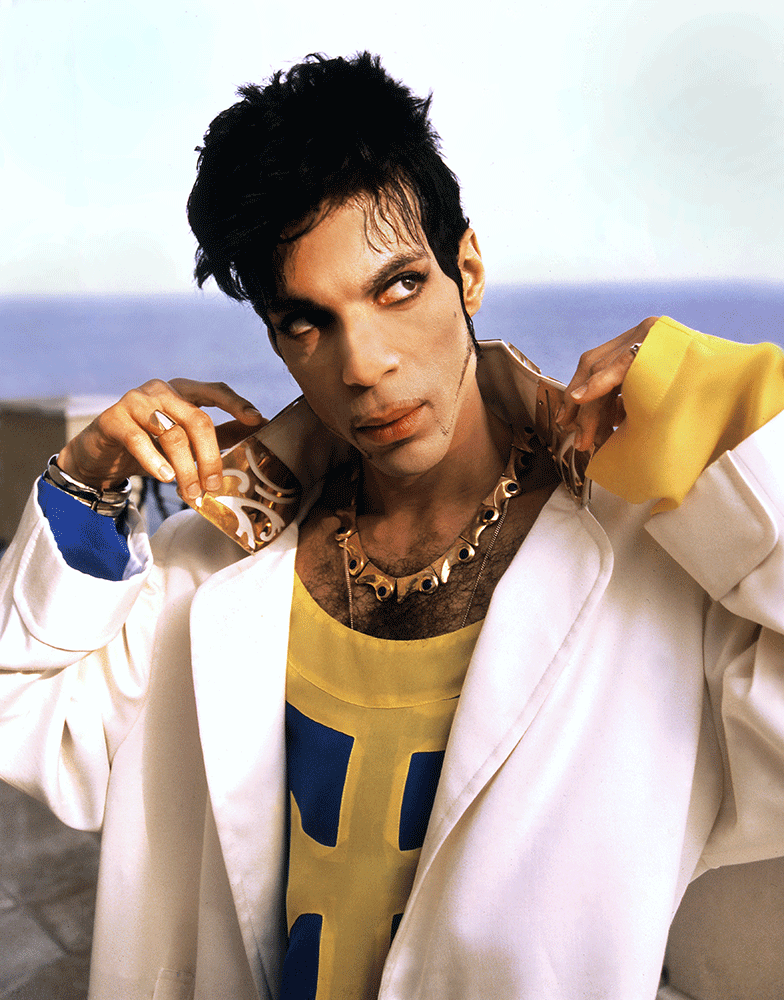
705. ‘The Most Beautiful Girl in the World’, by Prince

The list of superstar artists with underwhelming singles chart records is long, and complex. There’s Led Zeppelin, who simply didn’t bother releasing them. There’s Chuck Berry, whose ding-a-ling made number one two decades after he’d helped invent rock and roll. There’s Stevie Wonder, whose two chart-toppers don’t begin to do his talent justice…

The Most Beautiful Girl in the World, by Prince (his 1st and only #1)

2 weeks, from 17th April – 1st May 1994

Then there’s Prince – the star with possibly the biggest disparity between talent and number one hits. Not that he has a terrible overall chart record in the UK: seventeen Top 10 hits is nothing to be sniffed at. But only this one chart-topper (the 2nd biggest hit of his long career, apparently…)

And I’m just going to come out and say it… For ‘The Most Beautiful Girl in the World’ to be Prince’s only #1 is as big a travesty as ‘My Ding-A-Ling’. It might even be bigger. At least Berry’s novelty is dumb fun. This is syrupy, over-produced tripe, with some queasy lyrics… It’s plain to see, You’re the reason that God made a girl… The fact that the song debuted on the 1994 Miss USA pageant speaks volumes.

As I listen, all I can think of is all the brilliant Prince tunes that came and went without making #1… And not only is this dull, it’s disappointingly chaste. This from a man who recorded songs like ‘Soft and Wet’, ‘Cream’, and ‘Sexy MF’. There’s a spoken-word portion, as in all the worst love songs, in which Prince semi-raps: And if the stars ever fell, One by one from the sky…

It leads on to the most enjoyable bit of the song though, in which Prince provides his own backing vocals in a deep voice before launching back into his more famous falsetto. The song’s odd sound effects – tears dripping, clocks ticking, birds twittering – are interesting too. These moments are where we come closest to the fun, creative-chameleon Prince, who’s sorely missing from the rest of this sludge.

Of course, ‘The Most Beautiful Girl in the World’ isn’t technically a ‘Prince’ song. It came at the start of his ‘Love Symbol’ period, AKA the time he was known as ‘The Artist Formerly Known as Prince’, as part of a rebellion against his Warner Brothers contract. He felt they were holding him back, insisting that he chill out and release albums more sporadically. Interestingly, this single – one of his most successful – was released on a small, independent label, rather than Warner Bros. The corresponding album didn’t see the light of day for another year and a half, and is still involved in a lawsuit over plagiarism involving ‘The Most Beautiful Girl in the World’ and an Italian song called ‘Takin’ Me to Paradise’.

Prince does already have two other chart-toppers to his name as a songwriter. Two classics: Chaka Khan’s ‘I Feel for You’ and Sinead O’Connor’s ‘Nothing Compares 2 U’. And of course there’s ‘Purple Rain’, ‘When Doves Cry’, ‘Kiss’… So many that I might have to do a post on Prince’s nearly-number-ones. All these hits kick this one into the long grass… And yet. The charts often don’t play nice…

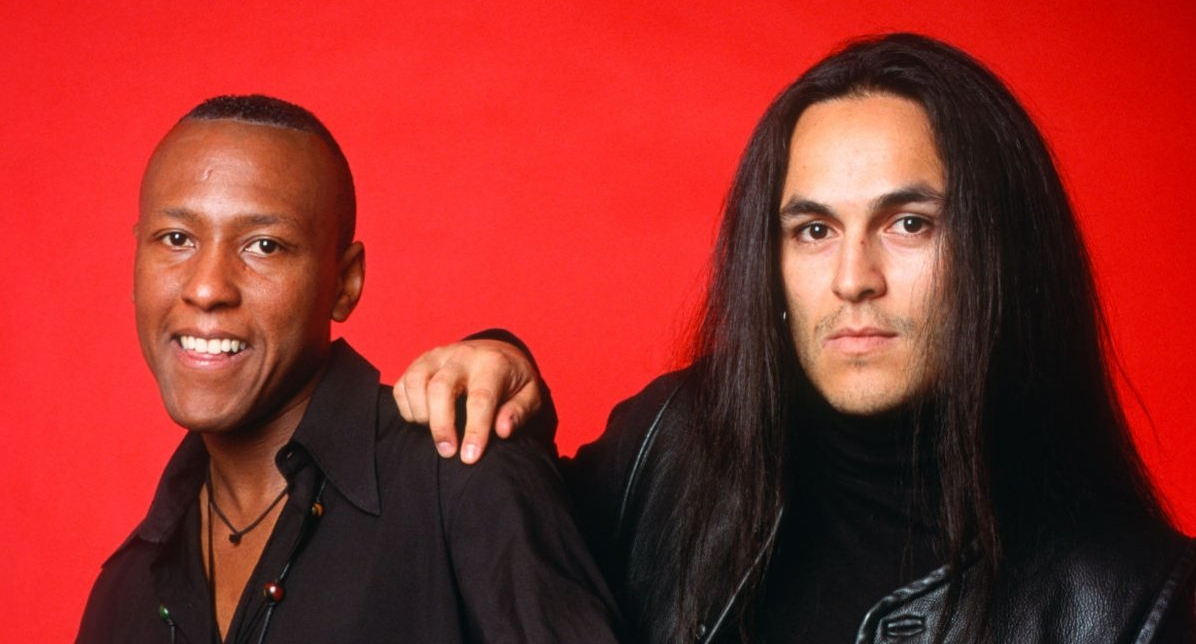
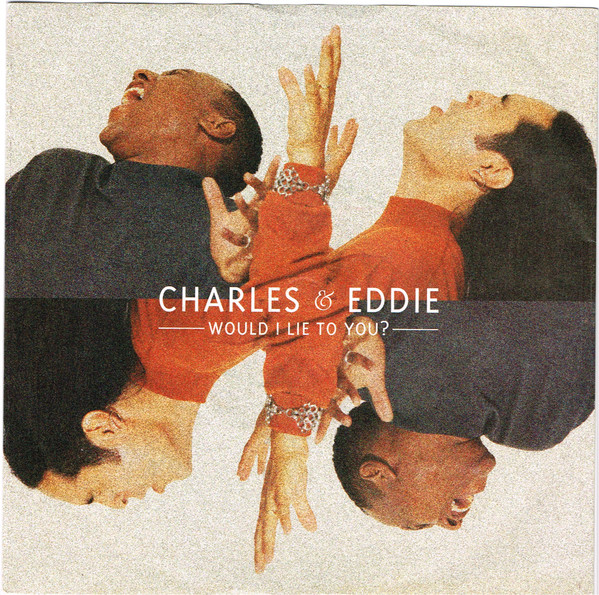
683. ‘Would I Lie to You?’, by Charles & Eddie

Well, would you look at that. We’ve literally just had the 1990’s biggest R&B/pop/soul hybrid act at number one – Boyz II Men with ‘End of the Road’ – but it turns out that they were but a warm-up act for… checks notes… the decade’s greatest soul single.

Would I Lie to You?, by Charles & Eddie (their 1st and only #1)

2 weeks, from 15th – 29th November 1992

Usually I see a great song coming, and semi-prepare what I’m going to write in advance. You don’t want to do the classics wrong, do you? But despite ‘Would I Lie to You?’ being on the horizon for a while now, and despite me being pretty familiar with it, I was caught off guard by how good it actually is.

The main reason it’s an improvement on ‘End of the Road’, is that it doesn’t go down the default drippy approach of so much ‘90s soul and R&B. The sort of slushy sentiment that Boyz II Men excelled at. No, Charles & Eddie keep things sassy and upbeat in the verses: Everbody’s got their history, On every page a mystery…  Before switching to a heartstring-tugging bridge: I’m tellin’ you baby, You will never find another girl, In this heart of mine…

And OK, the lyrics in the chorus are stock-standard love song: Don’t you know it’s true, Girl there’s no-one else but you… but they’re wrapped up in such a timeless melody that you don’t really notice. Plus, whether or not Charles and Eddie are indeed telling the truth is never established. Part of this song’s attraction, to a cynical mind like mine anyway, is that behind their honeyed voices and gorgeous harmonies they could be full of shit…

But back to that word ‘timeless’. That’s the other, even greater, attraction that this record has. It borrows the best of sixties and seventies soul, of Motown and the Temptations (and with the gospel backing, the organ and the near calypso-sounding drum break it is pretty much a soul music ‘How To…’ guide), but it still sounds perfectly placed in the early ‘90s. It’s authentic enough to stand up on its own, and to not sound like a well-intentioned pastiche. In short, it’s a brilliant record.

Charles Pettigrew and Eddie Chacon met on the New York subway in 1990, when one spotted the other carrying a Marvin Gaye LP. Which for an origin story sounds as great as it does unlikely. Members of twelve-year-old Chacon’s first band, interestingly, went on to join Metallica and Faith No More. He and Charles are, like Tasmin Archer a couple of posts previously, marked down as one-hit wonders, despite producing two studio albums, and three further Top 40 hits.

They split in 1999, with Chacon continuing to work intermittently, and he has released two well-received solo albums in the 2020s. Sadly, Pettigrew died of cancer two years after their split, aged just thirty-seven. This post then can hopefully serve as a tribute, to him, and to the greatest soul chart-topper of the decade.

682. ‘End of the Road’, by Boyz II Men

Things are getting very nineties around here: from iconic dance hits, to adult, dinner-party pop, to this… Yes, it’s time to sound the boyband klaxon!

End of the Road, by Boyz II Men (their 1st and only #1)

3 weeks, from 25th October – 15th November 1992

When I think of ‘90s boybands’, the first ones that spring to mind are all homegrown: Take That, East 17, 5ive, Boyzone (OK, Irish but still…) Yet all four of the boyband #1s that we’ve covered so far have been by Americans. And they’re getting progressively more sophisticated and mature – from NKOTB, to Color Me Badd, and now Boyz II Men. So much so that it feels slightly unfair to label these dudes as a ‘boyband’.

Except, the name, Boyz II Men, is pure ‘90s Boyband. Is there a ‘z’ in place of the ‘s’…? Check. Are there numbers and/or symbols…? Check. Is it memorably cheesy…? Check check check. Still, musically, this is a big improvement on ‘I Wanna Sex You Up’. It’s an update on the classic sixties/seventies vocal group sound: great voices, and great harmonies, with bass, tenors and baritones swooping all around one another.

If this was a one-off smash by a one-hit wonder, then I might be more effusive in praising it. It is a good record, a well-produced, well-written, well-performed pop song with a soaring bridge, and a catchy chorus: Although we’ve come, To the end of the road… It also has a great spoken word section (and intro, on the album version) in which bass vocalist Michael McCary does his best Barry White: All those times… You ran out with that other fella, Baby I knew about it…

The reason why I’m feeling a bit down on this record is because I know that this was not Boyz II Men’s only hit. And most of those other hits sound very much like ‘End of the Road’. They had a sound, and they rinsed the arse off it: ‘One Sweet Day’, ‘On Bended Knee’, ‘Water Runs Dry’… The one Boyz II Men song that I like more than ‘End of the Road’ is the preposterous ‘I’ll Make Love To You’, which basically sounds like someone doing a Boyz II Men parody.

At least in the UK this was the Boyz only visit to the top of the charts, and the first of just three Top 10 hits. Compare and contrast this with their complete domination of the Billboard charts in the mid-nineties. Two of their singles (including this one) set records for most consecutive weeks at #1. They were the first act since The Beatles to replace themselves at the top. Their five chart-toppers spent a combined 50 (fifty!) weeks at number one…

Thank God, then, for their less-fanatic British fans. They sent the band’s (second) best single to number one, for a perfectly sensible three weeks. And we can appreciate it for the fine piece of soul/R&B that it is. Plus, it was technically a Motown release, giving that legendary label its first UK #1 since ‘I Just Called to Say I Love You’ and, unless anyone wants to tell me otherwise, its last.