And she’s back. Forget Billie Piper, this is the pop comeback of the year 2000. Surely one of the biggest pop comebacks of all time?
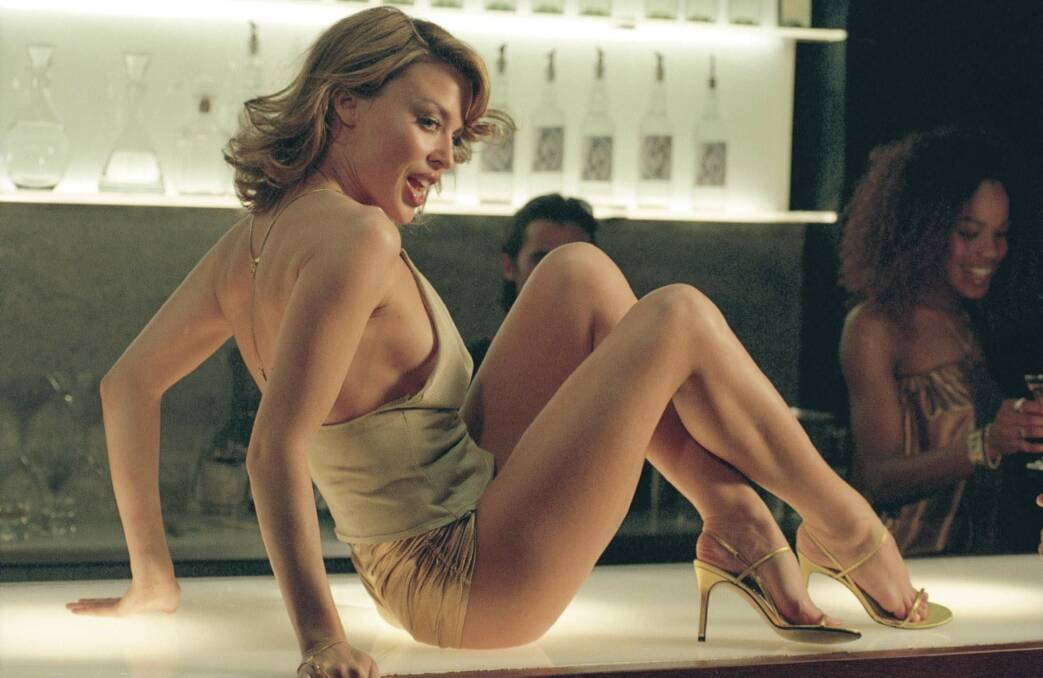
Spinning Around, by Kylie Minogue (her 5th of seven #1s)
1 week, from 25th June – 2nd July 2000
Amazingly, it has been over a decade since Kylie’s last number one (‘Tears on My Pillow’ in January 1990), and almost six years six since her last Top 10 hit (1994’s ‘Confide in Me’). Since her debut in 1988, we’ve had ‘Neighbours’ Kylie, Pop Puppet Kylie, Creative Control Kylie, Indie Kylie… and then a couple of years of silence. Was that, everyone wondered, that?
As an unashamed Kylie fan, I’m glad about what ‘Spinning Around’ did for the Princess of Pop. It brought her back, set her up for a glorious, and so far never-ending, second act. She was still only in her early-thirties here, but quite often early-thirties might as well be early-eighties for a female pop star. It was truly impressive the way she returned, with an updated yet familiar, utterly-commercial-but-critically-respected sound, as if she’d never been away. But…

As far as ‘Spinning Around’ is concerned, I’ve always found it a bit basic. A bit Radio 2. A bit hen-night in a provincial town. It’s catchy, for sure, and it’s funky bassline and sparkly synths are more proof that we’re in the midst of a disco revival. I like the middle-eight – the Baby, baby, baby… bit – but the rest of the lyrics are a whole lot of nothing, vaguely themed around this song as a comeback. I’m spinning around, Move out of my way, I know you’re feelin’ me cause you like it like this…
And let’s be honest, as reluctant as I am to reduce Queen Kylie to a mere sexual object, the one thing everyone remembers about this record are the gold hotpants she wore while writhing around on a bar top in the video. (Hotpants that were allegedly bought for fifty pence in a market, and which have since been displayed at the V&A museum.)
So the best I’ll say for ‘Spinning Around’ is that it’s a perfectly serviceable pop song which did what it had to do. Kylie was back, back, back, and free to release better songs in the coming years. Of course there’s the colossal lead single from her next album, but even the Latin-tinged ‘Please Stay’ was a better track from later in 2000, while there’s also the industrial camp of ‘Your Disco Needs You’, which really should have been a single. Still, maybe it’s just me. ‘Spinning Around’ seems to be remembered fondly, and was the first in a run of sixteen straight Top 10 hits for Australia’s highest-selling act, lasting right through until 2008. It also earned Kylie enty to a very exclusive club – the #1s in three decades club, which at the time consisted only of Elvis, Cliff, the Bee Gees, Queen, Blondie and Madonna.






 The UK Number Ones Blog