518. ‘Is There Something I Should Know?’, by Duran Duran

From Michael Jackson, past ‘Total Eclipse of the Heart’, to Duran Duran. Our head-first jump into the heart of the 1980s continues…

Is There Something I Should Know?, by Duran Duran (their 1st of two #1s)

2 weeks, 20th March – 3rd April 1983

Please please tell me now! It’s an aggressive intro, as Simon Le Bon pleads, again and again, while those trademark eighties drums blast through the speakers. In come some jangly, filtered guitars, and an insistent, galloping beat. This is a record that grabs you from the start, and doesn’t really give you a chance to decide whether or not it’s any good…

And it is a good record. After a few listens I’ve settled into it, and am spotting some cool touches. There’s a great bassline, for example, and a nice moment when, just before the choruses, everything fades apart from a pulsing synthesiser that sounds like it’s trying to send a message by Morse Code. I also like the soulful urge in the pre-chorus: With broken glass for us to hold, And I got so far before I had to say…

There are bits I’m not so hot on, though. The weird, harmonica-led ‘solo’ feels like a missed opportunity, and the line You’re about as easy as a nuclear war… jars as much in today’s world as it probably did forty years ago. I also find Le Bon’s delivery, as much as I like it in the chorus, a bit much in the verses. Although they have very different voices, it was the same with Limahl in Kajagoogoo’s ‘Too Shy’: there’s something about the new romantic style of singing that’s a bit too arch at times…

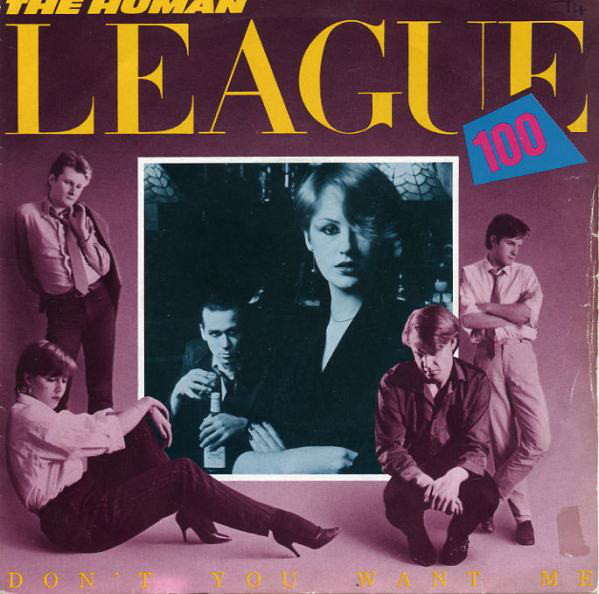
(Possibly the worst picture-sleeve yet? It looks like it’s been printed on a school jotter…)

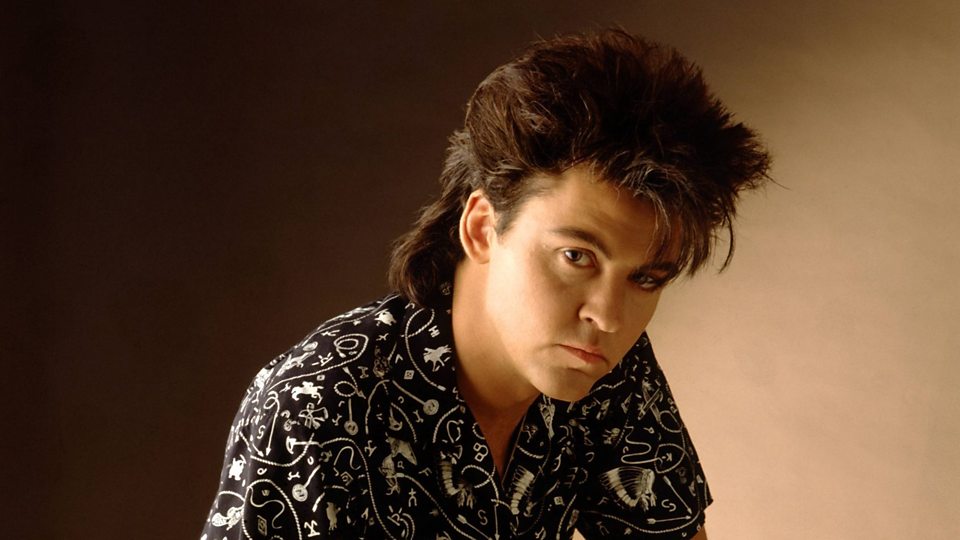
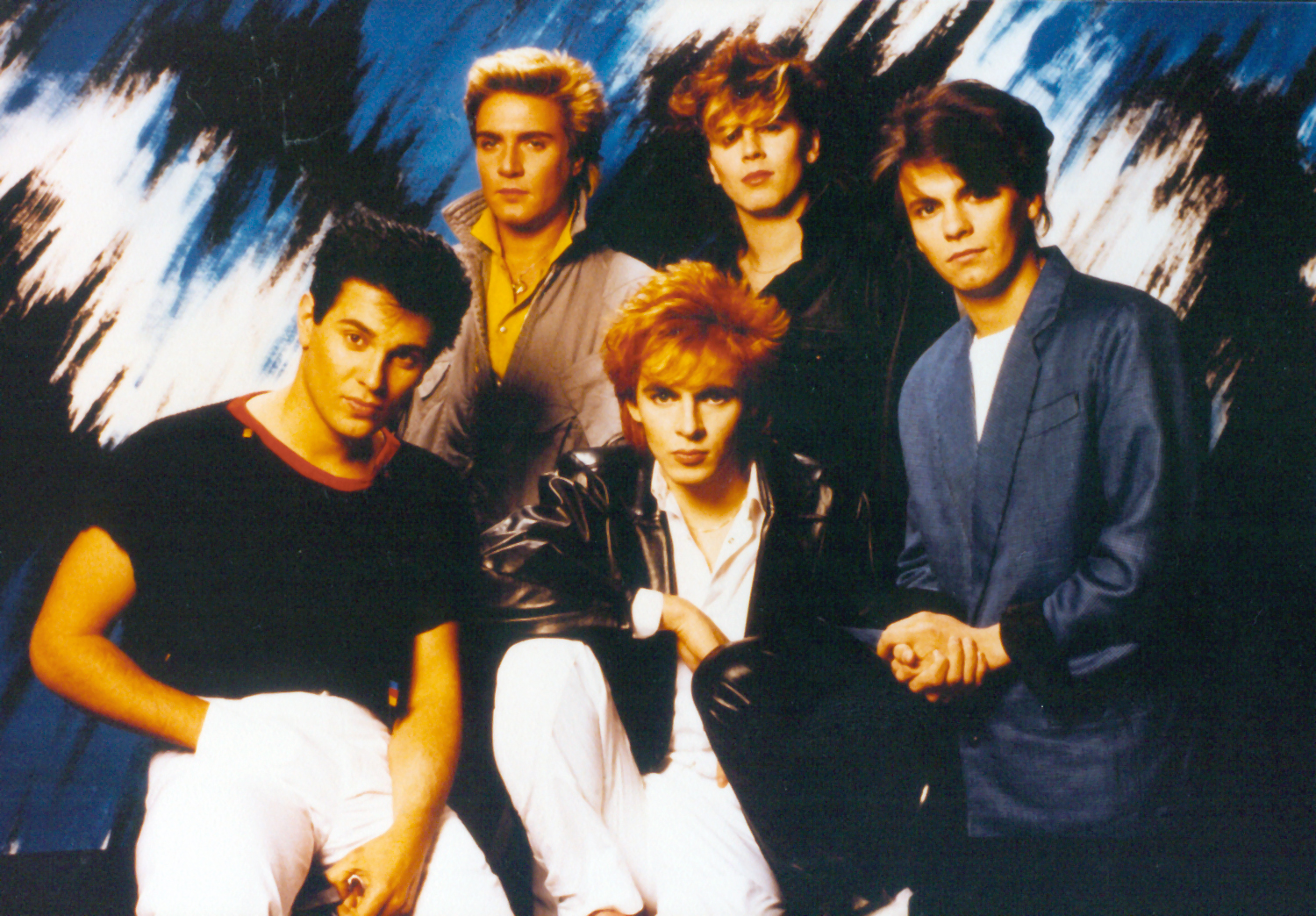
Speaking of ‘Too Shy’, that was actually the first #1 that a member of Duran Duran had a hand in: it was produced by Nick Rhodes. Duran Duran, though, had been around for a lot longer than Kajagoogoo – ‘Girls on Film’ was their first Top 10 hit in 1981 – and would go on to have many more hits. And to me, speaking as someone who doesn’t know them away from the big hits, they are probably the quintessential mid-eighties band. The poster boys of New Romanticism and the 2nd British Invasion. Brash, loud (both musically and in their fashion), and a triumph of style over substance.

But I’m here to have my mind changed on that. I like ‘Is There Something I Don’t Know?’ I don’t love it, but there’s an endearing urgency to the song that sees it through. And in entering the charts at #1, it announces Duran Duran as the biggest band in the nation at this moment (and, unlike many of the biggest British acts since The Beatles, they were about to be huge the whole world over, too…)

Advertisements

515. ‘Too Shy’, by Kajagoogoo

I think it may have arrived, the moment I’ve been anticipating for a while now… The official start of the 1980s.

Too Shy, by Kajagoogoo (their 1st and only #1)

2 weeks, 13th – 27th February 1983

This is the most eighties chart-topper yet. Everything here has been filtered through some kind of ‘80s-ifier: the synths, the electronic drums, the bass, the icy piano… And that’s before you get to the band’s hair-dos… Just look at those mullets! I really like the intro, though: the slow build up and funky bass riff. There’s also a killer, if slightly nonsensical, chorus: You’re too shy shy, Hush hush, Eye to eye…

Singer Limahl’s delivery is also very of its time. It’s very arch, very airy and knowing. I don’t want to plant the ‘New Romantic’ flag, as I don’t think Kajagoogoo were quite that, but that’s where we’re heading. The rest of this song, though…? It’s OK. The nice touches aren’t enough to cover up the fact that it’s a bit lightweight, and a bit dull in places. I’ve heard of ‘landfill indie’… Can this be ‘landfill eighties’?

While the song is fine, we have to take a moment to examine the band name. Potentially one of the worst band names in history? It’s based on the sounds babies make, apparently. Before Kajagoogoo they were known as ‘Art Nouveau’, which is the sort of name you’d give a fictional parody of a new-wave band. They weren’t around for very long. Limahl left after just two years as lead-singer, citing personality differences, and the band officially spilt up in 1985.

I do think this is a moment where any remnants of what went before have been ditched. There’s no disco here, no post-punk or soft rock. Just pure and unadulterated eighties. Even the big, decade-specific acts we’ve met so far – Adam Ant, Culture Club, Human League – didn’t have the mid-eighties glossiness that ‘Too Shy’ has. But I think we’re set now, and about to foray into the deepest depths of it.

And I have to admit that I’m making that statement not based solely on this one record – though it is very now. I’m also making it with one eye on the chart-toppers that will immediately follow. The next five number ones will feature either some of the decade’s biggest stars, or its biggest songs. Kajagoogoo’s ‘Too Shy’ is the appetiser to a giant ‘80s feast that is on its way…

504. ‘Happy Talk’, by Captain Sensible

In which ‘South Pacific’ meets punk rock meets kids party singalong…

Happy Talk, by Captain Sensible (his 1st and only #1)

2 weeks, 27th June – 11th July 1982

This is a record you can’t properly imagine until you’ve heard it. If that opening sentence left you stumped, then just go ahead and press play before reading my attempts to describe it… I know, right? It’s woozy, a bit trippy, very end-of-the-pier rinky-dink. And to be honest, I quite like it.

Happy talkin’, Talkin’ happy talk, Talk about things you’d like to do… I’ve never seen ‘South Pacific’, and so wasn’t sure how faithful this cover was. But it is pretty similar to the original showtune, with the brass and strings replaced by very ‘of their time’ synths. It reminds me, a little, of Dave Stewart and Barbara Gaskin’s wild take on ‘It’s My Party’: another classic tune done up for the early eighties. Only less unhinged.

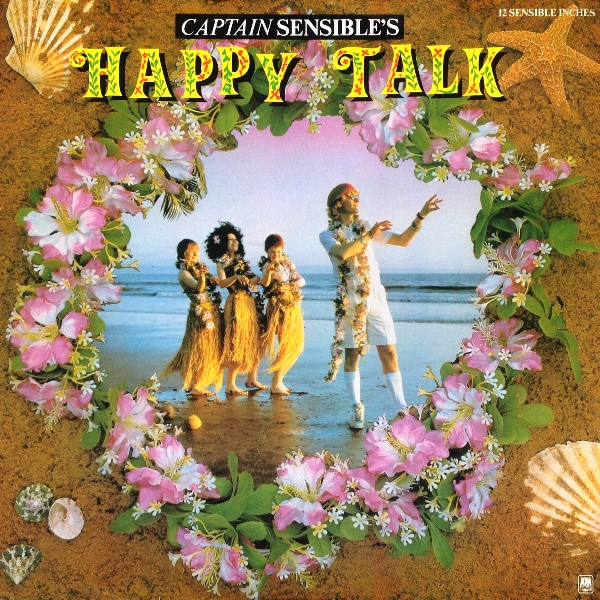
Well, slightly less unhinged. In the video, and on Top of the Pops, Captain Sensible, dressed as half pimp-half pirate, gives the impression that he is well under the influence of something a bit stronger than coffee. There’s a dancing parrot, too, and a backing girl-group called the Dolly Mixtures. You’ve got to have a dream, If you don’t have a dream, How you gonna have a dream come true?

That there is a hook I can get behind. I’m not one for motivational messages in songs, but this one can’t be argued with. No dreams = no dreams coming true. Simple. Cue the organs. It’s one of the more unexpected themes of 1981-82: chart-toppers that sound like fairground rides. ‘Ghost Town’, ‘House of Fun’, now this. Was it intentional? Or is it just that they were using cheap synths? It also calls to mind Adam Ant’s use of music hall brass from ‘Goody Two Shoes’.

Captain Sensible’s day job was as a member of The Damned (the first British punk act to release a single back in 1976) and this record featured on his first solo album. The giant shift in sound from punk to this might be explained by the fact he had become a pacifist vegetarian the year before. The punk-est moment comes when the Captain leaves a big old pause in the Golly baby I’m a lucky cu…….ss… line that has you wondering if he’s about to drop a giant ‘c’-bomb in this family-friendly single (Although you could also argue that him recording an old showtune in this novelty style is already as punk as it gets…)

I’ve said it many times before: at least make your songs interesting. This one certainly is. A harmless singalong for the kids and their grannies, that actually subverts by just existing. Captain Sensible wouldn’t have many other hits, while The Damned have reformed and disbanded several times over the years. He has also formed his own political party (the ‘Blah!’ Party), and – much more impressively – recorded the theme song for nineties snooker/quiz show ‘Big Break’.

Advertisements

494. ‘The Model’ / ‘Computer Love’, by Kraftwerk

Atmospheric, electronic, and über-cool… Ja. Kraftwerk ist da!

The Model / Computer Love, by Kraftwerk (their 1st and only #1)

1 week, 31st January – 7th February 1982

She’s a model, And she’s looking good… It has to be said, German-accented English is the perfect voice in which to deliver an electro-pop hit like this. She plays hard to get, She smiles from time to time… While this model sounds a bit high-maintenance: all champagne, nightclubs and envious glances…

A drum-machine keeps steady, deliberate time, while two or three different synths play variations of the main, instantly memorable, riff. There are not many fancy flourishes, no tricks or gimmicks, which can’t be said of some recent electronic #1s (‘It’s My Party’ springs to mind…)

There’s a minimalism to it, a precision. (It’s hard to avoid certain national stereotypes, but I’ll try…!) There’s nothing here that doesn’t need to be. It’s repetitive, certainly; but not boring. It’s a song that seduces you, just like the model in the lyrics. It’s almost lo-fi, which could have something to do with the fact that ‘The Model’ was nearly five years old when it topped the charts.

It was originally supposed to be the ‘B’-side, an older hit included to beef up the appeal of the new single, but radios started to play it and it became a double-‘A’. And it’s the perfect hit for a winter’s week: both in its frosty sound, and in how it sits alongside some very random early-year chartmates in Bucks Fizz and Shakin’ Stevens.

What of that new single, then? ‘Computer Love’ kicks off with another catchy riff – one catchy enough for Coldplay to borrow decades later – but as the record finds its groove you can feel a slightly lighter touch than the heavy, deliberate ‘Model’. There’s almost something disco in the staccato drums, and feathery high notes. It sounds more modern, more ‘eighties’ really, than song on the flip-side. (Though it had only made #36 before being twinned with ‘The Model’.)

It’s another twisted love story, but this time a computer is the object of the singer’s affections: another lonely night, another lonely night… He stares at the screen and longs for a data date. I wonder if the band had any idea, in 1981, of how prescient those lyrics would become in the twenty-first century…? Aren’t we all just staring at our screens, these days, needing a rendezvous?

I’m not enjoying this as much as ‘The Model’, though. It’s too light, too ephemeral. There’s not as much to get your teeth into here. But as a chart-topping, double-‘A’ side single, both tracks work very well. And I say that without being the biggest fan of electronic music. It feels like a moment at the top of the charts. True, it’s far from the first electronic #1, but Kraftwerk had been there from the very beginnings of the genre: forming in 1969, scoring their first hit in 1974. In many ways, they’ve been a part of all the synth-based number ones so far, from ‘I Feel Love’, to the Buggles, to ‘Don’t You Want Me’.

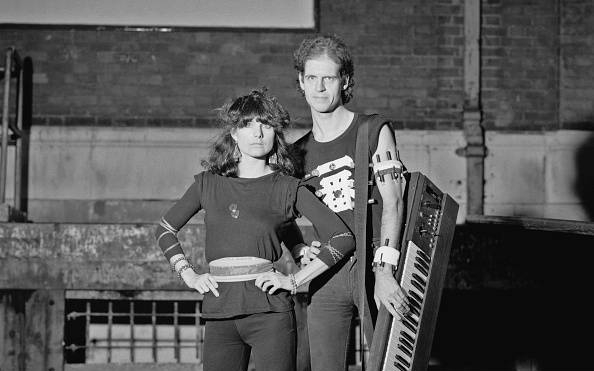
Kraftwerk were/are basically two men – Ralf Hütter and Florian Schneider (who passed away in 2020) – and a revolving cast of supporting musicians. They are notoriously reclusive, and have released one album in the past thirty-five years. They don’t have many hits to their name in the UK, this one being the only time they ever breached the Top 10. But their legacy cannot be understated. Considering how prevalent electronic music is now – how few acts don’t incorporate at least a smattering of non-analogue sounds – they have to be seen as legends. The NME has argued that while ‘The Beatles and Kraftwerk’ doesn’t have the same ring as ‘The Beatles and The Stones’, it is probably more accurate in reflecting who pop music’s two most influential bands are.

491. ‘Don’t You Want Me’, by The Human League

1981 has had its fair share of iconic chart-topping moments: Bucks Fizz’s skirt-ripping moves, The Specials’ call to arms, Soft Cell’s re-imagining of a soul classic, Mercury and Bowie going toe-to-toe… And it ends with perhaps its most iconic tune.

Don’t You Want Me, by The Human League (their 1st and only #1)

5 weeks, 6th December 1981 – 10th January 1982

For this is one of the most recognisable riffs ever, I’d say. Up there with ‘Satisfaction’ and ‘You Really Got Me’ for chart-topping riffs. It’s dramatic and ominous, yet catchy and danceable. It’s a synth riff here, but play it on a piano, a guitar, a bloody harp, and people would know it was the intro to ‘Don’t You Want Me’.

The opening lyrics are equally iconic: You were working as a waitress in a cocktail bar… a male voice intones… When I met you… It’s sung by an overbearing – ok, creepy – bloke. A Svengali figure. He found this girl, made her a star, and now she’s outgrown him. Don’t forget it was me who put you where you are now, And I can put you back down too…

In the second verse, the starlet has her say. Yes, she was working in a cocktail bar… That much is true… She tells him politely that it’s time for her to make it on her own. The male ‘character’ is so well-formed, such a nasty sounding piece of work, that you wish his female counterpart had a little more bite. Who is she? Did she really just use him? Or maybe her niceness is the ultimate insult…?

Aside from the riff, the next best bits are the lines that accelerate up to the chorus: You better change it back or we will both be sorry! This is a high-quality pop song, well worthy of being the year’s biggest-seller and a Christmas number one. But – there’s always a ‘but’ – I’m not sure if there isn’t a hint of ‘fur coat and no knickers’ about it. ‘Don’t You Want Me’ has a great riff and great hook, but on repeated listen it goes from all-time classic to simply great pop. Two years ago, Gary Numan was doing things with a synth that genuinely stood out. Now, in late-1981, synths alone are not enough to wow.

Phil Oakey, The Human League’s founder, didn’t want this released as a single, and has said in subsequent interviews that he sees the music video as a big factor in its success. And you can see why: it’s moody, noirish… dare I say, once more for luck, iconic? It’s certainly slicker and more expensive than many of the homemade looking MVs from the last couple of years, and it looks forward to a New Romantic future in the make-up, earrings and fringes. ‘Rolling Stone’ has claimed ‘Don’t You Want Me’ as the starting point for the 2nd British Invasion in the US (it hit #1 on Billboard six months after topping the charts here).

The Human League had only the one UK chart-topper, but were scoring hits well into the nineties. They still tour to this day. After I’m done writing this post, I’m going to listen to the album that birthed this hit, ‘Dare!’ to see what all the fuss us about. Maybe I’m being harsh in saying that this record lacks much substance beyond its killer riff. It’s still a great tune, but when songs come along with as much baggage and reputation as this one then I can’t help expecting great great things…

487. ‘It’s My Party’, by Dave Stewart with Barbara Gaskin

More evidence that 1981 was a leap-forward for the charts. The year in which the decade truly began. Because this, this next record, it is… truly…

It’s My Party, by Dave Stewart with Barbara Gaskin (their 1st and only #1s)

4 weeks, 11th October – 8th November 1981

something? It’s a leap-forward, for certain, because we’ve heard nothing like this before at the top of the charts. Whether we ever needed to hear anything like this at the top of the charts is another question. At its most basic level, this is a cover of the Lesley Gore hit, a #9 (and US #1) in 1963. Except the original has been deconstructed, mashed, blended, twisted and fricasseed until what is being served up is almost unrecognisable.

I’m enjoying it, at first. The intro is the best bit: woozy drums, weird far-eastern sound effects, and the Cry if I want to… line chanted like a mantra. But as it goes on, the song veers in one direction then another, then another. I count three complete changes of tone and style. No, make that four. I’m starting to feel dizzy. Can I just hand over my next WTAF award now?

Is this good? Or is it terrible? I can’t think of many records that straddle the line so completely as this. There are flashes – mainly when the charm of the original manages to shine through – where it’s really fun. But there are other times when it feels like this production is being controlled by a five-year-old banging away at the settings on their toy keyboard. Perhaps you could look at this as haute-couture music: just like nobody actually wears the clothes that come down the runway in Milan; probably nobody would listen to this by choice anymore. But the sounds and techniques used here would filter on down through the decade…

Or maybe that’s generous. Acts like The Buggles, and Soft Cell (who literally just took their version of a sixties gem to the top) have shown that you can sound ridiculously modern – emphasis on the ridiculous – and still make a great pop song. This one gets very lost along the way: there’s a moment, after the wedding bell sound effects and a theatrical gasp, when the final chorus clicks, and you can see that Dave Stewart and Barbara Gaskin had it in them to make this a great pop record. But, hey ho, it doesn’t last. Give me the sassy, swinging original over this any day. (Actually, I’ve just realised the difference between this and Soft Cell. Soft Cell lovingly re-crafted a classic; this sounds, at times, like art school students taking the piss – see the annoying way Gaskin squeals at the end of every ‘you’, for example.)

The Dave Stewart involved in this is not, as I immediately thought, the Dave Stewart of Eurythmics fame. This DS was a keyboard player and composer for various prog-rock bands throughout the seventies, before he hooked up with his former backing singer, Barbara Gaskin. Soon afterwards, they scored this huge hit, by far their biggest. They still work with one another, and have released seven albums together. And I do wonder if they chose ‘It’s My Party’ because it is such a typically old-fashioned, bubblegum hit, and the re-imagining is therefore so shocking. A few years later they tried to repeat the trick with a version of ‘The Locomotion’ that only made #70.

I still don’t really know what to make of this one, even after repeat listening. It is certainly something… Is it avant-garde, or just dumb? Impressive, or unlistenable? I can’t help thinking of that quote from ‘Jurassic Park’: they were so preoccupied with whether they could, they never stopped to think if they should…

For the first time in a while… A #1 that is missing from Spotify…

485. ‘Tainted Love’, by Soft Cell

Compare and contrast, if you will, this next #1 with our last. ‘Tainted Love’ has the same instruments, is in the same basic genre as ‘Japanese Boy’, but how different it sounds…

Tainted Love, by Soft Cell (their 1st and only #1)

2 weeks, 30th August – 13th September 1981

It’s a collection of synthesised beats and sound effects, intricate but minimalist, and it sounds thrillingly futuristic. One of the sounds – the poink poinks, you know the high-pitched ones that contrast with the lower dun duns, the ones the song fades ends on – always make me think of a life-support machine. In actual fact, they sound nothing like a life-support machine (though Intensive Care wards would be a much more fun place if they did). It’s strange how music can put images into your head.

Sometimes I feel, I’ve got to, Run away… It’s a tale of a toxic relationship, about a lover who needs the tears and pain of their partner, and the singer’s escape from their tainted love… Don’t touch me please, I can’t stand the way you tease… It’s a cover, of course, of a 1964 release by Gloria Jones that failed to chart. A cover of a cover, even, as Jones had re-recorded it in 1976, with the help of her boyfriend Marc Bolan, though it still failed to chart.

And it’s a great cover version. Soft Cell take the original, strip down all the sixties froo-froo and do it up in an early-eighties style. It’s like seeing an old building renovated in a much more modern fashion, but with the walls all in same place, the support beams still running across the ceiling. They take the song in a completely new direction (a direction semi-influenced by Jones’s re-recording), though to most listeners at the time it would have been brand new. It’s sexy, it’s abrasive, it’s very, very now.

By the end, the singer is having second thoughts about giving up on this relationship. Touch me baby, Tainted love… he urges. It might be wrong, he thinks, but it feels so right. Meanwhile the music video is very much in the ‘anything goes’ spirit of the early-MTV age: there are cricketers, Greek Gods, Regency-dressed women, suspicious looking children…

Actually, what I thought was the video – the one I’ve seen several times before, in which a man writhes on a bed and Marc Almond sings among the stars – is actually the video for the 1991 re-recording, which seems to have now usurped the original. One thing I do notice, as great as this strange, sexy record is, Almond’s voice lets it down slightly. It strains at times, and is slightly flat at others. He sounds much better a decade later, on the re-recording.

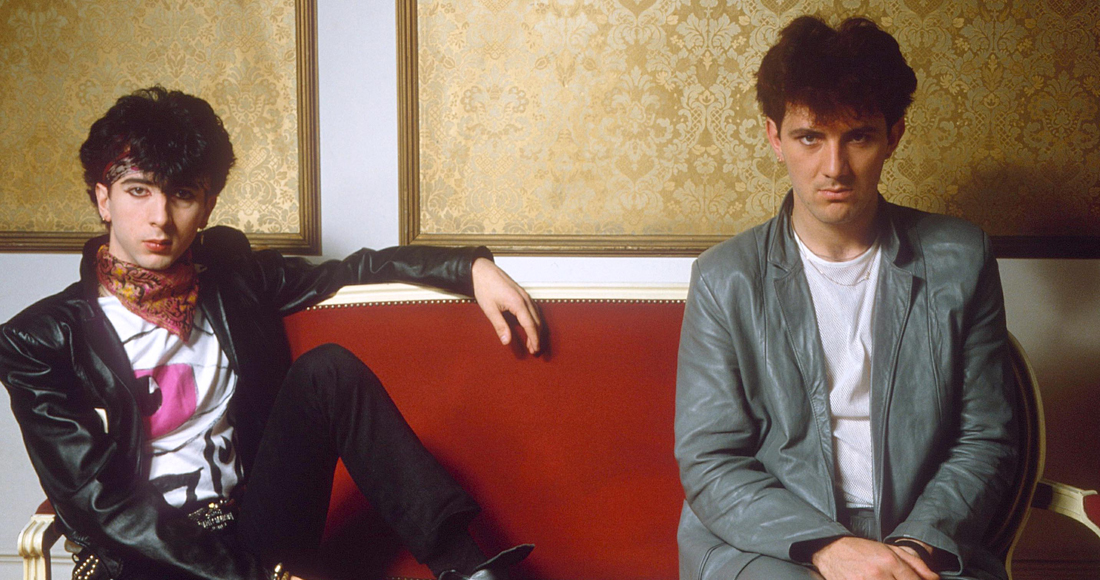
Soft Cell were another early-eighties act that burned brightly but briefly. They had a handful of other Top 10s before Almond and his sidekick Dave Ball went their separate ways. They won’t re-appear on this countdown (though Almond will, eventually) And, carrying on the fine tradition of covering and re-recording the life out of ‘Tainted Love’, Marilyn Manson scored his (their?) biggest UK chart hit when his/their Industrial-metal version reached #5 in 2002. I can’t think of many songs that I love in three different versions; but ‘Tainted Love’ is one.

Before I go, and seeing as this is my last post for 2021, I’d just like to wish all my readers, followers, likers and commenters a very Happy New Year! See you all in 2022, as we push on through the eighties!

484. ‘Japanese Boy’, by Aneka

This week, we’re off to discover the mysteries of the Orient… The opening chords sound like the famous intro to ‘Kung Fu Fighting’ remixed, a cheap sort of way to show we’re not in Kansas anymore. All that’s missing is a huge gong being banged…

Japanese Boy, by Aneka (her 1st and only #1)

1 week, 23rd – 30th August 1981

Then in comes a driving synth riff with a familiar rhythm and tempo… Disco’s back (again!) baby, for a week at least. It’s a toe-tapper, for sure; the sort of record you can’t help dancing to, even if you don’t really want to. And you may well not want to dance to this because, let’s be honest, it’s a bit naff…

He said that loved me, Never would go, Uh-oh, Uh-oh… Aneka’s been left all alone. Her happy home’s been broken up. Mister can’t you tell me where my love has gone, He’s a Japanese boy… Meanwhile a very tacky tick-tock effect keeps time, and there are the same ‘pew-pews’ from Kelly Marie’s ‘Feels Like I’m in Love’. Maybe the two songs were recorded in the same studio? I feel strangely proud that two of the early-eighties’ trashiest (and catchiest) #1s were Scottish.

For yes, no matter the, um, chopsticks in her hair. No matter how convincing she looks in a kimono. Aneka is not, brace yourselves, actually Japanese. Her real name is Mary Sandeman, and she’s from Edinburgh. You can look at it two ways: it’s a white woman singing in a high-pitch, pretending to be a geisha. While you could argue that she usually sang in a high-pitch (she did), the video below in which she bows and dances like an obedient courtesan does look a bit iffy these days…

Or you could look at the positives. It’s a white woman who’s been dating, maybe even marrying – definitely sexualising – an Asian man, in 1981. Something that Hollywood still gets stick for not doing enough of thirty years later. Is ‘Japanese Boy’ both incredibly progressive and incredibly backwards…? Or is it just a silly disco hit that doesn’t deserve either weighty tag?

I have to admit I’m enjoying this. It’s a musical Big Mac – lacking in any sort of proper sustenance, every verse, chorus and chord change signalled a mile off, but completely hitting the spot. And it seems that Europe agreed wholeheartedly that summer – it hit #1 from Ireland to Switzerland. One place that didn’t agree was Japan. All the ‘Kung Fu Fighting’ bits I mentioned in the intro…? Japanese record labels thought they sounded too Chinese (which they obviously are), proving yet again that Westerners struggle to differentiate anything east of India.

This was Aneka’s one and only hit (the follow-up made #50) and she’s pretty much disowned it these days, refusing offers to do oldies shows. The most bizarre thing about this whole story is that Mary Sandeman is actually a well-respected Scottish folk singer. The follow-up album to this Japanese excursion was titled ‘Reflections on Scotland’. Even the ‘B’-side to this very smash hit was a cover of Robbie Burns’ ‘Ae Fond Kiss’. ‘Japanese Boy’ was her one attempt at something different… and it ended up being a chart-topping single, written about in WordPress blogs decades later. That’s life.

444. ‘Video Killed the Radio Star’, by The Buggles

First up today, I’m going to christen 1979 as not only the best year of the decade for chart-topping singles, but also ‘The Year of the Piano Intro’. We’ve had Gloria Gaynor’s iconic flourish, The Boomtown Rats’ mini rock opera, and now this. A synth piano announcing that: this, this is going to be interesting…

Video Killed the Radio Star, by The Buggles (their 1st and only #1)

1 week, from 14th – 21st October 1979

I heard you on the wireless back in ’52… The singer reminisces about a simpler time, when music had a human touch. ‘Music was better in my day…’ Except, the twist is, this is a pretty avant-garde, electro-pop song. Exactly the type of music the lyrics complain about. Or are they complaining at all? Are they instead mocking people with nostalgic views on music…? Pictures came and broke my heart, Put the blame on VCR…

The lyrics, though, are not the first thing that slaps you around the chops when you hear this record. Like Tubeway Army, it is almost aggressive in its desire to sound like the future, though with a very different, perkier sound. I saw it described it as an ‘extended jingle’, which is pretty perfect. Even the two voices, a bubblegum girl and a morose lead, are filtered through various effects.

I like this, it’s fun, it’s a classic… But I can’t shake the feeling that it’s a little showy. That some bits – the noodley synth flourishes and the aww-ah-oh fills – are a bit much. It took, apparently, three months to record and, again in another link to Tubeway Army, was inspired by a sci-fi story, this time by JG Ballard. Still, they reign it in for the iconic, driving chorus: Video killed the radio star… In my mind and in my car, We can’t rewind, We’ve gone too far… It’s a bit Queen, a bit Sparks, and more than a bit unique.

The Buggles were a duo, Trevor Horn and Geoff Downes. Horn in particular had been around the music biz for a while, producing jingles among other things. ‘Video Killed the Video Star’ was their first and by far their biggest hit, though they’re not quite one-hit wonders. Horn certainly isn’t, he was lead-singer of Yes for a year or so before becoming a full-time producer. His fingerprints will be on several future number ones, well into to the 2000s.

What many won’t know is that this wasn’t the first recording of ‘Video…’ Horn and Downes had originally written it with Bruce Wolley, who released a still-interesting but slightly more one-dimensional version in 1978. What many will know is that this was the very first record to be played on MTV, on 1st August 1981. Which is cute, I guess, but led me to believe for many years that this was the first ever music video (which is nonsense, they’ve been around since the ‘60s). It also led me to believe that this song had been released in the ‘80s. It seems a bit strange to me that a brand-new, impossibly modern channel like MTV would launch by playing a near two-year old song, regardless of the apt lyrics. But then again, the 6th video played on MTV was ‘We Don’t Talk Anymore’, by Cliff Richard. Perhaps they weren’t going for ‘cutting edge’.

Finally, it’s worth noting that after decades of having to publish every one of my posts with those boring, stock-standard record-label sleeves… The age of the picture sleeve is upon us! Most of 1979’s chart-toppers seem to have had glossy (!), colourful (!) sleeves with pictures of the actual recording artists (!) Just like LPs! What on earth took them so long? While punk has to take the credit for the wild variety of sounds in this new-wave era; I’m giving disco, and the genre’s love for the 12” remix, the credit for sending pop music into technicolour. Just in time for a new decade…

442. ‘Cars’, by Gary Numan

Gary Numan returns to the top of the singles chart, after doing so alongside his Tubeway Army a few weeks back, with another outsider anthem.

Cars, by Gary Numan (his 1st and only #1)

1 week, from 16th – 23rd September 1979

Here in my car, I feel safest of all… He’s locking the modern world away behind four doors and a boot. It’s the only way to live, In cars… It’s another memorable electronic riff: still clanking and industrial, but a little perkier than ‘Are ‘Friends’ Electric’, poppier even. Numan’s vocals are have lost the conversational tones of his earlier #1, and are full-on Kraftwerk-robot chic.

Here in my car, I can only receive… Is this, maybe, a little bit of a novelty? Is Numan hamming up the extra-terrestrial image he had seen grow around his live performances of ‘Friends’? I don’t know – perhaps that feels harsh. He was inspired to write this song after some unsavoury types had tried to drag him from his car… Had ‘Cars’ come first then maybe it’d sound just as ground-breaking. But… if you were to write a piss-take of a song by Gary Numan, it might sound a lot like this record.

As in ‘Friends’, there are variations on the main riff throughout the song. One is the grinding, clanking trip through a car factory without noise-cancelling headphones. One is a high-pitched counterpoint to this; that one sounds as if you’re speeding down a motorway at night. And then there’s the disco bit, the riff that reminds me of ‘Funkytown’, by Lipps Inc (which wasn’t released until November ’79 – maybe they’d heard ‘Cars’ while recording…)

This record is actually two-thirds instrumental. Once Numan has intoned his way through three verses (no choruses here), the synths take over and you just got to let them wash over you, man. I want to like this more; but with each listen I find my attention wandering by the end. Who am I to judge, though? ‘Cars’ has charted three times in the UK, and remains a staple of adverts, Best Ofs, and Numan’s live shows to this day. And it’s certainly a fine addition to the rich tapestry that is 1979’s chart-toppers.

This is credited to Numan, solo, but still features half of the Tubeway Army on the record. You could argue that both of his quick-fire #1s could be credited to either Numan or his Army, but hey. He remains active to this day, a synth pop legend, and many of the acts who will make this the sound of the early eighties owe him a debt. And if that’s not cool enough for you, how about the fact that, after helping invent synth-pop, he got his pilots’ license and set up own airline, Numanair, in 1981…