751. ‘Breathe’, by The Prodigy

Post-recap, we delve into the next thirty. And it’s a very strong start to the next bunch: more headbanging nastiness from The Prodigy.

Breathe, by The Prodigy (their 2nd and final #1)

2 weeks, from 17th November – 1st December 1996

Is ‘Breathe’ better than ‘Firestarter’? Or is it just more of the same thing? Not that more of the same thing, when the thing in question is ‘Firestarter’, is a bad thing, but still… It’s definitely built around the same foundations: a Drum and Bass beat, a heavy riff, a distinctive sample (that sounds to me like someone throwing nunchuks around), and some pretty aggressive lyrics.

Come play my game… growls Keith Flint, like the villain in a particularly twisted fairy-tale. Inhale, Inhale, You’re the victim! responds rapper Maxim, who also gets the song’s best line: Psychosomatic! Addict! Insane! As with ‘Firestarter’, the lyrics are kept to a minimum, but it seems to be a panic attack set to some Big Beats. The video, featuring lots of creepy-crawlies, darkened rooms, and crazed gurning through holes in walls, certainly emphasises this.

I’d say that if it does pale in comparison with the Prodigy’s previous single, it’s because it lacks the shock factor. Would ‘Breathe’ have been the one that got the tabloids in a tizz, and be better remembered today, if it had come first? Or is it a shadow number-one, that wouldn’t have made it without the controversial predecessor? It’s certainly even heavier than ‘Firestarter’, and less commercial sounding, meaning that it really stands out as one of the angriest, most brutal chart-toppers the UK has ever had.

Again, the song was built around a couple of eclectic samples: a drum fill from Thin Lizzy, and ‘whiplash swords’ (AKA the nunchuks) from the Wu-Tang Clan. It was the 2nd single from the massive ‘Fat of the Land’ album, but it gets overshadowed by the songs released either side of it. Following this came the still-controversial ‘Smack My Bitch Up’, which some say glorified drug use and domestic violence.

But if ‘Breathe’ is overshadowed, then it’s to the song’s benefit. It remains fairly fresh, and still packs a big old punch through your headphones. And whether or not it is better or worse than ‘Firestarter’ is beside the point, really. I’m just glad the Prodigy have been around to add some nasty, punk energy to the top of the charts for 1996.

After this the band took a break for several years, before releasing their fourth album in 2004. They have been putting out new music fairly regularly ever since, though the only consistent member has been founder Keith Howlett, and they scored their most recent Top 10 hit in 2009. Keith Flint, who had struggled with depression and addiction over the years, was tragically found to have hanged himself in 2019.

747. ‘Setting Sun’, by The Chemical Brothers

There’s no doubt that ‘Firestarter’ was the big, banging dance-rock crossover hit of 1996; but that song’s infamy probably means that it has unfairly overshadowed the year’s other big, banging dance-rock crossover hit…

Setting Sun, by The Chemical Brothers (their 1st of two #1s)

1 week, from 6th – 13th October 1996

Because ‘Setting Sun’ hits even harder than ‘Firestarter’, and it hasn’t been tamed by years of ubiquity. I hadn’t heard it properly for ages, and was genuinely taken aback by how nasty it sounds. Take the relentlessly monotonous, boldly uncommercial, one-minute long intro for a start. These are big beats with a capital ‘B’.

The shrieking klaxons and the gut-dropping bass hold the track together, and are very nineties. But in the droning sitar, and the vocals played in reverse, there’s also more than a nod to the original tape-looping, Eastern-looking, psychedelic game-changer: the Beatles’ ‘Tomorrow Never Knows’. At one point lawyers looked like getting involved, before a musicologist was brought in to prove that the song was merely inspired by, and didn’t sample, The Beatles. The fact that it was used as a template for a dance track thirty years later surely just proves how incredibly ahead of its time ‘Tomorrow Never Knows’ was.

And what could be more Beatlesy, back in 1996, than to have Noel Gallagher on vocals? Uncredited, and filtered through layers of feedback, but still recognisable from the off, he even manages to rip-off his own lyrics from ‘Half the World Away’… You said your body was young but your mind was very old… And I have to say that this is probably the best #1 single that he features on, as much as I do enjoy many of Oasis’s chart-toppers.

Other brilliant moments include the intense break half-way through, which sounds like a helicopter landing on your head. (I was going to call it the ‘middle-eight’ but I don’t think traditional terms like that apply to boundary pushers like this.) And then there’s the completely unhinged outro, in which the song disintegrates before our ears. The video I’ve attached below is the radio edit, but it’s worth hearing the full five and a half minute version, to drag out the exquisite nastiness…

Another thing that’s interesting about this record is that, unlike The Prodigy when they unleashed ‘Firestarter’, The Chemical Brothers had only a couple of minor hits to their name before ‘Setting Sun’. According to most sources, airplay was limited too. So it seems to have been a genuine underground, word of mouth smash (with Noel G for added clout) that set the duo up to become one of the biggest dance acts of the late-90s and early-00s.

The Chemical Brothers (yet again, like the Walkers, the Righteouses and the Outheres, they are not actually brothers!) had met at the University of Manchester in 1989, and had bonded over their love of rave culture. There can be few chart-topping DJs with a degree in late-Medieval history, but the Chem’s Ed Simons is one. They have one further chart-topper to come, but it will have to go some to match the power of this.

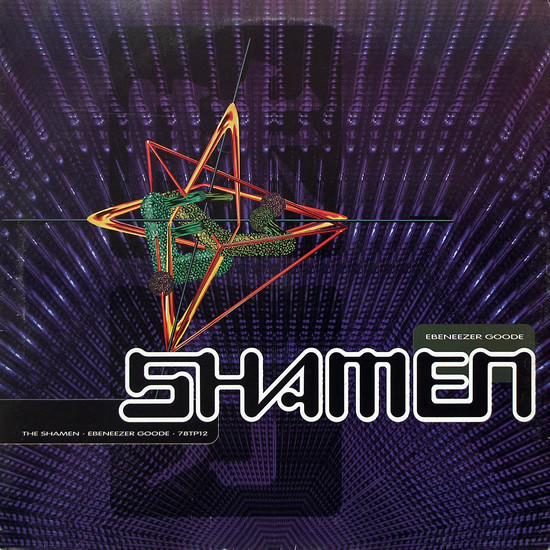
680. ‘Ebeneezer Goode’, by The Shamen

Hot on the heels of ‘Rhythm Is a Dancer’ comes another ‘90s dance classic…

Ebeneezer Goode, by The Shamen (their 1st and only #1)

4 weeks, from 13th September – 11th October 1992

And as magisterial as Snap!’s track was, ‘Ebeneezer Goode’ represents the flip-side of dance music in the early years of the decade. Aggressive and in-your-face, the opening voiceover sets the tone: A great philosopher once wrote… Naughty, naughty, Very naughty…. And off we go, cackling like Sid James…

Since forever, pop music and drugs have gone together. Sex and drugs and rock and roll, and all that. But no genre has ever been quite so entwined with illegal substances as electronic dance, and with one Class-A substance in particular. So when a track comes along by one of the big dance acts of the day, shamelessly celebrating said drug, and getting all the grown-ups’ knickers in a twist at the same time, you know it’s going to be a big old hit.

The clever bit here (I was going to use the word ‘genius’, but I think that would be stretching it slightly) is that the drug reference isn’t immediately obvious. ‘Ebeneezer Goode’, you might think, sounds like a character invented by Charles Dickens. Eezer good, Eezer good, He’s Ebeneezer Goode… A silly novelty song, parents around the country might have thought, as they heard it blaring from their teenagers’ bedrooms. Harmless nonsense. But, wait…

And like the teacher who’s twigged on far too late that the class is having a joke at their expense, the parents realise that the chorus could just as well be saying ‘E’s are good, ‘E’s are good… ‘E’s as in Ecstasy… And look, the song’s at number one already. It’s not big, and it’s not clever, but it is pretty amusing. Very naughty indeed…

But amid all the innuendo, the guffawing and the gurning, this is still a banger. The joke would have worn very thin, very quickly, if this wasn’t a good pop tune. I don’t think it’s quite up there with ‘Rhythm Is a Dancer’, and I don’t think you’d want to hear it all that often, but it’s a lot of fun. And it’s a significant number one because rave culture isn’t really represented at the top of the charts, despite being one of the big musical movements of the day, and while this is diluted, poppy rave, and it lost the Shamen a lot of ‘hardcore’ fans, it still counts.

It’s also, despite the modern sound, a treasure trove of peculiarly British references. We’ve got rhyming slang, and a shout-out to Vera Lynn, of all people: Anybody got any Vera’s…? Lovely… (‘Vera Lynns’ being rhyming slang for ‘skins’, which people used to mix cannabis and ecstasy) and a reference to ‘Mr Punchinella’ AKA Mr Punch from ‘Punch & Judy’. While  in the second verse there’s even a bit of sensible advice: But go easy on old ‘Eezer, ‘E’s the love you could lose… Pop pills responsibly, kids.

The BBC, always up for a good banning, initially refused to air the song, but relinquished when it became a huge hit. Hilariously, the week that ‘Ebeneezer Goode’ climbed to number one was the Corporation’s ‘drug awareness week’. On TOTP the band changed some of the lyrics, including adding a reference to ‘underlay’, which they explained as a ‘gratuitous rug reference’. Boom and indeed tish. It was far from the first hit song to reference an illegal substance – The Beatles were doing it twenty-five years earlier – but few had done it quite so shamelessly.

The Shamen were a Scottish band, formed in Aberdeen in 1985, and had been around since the very earliest days of house music. They started out making psychedelic pop, before moving to a more electronic sound. This wasn’t their first Top 10 hit, but it was so unexpectedly huge that the band decided to delete it while it was still on top of the charts, so that it wouldn’t come to define them. Sadly, though, it still did, and their hits grew smaller and smaller until they split in 1999. But, as founding member Colin Angus says, ‘Uncle Ebeneezer is still looking after me to this day.’ Whether he’s still dropping MDMA, or he’s talking about royalties, I do not know, but it seems fitting to end this post on a double-entendre.

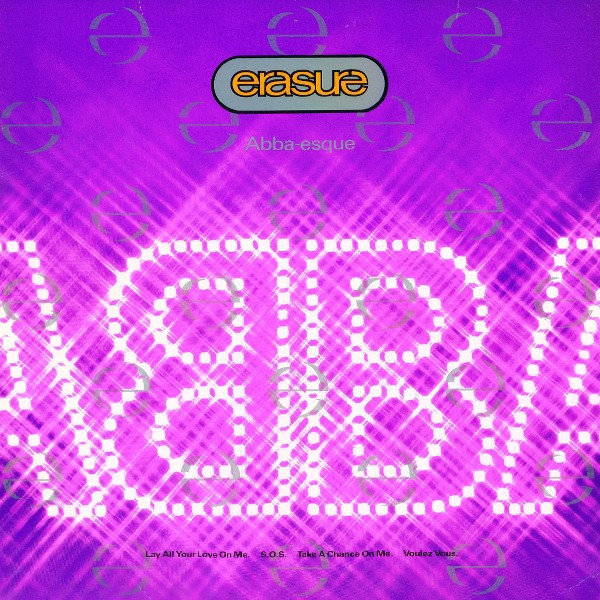
677. ‘ABBA-esque E.P.’, by Erasure

Can there be anything camper than Erasure covering ABBA? How about Erasure recording an entire E.P. of ABBA covers, and called it ‘ABBA-esque’?

ABBA-Esque (E.P.), by Erasure (their 1st and only #1)

5 weeks, from 7th June – 12th July 1992

ABBA scored nine #1s between 1974 and 1980, making them at this point in time the fifth most successful chart-topping act (behind Elvis, the Beatles, Cliff, and The Shadows). But luckily, three of the four tunes Erasure chose to cover didn’t make top spot originally. Starting with, perhaps, ABBA’s greatest non-number one single…

I’m not sure which was the ‘lead’ single from the E.P. – I get the feeling it was track three, but they made videos for all of them – so I’ll go through them in order. We kick off with ‘Lay All Your Love on Me’, which was only ever released by ABBA as a 12” single. It’s the most faithful cover of the four, with the mood and tempo kept, and just the instrumentation updated to a post-SAW, Hi-NRG style. I love that they don’t change the pronouns in the lyrics, as most acts do when covering a song originally sung by a different gender, and we’re treated to Andy Bell asking how a grown up woman can ever fall so easily…

Of the four, I don’t think I’d ever heard their take on ‘S.O.S.’ before. And, of the four, it’s my least favourite. ‘S.O.S.’ is an important song in the ABBA canon: the song that extended ABBA’s career beyond simply being Eurovision winners; a genuine rock classic beloved of Ray Davies, Pete Townshend and The Sex Pistols. This over-processed take, though, fails to capture the soaring joy that can be found in the when you’re gone, how can I even try to go on… line in the original.

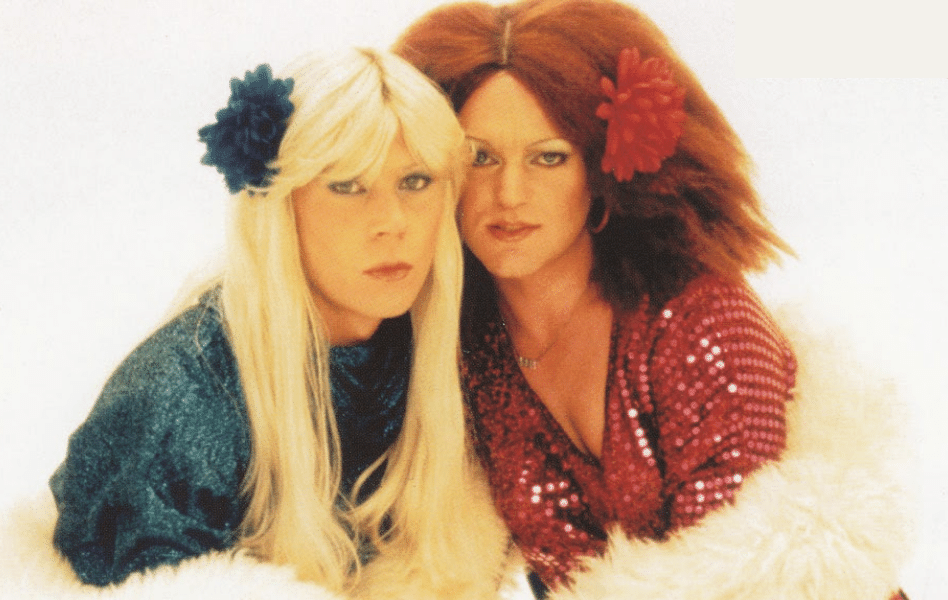
Track three then, and the one that represented this E.P. as a whole. ‘Take a Chance on Me’ was an ABBA chart-topper, back in February 1978. It’s an improvement on ‘S.O.S.’, but they’ve gone moodier than the original. They’ve also gone very early-nineties and added a ragga-style rap, or toast, by one MC Kinky. It’s a bold move, but then by this point in the E.P. maybe they were thinking it might have started to feel a bit by-the-numbers. It certainly shakes things up. The video for ‘Take a Chance…’ is the highlight of the entire project: Vince and Andy pout, gurn and flirt with one another, both as themselves and in drag as Agnetha and Frida. I’m sure it was done lovingly, but I do wonder what the ladies thought…

We end on what is probably my favourite of the four: a pounding, throbbing, techno-take on ‘Voulez Vous’. The intro, in fact, isn’t a million miles from something you’d hear at a hardcore rave. Here Erasure succeed in completely updating disco-era ABBA to a 1992 sound, which is testament either to the strength of their interpretation, of Benny and Björn’s songwriting, or maybe both. (‘Voulez Vous’ also includes some of my personal favourite ABBA lyrics: I know what you think, The girl means business so I’ll offer her a drink… and We’ve done it all before, And now we’re back to get some more, You know what I mean…)Years later, a fifth cover – ‘Gimme! Gimme! Gimme!’ – was added to the E.P., but as it wasn’t around when this topped the charts I won’t bring it up.

Are any of the four covers better than the originals? No, of course not. But that doesn’t mean that this wasn’t a worthwhile exercise. For a start it got Erasure an overdue #1, after almost a decade of releases and twelve previous Top 10 hits. But even better than that, it started The ABBA Revival.

It seems strange to say in 2023, but even I can remember a time when ABBA weren’t the world’s most beloved band. By the late-eighties they were a punchline, an embarrassment, records to be hidden under the bed rather than publicly displayed. Erasure unashamedly covering four of their hits, allowing kids to discover them and adults to remember just how good ABBA had been, started us down the road to ‘ABBA Gold’ (which was released later in 1992) becoming one of the biggest-selling albums of all time, to ‘Muriel’s Wedding’, to the ‘Mamma Mia’ stage show and films, to the band’s holographic comeback. As a ‘thank you’, ABBA tribute act Björn Again (who in 1992, believe it or not, opened for Nirvana – Kurt Cobain being another factor in the ABBA-naissance) released ‘Erasure-ish’, with covers of ‘A Little Respect’ and ‘Stop!’

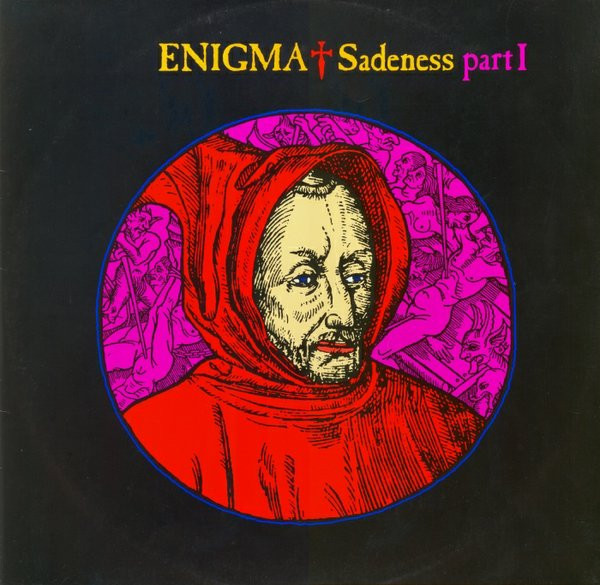
657. ‘Sadeness Part 1’, by Enigma

If we thought that Iron Maiden scoring a heavy metal #1 was unexpected, then it seems positively mainstream compared with the intro of our next chart-topper.

Sadeness Part I, by Enigma (their 1st and only #1)

1 week, from 13th – 20th January 1991

For how about some Gregorian chanting (in Latin, of course) to kick off 1991? Chanting that is mixed with a chilled-out dance beat, and then replaced by some electronic pan pipes. It’s the culmination of the new-age vibe that’s been infiltrating pop music over the past few years – think Enya, Simple Minds, even recent Cliff – and it means that this record sounds highly innovative and unusual; and yet truly dated.

A bit later a crunchy guitar comes in, while a woman mutters breathily in French, reminding me of Serge & Jane. These are the moments that lift this record above being something you’d hear in the background as someone performs an aromatherapy massage. I do like the drop, the do-doop-de-doo fill, too. It’s way beyond my usual wheelhouse – I have a deep distrust of anything that could feature in a ‘chillout’ playlist – but there’s enough going on here, a lot even, to keep things interesting.

The lyrics, such as they are, appear in Latin and in French. And if you were thinking a song this weird couldn’t possibly have banal lyrics about love and laughter then you’d be correct. It’s written in the form of an address to the Marquis de Sade (hence the title), the notorious 18th century French author and libertine responsible for some of the most outrageously explicit writing in history. (As an aside, I studied literature at university, and the only time we received a content warning, and were allowed to skip a text if we felt uncomfortable, was as we were about to read Sade’s ‘Justine’. There’s a reason the man gave his name to the term ‘Sadism’…) Anyway. Sade tell me, What are you looking for…? the song asks. Sade, are you evil or divine…?

I’m loath to label this as ‘not good’. When it comes to writing these posts, a record featuring chanting monks and pan-pipes, about a notorious sex-offender, is certainly more interesting to write about than your average dance hit. And it’s amazing how sophisticated dance music has become in the past couple of years, since the Hi-NRG heyday of SAW, and how quickly things have chilled out. But at the same time. ‘Sadeness Part 1’ isn’t something I’d ever incorporate into my daily playlists.

Enigma were a German ‘musical project’, helmed by German-Romanian producer Michael Cretu, and this was their breakthrough hit. And what a hit: number one across Europe, and Top 5 in the US. They struggled to match this success until the lead single from their second album, ‘Return to Innocence’, made #3 three years later. That record ditched the monks and went for more ethnic, tribal chanting.

Since then, Enigma have continued to record without particularly bothering the charts, including a 2006 concept album based on an imagined collision between the Milky Way and Andromeda galaxies. Because why not? Cretu’s greatest moment may have come long before Enigma and his championing of world music, though: he played keyboards on Boney M’s 1978 #1 ‘Rivers of Babylon’

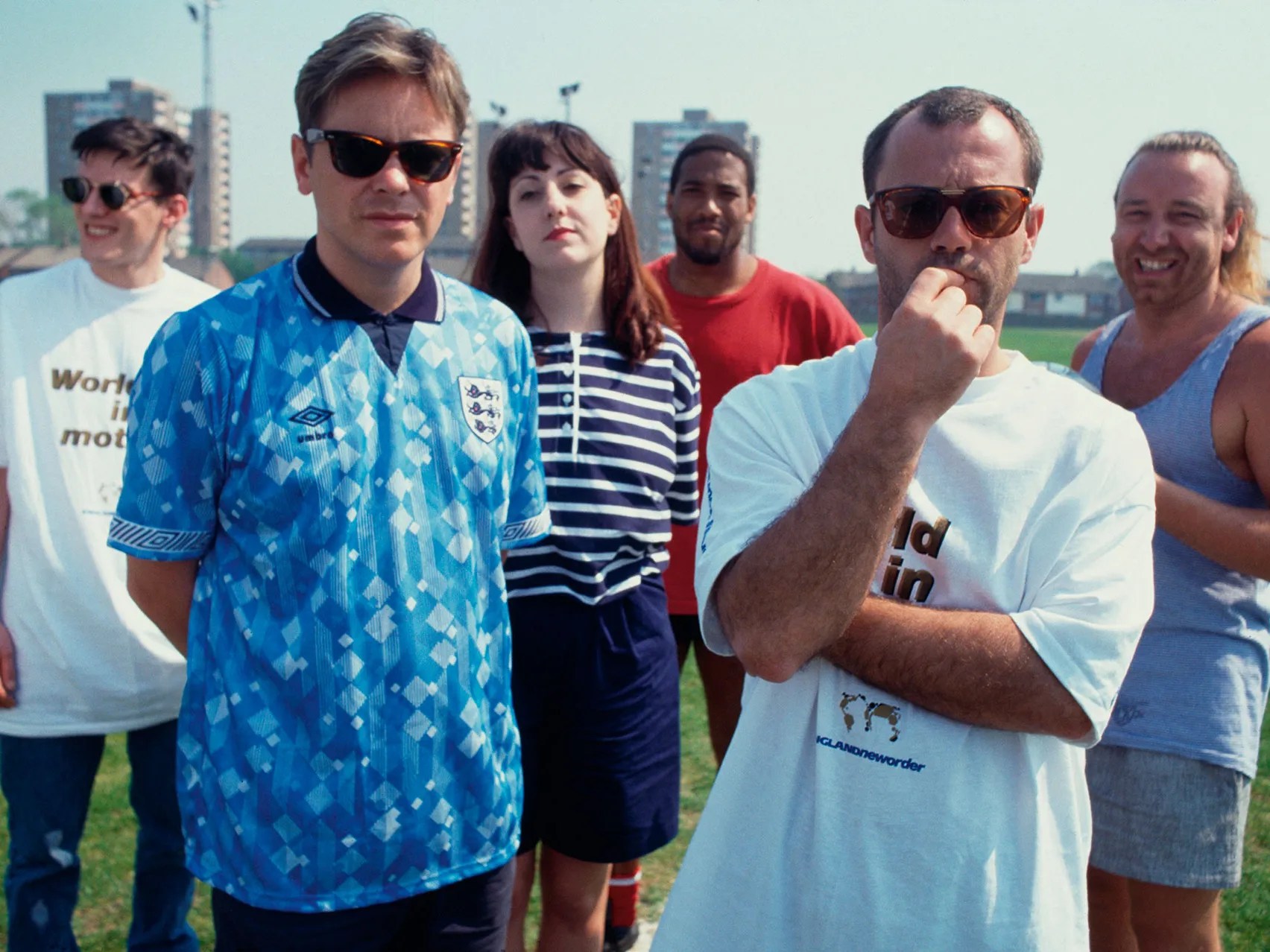
646. ‘World in Motion’, by ENGLANDneworder

Ah yes. It’s that time again in which I, a Scot, have to write about the English National Football Team, and attempt impartiality…

World in Motion, by ENGLANDneworder (New Order’s 1st and only #1)

2 weeks, from 3rd – 17th June 1990

OK, there’s only been one ‘England’ #1 before: the 1970 World Cup squad’s jaunty ‘Back Home’. (Scotland, meanwhile, have cracked the Top 10 several times – they just haven’t quite made it to the top. Which is quite fitting, really, given our footballing history…) But this record is a different beast to ‘Back Home’. This is no cheesy squad singalong, about trophies and triumph. This is actually quite cool.

It helps that New Order were a very good band, the band of ‘True Faith’ and ‘Blue Monday’, and of Joy Division before that, and that they created a credible piece of dance-pop. And it helps that they tried to write a song that could stand alone if separated from its footballing context: Express yourself, Create the space… Beat the man, Take him on… And of course the chorus: Love’s got the world in motion, And I know what we can do…

Sensibly, the actual players are limited to backing vocals. Until, of course, the rap. Liverpool winger John Barnes takes over for perhaps British hip-hop’s most iconic moment, written by comedian Keith Allen (who prances around in the video): Catch me if you can, Cos I’m the England man… Three lions on our chest, I know we can’t go wrong… And then boom! Suddenly, it’s a full on football song, with Eng-er-land chanting, and canned commentary from the 1966 final. But by that point, even Scots will have given in and started tapping their feet to the best, yes I’m committing right here and now, football single ever.

The back stories to this song are quite fun. New Order initially suggested a song called ‘E for England’, which was quickly rejected by the FA for its fairly blatant drug references. Star striker Gary Lineker didn’t want to feature as he was releasing his own World Cup single, the completely forgotten ‘If We Win It All’. Meanwhile, seventy-year-old Kenneth Wolstenholme re-recorded his ’66 commentary specially for the song (making him the oldest person so far to feature on a #1…?)

‘World in Motion’ came at an interesting time for football. The Hillsborough disaster had happened the year before, and the changes to stadiums and crowd management that would come out of that tragedy were about to be implemented. Meanwhile, at the World Cup in Italy, England put in their best performance since you-know-when and lost on penalties to West Germany in the semis: Gazza’s tears, Chris Waddle, Pavarotti and all that. (Scotland, naturally, went out in the group stages.) The video is charmingly low-budget, and the players a world away from the well-groomed, tattoo-ed, sculpted lads of today. It’s an interesting glimpse of a sport that I cannot quite remember, just two years before the Premier League/Champions League explosion.

But, that’s a story for a different blog. Musically, this was New Order’s only #1, though they scored eight Top 10s between 1983 and 2005 (including the best-selling 12” of all time). They were, still are, hugely influential and as fun as this record is, it’s somewhat bittersweet that it’s their biggest chart hit. And sadly, ‘World in Motion’ has since been relegated to the second division of football songs, behind a far more obnoxious, entitled, and frankly (without giving too much away) insufferable single from six years later…

645. ‘Killer’, by Adamski

The first word that comes to mind as this next number one begins is ‘lumbering’. Like Godzilla trampling Tokyo underfoot, the beat here is heavy, and relentless…

Killer, by Adamski (his 1st and only #1)

4 weeks, from 6th May – 3rd June 1990

It’s a fourth consecutive dance #1, and each one has done something slightly different within the genre’s confines. ‘Dub Be Good to Me’, ‘The Power’, ‘Vogue’, this. They’ve all had one thing in common, though: pretty low bpm. There have been moments, while listening to each one, in which I’ve wondered whether you could do much dancing to them. The early ‘90s was the height of rave culture in the UK, of people off their tits and mad for it in a field in Hampshire, but you wouldn’t necessarily know it by listening to the most popular dance tracks of the time.

While ‘Vogue’ well and truly warmed up after a slow start, I’m not sure if ‘Killer’ ever quite rises above its plodding beat, decorated with creepy synth effects that sound like aliens trying to broadcast to the mothership. There’s a moment in the middle where some choppy trickery with the vocals turns them into a sort of dance Morse Code, and this kicks things into life. There’s a more traditionally ‘dancey’ piano riff after that, and a moment where you think this might be turning into a banger. But it doesn’t quite manage it.

Solitary brother… I like this line… Is there still a part of you that wants to live…? Again, not your run-of-the-mill dance lyrics. And while we should applaud strangeness, and creativity, and so on; it doesn’t mean that I particularly enjoy this record. I’d file in under ‘interesting’, rather than ‘fun’.

The vocalist was an at the time unknown bloke called Seal. (So unknown that the Official Charts didn’t credit him on the single, which seems a bit harsh.) He’d been a funk and soul singer in Britain and the Far East, and was sleeping on a friend’s sofa when he met DJ and producer Adamski, handing him a demo tape. The rest is history, though nothing he did after his big breakthrough hit has the same oomph. He went back down the smooth soul route, and along the way recorded one of my least favourite songs of all time: ‘Kiss From a Rose’. (It just gives me goosebumps, and not the good kind…)

What’s ‘Killer’ about, though? The lyrics, written by Seal, are an exhortation to freedom and to transcending whatever holds you back, according to the man himself. That sounds more like M People than this weirdly ominous record, while Adamski meanwhile thinks it sounds like the soundtrack to a movie murder scene. It ends with a message: Racism in amongst future kids can only lead to no good… Which is worthy, but which means the record ends on a strangely sombre note.

Seal released his debut solo album later that year, and has gone on to sell twenty million records around the world, and to marry Heidi Klum. Adamski, meanwhile, scored a #7 with the follow-up, before fading from popular view. He still records though, and tours as a DJ.

Of the past four number ones – the spring of dance, I’ll call it – I’d have ‘Vogue’ as my favourite, closely followed by Beats International. But I’d have ‘Killer’ in third, ahead of Snap! It’s a very odd song, an uncomfortable, edgy record; but there’s greatness there, buried somewhere deep. Up next, an act that are undoubtedly dance music pioneers, the daddies of all this electronic business, and one of the most influential bands of the 1980s… With Peter Beardsley.

643. ‘The Power’, by Snap!

The spring of 1990 truly was an age of interesting intros. Well, I don’t know if two songs quite make an ‘age’, but following on from Beats International’s famous rap, our next #1 kicks off with a burst of Russian LW radio. Something something transceptor technology…

The Power, by Snap! (their 1st of two #1s)

2 weeks, from 25th March – 8th April 1990

Then boom: a riff that sounds like an electric shock, and (another) dance diva with big lungs bellowing about having the power. So far so famous, a hook that pretty much everyone of a certain age knows. Unfortunately, the less-remembered remainder of the song struggles to match the energy of the title line.

It’s much lower-tempo than you’d think: I’d mis-remembered it as a madcap ride, akin to S-Express, but it’s nowhere near as fun. There’s a rapper – in fact this might be the most rap-heavy chart-topper so far, at the start of the decade in which hip-hop will finally go mainstream. Turbo B has a couple of good lines: Maniac, Brainiac, Winnin’ the game, I’m the lyrical Jessie James… and a real clunker: So peace, Stay off my back, Or I will attack, And you don’t want that… While Penny James, the female lead, has a voice that contrasts with him well.

Both the rap and the vocals were based on earlier songs, by a Chill Rob G and a Jocelyne Browne respectively, and for a while it seemed there might be lawsuits on the horizon when the producers tried to use the originals without permission. The record was quickly re-recorded by Turbo B and James, inadvertently setting up Snap! as an actual band with a hit making future rather than a one-hit wonder.

There’s another good moment, when the electric shock riff takes over and performs a bit of a solo; but for me, as a whole, this record struggles to build up a head of steam. I can’t imagine dancing to it, unlike recent dance bangers from Black Box and Beats International. Snap! (note the Wham!-like exclamation mark) were a German creation, and I get “Boney M for the ‘90s” vibes, what with their nationality, their take on Eurodance, and the questions over whose voices you’re actually hearing… (Though both Turbo B and Penny James were American.)

‘The Power’ was Snap!’s first release, and they would go on to have an impressive nine further Top 10 hits between 1990 and 1994. So popular were they that their fifth single was a medley of the previous four, which still made #10. And while this record may not reach the heights of ‘Ride on Time’, you could argue that it was just a warm-up for Snap!’s globe-humping second, and definitive, chart-topper: one of the biggest dance records of all time. Until then, then…

593. ‘It’s a Sin’, by Pet Shop Boys

Ah, yes. Cleansing the palate after the rotten ‘Star Trekkin’, it’s a, it’s a, it’s a… classic. In fact, with Whitney before and Pet Shop Boys after, we have two beauties sandwiching a stinking turd. Such are the pop charts…

It’s a Sin, by Pet Shop Boys (their 2nd of four #1s)

3 weeks, from 28th June – 19th July 1987

It’s an epic, statement intro, juddering in like a train about to overshoot its platform, followed by a dramatic ‘Skoosh!’ It’s a sound effect last heard on ‘Relax’, and that’s a comparison I think could be maintained for the entirety of this post. Not only in the skooshing, but in the fact that ‘It’s a Sin’ is every bit as gay as its more infamous predecessor.

If ‘Relax’ was an unrepentant celebration of all things queer, then ‘It’s a Sin’ is a little more introspective. A lot more. When I look back upon my life… Neil Tennant announces… It’s always with a sense of shame… I’ve always been the one to blame… Tennant had gone to a Catholic school, where he was taught that pretty much every natural urge he had would earn him a one-way ticket to hell. For everything I long to do, No matter when or where… Or who… It’s a sin…

As serious as the lyrics are, though, the PSBs keep things moving, and shaking. You can pay scant attention to the words, if you wish, and just dance. Tennant himself has said he wrote the song more in a camp than an angry frame of mind. That comes through in the ‘do’ and ‘who’ rhyme, and I can’t help but picture a Noël Coward-esque arched eyebrow on the They didn’t quite succeed… line.

While if you listen harder still, you realise that he isn’t quite as ashamed as he first suggests. In the glorious Father forgive me… middle eight, he ends with a chest-beating moment of affirmation: I didn’t care, And I still don’t understand… It’s a brilliant feat, to write a song about something so unpleasant – his experiences could be seen as child abuse, who knows – but make it so catchy, and so funny. ‘Relax’ was in your face; ‘It’s a Sin’ outs itself more slowly, but just as effectively.

‘West End Girls’ is the Pet Shop Boys’ song which is routinely crowned as one of the best songs of the 1980s, if not of all time. But for me, this one beats it all ends up. Tennant and Lowe wanted Stock Aitken Waterman to produce it, but Pete Waterman hated the demo version. The one that got away… (I’d love to hear the SAW take on it.) Tennant has also likened it to a heavy metal song, in its tempo, it’s portentous chords and it’s overblown production. I’d also like to hear a metal version, and the closest I could find was this take by Finnish (of course they are) band The Jade… None of them can touch the original, though. One of the high points of the entire decade.

Advertisements

579. ‘Take My Breath Away’, by Berlin

Serious question: is this the 1980s’ most iconic riff? It’s not a decade known for its riffs, not like the sixties and the seventies anyway. ‘Sweet Child O’ Mine’, ‘Money for Nothing’, Van Halen’s ‘Jump’, this…?

Take My Breath Away, by Berlin (their 1st and only #1)

4 weeks, from 2nd – 30th November 1986

Of course, purists will argue that any riff not played on a guitar ain’t worth mentioning. But the fact that this is played on a squelchy, echoey synth simply makes it even more representative of the era. Add the drums, the backing melody, the video, the fact that it’s from the soundtrack to one of the decade’s biggest movies, and you’ve got yourself an eighties classic: ‘Take My Breath Away’. Or to give it its full title: ‘Love Theme from ‘Top Gun’’.

Watching every motion in my foolish lover’s game… The lyrics are pure power-ballad tosh: profound, until you actually sit down and listen to them. On this endless ocean, Finally lovers know no shame… I was going to let them off as I assumed the band were German and not writing in their first language… But no, Berlin were from Los Angeles. Yet you’re not here for the lyrics; you’re here for the drama, for the fist-clenching, head-shaking silliness of it all. You’re here for the key change, one of the very best of all time.

Even if you’ve never seen it, you’d put a lot of money on the video for this song featuring dry-ice and a wind machine. And it does, as well as lots of bombed out aircraft shells, interspersed with movie footage of Tom Cruise and Kelly McGillis. If there is a story to it, it seems to be that the band are scavengers, returned to the Top Gun Academy following a nuclear apocalypse. It makes as much sense as the lyrics…

It’s a triumph of style over substance – further cementing it as one of the 1980’s defining tunes – but I love it. This could have been quite slow and plodding – it is not a fast song – but Berlin, and lead singer Teri Nunn, give it a ridiculous energy. Also helping is the fact that none other than Giorgio Moroder was on production duty. He adds this to his credits on ‘I Feel Love’ and ‘Call Me’ to complete a hattrick of electro-classics (as well as the very first electronic #1 being a cover of his ‘Son of My Father’.) Lady Gaga clearly took ‘Take My Breath Away’ as inspiration for her song on the Top Gun 2 soundtrack but, as much as I love her, she didn’t quite manage to match the original…

‘Top Gun’ has one of the most famous, and successful, movie soundtracks of all time, although this song was the only big UK hit to come from it. This was also the only big UK hit for Berlin, a new-wave band who had been around since the start of the decade. It returned them to the Top 3 in 1990, too, when re-released. And look! It’s only Part I of a quintessential eighties double-header at the top of the charts. Get the hairspray ready for our next #1…

Advertisements