924. ‘Freak Like Me’, by Sugababes

Back in my post on All Saints’ ‘Pure Shores’, I crowned the ‘00s as the decade of the girl group. All Saints, as great as they were, were a bit of a false start (and they were technically a ‘90s group, anyway) but we’re finally off and away. Forget Destiny’s Child, forget Atomic Kitten. The two greatest girl groups of the decade (of all time?) score their first #1s in 2002, starting with…

Freak Like Me, by Sugababes (their 1st of six #1s)

1 week, from 28th April – 5th May 2002

No more covers of ‘Eternal Flame’, or songs about well you’re ‘surviving’. The Sugababes grab a sample from Tubeway Army and have their wicked way with it, whipping it into a whirlpool of echo, churn and industrial synths, while singing about how they want it every which way with a bad boy. This is what I want from my girl groups. Filth!

I wanna freak in the morning, freak in the evening… I need a roughneck brother who can satisfy me… The lyrics are nothing revolutionary, even if they are a world away from the kid-friendly Spice Girls. Though the Spiceys are there in spirit, in terms of their Girl Power message. This is girl group pop for the 21st century, in which the women are in charge, and parading their men around like dogs, apparently. Come on and I’ll take you around the hood, On a gangsta lead…

As fresh as All Saints’ hits sounded, I don’t think we’ve heard anything like this on top of the charts before. I’m going to use the word ‘original’, despite the fact that the Gary Numan sample is so front and centre. And despite the fact that the song itself is a cover of a US #2 hit from 1995, by Adina Howard, which itself samples and interpolates snatches from Sly & the Family Stone and Bootsy Collins. DJ Richard X had created a mash-up of Howard’s version and ‘Are “Friends” Electric’, but couldn’t secure Howard’s permission to use her vocals. Instead, he turned to desperate-for-a-hit Sugababes, who had been dropped by their label following an underperforming debut album, and who had lost founding member Siobhán Donaghy a few months earlier. For what it’s worth, Gary Numan claims that this song is better than his original.

So, a girl group. A DJ. A bootleg mash-up. Is this the #1 which officially announces the ‘00s as up and running? I probably claimed the same thing when Hear’Say became the first reality TV winning group, but I much prefer this version of the noughties. This reminds me of university, of the decade’s indie revival where pop and guitars collided, of the hits to come, of the days when I’d go out four nights a week… (nowadays, four nights a year is more likely…)

How much my coming-of-age influences my opinion of this record, and pretty much every #1 between now and 2008, is a good point to raise. But also, it’s a pointless question. Music is memory. The charts are one way of recording the soundtrack to our lives. Had I been born a decade earlier and I might have dismissed this as a gimmicky nothing, but I hope not. I hope the quality of this record can exist beyond my nostalgia.

Like Atomic Kitten with ‘Whole Again’, Sugababes were in danger of being consigned to the dustbin had ‘Freak Like Me’ not been a hit. Thankfully it was, and it set the MK II (and III, and IV) versions of the group up for sixteen further Top 10 hits between now and 2010, five more of which will make #1. And, as good as this record is, I think at least one of their later chart-toppers is better.

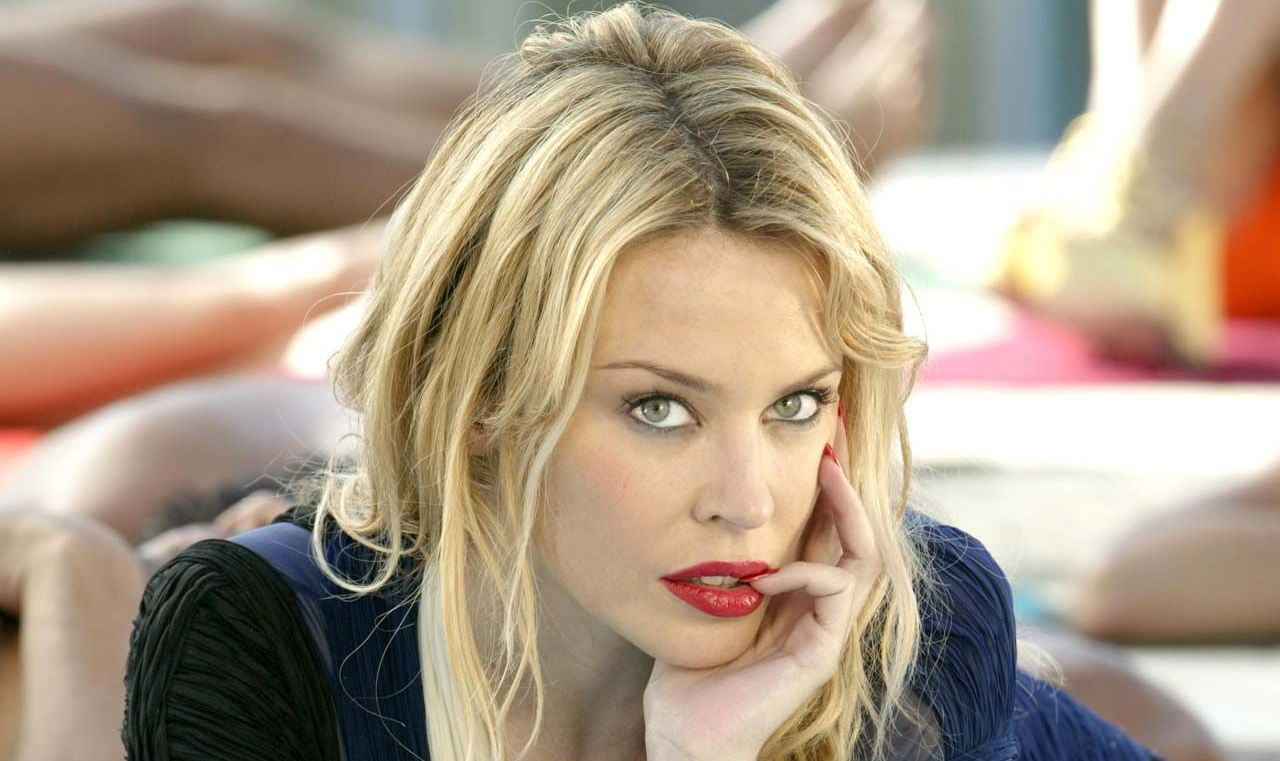
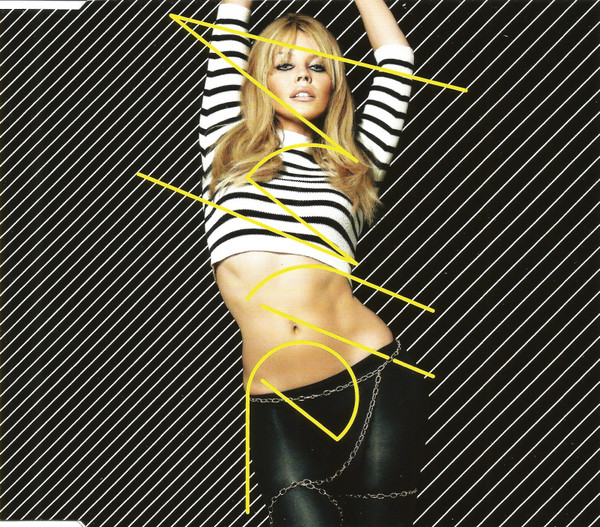
910. ‘Can’t Get You Out of My Head’, by Kylie Minogue

After a fairly underwhelming run of boyband fluff and novelty covers, we finally arrive at a number one record worthy of its exalted position…

Can’t Get You Out of My Head, by Kylie Minogue (her 6th of seven #1s)

4 weeks, from 23rd September – 21st October 2001

This is sophisticated pop by the standards of any era, not just when compared to the trash that it regally swept aside to spend a month on top of the charts. Pop to sit with the likes of ‘Dancing Queen’, or ‘Heart of Glass’, or ‘…Baby One More Time’ (not to give away my next Very Best award, or anything…)

And like the best pop songs before it, it has layers. Yes, ‘Can’t Get You Out of My Head’ is catchy, and has a la-la-la hook which lodges itself deep in your brain. But it’s actually quite a sinister record, almost a dirge, with a hypnotic marching beat setting the foundations of this tale of obsession. There’s a dark secret in me, Don’t leave me locked in your heart… Perhaps the most telling line is when Kylie breathes the Set me free… Feel the need in me…

It straddles that fine line of being strange enough to be interesting, yet catchy enough to be a huge hit. You can dance to it, sure, but you can also think about it, and analyse it. You couldn’t do the same with ‘Hand on Your Heart’. And it hasn’t actually got a chorus. Or does it? Are the lalalas the chorus? Is it the Set me free…? Or is it one big chorus? This fluid, hypnotic element means that the song could potentially be played on a never-ending loop and not grow old…

I can remember hearing this record for the first time, on a radio in my old Scout hut. That same night (unless I’m mixing two memories here) I had also been clobbered over the head with a hockey stick and knocked unconscious. I’d like to claim that I came to with the sound of Kylie’s new single in my ears, but I think that really would be stretching things. Anyway, concussed or not, it sounded like the biggest-sounding hit I’d ever heard. My love for Kylie, which had been bubbling away since the early nineties, now came to the boil. She remains an icon, a legend. She is, and always will be, the moment.

Many would claim that this is Kylie’s signature song, but that’s not a simple claim to make. Has any other pop star released their signature song a full fifteen years into their careers? So I’d definitely agree that this the signature song of her post-comeback career, proving that her return the year before, with ‘Spinning Around’, wasn’t going to be a one-album flash in the pan. And Kylie of course remains active, and dare we say relevant, a quarter of a century on. But she also has one final #1 to come, so we won’t wrap things up for her just yet.

‘Can’t Get You Out of My Head’ was a final number one, though, for one of its songwriters, Rob Davis (alongside Cathy Dennis). Davis had an incredible career in music, from his early-sixties debut in a Shadows tribute band, to his role as lead guitarist in Mud, to his three classics of the early ‘00s: ‘Toca’s Miracle’, ‘Groovejet’, and this.

Having waxed lyrical about this record for seven paragraphs, I will spoil it all by admitting that ‘Can’t Get You Out of My Head’ is not my favourite Kylie record. I will never not enjoy it, but like ‘Dancing Queen’ and ‘…Baby One More Time’ before it, copious airplay has taken the edge off. Nowadays I’d rather hear it in the brilliant New Order mash-up ‘Can’t Get Blue Monday Out of My Head’, which Kylie debuted at the 2002 Brit Awards, and subsequently released as a B-side. Get your ears around that, if you never have before…

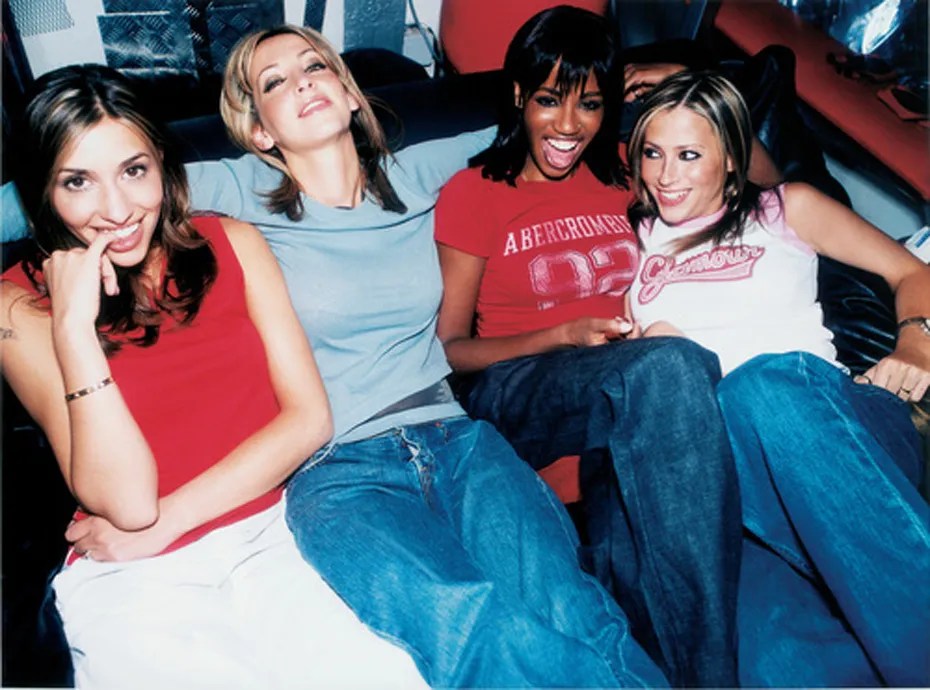
876. ‘Black Coffee’, by All Saints

All Saints return for their second number one of the year, although ‘Pure Shores’ feels like a lifetime ago given how many chart-toppers we’ve ploughed through since then…

Black Coffee, by All Saints (their 5th and final #1)

1 week, from 8th – 15th October 2000

And this second single from their second album is cut from much the same cloth as their previous #1. It’s got the same lush, dream pop soundscape, with woozy synths and whale noises – it too was produced by William Orbit – and is a further departure from the sassy, R&B pop of their 1998 hits. But I think I actually prefer this to the hugely loved and well-respected ‘Pure Shores’.

I’d say that it’s got the best chorus of their five chart-toppers, and the contrast between the ambient yearning there and the fast moving verses is very appealing. It’s a love song, going by most of the lyrics… I wouldn’t wanna change, Anything at all… But the song’s wistful atmosphere (and the video) hints at a break-up… I wouldn’t wanna take, Everything out on you… (Although I know I do…)

Any song that chucks its title down the sink in the middle of the second verse is automatically very cool, but I would suggest that what elevates this record to true greatness is the coda, in which the first verse is remixed into something more industrial, and darker. It’s a fantastically edgy way for Britain’s coolest girl group to bow out from chart-topping duty.

Sadly, though, ‘Black Coffee’ was a big part of All Saints calling it quits in early 2001. It was the only All Saints original not to be written by Shaznay Lewis, and the Appleton sisters saw this as a reason for them to finally be given lead vocals over Lewis. Tensions built up during recording and live performances, until an argument over who got to wear a jacket for a photoshoot proved the final straw. And to be honest, that was a huge part of All Saints appeal: the fact that running behind all those great songs was the nagging suspicion that they really fucking hated each other.

They had one more single to come, the #7 ‘All Hooked Up’, which contains the classic chorus line: I know that you want a piece of my ass… But that was pretty much it (until the inevitable comeback five years later). On any given day my choice of best All Saints single might rotate between ‘Never Ever’, ‘Pure Shores’ and this, but today I’m leaning towards ‘Black Coffee’. Add in ‘Bootie Call’ and the better-than-they-should-have-been covers of ‘Lady Marmalade’ and ‘Under the Bridge’, then you have one of the great chart-topping runs.

872. ‘Music’, by Madonna

Maybe it’s just my age, and the fact that I was in prime ‘coming of age’ territory during the summer of 2000, but it feels like every chart-topper at the moment has a line, or a moment, that resonates to this day.

Music, by Madonna (her 10th of thirteen #1s)

1 week, from 27th August – 3rd September 2000

We’ve had Craig David’s seven days of wooing. Robbie’s ‘Rock DJ’. Will the real Slim Shady please stand up and If it ain’t love, Then why does it feel so good… To the list we can add Madonna’s command: Hey Mr DJ, Put a record on, I wanna dance with my baby…

When I claimed that her version of ‘American Pie’ wasn’t as bad as people said, but that it was also a bit too safe, I was looking ahead to this record. Imagine if she had bent and twisted that hallowed classic of rock ‘n’ roll using the grinding, whirring, blurping production that she employs on ‘Music’. It may have turned out terrible, but it would have been every bit as fun and provocative as her other most controversial moments.

As it is, we are left with ‘Music’, and for a woman in her forties, almost two decades into her chart career, it is a remarkably modern record. The video and the lyrics may reference disco balls and boogying, but musically this is forward-facing electro-funk. Again, Madonna shows herself to be bang on-trend, as this sounds both like Daft Punk circa 1997, and Hot Chip circa 2006. It also leaves room for a bit of cheese amongst the cool, in the heavily distorted Do you like to boogie-woogie refrain.

Lyrically this is standard sort of ‘music brings the world together’ stuff. Although she does try to reach for a higher plane of thought with the line: Music, Mix the bourgeoisie, And the rebel… Apparently Madonna was inspired to write this at a Sting concert, noting the euphoric reaction of the crowd when he started to play the old Police hits. The video isn’t one of her most thought-provoking either, featuring Sacha Baron-Cohen in character as Ali G (how very Y2K) driving her around in a pimped-out limo.

No, here Madonna isn’t trying to outrage or annoy, she just wants us up on our feet. And I, for one, will always head to the dancefloor when this one comes on. This record took her into double-figures in the total number ones count, the first woman in British chart history to manage it. She joined Elvis, The Beatles, and Cliff Richard in managing ten or more chart-toppers. Meanwhile ‘Music’ itself made history by becoming the first song ever to be played on an iPod.

I may have overstated it in the intro, or allowed nostalgia’s rose-tinted specs to influence my take. Perhaps the chart-topping lyrics of the day were no more memorable than any other era’s. Perhaps I was just of an age to remember them. But I do think the #1s of the summer of 2000 were an integral part of turn-of-the-century popular culture, one of those periods when the charts reflected more than just musical taste. And that’s something, in this fragmented, online age, that I don’t think we’ll ever see again.

850. ‘American Pie’, by Madonna

Just before our next recap, do we have a contender for the Worst Number One award…?

American Pie, by Madonna (her 9th of thirteen #1s)

1 week, from 5th – 12th March 2000

It’s fair to say that Madonna’s version of Don McClean’s ‘American Pie’ is much maligned. I’m guilty for some of this maligning, as I’ve pre-dissed it in earlier posts and comments, despite not having heard it for a quarter of a century. So, question is: is it as bad as everyone seems to think?

No, not at all. If this was the original version of ‘American Pie’, then it might be quite a fairly innocuous entry to the Madonna canon. But it’s not, of course. I think critics are more offended by the idea of this track than the song itself. Madonna? That cone bra wearing, Jesus humping, sex book publishing harpy, daring to cover one of the pillars of rock and roll?? And I’d guess that Madonna was fully aware of this, and that her deciding to cover this classic is an act every bit as provocative as the time she went down on Black Jesus.

At the same time, there’s nothing amazing about this version. It’s as if deciding to record it was bold enough, because Madonna forgot to make it particularly interesting. Sensibly, she doesn’t do the full eight minute version, and she uses McClean’s final verse, which most radio edits of the original skip. Perhaps she was attracted by the reference to the Father, Son, And the Holy Ghost, in keeping with her usual religious schtick.

‘American Pie’ was produced by William Orbit, just like the previous chart-topper from All Saints. This puts ‘American Pie’ in the unenviable position of sounding quiet a lot like its predecessor, but being not as good. All the Orbit swishes and swirls are there, but it ends up sounding like the B-side to ‘Pure Shores’. I’d have like Madge to have gone full, crunching electro – much like her second #1 of the year 2000 – just to truly give the purists a heart attack.

Madonna recorded this cover – and she’s not someone who has recorded very many covers during her career – for the soundtrack to her romcom ‘The Next Best Thing’ (her co-star Rupert Everett cavorts with her in the video, which also acts as an ‘America at the turn of the millennium’ time machine, with firefighters, body builders, blended families and kissing lesbians). It’s becoming something of a trend in the late nineties/early noughties for famous #2 hits make #1 in inferior cover versions. We’ve had ‘A Little Bit More’, and ‘I Have a Dream’. Now this, with a few more to come soon.

Perhaps, though, the final word should go to Don McClean himself, who was whole-hearted in his support for Madonna’s cover. ‘I have received many gifts from God’, he said, ‘but this is the first time I have ever received a gift from a goddess.’ (By ‘gifts’ we can only speculate that he meant ‘royalty cheques’.)

In other news, I recently wrote another guest post for Keith’s Nostalgic Italian blog, about books from our childhood. Check it out here.

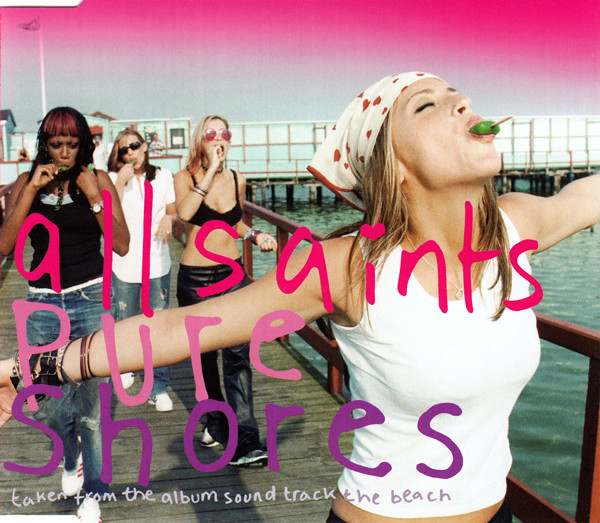
849. ‘Pure Shores’, by All Saints

The fifties had rock and roll, the sixties had beat bands and psychedelia. The seventies had glam, disco, and punk, while the eighties had new wave and new romantics. The nineties had hip-hop and Britpop, not to mention dance. The 2000s have… What do the 2000s have? In fact, what musical movements of any sort does the 21st century have…?

Pure Shores, by All Saints (their 4th of five #1s)

2 weeks, from 20th February – 5th March 2000

The new millennium provides an interesting dividing line, after which the Pop River reaches its delta, loses momentum, and splits into lots of little tributaries. It’s all to do with something called ‘the internet’, I think, taking power away from record companies and radio stations, and letting people discover all the music they could ever have dreamed of at the whir of a dial-up modem and the click of a mouse. The death of the monoculture, and all that. (Which isn’t to suggest that pop music’s journey had been relentlessly forward-moving over the first fifty years of the singles chart. Glam owed a debt to rock ‘n’ roll, Britpop owed a debt to the sixties, and so on …)

Anyway. That’s my long-winded way of getting around to saying that if the 21st century has a musical movement, I’d argue that it’s not so much a sound as a gender. Women. Female pop stars. Britney, Beyoncé, Gaga and Swift, to scratch but the tip of the iceberg. (And again, this is not to suggest that Connie Francis, Dusty Springfield, Diana Ross and Madonna were all figments of the 20th century imagination. Just indulge me…)

The dominance of the female pop star also meant – especially in the case of Britain in the 2000s – girl groups. In a few years I’ll be going wild for the cutting-edge pop of Sugababes and Girls Aloud, who even the likes of the NME will be rushing to anoint as the new avant-garde. All of which starts here, with the return of All Saints.

Phew. Having almost used up my regular wordcount with that intro, I’d better crack right into the song. ‘Pure Shores’ is described as ‘dream pop’, and it is definitely a step away from the group’s R&B-focused 1998 hits. The verses are laid-back, ambient, with a thrumming bass and lots of shimmering effects. We take detours between the verses for some whale calls and echoey backing vocals. It’s a pop song with the confidence to take its time, and to take us to some odd places. It was produced by electronic pioneer William Orbit, who is most famous perhaps for his work with Madonna around the same time, and who also worked with Blur, Prince, and U2.

But it is still a pop song, and the success of such things hinge on choruses. ‘Pure Shores’, for all its unusual soundscaping, remembers to click things into gear for a memorable I’m movin’, I’m comin’, Can you hear what I hear… Perhaps I’m of just the right age, but there are few choruses that transport me to a particular place and time like this one. It’s calling you my dear, Out of reach… The best bit of the song, though, is the hard-edged middle-eight, all industrial synths, and the following key change to take us home.

‘Pure Shores’ was written to order for the Leonardo Di Caprio movie ‘The Beach’, hence the Take me to my beach… line (the title doesn’t appear in the lyrics but certainly fits in with the film’s theme). Shaznay Lewis wrote most of the lyrics on a transatlantic flight, which is impressive, and not something many girl group members would be capable of doing, adding another layer of respectability to this tune.

Having said all that, and as good as ‘Pure Shores’ is, I think All Saints’ final chart-topper is even better. Both tracks, bookending the year 2000, set the tone for what pop music, specifically pop music fronted by women, could achieve in the years to come…

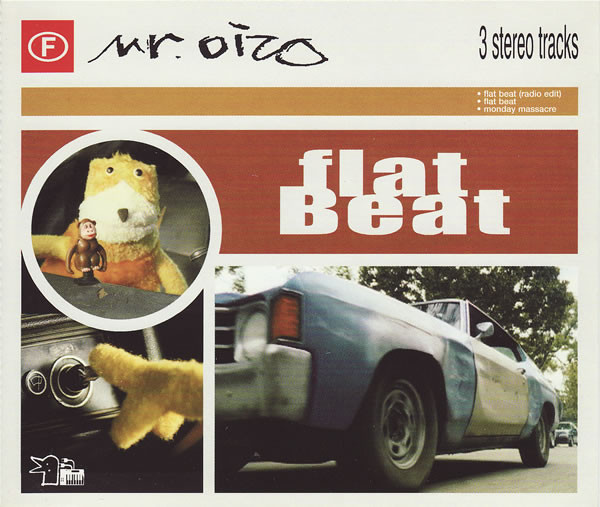
820. ‘Flat Beat’, by Mr. Oizo

And now for something slightly different…

Flat Beat, by Mr. Oizo (his 1st and only #1)

2 weeks, from 28th March – 11th April 1999

…please don’t adjust your dial. I did earlier bill 1999 as the year of the random dance hit, and dance hits don’t come much more random than this.

Yes, it’s repetitive, but when the song is called ‘Flat Beat’ I think that’s largely the point. And yes, some of the myriad effects, pulses and throbs that make up this record are odd. But there’s something hypnotising in this track’s minimalism, and in that strange, vibrating bass riff that you can almost feel pressing against your eardrums (this is a chart-topper best appreciated through headphones).

Every thirty seconds or so, as you begin to tire of the simple beat, another little element is added, just in time. I’m imagining Mr. Oizo taking a walk through his local rainforest, and using some of the stranger sounding animal calls to decorate this tune. The intro features a woman claiming that Quentin (Mr. Oizo’s real name) is a ‘real jerkie’. The album version ends on what sounds a lot like someone taking a piss. I can’t say I truly love ‘Flat Beat’, but I do enjoy how bloody weird it is.

‘Flat Beat’ was helped to the top of the charts by Flat Eric, a yellow puppet made by Jim Henson’s Creature Shop. In the video he runs a business, answering phones and smoking frankfurters. But it was his appearance in a series of Levi’s adverts that made him famous, and that necessitated Mr. Oizo make a tune to go with them.

This is the latest – the seventh – and I believe final ‘Levi’s’ chart-topper. Since the mid-eighties we’ve had the jeans makers to thank for curios like ‘The Joker’, ‘Should I Stay Or Should I Go’, and Stiltskin’s ‘Inside’ making number one. Like its predecessors, ‘Flat Beat’ would have been nowhere near #1 without the ad campaign, but I will say that all of the Levi’s-resurrected chart-toppers have been worthwhile in their own way.

Mr. Oizo AKA Quentin Dupieux is a French DJ and filmmaker (‘oiseau’ being French for ‘bird’). ‘Flat Beat’ was a bonus track on his first album, and he’s had a few others which have been minor hits in his homeland. In the UK he has gold-star, purest one-hit wonder status, with nothing else even grazing the lower reaches of the charts.

It’s also worth noticing that, spoken intro aside, this is a purely instrumental track. Wikipedia lists it as the 25th instrumental number one, though they count ‘Hoots Mon’, and ‘Block Rockin’ Beats’ in that list, which seems generous. What’s indisputable is that there have been precious few since the genre’s heyday in the fifties and early-sixties – this is only the ‘90s second instrumental after ‘Doop’, while there were zero in the ‘80s – and that there are precious few more to come.

The album version:

796. ‘Deeper Underground’, by Jamiroquai

And so Jamiroquai, a nineties chart mainstay, score their only number one single. Should we class them alongside Dusty, Quo, and a-Ha, as one of the great one and only #1 acts? Or is one chart-topper par for their course…?

Deeper Underground, by Jamiroquai (their 1st and only #1)

1 week, from 19th – 26th July 1998

‘Deeper Underground’ isn’t the first record you’d think of as Jamiroquai’s only #1, and it’s not a record I’ve heard much over the years. So two things strike me as I listen to it now. First, that it’s obviously from a movie soundtrack, as no normal pop single has this much time to open, with strings and ominous chords, never mind a monster’s roar. It was from the big 1998 summer blockbuster ‘Godzilla’, which was fairly successful at the box office but was panned by critics.

The second thing I notice is how heavy this record is. By the time I was a teenager, Jamiroquai were a byword for naffness, mainly brought about by lead singer Jay Kay’s collection of silly hats. Many of their other big hits veered towards a disco cheeriness, but ‘Deeper Underground’ has an edge to it, underpinned by a scuzzy funk riff. They had been acid funk pioneers in the early nineties, and this is definitely not their most commercial moment. When the lyrics finally arrive, Jay Kay almost freestyles over the aggressive beat.

As a soundtrack hit, the lyrics have to relate to the movie they feature in. But Jamiroquai manage to twist lyrics about going deeper underground to escape a massive, city-smashing monster, into what seems like a song about paranoia: Something’s come to rock me, And I can’t keep my head, I get nervous in the New York City streets, Where my legacy treads… The video takes a more literal approach to the subject matter, with Jay Kay dancing his way around death as Godzilla, and any number of crashing taxis and helicopters, destroy a cinema, all with very dated CGI.

I had thought that this record sampled Led Zeppelin, and although the riff is cool it’s not quite at Led Zep standards. This is because I was confusing it with the other big hit from the ‘Godzilla’ soundtrack, Puff Daddy and Jimmy Page’s ‘Come With Me’, which is based around ‘Kashmir’. That one made #2 around the same time (and is Page’s only Top 10 hit in the UK, either with or without Led Zeppelin).

As ‘Deeper Underground’ descends into even nastier, funkier territory, the synths grow harsher and harsher until it sounds a bit like I imagine electro-shock therapy would. It’s cool. I like it. I’m glad that this is Jamiroquai’s only #1, over the much more mum-friendly ‘Canned Heat’ or ‘Cosmic Dancer’. Though their greatest moment remains ‘Virtual Insanity’, which was one of my favourite tracks on ‘Now 37’ back, as they say, in the day.

In my intro I called Jamiroquai a ‘nineties mainstay’, but that wouldn’t seem to do them justice. I’ve just discovered that they were the 3rd best-selling UK act of the decade, behind Oasis and The Spice Girls. Which is very impressive for a band that many write off as one guy and some hats (though as much as I’ve enjoyed writing this review I was probably hasty in naming them alongside Dusty and Status Quo…) ‘Deeper Underground’ remains forgotten amongst their back-catalogue it seems, as it is nowhere to be seen on their Spotify popular tracks. On the same platform’s ‘This Is Jamiroquai’ playlist, it is buried away as track twenty-eight.

786. ‘Frozen’, by Madonna

Of all Madonna’s thirteen number ones, ‘Frozen’ – her first in almost eight years – has to be the strangest…

Frozen, by Madonna (her 8th of thirteen #1s)

1 week, from 1st – 8th March 1998

It’s her longest for a start, and probably the least accessible. There’s no instant hook, as with ‘Into the Groove’, and no controversial gimmicks, as with ‘Like a Prayer’. Instead there’s a shimmering, undulating electronic beat, beefed up at intervals by strange, reverberating sound effects and drum fills. And there are the strings that add an air of grandiosity to the song, especially when they come to the fore midway through, like an ‘Arabian Nights’ film score. A Rolling Stone reviewer at the time described it as “arctic melancholy”, and I think that’s perfect.

Interestingly for Madonna, the lyrics are the least noticeable thing about ‘Frozen’. They seem to be about a lover who is closed off: You only see what your eyes want to see, How can life be what you want it to be, You’re frozen, When your heart’s not open… Or perhaps it’s more religious, with Madonna, who had begun taking an interest in Eastern spiritualism, singing as a sort of high priestess. The video would bear this interpretation out, Madge floating above a desert, all in black, as a sort of nun-slash-witch, before turning into a flock of crows, and then a large dog.

In fact, despite me claiming that this isn’t one of her gimmicky chart-toppers, the first thing that springs to mind when I think of ‘Frozen’ is Madonna – famously blonde for most of the past fifteen years – now with long jet-black hair. Always one for the visuals… The second thing I remember about this record is hearing it almost as often as ‘My Heart Will Go On’ at the pool bar in Lanzarote during my spring holiday that year.

And the fact that it was on such heavy rotation at the time perhaps proves that this isn’t as inaccessible as I suggested. In truth, there are just as many hooks here as in Madonna’s poppier numbers, they’re just buried in the trip-hop beats, and stretched out over six minutes. Of 1998’s seven number ones so far, three have now run on beyond five minutes – ‘Never Ever’, ‘All Around the World’, and this – while Celine Dion wasn’t far behind (and that one certainly feels longer than five minutes…)

Although this was her first number one since ‘Vogue’, Madonna hadn’t ever been away from the top of the charts. In fact, she’d casually racked up a further seventeen (!) Top 10 hits between ‘Vogue’ and now. At the same time, ‘Frozen’ was the lead single from her first studio album in four years, following a few years of compilations and soundtracks.

Undoubtedly then, we can class this is one of Madge’s famous re-inventions. She wasn’t just following current trends with William Orbit on production duty, she was setting them. Fifteen years is a lifetime for a female pop star, and this was a statement release, one that announced the Queen of Pop wasn’t going anywhere. ‘Frozen’ was an interesting choice for the lead-single though, especially considering that follow-up ‘Ray of Light’ is the much better remembered hit, but it makes for an interesting detour in Madonna’s chart history. This is her second and final ‘90s #1, making it by far her least successful chart-topping decade. However, she has five more ‘00s #1s to come, all perhaps owing a debt to how successfully she updated her sound here.

757. ‘Your Woman’, by White Town

In my last post I promised you something quirky. Is this quirky enough for you? Are you not quirked??

Your Woman, by White Town (his 1st and only #1)

1 week, from 19th – 26th January 1997

A gender-bending tale, centred around a trumpet sample from the 1930s, all written , recorded and produced by a fairly geeky looking chap in his bedroom. And catchy. I should also mention that it’s incredibly catchy.

It’s also very hard to describe. Is it dance, funk, indie, Britpop…? Is it lo-fi, hip-hop… boom bap?? (I have no idea what ‘boom bap’ is – Wikipedia suggested it, and I just liked the sound of it.) It’s at times creepy – the horn sample sounds like a haunted gramophone – but also quite funny – the middle eight with the plinky-plonky Game Boy sound effect is brilliant, my favourite part of the song, but also surely a musical piss-take.

Most of all it’s pretty subversive. Musically so, because number one singles aren’t meant to be recorded by nerds in their bedroom. And lyrically, because it sounds at first like our most explicitly gay chart-topper since ‘Relax’. A clipped, very English-sounding man delivering lines like: Well I guess what you say is true, I could never be the right kind of boy for you, I could never be your woman… The man behind it has said that it’s not explicitly queer though, more just about loving someone who isn’t right for you, when love and lust get mixed with your highbrow ideals…

The man behind White Town being Jyoti Mishra, born in India and raised in Derby, who had been in bands since the late 1980s and was well-known in underground scenes. ‘Your Woman’ was pushed heavily by Radio 1, leading to it entering the charts at the top, but Mishra struggled to follow it up. Having signed with EMI, he felt a loss of creative freedom, as well as frustration at his sudden fame. Frustrating for me is the fact that the follow-up to ‘Your Woman’ managed to scrape to #57, meaning that White Town isn’t strictly a one-hit wonder.

I mentioned above that the trumpet hook came from the ‘30s, more specifically ‘My Woman’, a 1932 hit written by Bing Crosby. (The music video nicely plays with the 1930s theme, aping the pratfalls and scene fades of old silent films.) The version sampled by Mishra is a different version, still from 1932, by Lew Stone & His Monseigneur Band. It’s been used since by rapper Naughty Boy and, probably most famously, by Dua Lipa on her 2020 song ‘Love Again’. It’s also been suggested that the original trumpet riff inspired one of the world’s most famous pieces of film score: the ‘Imperial March’ from Star Wars.

Jyoti Mishra and White Town were quickly dropped by EMI, and went back to recording independently, releasing their most recent album last year. For the 20th anniversary of ‘Your Woman’, he re-recorded the song using instruments commonly used in 1917. Because why not. Back in 1997, the tune was such a smash that it made its way onto ‘Now That’s What I Call Music 36’, which was the first edition of the series I ever bought, on cassette, probably with my 11th birthday money. And I’m not just inventing a cute ending for this post when I say that back then ‘White Town’ was my favourite track across the whole four sides… It really was.