Results! Your best (and worst) Christmas Number Ones…

The results are in, the public has spoken. Earlier this week, Wham! finally made the festive top spot with ‘Last Christmas’, thirty-nine years late. (Hopefully now that it has achieved its ultimate goal, the song will be purged from every device on the planet, and we’ll never have to hear it again…) But in an even more important call to arms, I asked readers of this blog to choose their favourite, and their least-favourite, Xmas #1s.

The vote stopped in 1994, as that’s where our regular blog is (and because that is, I firmly believe, the end of the golden-age of the Christmas chart-topper). I also didn’t include every official Xmas #1 – just those that were Christmassy or silly enough – because everyone knows the Beatles were good, and we didn’t need them adding this honour to their role-call. So without further ado, the Top 3 Best Christmas #1s, as voted by you, are…

3rd place

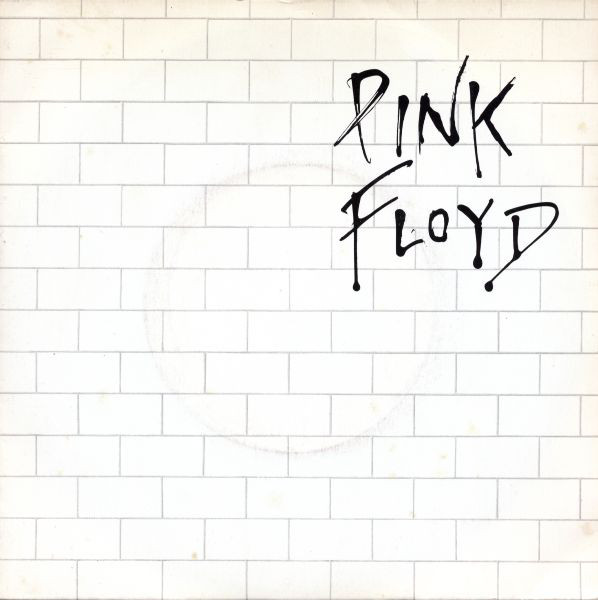
‘Another Brick in the Wall (Part 2)’, by Pink Floyd

The final Christmas #1 from THE decade for Christmas #1s, it’s the only single ever released by Pink Floyd (references needed). It ticks some of the boxes for a festive hit – novelty value, children singing en masse – but otherwise it’s got bugger all to do with the holiday season, and lots to do with abuse of power and brainwashing of youngsters. Margaret Thatcher hated it, and there’s no greater endorsement than that! (Read my original post on it here.)

2nd place

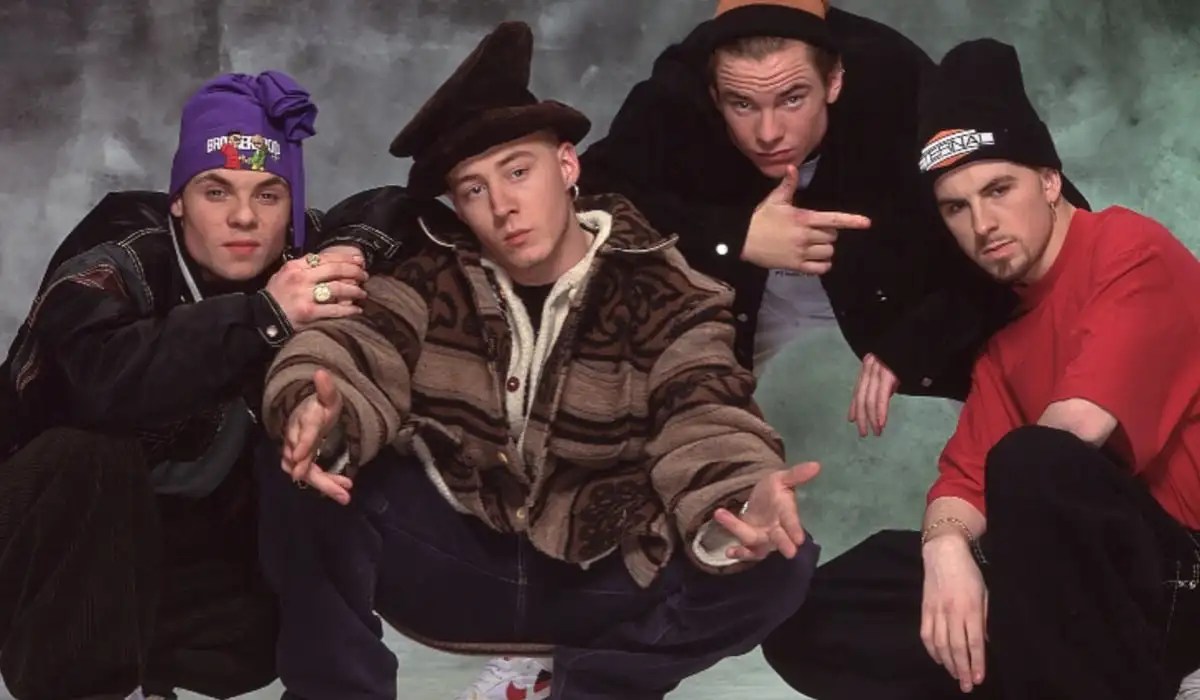
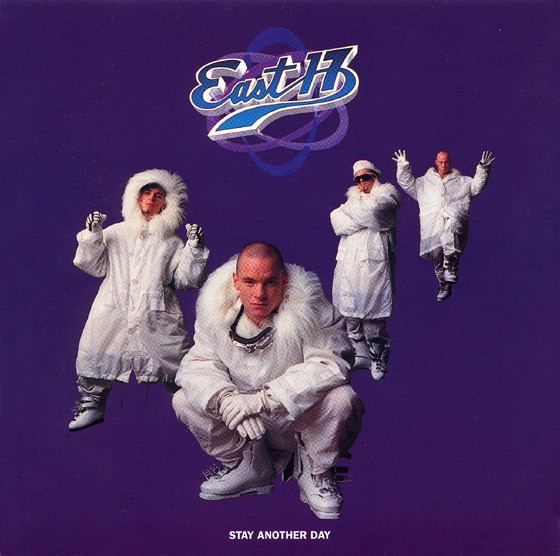
‘Stay Another Day’, by East 17

More Christmassy than Pink Floyd, though still not officially a ‘Christmas song’ (but, the bells!)… The 1994 Xmas chart-topper. Written about the suicide of Tony Mortimer’s brother, it’s both sad, and uplifting, as I mentioned in my post on it a few weeks back. And those white parkas have become enshrined in British pop culture. It was still some way off the winning song, though…

1st place

‘Merry Xmas Everybody’, by Slade

It had to be, didn’t it? With just over 30% of the vote, it’s the song that kicked of the very idea of the ‘Christmas Number One’. A glam classic, and a raucous festive singalong, for many it simply isn’t Christmas until Noddy Holder has belted out his famous line… All together now… It’s Christmaaaaaas…!

Anyway, now that’s done, on to the really important bit. The WORST… And interestingly, more votes were cast in this one than for the ‘good’ Christmas songs. Nice to see everyone indulging their dark side… One song was a clear leader from the start but, like all the best Xmas #1 races, a second contender caught up and ended the vote neck and neck. Yes, we have a tie…

Joint 1st place

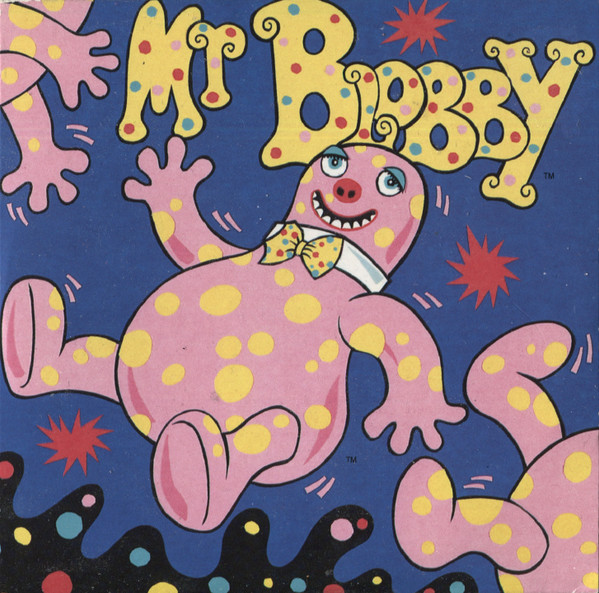
‘Mr Blobby’, by Mr Blobby, and ‘There’s No One Quite Like Grandma’, by The St Winifred’s School Choir

I’m not sure there can be many complaints, as these are two truly terrible pieces of music, for very different reasons. One is manically unhinged, the other is sickeningly saccharine. Both represent the British public’s tendency to send utter tat to the top of the charts, especially at Christmas. But… I do have a soft spot for one of them; while the other needs, in my opinion, to be torched by a flame-thrower. Regular readers will know which is which.

Thanks for voting, for reading this post, and for reading, liking, and commenting on all my posts throughout this year, and the years before. For the first time since starting this blog in 2018, I’ll be taking a winter break. I’ll still be around, interacting in the blogosphere, but the next #1s post will be (hopefully) on the 7th January.

All that’s left is to wish you and yours a very Merry Christmas, and a Happy New Year! See you in 2024!

#1s poll! Choose your best (and worst) Christmas Number Ones…

It’s the most wonderful time of the year, at least according to Andy Williams, which means stockings above the fireplace, geese getting fat, goodwill to all… And the annual race for Christmas Number One.

By now it’s certainly a British tradition, and the one time of the year that the singles chart is guaranteed to make the news, but most people would say that the honour of being the nation’s biggest-selling song on December 25th has lost a lot of its lustre. I’d agree. In fact, I’d say that we’ve already covered the heyday of the Christmas Number One in my regular blog… The most recent festive #1 was 1994’s: East 17’s ‘Stay Another Day’, a classic that I’ve just named one of the Very Best. From here on its a slippery slope, past The Spice Girls, endless X-Factor winners, countless charity singles, to the very bottom of the barrel, and the dreaded LadBaby.

Now it’s time for you to decide: what is the greatest Xmas #1? And, perhaps more importantly, what is the worst?? See below two polls, in which you can choose as many or as few songs as you like, for both honours.

Perhaps controversially, I’ve not listed every Xmas #1 since 1952. Until the early seventies, the idea of a ‘Christmas Number One’ wasn’t particularly relevant, so the only pre-1973 hits I’ve included in the vote are specifically Chistmassy, or novelty songs that probably wouldn’t have made #1 at any other time of year (so, sorry, no Beatles…) Even post-1973, I’ve excluded pop songs that just happened to be #1 at Christmas (so no Human League, or Pet Shop Boys). However, there is space at the bottom for you to nominate any Xmas #1 you think I’ve unfairly missed off the list. You may, for example, feel very strongly that ‘Two Little Boys’ deserves the title…

Here’s the poll for the best…

And the worst…

I’ll announce the results on Christmas Eve, so you have until then to cast your votes. Have at it!

714. ‘Stay Another Day’, by East 17

Every good guy needs a bad guy. Every superhero a nemesis. And the cutest, cleanest-cut boyband of the day needed some rough east London lads as their foils…

Stay Another Day, by East 17 (their 1st and only #1)

5 weeks, from 4th December 1994 – 8th January 1995

Take That have dominated the charts of 1993-1995 like few acts ever do: they’re on five number ones in our countdown – and it’ll very soon be eight – having stuck to a winning pop formula. East 17 meanwhile had been ticking along since mid-1992, scoring five Top 10 hits packed with edgier dance and hip-hop touches, yet not coming close to matching Gary and the boys’ success.

Though the one thing East 17 can lay claim to that Take That can’t is a Christmas number one. A classic Christmas number one at that. A record… I’m just going to stick my neck on the line right now… better than any Take That ever released. (Yes, including that one…) And, ironically, to score their only number one they momentarily dropped the bad-boy posturing, and out-Barlowed Barlow himself; recording a sophisticated, grown-up ballad the likes of which Take That’s chief songwriter would have jumped at.

Baby if you’ve got to go away, Don’t think I could take the pain, Won’t you stay another day… It’s a ballad, of course, and on first listen the lyrics are standard weepy, break-up fare. The four voices meld together in an almost a cappella way – a nod to Christmas hits past? – led by a painfully young sounding Brian Harvey. It’s touching, but when you learn that Tony Mortimer actually wrote it following his brother’s suicide, then lyrics the might on the surface sound simplistic Oh don’t leave me alone like this… hit ten times harder, and elevate the song much higher.

The only controversy that surrounds this record is whether or not it’s a Christmas song. So pressing an issue is it that YouGov polls have been conducted on the subject (the ‘no’s had it, with a slim majority). I’d have to say it is though. It clearly ends in a hail of church bells, that were tacked on once the song had been slated for a festive release. Plus the video has snow in it! Luckily the fact that it now gets filed away with the other festive favourites for ten and a half months of the year means it’s not been done to death. Unlike some other boyband ballads from the mid-nineties…

Speaking of the video… It’s both iconic (those white parka jackets) and yet terrible (pretty much everything else – the dodgy green screen, the floating dancer, the white gloves…) But even that can’t ruin the song. East 17 would continue until the end of the decade – scoring a further six Top 10s – with their fair share of sackings, drama and drug-related controversies. Take That, it’s fair to say, won the war, if there ever was one. Though I was very surprised to learn that if you look beyond British shores, East 17 actually sold more records worldwide, thanks to their popularity in Europe and Australia. And recording one of the best ever boyband singles ever probably helped too.

698. ‘Mr. Blobby’, by Mr. Blobby

From Meat Loaf, to Mr. Blobby. From one larger-than-life epic, to another…

Mr. Blobby, by Mr. Blobby (his 1st and only #1)

1 week, from 5th – 12th December 1993/ 2 weeks, from 19th December 1993 – 2nd January 1994 (3 weeks total)

It’s been a while since I’d last heard this, for obvious reasons, and I thought I’d imagined the farting synths. No, actually, they’re not farting synths. They’re fart sounds. This number one single is built around farts, of the sort seven-year-olds make by blowing into their elbow cracks.

Before we delve any further into this murky swamp, I’d better explain exactly what a Mr Blobby is, for anyone not British, or anyone born in this century. There’s no better place to start than checking the picture embedded at the head of this post. It’s a man in a giant pink and yellow rubber suit, with a perma-grin and googly eyes, who’s only capable of saying ‘blobby’, over and over again in an electronically altered voice. His schtick is that he’s terminally clumsy, and anyone who comes in contact with him will end up flat on the floor and/or with a faceful of something sticky. He rose to fame on ‘Noel’s House Party’, a Saturday evening light entertainment show, set in a fictional mansion named ‘Crinkly Bottom’…

Before we go any further, I must stress that this is a truly heinous piece of music, one that I have no interest in ever hearing again once I’ve finished writing this post. And yet… When this came out, I was that seven-year-old, for whom fart noises, and the sight of Mr. Blobby falling through a drum kit, were the height of comedy. Even now, I’m ashamed to say, the video raises a smile…

In it Mr. Blobby is bathed on a slab, in a recreation of Shakespear’s Sister’s ‘Stay’ video, and leers over his backing band in a recreation of Robert Palmer’s ‘Addicted to Love’, as well as leading a gang of children in what looks like a Satanic ritual. He is chauffeured by Jeremy Clarkson, and has Carol Vorderman as some sort of scientific advisor in his ‘Blobby Factory’. There’s an air of utter anarchy, chaos, not to mention an underlying creepiness (though maybe that’s just the Noel Edmond’s cameo…)

With a lot of the truly terrible #1s that we’ve covered, a large part of what makes them awful is that the writers and performers don’t seem to realise how bad their song is (see ‘No Charge’, or St. Winifred’s, for example). This isn’t the case with ‘Mr. Blobby’ – the creators know they’re unleashing something horrendous on the world, and show a complete lack of contrition. Quite the opposite. So while I’m not going to argue the case for ‘Mr. Blobby’ being any good, I am going to gently suggest that might be one of the few truly punk #1s.

It’s also musically quite… complex? Like the video, the song doesn’t stay with any one sound for long. The farting and the children’s chanting (Blobby, Oh Mr Blobby, Your influence will spread throughout the land…) are constantly interrupted by sudden and incongruous swerves into dance and rap, by key changes and a rising and falling tempo. I jokingly called it an ‘epic’ in my intro, but maybe I wasn’t far off… It’s hyperactive, bright, zany, stupid… It’s ADHD in musical form. Or, rather, it’s a dog whistle for seven-year-olds, who are the only ones for whom this song holds any meaning.

For me, the moment that sums it all up comes towards the end of the video, when there’s footage of Blobby storming out from a helicopter and into the arms of a child, who looks like he’s seen the face of God. It sums up Blobby mania, which culminated here, in him reaching Christmas Number One. He was everywhere: on TV, in panto, in adverts, in a 1994 computer game, even running for election as an MP in 1995 (receiving 0.2% of the vote). Three separate Mr. Blobby theme park attractions were opened over the course of the 1990s, none of which survived the decade…

The fact this made Christmas number one is a story in itself, one that I’ll go into more detail on in my next post. It was initially knocked off the top, before roaring back, and amazingly became the first record in almost twenty-five years to have two separate spells at number one (during the same chart run). This was common in the fifties and sixties, and has become a normal occurrence again in the 21st century, but throughout the entirety of the seventies and eighties no record managed the feat. In terms of returning to number one with a different song, the closest Blobby came was with ‘Christmas in Blobbyland’, which made #36 two years later. He remains active to this day, popping up on ‘Britain’s Got Talent’ just this year…

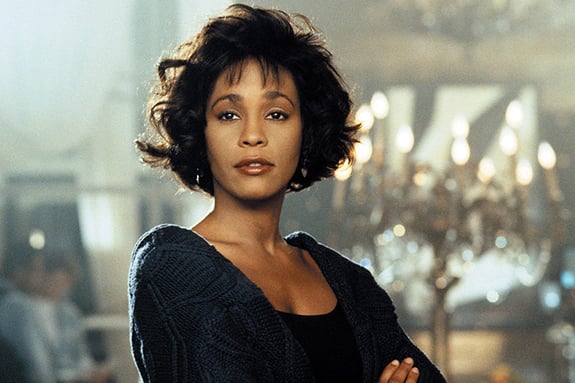
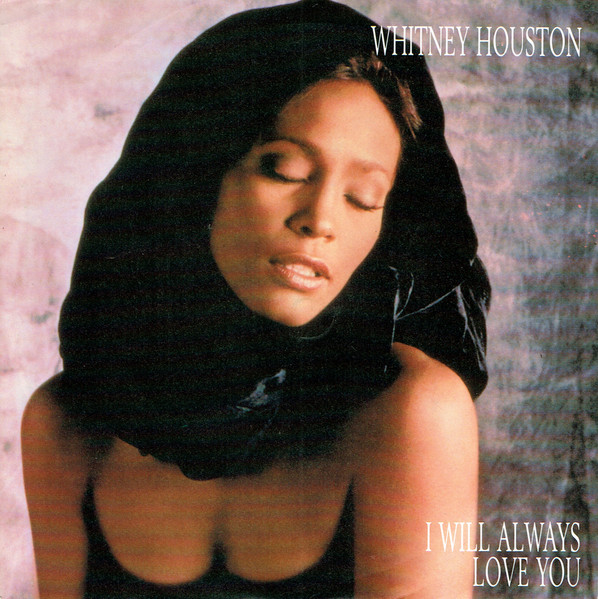
684. ‘I Will Always Love You’, by Whitney Houston

I’ve enjoyed my journey through 1992, a year short on number one hits (just twelve) but a year that has valued quality over quantity. I’ve not actively disliked any of its chart-toppers, the worst I could say is that a couple have been fairly bland (yes, KWS, I’m looking at you). But before we wrap this year up, we have to grapple with its final hit. The year’s biggest-selling, longest-running #1…

I Will Always Love You, by Whitney Houston (her 4th and final #1)

10 weeks, from 29th November 1992 – 7th February 1993

The early nineties is the era of the soundtrack single. And it’s bookmarked by three songs-from-movies in particular, each of which got into double figures at the top of the charts. Enter Part II, then: Ms Houston, and the love theme from her blockbuster ‘The Bodyguard’. (And, as an aside, isn’t it interesting that both this and the earlier ginormous soundtrack #1 were from films starring heartthrob du jour Kevin Costner…?)

Anyway. First off, this record gets a lot of stick. It’s overblown, over-sung, overplayed… A misuse of Whitney’s undoubted talents. It also has the misfortune to be a cover – a cover of a wistful, tender original by the universally beloved Dolly Parton. Bryan Adams’ sixteen-week monster at least had nothing to compare it with… But is this stick justified? Does ‘I Will Always Love You’ deserve the hate…?

Well, yes. Let’s be honest, it’s rotten. A bloated whale corpse of a record. All the complaints I had about ‘Everything I Do (I Do It for You)’ – that it was too much, too serious, missing the tongue-in-cheek silliness that any good power-ballad needs – also apply here. Plus, this adds a teeth-grinding saxophone solo for good measure.

But what’s also annoying about this record is that for the first three minutes or so, it’s actually pretty dull. I compared Whitney’s most recent #1, ‘One Moment in Time’, to a couple of rounds in a boxing ring. She grabbed that tune, and pummelled the listener into oblivion with it. Ridiculous, of course; but I enjoyed the bombast. Yet on ‘I Will Always Love You’, she sleepwalks her way through the first couple of verses, with their gloopy production, and sleazy sax. Then comes the moment that everyone remembers when they think about this song: the pause, the drumbeat, and the rocket launch into the final chorus.

It’s like she knew that this song would be a millstone around her neck for the rest of her career, and thought ‘fuck it, we might as well have some fun’. Either that, or she foresaw that this would be murdered in karaoke bars from here to eternity, and so decided to make it impossible to copy, by going through her full repertoire of trills, belting, melisma… you name it. Because while you might disagree with her approach to this song – and I do – there’s no denying that the woman could sing. It’s an ending so aggressive, so over the top, that the ‘love theme’ becomes a stalker’s anthem: I-ee-ayye will always love you-hoo… (and there’s nothing you can do about it!)

This song stayed at number one for ten weeks – a total that Bryan Adams would have scoffed at, but that gave Houston the record for a female soloist. It made the top in late November, stayed there as Xmas #1, and was still there at the end of January to become my 7th birthday number one. (My ‘girlfriend’ at the time – we were in Primary 3 – liked to sing this to me as we walked home together…) Wikipedia lists it as making #1 in twenty-three countries, though I’m sure there were more. It set a new record for weeks at #1 on the Billboard chart, and remains the planet’s best-selling song by a female act… ever.

Yet here ends Whitney Houston’s British chart-topping career. From smooth jazz (‘Saving All My Love for You’), to dance pop (‘I Wanna Dance With Somebody’), to overblown power-ballads (the last two). Her chart career, though, was far from over, and in fact she would go on to release some her best records once her voice had deteriorated through age (and drug use), meaning she could no longer attempt ginormous ballads like this one. ‘My Love Is Your Love’, ‘It’s Not Right but It’s Okay’, and ‘Million Dollar Bill’, among others, are all great.

Whitney died in 2012, after a troubled life, aged just forty-eight. A sad way for one of the most technically gifted singers of all time to go. Among the tributes paid upon her death was one from Dolly Parton, whom the media had suggested wasn’t happy with Houston’s cover at the time. Parton thanked her for bringing her song to a wider audience (not to mention for the royalties that must have rolled in…)

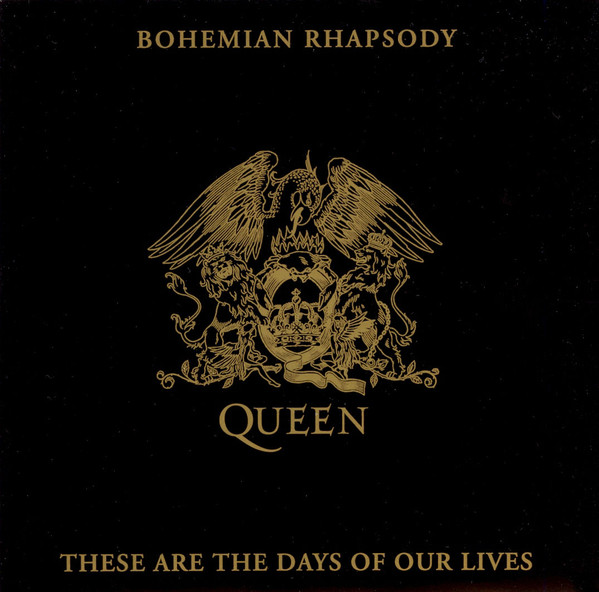
672. ‘Bohemian Rhapsody’ / ‘These Are the Days of Our Lives’, by Queen

On November 23rd 1991, Queen frontman Freddie Mercury released a statement announcing that he was HIV positive, and had developed AIDS, confirming years of speculation about his ailing health. Barely one day later another announcement followed: Mercury was dead, aged just forty-five.

Bohemian Rhapsody / These Are the Days of Our Lives, by Queen (their 4th of six #1s)

5 weeks, from 15th December 1991 – 19th January 1992

Which brings us to the final #1 of the year – the Christmas Number One – and the first time a song has re-topped the charts. How to deal with this? Write about ‘Bohemian Rhapsody’ all over again? I’d rather not… Or just provide a link to my original post on the song, back when it was a nine-week chart-topper (and another Xmas #1) back in 1975-76? Neither seems the perfect solution… ‘Bo Rap’ may well be one of the best-loved, most innovative, outré pop songs of all time; but it has been played to death. We all know what it sounds like. Luckily, Queen twinned it with a song from ‘Innuendo’, their latest album, and gave us something else to talk about!

‘These Are the Days of Our Lives’ couldn’t be more different from its re-released partner. A lounging, glossy soft-rock tune, with a gentle Bossa nova beat. It’s not classic Queen – it sounds more like a Freddie Mercury solo record – until Brian May’s trademark guitar come chiming in towards the end. Lyrically, though, it’s the perfect swansong.

It was written by Roger Taylor, but lines like You can’t turn back the clock, You can’t turn back the tide, Ain’t that a shame… are sung ruefully by Mercury, in what many have claimed were the final vocals he ever recorded. It’s unashamedly sentimental, and usually that would have me running a mile, but when lyrics like Those days are all gone now, But one thing is true, When I look, And I find, I still love you… are sung by a dying man then they hit much harder.

The video – filmed in black and white to hide just how gaunt Mercury was – is certainly the last thing he filmed, six months before his death. Ever the showman – behold the cat waistcoat! – he asked for the closing shot to be re-filmed, in which he chuckles to himself, looks down, then whispers I still love you… Not a dry eye left in the house.

The lyrics shift from ‘those were’ the days of our lives to ‘these are…’, in a positive message, a sign that even in the shadow of death each day is a gift. Again, this is something I might balk at if it weren’t for the fact that a dying man is singing it. If he believes it then who am I to judge? Personally, I’d have liked ‘The Show Must Go On’ as the posthumous single – much more dramatic, much more Queen – but that had been released a couple of months earlier, making #16.

For sure ‘These Are the Days of Our Lives’ wouldn’t have made number one on its own, without either Mercury’s death or ‘Bo Rap’s re-release. A certain run-of-the-mill Elton John song will suffer a similar fate a few years later, caught up in another famous death, becoming one half of the highest-selling single ever in the process. ‘Bohemian Rhapsody’ meanwhile added five more weeks in top spot to its original nine, becoming the third longest-running #1 ever. And this isn’t the end of the chart-topping story for either Queen or Freddie. But it is the end for 1991, one of the more interesting years for chart-topping singles, with Gregorian chants, rapping cartoon characters, sixteen-weekers, Bono in character as ‘The Fly’, Vic Reeves (because why not?), and it all ending on a farewell to the greatest frontman who ever strutted the stage.

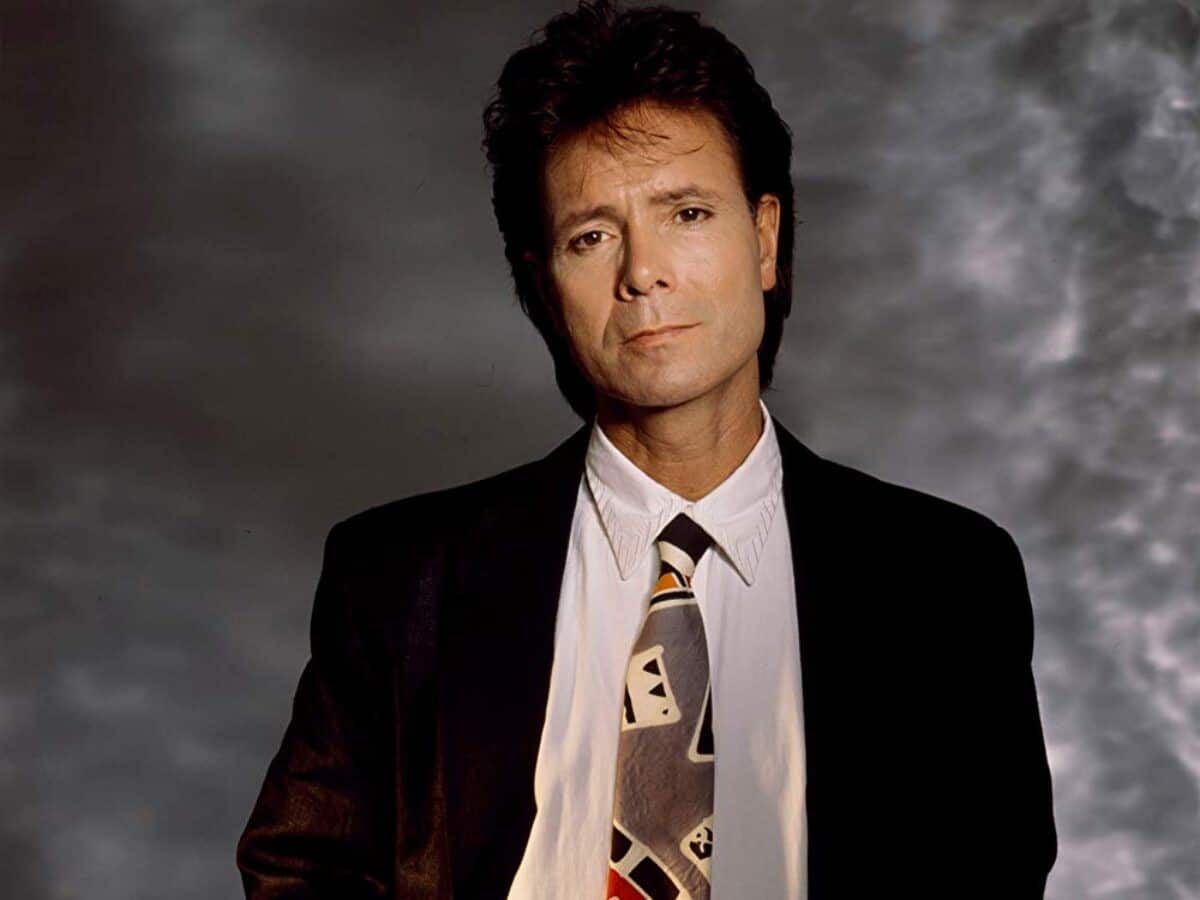
655. ‘Saviour’s Day’, by Cliff Richard

Appearing on a 3rd Xmas #1 in a row, and going full in on the nu-folk sound of the time: the one, the only, Sir Clifford of Richard.

Saviour’s Day, by Cliff Richard (his 13th of fourteen #1s)

1 week, from 23rd – 30th December 1990

It’s a Christmas tune, and yet it’s not really. No references to decking the halls or Santa Claus here, and not a sleigh bell in sight. I mentioned that, two years ago, despite ‘Mistletoe and Wine’ being unashamedly religious in tone, Cliff still kept the little secular touches that people expect from a festive chart hit. For ‘Saviour’s Day’, though, he’s gone full-on Christian contemporary.

Open your eyes on Saviour’s Day, Don’t look back or turn away… It’s proper judgement day stuff – some hardcore preaching. Life can be yours if you’ll only stay… Songs like this are usually tucked away on a niche Christian chart, so that regular people don’t have to hear them. But, because Cliff is the biggest solo star this island has ever produced (a bold statement, but I’m sticking to it!) he manages to take it to number one.

However actually, by the end, I’m pretty sure he’s toasting several different gods: the God of the Present, the God of the Past… Maybe he was going all Dickensian – rather than for a pagan, Earth-mother sort of vibe – but I’m not sure the Bible allows that kind of blasphemy. Though maybe God himself would think twice before disagreeing with Cliff.

I was expecting to dislike this. And there are certainly aspects of it that I can’t get behind. The lyrics, for a start. The electronic pan-pipes are also an acquired taste, while there are some horrible synth flourishes that make my hair stand on end. Plus, the video is ridiculously cheesy (or is that cheesily ridiculous?), featuring Cliff striking messianic poses on the chalk cliffs of Dorset. And yet, ‘Saviour’s Day’ has a corker of a chorus. And people who know much more about song writing than I do really rate it.

It’s probably better than ‘Mistletoe and Wine’ – though that too has a tacky charm – and it’s certainly better than Cliff’s fourteenth and final number one. (Thankfully we have some way to go before we meet that one.) What’s not up for debate is that this record gave him a chart-topper in every decade that the UK singles chart had been in existence: two in the fifties, seven in the sixties, one in the seventies, two in the eighties, and now one in nineties (plus one to come). It’s a feat that has never been matched, and perhaps never will.

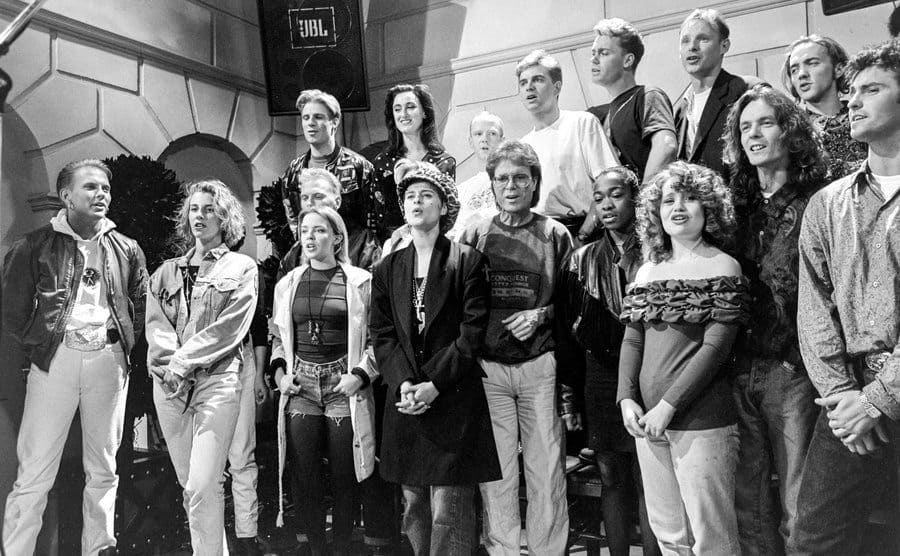
638. ‘Do They Know It’s Christmas?’, by Band Aid II

And so we reach the end of the 1980s. And, in some ways, the decade’s final number one single is quite perfect.

Do They Know It’s Christmas?, by Band Aid II

3 weeks, from 17th December 1989 – 7th January 1990

It’s a charity single, for a start, a ‘genre’ that has dominated the charts since the middle of the eighties. It’s a cover, of course, of the charity single, the one that kicked the whole trend off. Plus, it was produced by Stock, Aitken and Waterman, giving the trio their seventh #1 of the year. But beyond the good cause, and the production team, the tag ‘perfect’ quickly wears thin.

There’s a reason why none of the three subsequent Band Aids have ever been much played after their original chart runs; while the first is seen as a classic, a perennial returnee to the charts every Christmas. There’s a novelty factor each time, and the urge for people to be seen to be doing something for charity, that means a new Band Aid single will always chart highly. But beyond that initial burst of enthusiasm, there’s always the slow realisation that the new versions simply aren’t as good.

Here, we swap Bono, Boy George, Sting and Paul Young for a considerably younger crowd. Kylie is on opening line duties, followed by Chris Rea and Jimmy Somerville. We meet Jason Donovan, Sonia, Lisa Stansfield, Bros and Wet Wet Wet again, after their recent chart-topping successes. The only singers to reprise their roles from 1984 are two-thirds of Bananarama (Siobhan Fahey having left the year before). To be honest, I struggled to recognise many voices without watching the video, which isn’t a problem you have with the original. One voice stands out above the rest, though: Sir Cliff, who makes it two Xmas #1s in a row (and who will, without wanting to give too much away, soon be making it three).

The production is muted and respectful by SAW’s usual standards, which was probably to be expected. The video is standard: Michael Buerk reporting from Ethiopia, horrifying images of malnutritional babies spliced with footage of Marti Pellow and Matt Goss goofing about. We’ll leave Band Aid II to play out here, bringing the 1980s to a close, and instead muse on the final year of the decade.

1989 has been, I’m going to stick my neck out here, a game-changing year. It’s set the template for modern pop music, in various ways. Firstly, on a purely technical level, songs have started to enter regularly at #1. They’ll continue to do so throughout the 1990s, speeding up the turnover of chart-toppers. As well as that, we’ve had the first ‘modern’ dance #1 from Black Box, from which almost every subsequent dance smash can be traced. We’ve met the first ‘modern’ boy band too, in New Kids on the Block.

Meanwhile, rock music is no longer the force that it has been since the late ‘50s. Rock groups will still make #1, as U2 and Simple Minds have recently done, but often for one week only, thanks to fanbase support rather than genuine cultural heft. And finally, Madonna has defined the ‘modern’ female pop star, and the pop comeback (and comeback video) as a massive event that every pop star since 1989 has tried to mimic.

Next up, we’ll be embarking on the 1990s – the decade in which I came of age, among Britpop, dance, the Spice Girls and boy-bands. I’m looking forward to reliving it. But, you could argue that the nineties began a year earlier, in the final year of the decade that taste forgot…

620. ‘Mistletoe and Wine’, by Cliff Richard

I am writing this post on January 25th, possibly the least Christmassy date in the entire calendar. The whole shebang just came and went a month ago, with any right-minded human needing a good long detox from festive music…

Mistletoe and Wine, by Cliff Richard (his 12th of fourteen #1s)

4 weeks, from 4th December 1988 – 1st January 1989

Though, let’s be honest, is there ever a good time for listening to ‘Mistletoe and Wine’? Even if this were Christmas Eve, it’s not a song I’d ever rush to write a glowing blog post about. Yet it crops up, year in, year out: in shops, on music channels, buried away on Christmas playlists.

Cliff is probably Britain’s best-known Christian, well him and the big Archbishop of C, so of course his Christmas songs have to go deeper than just singing about Santa, presents and snow falling all around us. (He does sing about those things in ‘Mistletoe and Wine’, presumably because he still wanted people to buy the record; he just mixes a bit of sermonising in with it.) A time for living, A time for believing, A time for trusting, Not for deceiving… Ours for the taking, Just follow the master… Meanwhile, the way he pronounces ‘Christian’ in the chorus, with that extra vowel, has always gotten on my nerves.

Watching the video for ‘Mistletoe and Wine’, which begins with Sir Cliff peeking into a sleeping child’s bedroom, you could be forgiven for thinking that he himself is the aforementioned ‘master’, not the man upstairs. The way he conducts his carollers, swaying around as if in raptures, arms outstretched in a messianic pose… It’s ridiculous. Not to mention ridiculously camp.

But… There is something cheesily charming buried within, especially the moment it swells towards the final chorus, and a choirboy comes in with snatches of ‘Silent Night’. There’s an ‘all together now’ music hall feel to it. Most Christmas music is ultimately quite naff, and yet we love it. This record is certainly one of the naffest, and yet it is well loved. And to give him his dues, Cliff was several decades ahead of Mariah and Bublé in setting himself up as a Christmas fixture when the regular hits began to dry up.

I think I’ve been pretty fair and open-minded when it came to Cliff’s eleven previous chart-toppers. Some I really enjoyed discovering (‘Please Don’t Tease’) while some are just undeniable milestones of British popular culture, deserving of our respect (‘Summer Holiday’ and ‘Congratulations’). Some I found dull as dishwater (‘The Next Time’) while at least one is a stone-cold classic (‘We Don’t Talk Anymore’).

As late as the early-eighties he was still scoring respectable pop hits, but this feels like the moment he lost his grip. He was, to be fair, almost fifty when it was released, and how many fifty years old pop stars are still able to have big hits? But from here on in, Cliff seems to have been playing to the gallery, giving the middle-aged ladies what they wanted, with no attempt to keep current. This would be a great place to sign off on Cliff, sending him to a well-earned retirement of gospel songs and old rock ‘n’ roll covers. But no… He still has two further festive #1s to come. And by the time we’re done with them, you’ll be begging for ‘Mistletoe and Wine’…

601. ‘Always on My Mind’, by Pet Shop Boys

The Christmas #1 record for 1987 wasn’t a novelty, a charity record, or a song about snow and sleighbells. (Thank God.) It was simply the biggest pop act in the country, the freshly-crowned winners of my most recent ‘Very Best Chart Topper’, at the height of their powers, covering a classic.

Always on My Mind, by Pet Shop Boys (their 3rd of four #1s)

4 weeks, from 13th December 1987 – 10th January 1988

Not just ‘covering’ a classic. More grabbing a classic by the scruff of the neck, dressing it up in glitter and lycra, and shoving it onto the dancefloor. Cover versions work best when they take a song away from its usual environs, and this take on what was originally a hit for Elvis Presley certainly does that. From soaring balladry, to pounding Hi-NRG disco…

Great cover versions are also almost always of great originals. The shift in tones, in styles and in genres brings out different shades of meaning, different ways of appreciating the song, but at heart they remain very good in whatever dressing a band hangs on them. Elvis’s version is slick seventies bombast, made for belting out at his Vegas residencies; and the Pet Shop Boys’ take keeps the song’s humungous presence, swapping lush orchestration for thumping synths, while Neil Tennant’s detached performance of the heartfelt vocals adds an almost comic element.

Do they also change the words? The Elvis version is quite clearly: Maybe I didn’t love you, Quite as often as I could have… Whereas PSBs seem to be singing Quite as often, As I couldn’t… I just be mishearing it, but if they are changed they add a different meaning to the song, and it’s not quite as apologetic.

‘Always on My Mind’ has also been covered by Willie Nelson, as a country ballad, having first been recorded by Brenda Lee in 1972. Elvis’s version, though, was the first to become a hit and so feels like the original. Pet Shop Boys first performed their take for an ITV special on the tenth anniversary of Presley’s death, and it was so well received that they released it as a single a few months later. And as Pet Shop Boys singles go, it’s pretty straightforward. There’s nothing particularly clever, or knowing: it’s just an all-out dancefloor banger – one of those songs that pretty much commands you to get up and start making shapes.

What is the name of that pre-set, synthesised chord – the one that sounds like a dog barking, but compressed? It’s a sound that’s synonymous with the late-eighties and early-nineties, to me, and the Boys use it liberally here. It works, but also completely dates the song. Never mind, though. It was the perfect Christmas hit: both a fun pop tune from two huge chart stars, and a song that mums and grans up and down the land knew too. A smash for all the family! And that’s that as far as 1987’s concerned. Never fear, though. The pop classics keep on coming. Stay tuned…

Advertisements