Love Can Build a Bridge, by Cher (her 3rd of four #1s), Chrissie Hynde (her 2nd and final solo #1) and Neneh Cherry with Eric Clapton (their 1st and only #1s)
1 week, from 19th – 26th March 1995
What this? Cher… Chrissie Hynde?… Neneh Cherry and Eric Clapton? It can only mean one thing: charity single ahoy!
It probably means one other thing… That this record isn’t going to be much good. Not that it stinks – no, we’ve endured far worse chart-toppers in the name of a good cause. But following directly on from one of the all-time power-ballads, this one meanders by fairly blandly.
The three women gamely try to wring some cheer out of this tune, spending much of the video swaying arm in arm as if it was a trailer for ‘Steel Magnolia’s II’ (the fact that they do so while standing on a moving collage of famine victims seems slightly tasteless…) But really, a song with such an impressive cast-list should have little more life to it. The two moments that raise the pulse are the middle eight – When we stand together, It’s our finest hour… – and the solo, provided by one of the most famous guitarists ever to wield the instrument. File Eric Clapton under an ever-expanding folder titled: ‘legends poorly served by their ‘biggest’ hit’…
‘Love Can Build a Bridge’ was written and originally recorded by mother and daughter duo The Judds in 1990, with lyrics inspired by Naomi Judd’s battle against Hepatitis C. This version was the 1995 Comic Relief single, which is interesting, as there’s nothing ‘comic’ about this song. But considering that previous Comic Relief number ones have included Cliff and The Young One’s remake of ‘Living Doll’, and ‘The Stonk’, this comes as something of a relief (if you’ll pardon the pun).
Though this does mean that there’s not as much to write about here, compared to the truly heinous charity singles. The most noteworthy thing is that it is Clapton and Neneh Cherry’s highest-charting hit (it being the fourth of only five UK Top 10s for Cherry), and Chrissie Hynde’s final #1, after ‘Brass in Pocket’ with The Pretenders and a duet with UB40 (interestingly a cover of Sonny & Cher’s ‘I Got You Babe’). The one contributor that we will be hearing from again is, of course, Ms Sarkisian, who has the small matter of releasing the biggest-selling hit by a solo female… ever… to come.
We’ve had Whitney, we’ve had Mariah… Now we welcome onstage the 3rd member of the Three Tenoritas…
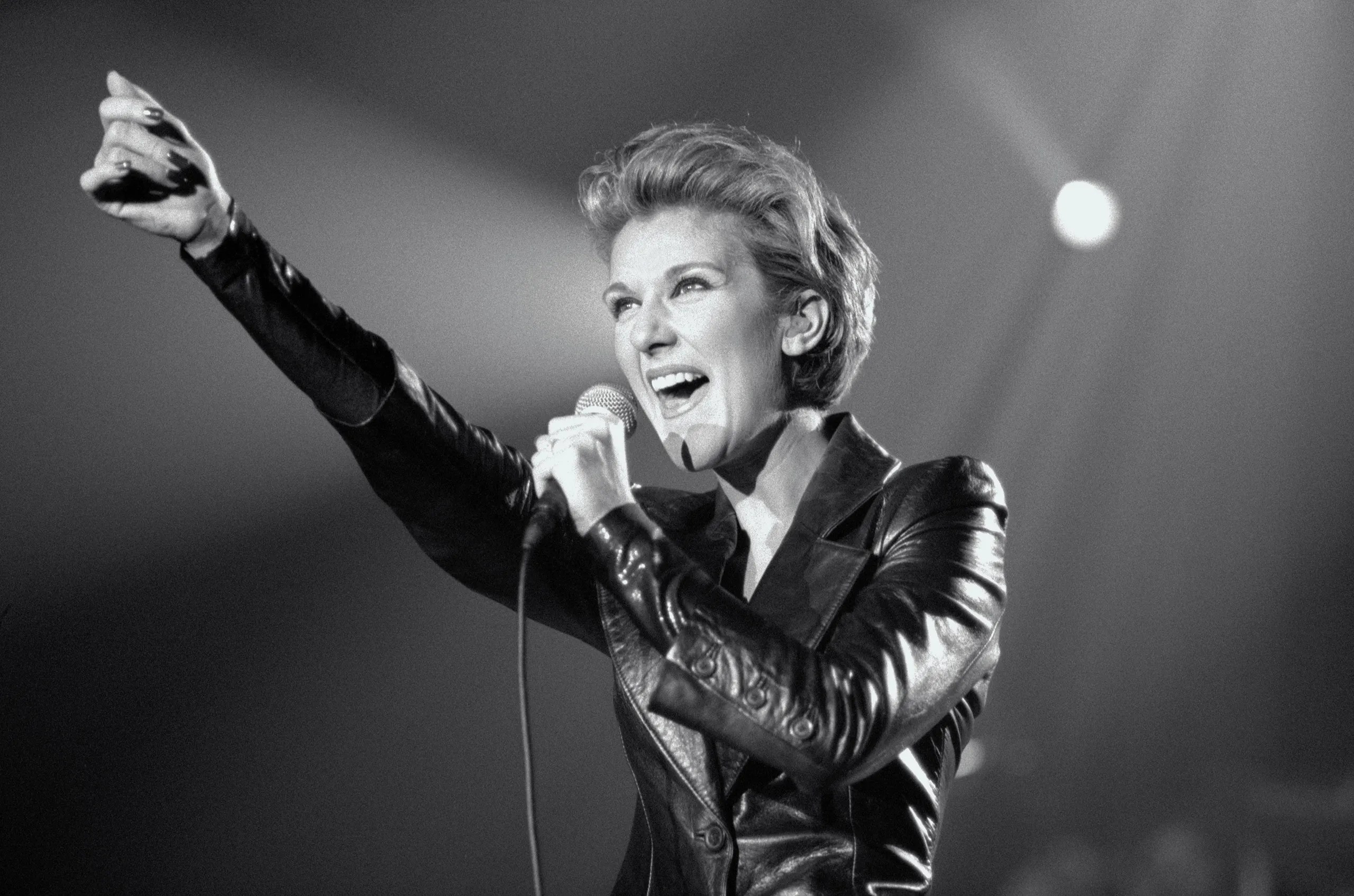
Think Twice, by Celine Dion (her 1st of two #1s)
7 weeks, from 29th January – 19th March 1995
It’s yet another colossal power ballad, of the style so beloved by the decade’s large-lunged divas. I was hard on ‘I Will Always Love You’, and down on ‘Without You’, and you probably think you know where this post is going. But, you’d be wrong. For this one goes straight to the top of the pile marked ‘Guilty Pleasures’.
What’s the difference between ‘Think Twice’ and those aforementioned crimes against eardrums? To be honest, I’m not sure. The first minute of this song is average, dull even. There are moody synths, as Celine Dion sings about her man starting to pull away. There are pan-pipes too, for God’s sake. It doesn’t sound promising. But at the start of the second verse, when the drums and guitars kick in, and Celine starts fighting for her man, the song transforms into a different beast.
My complaint about recent power ballads is that the sense of fun has drained out of them. They’ve become earnest and stodgy, not to mention that they’ve been clogging up the number one spot for months on end. But ‘Think Twice’ has a sense of OTT silliness that the best ‘80s power ballads – the likes of ‘Total Eclipse…’ and ‘Take My Breath Away’ – had. Then there’s the fact that it features an actual guitar solo! Not to mention the rhyming of ‘serious’ with ‘you or us’. And finally, there’s the way that Celine goes completely unhinged for the final chorus.
It’s impossible not join in with her ad-libs, the ba-ay-ay-bays and the NOnononoNOs, as this record hurtles to its gigantic conclusion. It’s all helped by the steamy video, in which Celine mopes around while a hunk in dungarees carves massive blocks of ice into sexy shapes. He storms off angrily, and Celine proceeds to caress and grind against his giant sculptures until he returns. It’s a cross between soft-porn and a tacky karaoke video, and it adds a further layer of flamboyance to what is already a piece of high camp.
This slow-burner of a power ballad had a suitably slow-burning journey towards becoming one of the biggest selling hits of the decade. Recorded in 1993, it was released as a single in September 1994, before finally making #1 five months later. Its fifteen-week climb to the top was a record and, in an interesting sign of the times, it was the first #1 not to be made available in vinyl.
Celine Dion had been a star in Quebec since the early ‘80s, but it wasn’t until 1990 that she started recording primarily in English. ‘Think Twice’ was just her 3rd Top 10 hit in the UK, but it set her up for many more. And although I like this much more than many of Houston or Carey’s monster ballads; I don’t have the same love for the rest of Dion’s career. She’s never really moved far beyond glossy ballads, and none of them came close to this classic. In fact, I suspect part of the reason that this record sounds so good is that it makes a refreshing change from hearing her signature song, her second number one… You know, the one involving an iceberg. And I won’t be anywhere near as nice about that dirge…
Every good guy needs a bad guy. Every superhero a nemesis. And the cutest, cleanest-cut boyband of the day needed some rough east London lads as their foils…
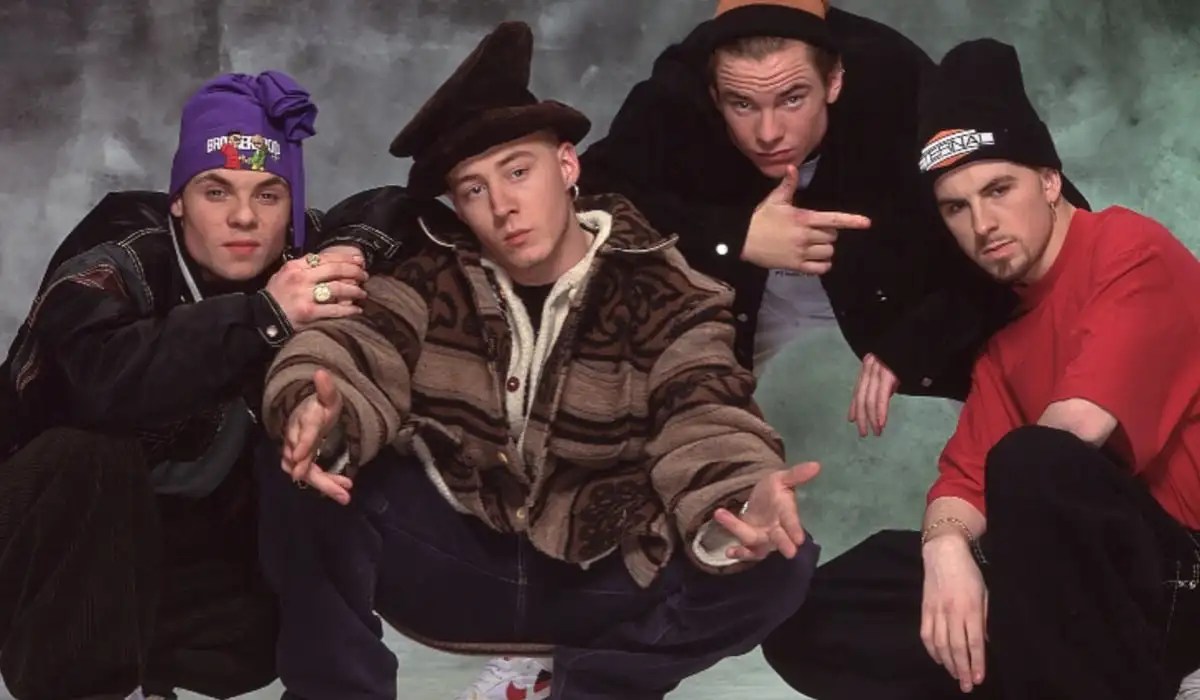
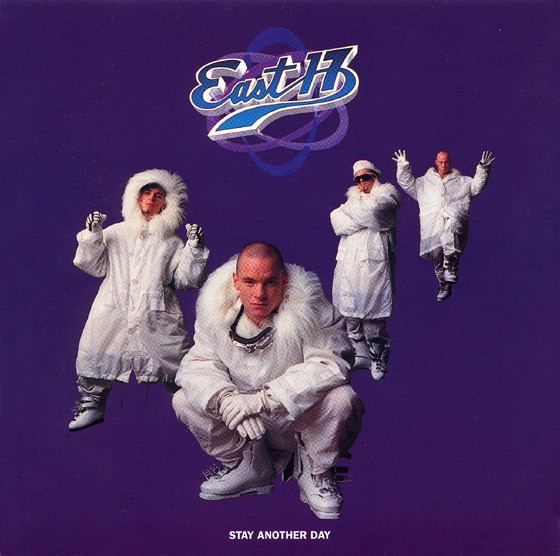
Stay Another Day, by East 17 (their 1st and only #1)
5 weeks, from 4th December 1994 – 8th January 1995
Take That have dominated the charts of 1993-1995 like few acts ever do: they’re on five number ones in our countdown – and it’ll very soon be eight – having stuck to a winning pop formula. East 17 meanwhile had been ticking along since mid-1992, scoring five Top 10 hits packed with edgier dance and hip-hop touches, yet not coming close to matching Gary and the boys’ success.
Though the one thing East 17 can lay claim to that Take That can’t is a Christmas number one. A classic Christmas number one at that. A record… I’m just going to stick my neck on the line right now… better than any Take That ever released. (Yes, including that one…) And, ironically, to score their only number one they momentarily dropped the bad-boy posturing, and out-Barlowed Barlow himself; recording a sophisticated, grown-up ballad the likes of which Take That’s chief songwriter would have jumped at.
Baby if you’ve got to go away, Don’t think I could take the pain, Won’t you stay another day… It’s a ballad, of course, and on first listen the lyrics are standard weepy, break-up fare. The four voices meld together in an almost a cappella way – a nod to Christmas hits past? – led by a painfully young sounding Brian Harvey. It’s touching, but when you learn that Tony Mortimer actually wrote it following his brother’s suicide, then lyrics the might on the surface sound simplistic Oh don’t leave me alone like this… hit ten times harder, and elevate the song much higher.
The only controversy that surrounds this record is whether or not it’s a Christmas song. So pressing an issue is it that YouGov polls have been conducted on the subject (the ‘no’s had it, with a slim majority). I’d have to say it is though. It clearly ends in a hail of church bells, that were tacked on once the song had been slated for a festive release. Plus the video has snow in it! Luckily the fact that it now gets filed away with the other festive favourites for ten and a half months of the year means it’s not been done to death. Unlike some other boyband ballads from the mid-nineties…
Speaking of the video… It’s both iconic (those white parka jackets) and yet terrible (pretty much everything else – the dodgy green screen, the floating dancer, the white gloves…) But even that can’t ruin the song. East 17 would continue until the end of the decade – scoring a further six Top 10s – with their fair share of sackings, drama and drug-related controversies. Take That, it’s fair to say, won the war, if there ever was one. Though I was very surprised to learn that if you look beyond British shores, East 17 actually sold more records worldwide, thanks to their popularity in Europe and Australia. And recording one of the best ever boyband singles ever probably helped too.
The charts of the first half of the 1990s have had many stories to tell: interesting one-hit wonders, new sounds coming, old sounds going, acts appearing and becoming huge… And yet from a certain angle it can look like the period was dominated by just three songs, all from film soundtracks, which together spent forty-one weeks atop the charts. (Set back to back that would stretch for over nine months, a period in which you could conceive, gestate, and birth a human child…)
Love Is All Around, by Wet Wet Wet (their 3rd and final #1)
15 weeks, from 29th May – 11th Sept 1994
We’ve already endured Bryan Adams and Whitney, and now here is the third and final chart-hogging behemoth. And thankfully it’s the best of the three, by far. It’s not an overwrought power-ballad, for a start. More a low-power ballad, with some jaunty flourishes among the cheesy sentiments and Marti Pellow’s over-singing.
I like the woozy fills before the chorus, and the way the band manage to update a song from the sixties with just enough nineties rock touches: a string section, some power chords, and a soaring guitar for the fade-out. ‘Love Is All Around’ was originally recorded by the Troggs, making #5 in 1967. This gave Reg Presley a writing credit on a second #1, after the band’s 1966 #1 ‘With a Girl Like You’. (Rather brilliantly, he spent the unexpected royalties on crop circle research…)
The fact that it’s a more upbeat number than its ginormous predecessors is also reflected in the movie it came from. ‘Four Weddings and a Funeral’ was a rom-com, compared to the epic ‘Robin Hood – Prince of Thieves’ and the slushy ‘Bodyguard’. For the soundtrack, Wet Wet Wet were asked to choose between covering this, Barry Manilow’s ‘Can’t Smile Without You’ and Gloria Gaynor’s ‘I Will Survive’ (which would have been interesting…) ‘Love Is All Around’ was, I’d imagine, an easy choice for the pop-rocking Wets.
As much as this record is a relief after the other two long-runners, I shouldn’t overstate its quality. It’s fine. It’s serviceable. It’s a decently done cover. Nothing more. The original has a low-key charm to it that this version cannot reproduce with its lush production, and the fact that Marti Pellow doesn’t do ‘low-key’. And of course, we can’t ignore that it far outstayed its welcome on top of the charts. You often hear talk about ‘The Song of the Summer’. Never has it been quite as literal as this, with the record on top from late-May to early-September.
By the end of its run, some radio stations were refusing to play it. The band were well aware of the record becoming a millstone around their necks, and deleted it from production. ‘We did everyone’s head in’, Pellow succinctly summed up. This meant that it fell one week short of matching Adams’ record for consecutive weeks at #1. ‘Love Is All Around’, however, did outsell both Adams and Houston in the long run, and currently sits at almost two million copies (number eleven in the all-time sales table).
This song’s success didn’t completely sour Wet Wet Wet’s reputations in the UK. They wouldn’t again make number one, but they scored five further Top 10s before splitting in 1997 after a dispute over royalties. They reformed a decade later, and continue touring and recording with two of the four original members.
The list of superstar artists with underwhelming singles chart records is long, and complex. There’s Led Zeppelin, who simply didn’t bother releasing them. There’s Chuck Berry, whose ding-a-ling made number one two decades after he’d helped invent rock and roll. There’s Stevie Wonder, whose two chart-toppers don’t begin to do his talent justice…
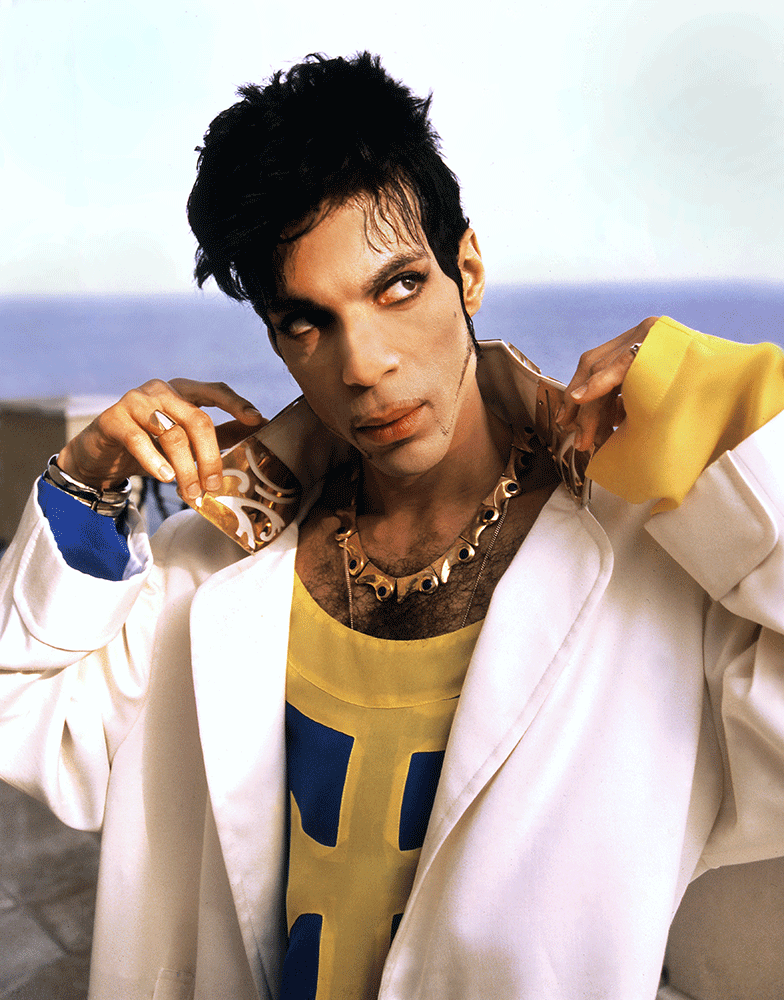
The Most Beautiful Girl in the World, by Prince (his 1st and only #1)
2 weeks, from 17th April – 1st May 1994
Then there’s Prince – the star with possibly the biggest disparity between talent and number one hits. Not that he has a terrible overall chart record in the UK: seventeen Top 10 hits is nothing to be sniffed at. But only this one chart-topper (the 2nd biggest hit of his long career, apparently…)
And I’m just going to come out and say it… For ‘The Most Beautiful Girl in the World’ to be Prince’s only #1 is as big a travesty as ‘My Ding-A-Ling’. It might even be bigger. At least Berry’s novelty is dumb fun. This is syrupy, over-produced tripe, with some queasy lyrics… It’s plain to see, You’re the reason that God made a girl… The fact that the song debuted on the 1994 Miss USA pageant speaks volumes.
As I listen, all I can think of is all the brilliant Prince tunes that came and went without making #1… And not only is this dull, it’s disappointingly chaste. This from a man who recorded songs like ‘Soft and Wet’, ‘Cream’, and ‘Sexy MF’. There’s a spoken-word portion, as in all the worst love songs, in which Prince semi-raps: And if the stars ever fell, One by one from the sky…
It leads on to the most enjoyable bit of the song though, in which Prince provides his own backing vocals in a deep voice before launching back into his more famous falsetto. The song’s odd sound effects – tears dripping, clocks ticking, birds twittering – are interesting too. These moments are where we come closest to the fun, creative-chameleon Prince, who’s sorely missing from the rest of this sludge.
Of course, ‘The Most Beautiful Girl in the World’ isn’t technically a ‘Prince’ song. It came at the start of his ‘Love Symbol’ period, AKA the time he was known as ‘The Artist Formerly Known as Prince’, as part of a rebellion against his Warner Brothers contract. He felt they were holding him back, insisting that he chill out and release albums more sporadically. Interestingly, this single – one of his most successful – was released on a small, independent label, rather than Warner Bros. The corresponding album didn’t see the light of day for another year and a half, and is still involved in a lawsuit over plagiarism involving ‘The Most Beautiful Girl in the World’ and an Italian song called ‘Takin’ Me to Paradise’.
Prince does already have two other chart-toppers to his name as a songwriter. Two classics: Chaka Khan’s ‘I Feel for You’ and Sinead O’Connor’s ‘Nothing Compares 2 U’. And of course there’s ‘Purple Rain’, ‘When Doves Cry’, ‘Kiss’… So many that I might have to do a post on Prince’s nearly-number-ones. All these hits kick this one into the long grass… And yet. The charts often don’t play nice…
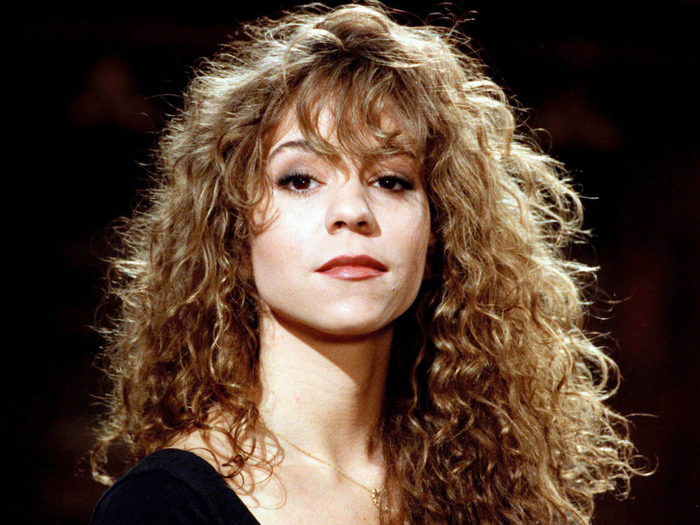
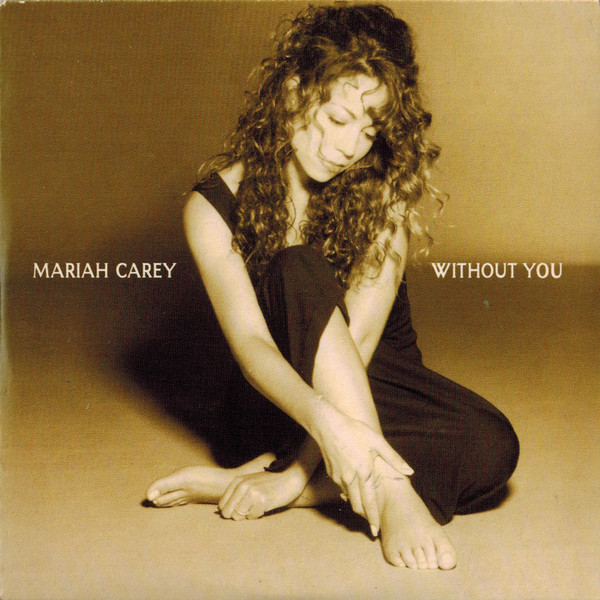
Mariah Carey, one of the biggest-selling stars of the 1990s, is very poorly served in terms of the UK number ones she scored in that decade. Just the one, in fact. This one.
Without You, by Mariah Carey (her 1st of four #1s)
4 weeks, from 13th February – 13th March 1994
And I have to say, as much as I have a soft spot for ‘Mariah’ the camp icon – the ‘Cribs’ appearance, the ‘I don’t know her’ meme, all that nonsense – the fact that she didn’t dominate the British charts in the same way she took over the Billboard Hot 100 can only be a good thing. Yes, she can sing. No question. She takes Nilsson’s 1972 #1, and sings the absolute bejeezus out of it.
At one point, towards the end of this track, she extends the I can’t give any more… line for a full sixteen seconds, in a display of aggressive melisma. I can barely hold my breath for sixteen seconds, let alone belt out a succession of different musical notes for that length of time, and in purely technical terms it is very impressive. And yet, it’s these sorts of vocal gymnastics that ruin the song.
The same charges that were laid out against Whitney Houston as she whooped and hollered her way through ‘One Moment in Time’ and ‘I Will Always Love You’, can be made against Mariah here. Technically good singing will only get you so far, if you don’t mean what you’re howling about. Not in every song – plenty of decent pop songs can be churned out half-arsed – but in a torch song like this, with such a heartfelt original to compare it to, the difference shows. (Nilsson’s version, of course, wasn’t the original, but it is the version to which everyone compared Carey’s.)
Another comparison I can make between Mariah and Whitney is that I’ve always enjoyed Carey’s poppier moments more than her monster ballads. ‘Fantasy’, ‘Dreamlover’ and ‘Heartbreaker’ are all solid nineties pop tunes. What we also have to take into account, before complaining about her endless stream of ballads, is that she was tied in to a pretty controlling contract, and a pretty nasty relationship, with her manager Tommy Mottola.
I was under the impression that Harry Nilsson had died when this cover of his most famous hit was at #1, and was going to make a cheap joke about his cause of death. Except he had died a month before, in January 1994, at the very young age of fifty-two. I assume that Carey’s cover was already recorded by then, and wasn’t intended as a tribute, even if it did in the end become one. She had already had eight chart-toppers in the US, though ‘Without You’ stalled at #3 over there.
Younger readers may be surprised to discover that Mariah Carey actually had a recording career beyond a certain Christmas song, the name of which I dare not type out in case I accidentally get it stuck in my head. In truly shameless Mariah fashion, she’s really lent into her ‘Queen of Christmas’ alter-ego in recent years and, even as I sit here in late October, I’m counting down the days until her annual assault on the charts, and on our ears…
I wrote in my last Take That post of the band’s obvious desire to be more than just teenyboppers, that their cover of ‘Relight My Fire’, and the involvement of Lulu, was proof of them aiming to become Britain’s biggest act, bar none. ‘Babe’, their third number one in under six months is another step in that direction…
Babe, by Take That (their 3rd of twelve #1s)
1 week, from 12th – 19th December 1993
It was also a clear bid for Christmas #1, entering the chart in pole position the week before the big day. But this isn’t the cosy, festive love song you might expect. No sleigh bells and novelty jumpers here. It’s the tale of a lost love, opening with dramatic strings, a disconnected phone call, and a slightly creepy first person narrator. I come to your door, To see you again, But where you once stood, Was an old man instead…
I like a song that tells a story, and that’s what this five-minute epic (another epic!) does. Mark Owen – on lead duties this time – gets her number, and calls. He manages to find out where she now lives, goes down her street… It’s pretty overwrought, with some clunky lines (You held your voice well, There were tears I could tell…), and the unanswered phone call at the beginning and end is pure melodrama.
But, while you can pick holes, this is above and beyond your usual boyband fare. Come the last verse, as she answers the door, the singer sees a little boy: He had my eyes, He had my smile… Plot twist! Why she ran away with his child, clearly never wanting to hear from him again, is not explained – but I’ll give Take That the benefit of the doubt and assume they wanted this sinister ambiguity. I hear more than a hint of menace when the singer announces I tell you I’m back again…
The video suggests that he’s been away at war, but I’m not so sure. I like the creepier reading. It builds to an almost hard rocking climax, before disintegrating into thin air, and a dialling tone. Like I said, it was clearly a bid for Christmas number one, an achievement that would have capped off Take That’s breakthrough year. And when it entered at number one the week before, all bets would have been off…
Except… Blobby, Blobby, Blobby and all that. The pink and yellow one became the first act in twenty-five years to return to the top, and the rest was history. Take That never did get their Xmas #1, though there will be a boyband classic at the top this time next year. Perhaps the fact that it is quite a dark song, which isn’t about cuddling up with your loved one by the fire, also hurt it in the end. ‘Babe’ goes down as an interesting sidebar in Take That’s career: not one of their biggest or best-loved hits, but another sign that they were here for the long run.
On the one hand, we have to ask how this became a number one single. How did this outrageous, eight-minute long, barnstorming rock-opera push past the dance and all the Take That to become the biggest seller of the year?
I’d Do Anything for Love (But I Won’t Do That), by Meat Loaf (his 1st and only #1)
7 weeks, from 17th October – 5th December 1993
On the other, we have to ask ‘how could it not?’ What would be the point of a song this huge getting stuck at #23? You put this much time, and money, this many power chords, that many prosthetics on Meat Loaf’s face, then you have to aim for the top. Then there is the fact that it was the lead single from ‘Bat Out of Hell II’, Meat Loaf’s first album in almost a decade, and follow-up to one of the best-selling albums of all time. Maybe the demand and the interest was there…? Or, if we had an imaginary third hand, do we decide not to care why, and just give thanks that it did? The dramatic build-up, the soaring chorus, the sledgehammer duet, the fun innuendo in the title…
It tells the story of a frustrated lover, who would do anything for love, you know it’s true and that’s a fact. Except, for one thing. One thing that turns out to be vital. ‘That’. Many suggestions have been offered as to what ‘that’ is: some philosophical, some slightly more sexual… There’s even a Wikipedia entry on the ‘perceived ambiguity of ‘that’’. The video, directed by Michael Bay with a budget that would be the envy of many a feature film, pads the story out a bit more. Meat Loaf plays a monster, Dana Patrick plays a sexy siren, miming along to lines originally sung by Lorraine Crosby. It’s part ‘Beauty and the Beast’, part Channel 5 soft porn. At the end, the pair escape an approaching police squad on a motorbike. It’s every bit as fun, and as confusing, as the song itself, and I’d suggest a large factor in its success.
Speaking of the female vocalist, she has to wait a while before coming in, but when she does she makes the most of it. Will you cater to every fantasy I’ve got, Will you hose me down with holy water, If I get too hot? Hot! has to be one of the greatest lines ever in a number one single. It’s reminiscent of Meat Loaf’s other epic duets: with Cher on ‘Dead Ringer for Love’ and with Ellen Foley on ‘Paradise by the Dashboard Light’. Sadly, Crosby – like many of Loaf’s female partners – didn’t get a credit, or any royalties, for her part in the song.
Do we list this as the ‘90s version of ‘Bohemian Rhapsody’? It’s every bit as epic, though not as genre-hopping. Or is it just a power ballad – possibly the ultimate power ballad? – the likes of which have been popping up at the top of the charts for a decade. The fun had started to fade, with bloated and boring turns by Bryan Adams and Whitney Houston, so Meat Loaf arrives just in time to inject some much needed OTT silliness to the genre. It was, of course, a creation of Jim Steinman, who also had a hand in another contender for best power-ballad ever: ‘Total Eclipse of the Heart’.
My only complaint is that it doesn’t build to a crescendo, rather a more gentle finish as the woman lists the ways he’s going to break her heart and he, to my ears anyway, grudgingly agrees. But that’s a minor quibble about a song that has so many soaring peaks over the course of its epic runtime. The UK single edit comes in at 7mins 48s, making this the longest number one single ever at the time, beating ‘Hey Jude’s twenty-five year record. There’s a more manageable five and a half minute edit, and a frankly ridiculous twelve minute version on the album. Meanwhile, following on from Lulu, Meat Loaf becomes the second consecutive forty-something to top the charts (he was forty-six when this made it to the summit).
‘I Would Do Anything for Love’ is glorious, but I don’t think it quite hits the heights of some of the ‘Bat Out of Hell’ tunes. I was raised on that album as a child, and could quite probably sing all seven songs (plus ‘Dead Ringer’ on the deluxe version) word for word. But it did what none of those songs could do, and gave Meat Loaf a number one single… In twenty-eight countries, no less. It was only his second UK Top 10 hit, but he’d go on to have several more in the years that followed, including a #8 for a re-released ‘Bat Out of Hell’ in the wake of this. I saw him in concert in 2007 and, while it was a lot of fun, it was clear that his best days were behind him by then. He continued recording and performing well into his seventies, despite various health issues, remaining a larger than life presence on stage and in interviews, until his death from Covid-19 complications last year.
More reggae at the top of the charts, after Shaggy and Ace of Base over recent weeks. And it’s Britain’s best-sellers in the genre who are bringing it there…
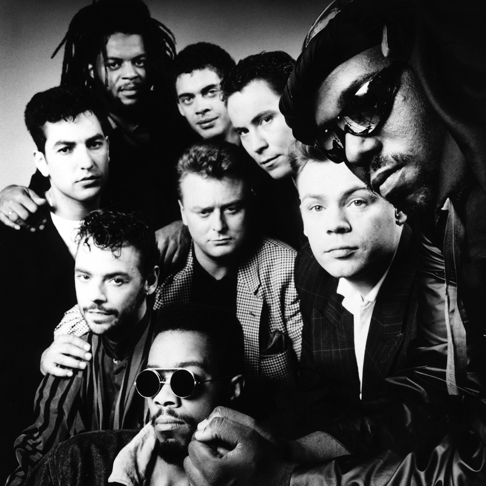
(I Can’t Help) Falling in Love With You, by UB40 (their 3rd and final #1)
2 weeks, from 6th – 20th June 1993
As with their last #1, a cover of ‘I Got You Babe’ with Chrissie Hynde, this is a dub take on a golden oldie (though note the slight title change from the Elvis original, a chart-topper in 1962). And I can see what they were going for – a softened version of their reggae sound, with clear nineties dance influences in the swaying beat – but I can’t take to it. ‘Plodding’ and ‘slow’ were the two notes I took on first listen. I also gave their version of ‘I Got You Babe’ a ‘Meh’ award, so I’ve got form.
Ali Campbell’s voice is an acquired taste most of the time, and especially so here. I don’t know if he’s trying to imbue his lines with emotion, but it mainly sounds as if he’s straining to get them out. Obviously it doesn’t help that the listener automatically compares his efforts to Elvis’s from thirty years earlier… And yet, the quality of the song shines through – there’s a reason why it’s become a standard – and I do like the addition of the short, sharp horn fills towards the end.
Like ‘Oh Carolina’ before it, ‘(I Can’t Help) Falling in Love With You’ featured on the soundtrack to the Sharon Stone movie ‘Sliver’. There are very few film soundtracks to have included multiple #1s, and it’s amazing that a movie as poorly regarded and forgotten as this ‘Sliver’ managed it. Still it gave UB40 their 3rd and final chart-topper, and became their biggest hit in the US, staying at #1 for seven weeks.
And we should note the impressive longevity of the band, given that those three number ones were spread out over a decade (while the Campbell brothers have one more shot at top spot, in a featuring role, to come). But I think it’s fair to say, and this is coming from someone who wouldn’t count himself as a fan, that UB40 are not best represented by their three #1s. Two of them are fairly pedestrian covers, while ‘Red Red Wine’ – which was also a cover, of course – has bit more charm to it, though still plays it fairly safe.
They had a few more years of chart hits in them, including two further Top 10s, but its perhaps right to mark this as UB40’s swansong. They remain a going concern, with four of the original eight members still in the band. Ali Campbell, however, left in 2008, after disagreements with the band’s management.
I have to admit my heart sinks each time I see an EP coming along. It’s hard enough writing about double-‘A’s (in fact, it can be hard writing about some of the standalone number ones…), but when it’s four songs to get through? Cancel my three o’clock…
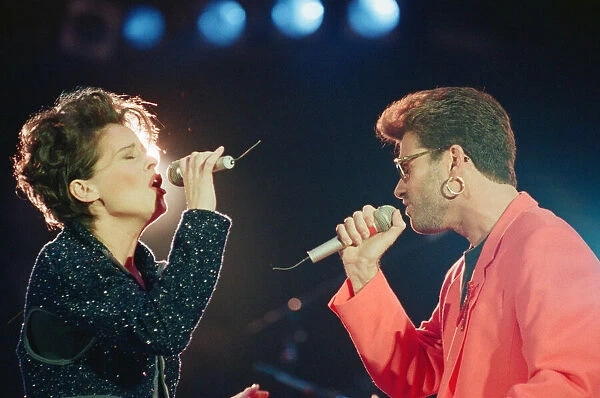
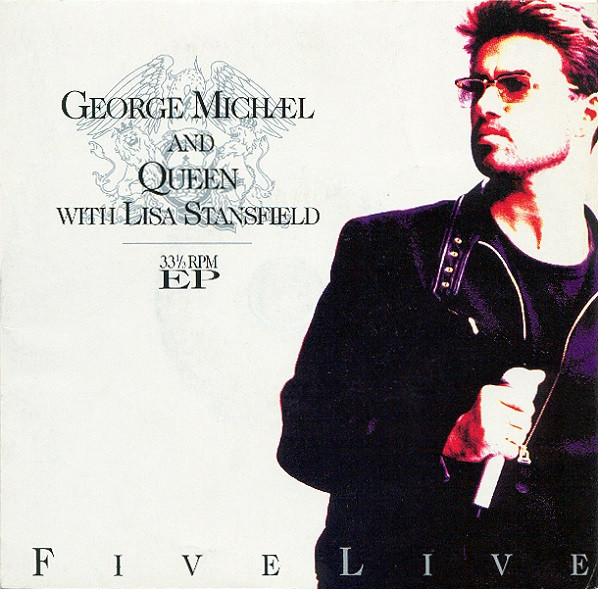
Five Live E.P., by George Michael (his 5th of seven #1s) & Queen (their 5th of six #1s) with Lisa Stansfield (her 2nd and final #1)
3 weeks, from 25th April – 16th May 1993
Luckily for me, the final EP to top the British singles chart has five whole tracks to get through! Five live tracks (hence the name) by George Michael, with assistance from Queen on two of them, and Lisa Stansfield on one. Let’s not tackle them in order, but take the two Queen covers first, recorded at the famous Freddie Mercury Tribute Concert a year earlier.
First up, George has a good old crack at ‘Somebody to Love’. It’s a thankless task, trying to do Freddie Mercury, singing one of his signature songs. But GM gives it a bloody good go. It might be the most impressive vocal performance of all seven of his solo #1s, especially given that it was recorded live. It’s a straightforward cover, but a decent one. And it takes to number one a Queen song that should, like many of their post-Bo Rap singles, have got there first time around. One wonders if this was where Brian May got the idea to start touring again, eventually, with the likes of Paul Rodgers and Adam Lambert.
The other Queen cover is ‘These Are the Days of Our Lives’, the track that had made #1 in the immediate wake of Mercury’s death. George is joined by Lisa Stansfield, who he welcomes on stage remarking that she hasn’t any hoover or curlers (presumably referring to her performance of ‘I Want to Break Free’ earlier that night, and not just being sexist…) Again it’s fine, excellently sung – particularly by Stansfield, who didn’t really get to show off her vocal chops on ‘All Around the World’. I don’t imagine it was easy going on stage with George Michael in full flow and holding your own, but she manages. Yet this track isn’t as enjoyable, because a) it was #1 barely a year before and b) it’s not as good as ‘Somebody to Love’ in the first place.
The three other tracks are George Michael solo efforts, recorded in March 1991, again at Wembley (from the same tour that gave us his ‘Don’t Let the Sun Go Down on Me’ duet with Elton John). According to the records, he covered both Adamski’s ‘Killer’ and The Temptations’ ‘Papa Was a Rolling Stone’, but both tracks are hard to, well, track down. Luckily on the British version of the EP he used a shortened, medley version, and again it’s… OK. You’d need a good ear to hear these tracks as a medley, but it works.
However, I refer you back to my comments on Michael’s earlier live #1: live versions being rarely better than the originals and, unless you were actually at the concert, the crowd noises are little more than a distraction. It’s like modern-day shaky camera phone footage, but better produced. Still it was for charity, which is always good, benefiting the Mercury Phoenix Trust, an AIDS fund set up by the remaining members of Queen, their manager Jim Beach, and Mercury’s former partner Mary Austin.
Did we need a fifth track though, making this the longest record to ever make #1 (a milestone that is now almost impossible to break)? Not really. This is where we tip into real self-indulgence, something that George Michael was always prone to, with a cover of ‘Calling You’, originally recorded by soul singer Jevetta Steele for the film ‘Bagdad Café’. I hadn’t heard of it, although the crowd’s reaction suggests that some of them had, at least. And in fairness it did win the Best Original Song Oscar for 1988. The vocals are amazing, from both George and his backing singers, especially again considering it was recorded live. But… It does go on. It unfolds at a snail’s pace, over five minutes. My patience is well and truly tried.
The history of EPs – longer than singles but shorter than LPs – on the UK singles chart is hard to pin down. In the sixties, their heyday, they sold very well and had their own chart. Between the 70s and 90s they fell out of fashion, but could chart alongside the singles. We’ve had three earlier EP #1s, from Erasure, The Specials and Demis Roussos. ‘Five Live’ was the last one to make the top, and maybe this sprawling beast of a record helped to kill them off. Nowadays the closest we’ve got to an EP is a Maxi-CD, or a digital bundle, but since the download/streaming era individual tracks can simply chart in their own right. The same fate has also befallen the double-‘A’ record, though we’ve still got a few more of them to come before then…









 The UK Number Ones Blog