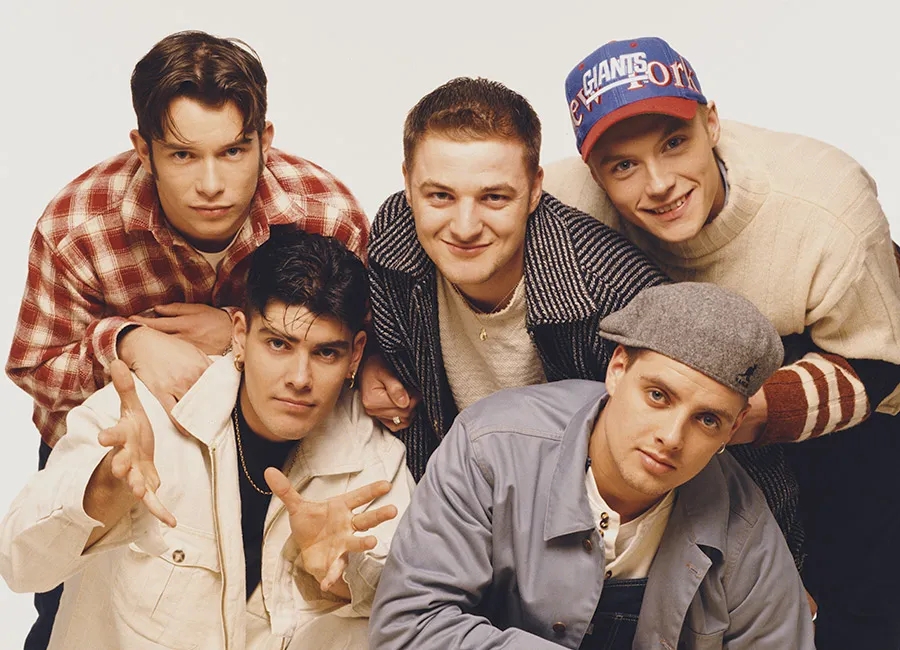
735. ‘How Deep Is Your Love’, by Take That

Take That have been a pioneering boyband in many ways, over the course of their eight number one singles. Multi-generational appeal with ‘Relight My Fire’, Ivor Novello-winning song writing in ‘Back for Good’, rock star level production on ‘Never Forget’

How Deep Is Your Love, by Take That (their 8th of twelve #1s)

3 weeks, from 3rd – 24th March 1996

And now they push the idea of the ‘goodbye’ single. Ever since, every boyband worthy of the name has released a ballad after the inevitable split has been announced, and solo careers begin to loom large on the horizon. Not just boybands, even, as The Spice Girls will soon attest. Sadly, though, for a band capable of very good pop songs, this is a fairly flat goodbye: a serviceably average Bee Gees cover.

It’s a faithful take on ‘How Deep Is Your Love’, which had made #3 in 1978 when the Bee Gees were at the height of their disco powers. Rather than disco, though, Take That go for a soft-rock, acoustic guitars with some hand-held drums, sound. It reminds me of ‘More Than Words’ by Extreme… Make of that what you will.

One thing the stripped back production does is push the boys’ – a four-piece now after Robbie’s departure – voices to the fore. Their harmonies are nice, almost a cappella at times, but they can’t lift this record to anything other than middling heights. It is not a patch on the original, which I would rate as one of the Brothers Gibb’s crowning glories.

Take That had announced their split a few weeks before this final single was released, ahead of a Greatest Hits album, and so it was inevitable that it would make top spot. (Helplines had to be set up to counsel distraught fans following the news…) Since ‘Pray’ in 1993, only one of their singles had failed to make #1. And then that was it, or so everyone assumed. Gary Barlow was about to embark on a solo career – we’ll meet him again very soon – as were Mark and Robbie, all to varying degrees of success. I doubt any one predicted that a decade later Take That would launch one of the most successful musical comebacks the country had ever seen… But all that can wait for another day! In our more immediate future, with this drab one out the way, we are about to embark on a run of classic chart toppers, starting with an ode to pyromania…

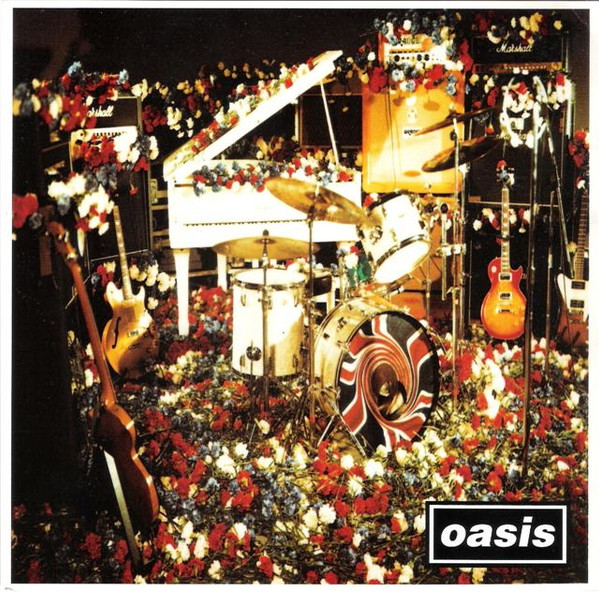
734. ‘Don’t Look Back in Anger’, by Oasis

‘Don’t Look Back in Anger’ isn’t Oasis’s best song (that is a question for a different post, but it would probably be something from their debut album). ‘Don’t Look Back in Anger’ is, though, probably the ultimate Oasis song. Oasis at their Oasisest.

Don’t Look Back in Anger, by Oasis (their 2nd of eight #1s)

1 week, from 24th February – 3rd March 1996

They set out their stall in the opening seconds, with the piano line from ‘Imagine’ which, according to Noel, was a deliberate middle finger to those who claimed Oasis were musical copycats. It hooks you in, declaring that the next five minutes are going to be epic. In fact, every part of this song, from that intro onwards, is a hook.

You can be the type of person who jots down every little chord, lyric or guitar lick that Oasis nicked – and I am that person sometimes – or you can be someone who admires the way they managed to distil British rock history into an elite-level run of singles (and two excellent albums), who admits that when they were good, they were very good. The drum-fill before the final, soaring chorus here is, no hyperbole, one of pop music’s great moments.

‘Don’t Look Back in Anger’ also features some of Noel’s more coherent lyrics. My personal favourite is the Please don’t put your life in the hands, Of a rock n roll band, Who’ll throw it all away… with the squealing guitars in between. A lot of the lines are still nonsense, but they work somehow. I assume it’s about a break-up, given all the stuff about walking on by, and not looking back. Or maybe it’s a mantra for living positively, not lingering on mistakes. Don’t go thinking that ‘Sally’ is anyone important, though. ‘It’s just a word that fit, y’know,’ says Noel. ‘Might as well throw a girl’s name in there.’

A song written and led by Noel has to beg the question: what of Liam? Well, despite having nothing to do, he spends the video mooching around the garden of a stately home in his shades, and still manages to be the star of the show. He is apparently responsible for the song’s most famous line: So Sally can wait… having misheard what Noel was really singing while writing it.

Despite what I wrote earlier, I’m going to briefly be the guy that points out the bits that Oasis nicked. I just now noticed that while everyone was distracted by the ‘Imagine’ piano in the intro, the floaty guitar in the outro is a rip-off of ‘Octopus’s Garden’. Is that common knowledge, or have I just unearthed another, previously undiscovered fossil?

‘Don’t Look Back in Anger’ was the 4th single from an album that had already sold in the multi-millions, and so the fact that it made number one is testament to how truly massive Oasis were in 1996. Over the past twenty-eight (!!!) years, it has gone from a pop song to almost a hymn, or an alternate national anthem. In the wake of the Manchester Arena bombing in 2017, gathering crowds spontaneously began singing it, giving the lyrics an even more resonant feel.

Meanwhile, it has also been voted the 4th Most Popular #1 Single ever, the 2nd greatest Britpop song (after ‘Common People’), and the Greatest Song of the 1990s. (And, most importantly, the 2nd Best Song to Sing Along to While Drunk – controversially robbed of top spot in that poll by Aerosmith’s God-awful ‘I Don’t Want to Miss a Thing’.) It is also by far the best of Oasis’s eight number ones… and I hope that’s not too much of a spoiler for what’s to come!

732. ‘Jesus to a Child’, by George Michael

1996 kicks off in the most understated way imaginable – with a slow, slinky, seven-minute bossa nova from George Michael.

Jesus to a Child, by George Michael (his 6th of seven solo #1s)

1 week, from 14th – 21st January 1996

I listen to it, properly, for the first time ever I think, and try to pinpoint the musical reason for this making number one. It’s not catchy – there’s no identifiable chorus – it meanders, weaves its smooth spell, then eventually departs. My thoughts are cast back a decade, to Michael’s similarly understated ‘A Different Corner’. He has a knack for taking unlikely songs to the top. But ‘Jesus to a Child’ makes ‘A Different Corner’ sound like the most instant, bubble-gum pop.

The reasons for it making #1 may have been largely to do with the power of the name. It was his first release for three years, since the ‘Five Live E.P.’, or for four if we only count original material. It was the lead single from ‘Older’ – his first studio album in nearly six years – though he had been performing the song live for over a year. You have to admire the sheer disregard for commercial success he showed in picking this as the first single.

The reasons for George Michael wanting to release this are now well-known, and very sad. ‘Jesus to a Child’ was written as a tribute to his late boyfriend, Anselmo Feleppa, who had died in 1993 after an AIDS-related brain haemorrhage. Michael had been unable to write anything for eighteen months after Feleppa’s death, until he wrote this elegy in under an hour. He set it to a bossa nova beat as a tribute to his lover’s Brazilian heritage.

The lyrics are beautiful: Sadness, In my eyes, No one guessed, Or no one tried, You smiled at me, Like Jesus to a child… and it sounds churlish to call this song ‘boring’. I imagine writing it was powerfully cathartic, and so perhaps we should view it as a poem, or a reading at a funeral. One that just happened to become a chart-topping hit, thanks to the enormous star power of its singer.

What is worth noting that is that even though the song is so clearly about a lost lover – The lover I still miss, Is Jesus to a child… – Michael couldn’t mention anything explicitly. There was rumour, and innuendo, like Freddie Mercury before him; but it would be another two years before he would come out (or be brutally outed, let’s be honest). 1996 is within my living memory, but the idea that a pop star nowadays wouldn’t reveal that a song was about their gay lover seems thankfully unlikely.

In my previous posts on George Michael, I’ve admitted that I don’t quite get the adoration for his music. A lot of it is good; but a lot of it is a bit too glossy, a bit too smooth, for me. Like this, even though many sources class it among his very best work. If this had been his last UK #1, I’d had to have written it of as a bit of a flat ending. Luckily, he has one more chart topper to come very soon, his 7th, and it’s probably my favourite of the lot. What’s not in doubt about George is that he seems to have been an incredibly warm and generous person – it was revealed after his death that all the royalties from this single had been donated to the charity ChildLine, a fact kept secret at his insistence.

730. ‘I Believe’ / ‘Up on the Roof’, by Robson & Jerome

Oh yes, time for more golden-oldies karaoke, from your granny’s favourites.

I Believe / Up on the Roof, by Robson & Jerome (their 2nd of three #1s)

4 weeks, from 5th November – 3rd December 1995

This time, they resurrect one of the very biggest number one singles. The biggest ever, if ‘weeks at number one’ is the metric we’re using. Frankie Laine’s original racked up eighteen weeks at the top way back in 1953. It was just the 9th #1, and it’s pretty amazing to think that its record still stands over seventy years on.

And for such a massive single, I feel it’s been a little forgotten (1953 was a long time ago, to be fair) and so it’s good in a way that it had another moment in the sun. And R&J’s take on it is… okay. Better than either of the tunes on their first single. It’s still cheap, still karaoke; but it doesn’t cloy as much, and builds to a fairly soaring climax. Maybe that’s testament to the quality of the song…

 Plus, it’s short – barely two minutes, like Laine’s version – and ‘shortness’ is ideal when these two take to the mic. Sadly, any mild positivity I can muster here is wiped out by the flip side of this disc: a version of The Drifters’ ‘Up on the Roof’ which takes the duo to new levels of tackiness. It is truly dreadful – synthy horns and horrible Disney princess tinkly bits. That this is a timeless classic’s only appearance at #1 (anywhere, as far as I can tell!) is genuinely criminal.

Equally criminal to some is the fact that this record held Oasis’s ‘Wonderwall’ at #2. However, thanks to Oasis not lacking for #1 singles, and thanks to ‘Wonderwall’s annoying ubiquity, I don’t class that an upset as heinous as this pair’s first single holding off ‘Common People’.

One thing I do notice, listening to these two songs, is that Robson & Jerome’s singing voices sound different. Better, more polished, than on ‘Unchained Melody’, or on ‘White Cliffs of Dover’. Whether this was the result of singing lessons, or something more sinister, I don’t know. Des Dyer, formerly of ‘70s band Jigsaw, made allegations that it was him singing on the records. He was paid off, and told to shut up. Much later, Mike Stock admitted that the duo’s vocal’s were ‘patched up’ by sessions singers.

Whether or not they were singing on these songs, it didn’t do them much harm. While not quite as successful as their debut, this record still made a month at #1 and reached almost a million sales. An album inevitably followed, on which they murdered The Beatles, The Monkees, The Walker Brothers, and Elvis, as well as ‘Amazing Grace’ and ‘Danny Boy’. At least they didn’t cling on at the top to become one of the worst Christmas Number Ones. For the King of Pop had other ideas…

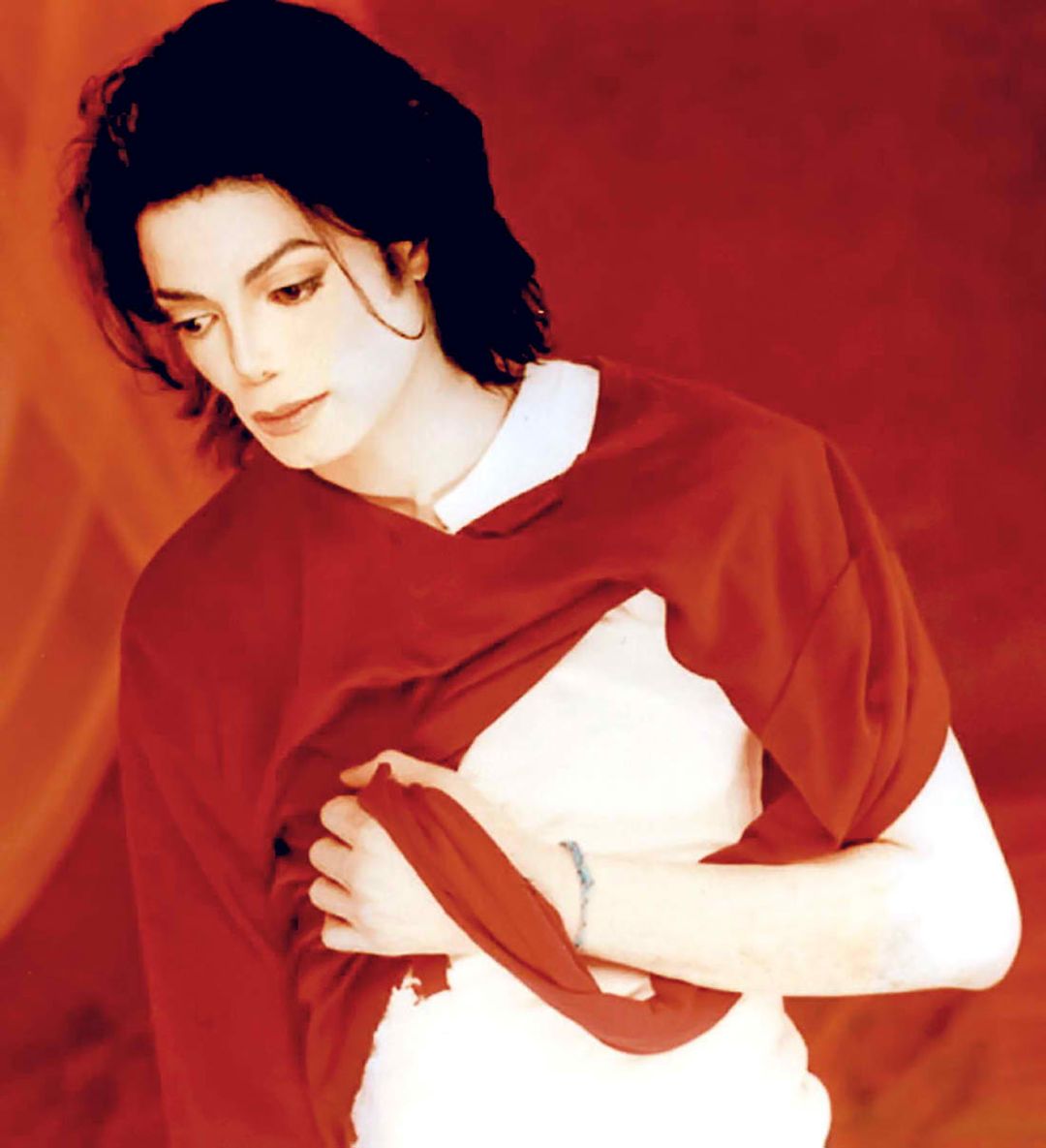
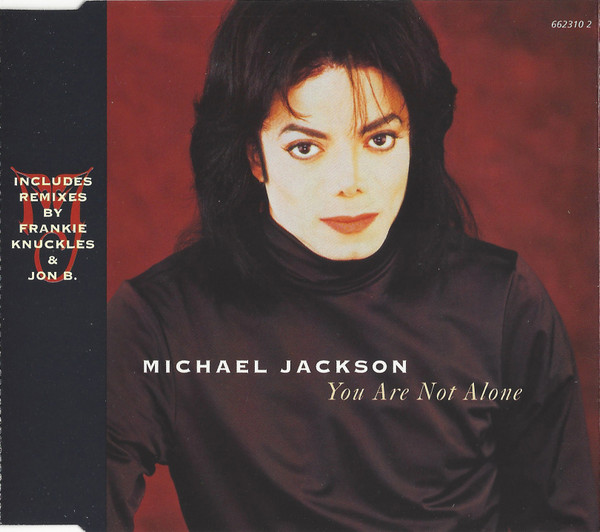
726. ‘You Are Not Alone’, by Michael Jackson

And so we arrive at yet another staging-post on the long, but thinly spread, chart-topping career of Michael Jackson. One number one with his brothers, and seven solo, stretched out over two decades. Interestingly, and perhaps aptly, he only ever made #1 in odd numbered years…

You Are Not Alone, by Michael Jackson (his 5th of seven #1s)

2 weeks, from 3rd – 17th September 1995

’77, ’81, ’83, ’87, ’91 and now 1995. And this is just what we’ve been missing on our 1995 bingo card. After all the dance, the Britpop and the power balladry, what we really needed was some slow and syrupy, mid-nineties R&B. This sound was (thankfully) much more prevalent on the Billboard charts, possibly the sound of US pop at the time, and few acts would have had the star power to drag this sludge to the top spot in the UK.

Trust MJ, though. It was the second single from the ‘HIStory’ album, following ‘Scream’, the duet with sister Janet, more famous for its record-breakingly expensive video. And there is a sweet simplicity to this song. The chorus plays almost like a lullaby: You are not alone, I am here with you, Though you’re far away, I am here to stay… Like a lullaby in that it’s pretty, and in that it may send you to sleep.

Jackson puts in a pretty strong vocal performance as well, limiting the ticks and the gulps that have marked most of his music since ‘Bad’ (there’s not a single ‘eeeh hee’ either). He gives the lungs a workout towards the end, post key-change, reminding us that underneath it all he was always a fine singer.

And yet… Watch the video, and it’s easy to become distracted from the actual song. He is now fully white, and very plastic-looking. We’re almost treated to a full-frontal from the King of Pop, as he smooches with then wife Lisa Marie Presley, wrapped only in a towel. It’s all pretty icky. Of course, knowing what we know now means that any Jacko love song comes with its own in-built ick-factor. (‘You Are Not Alone’ was also written by R Kelly, just in case we needed any extra ickiness.)

So, in summary, this is a sweet enough, well-performed ballad, your enjoyment of which depends on how much you can block out thoughts of what we know now, and of a near-naked MJ canoodling with Elvis’s daughter. 1995 will actually turn out to be Jackson’s most successful year, in terms of chart-toppers. He still has a massive Christmas #1 to come, in which he puts his clothes back on and returns to his usual preposterous, overblown nonsense.

722. ‘Unchained Melody’ / ‘White Cliffs of Dover’, by Robson & Jerome

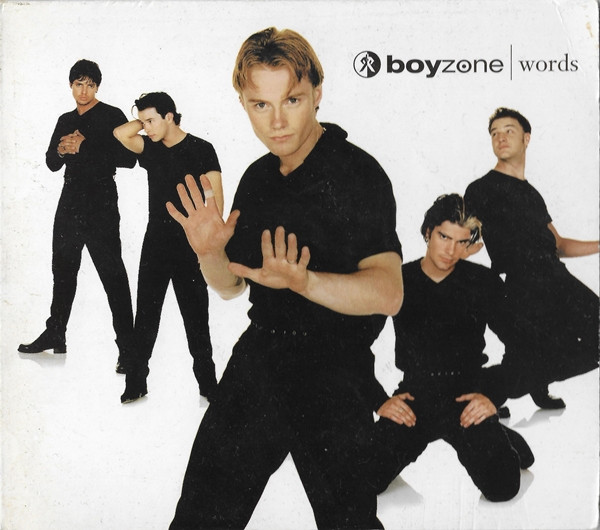
Serious question: who were the worst musical duo of 1995? In any other year, the moronic Outhere Brothers would have taken the prize hands down. And yet… We also have to reckon with another, potentially even more heinous, pair…

Unchained Melody / White Cliffs of Dover, by Robson & Jerome (their 1st of three #1s)

7 weeks, from 14th May – 2nd July 1995

Robson Green and Jerome Flynn were two actors and television personalities – still are, in fact. They had risen to prominence in the ITV series ‘Soldier Soldier’, in which they played, yes, soldiers. In one episode, they sang an impromptu version of ‘Unchained Melody’ at a wedding, going by the name the Unrighteous Brothers… And the rest was history.

This record suffers from two major problems. First off, it’s terrible. Secondly, the incomparably superior version of ‘Unchained Melody’ that this cover was based on is still fresh in the memory, having topped the charts barely four years ago. Which makes this sound even more like a cheap karaoke cash-in than the tinny backing track and the dodgy vocals might suggest.

And OK, they may have been going for a ‘cheap and cheerful’ feel, as in the TV programme, but that might be giving them a little too much benefit of the doubt. Allegedly the duo had a little ‘assistance’ in the recording studio (to the point where some claim that it’s not really them singing), but I’m not one to cast aspersions. Robson and Jerome seem like decent blokes, not taking themselves too seriously, enjoying an unexpected change in career direction… So on the one hand we shouldn’t get too annoyed by this silly #1. Yet, on the other, there’s the fact that what should have been a fun scene from a TV show was turned into a seven-week chart-topper, and the best-selling single of 1995 – nay, the best-selling single of the entire decade so far! The British public, once again, showing themselves unfit to be trusted within twenty feet of a record shop.

On the flip side of the disc, there’s something slightly more interesting. ‘(There’ll Be Bluebirds Over) The White Cliffs of Dover’ is a song from the Second World War, made famous by the forces’ sweetheart Vera Lynn. It’s interesting, because it may well have been a tie-in for the 50th anniversary of VE Day, and because it’s a clear indication of who this record was aimed at. Grannies across the land kept this on top of the charts, holding off U2 and, in a travesty far worse than Engelbert or ‘Shaddap You Face’, Pulp’s ‘Common People’.

‘Bluebirds’ itself is every bit as rotten as ‘Unchained Melody’, while the production may be even cheaper and nastier, slathered over twee lines about shepherds watching their flocks and little Jimmy sleeping safe in his room (which I’m sure were powerful in 1942 with the Luftwaffe swarming overhead, but which just sound maudlin here). At least, by the end, the pair have been relieved of their singing duties by a much more competent gospel choir.

Apparently both Robson and Jerome had to be persuaded to do any of this, to the point that Green threatened to sue for harassment. Who, pray tell, could be cynical enough to risk a court appearance in the name of unleashing this crap on the nation…? Oh, right, yep. Simon Cowell. The dark overlord of the charts in the 2000s cut his blood-sucking teeth with this, his first number one record. It was produced by two-thirds of SAW (Stock and Aitken), giving this disc yet another stamp of quality…

If only this was a one-off, for both Robson & Jerome, and for Simon Cowell. But, of course, it wasn’t. Much more is to come. Until then, let’s distract ourselves with some chart trivia. This marks the first time that a song has topped the chart in three different versions (the Righteous Brothers, of course, and the Jimmy Young version from way back in 1955). Meanwhile, ‘White Cliffs of Dover’ became the longest-titled #1 single ever – as long as you include the brackets at the start.

719. ‘Back for Good’, by Take That

These are the types of posts I least enjoy writing. Famous songs, that everyone knows, about which loads has already been said…

Back for Good, by Take That (their 6th of twelve #1s)

4 weeks, from 2nd – 30th April 1995

Quite often, too, they’re not songs I particularly like. And I should, in the interests of full-disclosure, admit off the bat that I’m not a huge fan of this record… I can recognise it as a good pop song – a well-constructed, grown-up pop song far beyond your usual boyband fare – and admire it thus. From a distance. With one listen per year, at most.

It’s the Barlow Conundrum, again. He’s often trying, to my ears at least, to write the perfect pop song. To prove that he and his band had long since grown beyond their ‘British New Kids on the Block’ origins. That he is to be Taken. Seriously. And of course he should be. He’s a very capable, competent songwriter. ‘Back for Good’ won an Ivor Novello award, one of British music’s ultimate accolades, for a start.

But… Compare and contrast this with another recent blockbuster boyband ballad, on a very similar lyrical theme: ‘Stay Another Day’. The lyrics to that are simple to the point of almost being trite. But something – something in their universality, in the way Brian Harvey delivers them like a lost child, in the song’s hidden subject matter – hits home in a way ‘Back for Good’ never manages.

Take the second verse here, in particular. Unaware but underlined, I figured out this story… In the corner of my mind, I celebrated glory… In the twist of separation, You excelled at being free… It all sounds clever, but does it actually mean anything? The harmonies are lovely, the want you back hook burrows its way in and never leaves, but is it all a bit fur coat and no knickers?

Or maybe it’s just me. ‘Back for Good’ has cropped up in pretty much every ‘Best songs of the…’ list for thirty years now. I am fully prepared for comments on how very wrong I am on this… But this record leaves me, like a fair old chunk of the Barlow Songbook, cold. Luckily for Take That, I am (sadly) not the arbiter of popular music, and this was a massive, massive hit all around the world. Even on the Billboard 100, where it made #7.

My feelings aside, ‘Back for Good’ was clearly the moment that Take That were made credible. Everyone who had written them off as just another boyband, even those way too cool for school, liked this record. I think it’s fair to say that without this song’s success, the band would not still be filling stadiums and topping the album charts in 2023. Back in 1995, and one of those aforementioned converts who confessed himself a fan of this song was Noel Gallagher. Speaking of whom…

717. ‘Love Can Build a Bridge’, by Cher, Chrissie Hynde & Neneh Cherry with Eric Clapton

Love Can Build a Bridge, by Cher (her 3rd of four #1s), Chrissie Hynde (her 2nd and final solo #1) and Neneh Cherry with Eric Clapton (their 1st and only #1s)

1 week, from 19th – 26th March 1995

What this? Cher… Chrissie Hynde?… Neneh Cherry and Eric Clapton? It can only mean one thing: charity single ahoy!

It probably means one other thing… That this record isn’t going to be much good. Not that it stinks – no, we’ve endured far worse chart-toppers in the name of a good cause. But following directly on from one of the all-time power-ballads, this one meanders by fairly blandly.

The three women gamely try to wring some cheer out of this tune, spending much of the video swaying arm in arm as if it was a trailer for ‘Steel Magnolia’s II’ (the fact that they do so while standing on a moving collage of famine victims seems slightly tasteless…) But really, a song with such an impressive cast-list should have little more life to it. The two moments that raise the pulse are the middle eight – When we stand together, It’s our finest hour… – and the solo, provided by one of the most famous guitarists ever to wield the instrument. File Eric Clapton under an ever-expanding folder titled: ‘legends poorly served by their ‘biggest’ hit’…

‘Love Can Build a Bridge’ was written and originally recorded by mother and daughter duo The Judds in 1990, with lyrics inspired by Naomi Judd’s battle against Hepatitis C. This version was the 1995 Comic Relief single, which is interesting, as there’s nothing ‘comic’ about this song. But considering that previous Comic Relief number ones have included Cliff and The Young One’s remake of ‘Living Doll’, and ‘The Stonk’, this comes as something of a relief (if you’ll pardon the pun).

Though this does mean that there’s not as much to write about here, compared to the truly heinous charity singles. The most noteworthy thing is that it is Clapton and Neneh Cherry’s highest-charting hit (it being the fourth of only five UK Top 10s for Cherry), and Chrissie Hynde’s final #1, after ‘Brass in Pocket’ with The Pretenders and a duet with UB40 (interestingly a cover of Sonny & Cher’s ‘I Got You Babe’). The one contributor that we will be hearing from again is, of course, Ms Sarkisian, who has the small matter of releasing the biggest-selling hit by a solo female… ever… to come.

716. ‘Think Twice’, by Celine Dion

We’ve had Whitney, we’ve had Mariah… Now we welcome onstage the 3rd member of the Three Tenoritas…

Think Twice, by Celine Dion (her 1st of two #1s)

7 weeks, from 29th January – 19th March 1995

It’s yet another colossal power ballad, of the style so beloved by the decade’s large-lunged divas. I was hard on ‘I Will Always Love You’, and down on ‘Without You’, and you probably think you know where this post is going. But, you’d be wrong. For this one goes straight to the top of the pile marked ‘Guilty Pleasures’.

What’s the difference between ‘Think Twice’ and those aforementioned crimes against eardrums? To be honest, I’m not sure. The first minute of this song is average, dull even. There are moody synths, as Celine Dion sings about her man starting to pull away. There are pan-pipes too, for God’s sake. It doesn’t sound promising. But at the start of the second verse, when the drums and guitars kick in, and Celine starts fighting for her man, the song transforms into a different beast.

My complaint about recent power ballads is that the sense of fun has drained out of them. They’ve become earnest and stodgy, not to mention that they’ve been clogging up the number one spot for months on end. But ‘Think Twice’ has a sense of OTT silliness that the best ‘80s power ballads – the likes of ‘Total Eclipse…’ and ‘Take My Breath Away’ – had. Then there’s the fact that it features an actual guitar solo! Not to mention the rhyming of ‘serious’ with ‘you or us’. And finally, there’s the way that Celine goes completely unhinged for the final chorus.

It’s impossible not join in with her ad-libs, the ba-ay-ay-bays and the NOnononoNOs, as this record hurtles to its gigantic conclusion. It’s all helped by the steamy video, in which Celine mopes around while a hunk in dungarees carves massive blocks of ice into sexy shapes. He storms off angrily, and Celine proceeds to caress and grind against his giant sculptures until he returns. It’s a cross between soft-porn and a tacky karaoke video, and it adds a further layer of flamboyance to what is already a piece of high camp.

This slow-burner of a power ballad had a suitably slow-burning journey towards becoming one of the biggest selling hits of the decade. Recorded in 1993, it was released as a single in September 1994, before finally making #1 five months later. Its fifteen-week climb to the top was a record and, in an interesting sign of the times, it was the first #1 not to be made available in vinyl.

Celine Dion had been a star in Quebec since the early ‘80s, but it wasn’t until 1990 that she started recording primarily in English. ‘Think Twice’ was just her 3rd Top 10 hit in the UK, but it set her up for many more. And although I like this much more than many of Houston or Carey’s monster ballads; I don’t have the same love for the rest of Dion’s career. She’s never really moved far beyond glossy ballads, and none of them came close to this classic. In fact, I suspect part of the reason that this record sounds so good is that it makes a refreshing change from hearing her signature song, her second number one… You know, the one involving an iceberg. And I won’t be anywhere near as nice about that dirge…

714. ‘Stay Another Day’, by East 17

Every good guy needs a bad guy. Every superhero a nemesis. And the cutest, cleanest-cut boyband of the day needed some rough east London lads as their foils…

Stay Another Day, by East 17 (their 1st and only #1)

5 weeks, from 4th December 1994 – 8th January 1995

Take That have dominated the charts of 1993-1995 like few acts ever do: they’re on five number ones in our countdown – and it’ll very soon be eight – having stuck to a winning pop formula. East 17 meanwhile had been ticking along since mid-1992, scoring five Top 10 hits packed with edgier dance and hip-hop touches, yet not coming close to matching Gary and the boys’ success.

Though the one thing East 17 can lay claim to that Take That can’t is a Christmas number one. A classic Christmas number one at that. A record… I’m just going to stick my neck on the line right now… better than any Take That ever released. (Yes, including that one…) And, ironically, to score their only number one they momentarily dropped the bad-boy posturing, and out-Barlowed Barlow himself; recording a sophisticated, grown-up ballad the likes of which Take That’s chief songwriter would have jumped at.

Baby if you’ve got to go away, Don’t think I could take the pain, Won’t you stay another day… It’s a ballad, of course, and on first listen the lyrics are standard weepy, break-up fare. The four voices meld together in an almost a cappella way – a nod to Christmas hits past? – led by a painfully young sounding Brian Harvey. It’s touching, but when you learn that Tony Mortimer actually wrote it following his brother’s suicide, then lyrics the might on the surface sound simplistic Oh don’t leave me alone like this… hit ten times harder, and elevate the song much higher.

The only controversy that surrounds this record is whether or not it’s a Christmas song. So pressing an issue is it that YouGov polls have been conducted on the subject (the ‘no’s had it, with a slim majority). I’d have to say it is though. It clearly ends in a hail of church bells, that were tacked on once the song had been slated for a festive release. Plus the video has snow in it! Luckily the fact that it now gets filed away with the other festive favourites for ten and a half months of the year means it’s not been done to death. Unlike some other boyband ballads from the mid-nineties…

Speaking of the video… It’s both iconic (those white parka jackets) and yet terrible (pretty much everything else – the dodgy green screen, the floating dancer, the white gloves…) But even that can’t ruin the song. East 17 would continue until the end of the decade – scoring a further six Top 10s – with their fair share of sackings, drama and drug-related controversies. Take That, it’s fair to say, won the war, if there ever was one. Though I was very surprised to learn that if you look beyond British shores, East 17 actually sold more records worldwide, thanks to their popularity in Europe and Australia. And recording one of the best ever boyband singles ever probably helped too.