10. ‘I’m Walking Behind You’, by Eddie Fisher with Sally Sweetland

eddie-fisher-with-sally-sweetland-im-walking-behind-you-1953

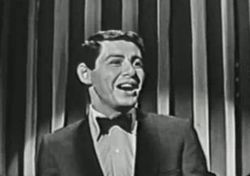
I’m Walking Behind You, by Eddie Fisher with Sally Sweetland (Fisher’s 2nd of two #1s/ Sweetland’s first and only #1)

1 week, from 26th June to 3rd July 1953

The first artist to top the UK singles charts twice.

I’m just annoyed that this is one of the songs that denied Frankie Laine his record. And it does seem a little odd that this one song, amongst all the other songs available, was the one that snatched a single week at the top, sandwiched between week after week after week of ‘I Believe’…

Anyway, before I head off down a swirling conspiracy theory tunnel, let’s just remind ourselves that this is what the record buying public do – they buy drivel and send it to number one. Drivel like this. This song is awful. Whereas I complained that Eddie Fisher’s first chart topper was dull and melodramatic (it’s quite a feat, I suppose, to be simultaneously dull and melodramatic), this is just plain creepy. The title doesn’t bode well, and the lyrics prove it to be true.

Picture the scene: (*sinister piano intro*) I’m walking behind you, on your wedding day… He is obsessed with his ex’s weddings, this guy. His previous chart topper had him lurking outside a church too. And I’ll hear you promise, to love and obey. But it’s OK, you see. He’s not stalking her; he’s merely giving her another option. If things go wrong, dear, and fate is unkind, look over your shoulder, I’m walking behind. She’ll be glad, I’m sure.

It would be unfair, though, to pin all responsibility for the creepy atmosphere here solely on Eddie Fisher. The backing vocals from Sally Sweetland are extraordinary. They float at a dog-whistle pitch far, far in the background. So far back that they echo. Backing vocals are traditionally, I had thought, recorded by someone stood behind, or next to, or at the very least somewhere in the vicinity of the lead singer. But it sounds as if Sweetland recorded her vocals from a warehouse down the street. It makes her sound as if she were an avenging angel, whispering down from the rafters into the ears of the spurned lover. Given the song’s subject matter, perhaps that was the intention.

EddieFisher

hqdefault


I guess I should mention here something which applies to all early the songs in this countdown. In the fifties the song was the thing, it seems, rather than the artist. The records that have topped the chart so far are, by and large, one of many versions of the same song. They’re just the most popular versions – the ones that made it to the top. For example, in 1953 alone, ‘I’m Walking Behind You’ was recorded by Frank Sinatra, Dorothy Squires, Jimmy Young and Eddie Fisher. ‘How Much is That Doggy…’ was recorded by Patti Page as well as Lita Roza. ‘Broken Wings’ was also recorded by Dickie Valentine and two chaps called Art and Dotty Todd. ‘Don’t Let the Stars…’ was recorded by no less than seven different acts before we count Perry Como’s chart topping version. Soon we’ll see an occasion where the two versions of the same song take turns at being number one.

So it’s unfair to paint Eddie Fisher as a creep with a habit of turning up at weddings uninvited. He just liked to record songs with lyrics about turning up at weddings uninvited. And I have to say that, while the sound and style of these early hits hasn’t sounded too dated to my modern ears (they mostly all follow the basic pop song formula: verse, bridge, chorus, solo, chorus…), the lyrics are really starting to grate. I wasn’t expecting any swears, or anything too sexy, but it’s all either been extremely saccharine, extremely melodramatic, borderline racist or just plain tame. Elvis needs to hurry along, and quick.

This is the last we’ll hear from Eddie Fisher in this countdown. And I have to admit the two songs I’ve heard so far haven’t inspired me to discover more of his back-catalogue. Except, as I was doing my ‘research’ for this post, I couldn’t help but notice his 1954 US #29 hit, simply entitled ‘Fanny’. Give it a listen, I assure you: it’s worth it.

But we can end this entry with a more heartwarming, and slightly more wholesome, piece of backstory. I had mentioned previously how all these early stars seemed to live well into their eighties and nineties. Well. Sally Sweetland, of the ethereal backing vocals, only went and lived up until 2015, to the grand old age of 103. Her husband had died a few years before that, and they had been together for seventy years! He had been the voice of Woody Woodpecker; and she had taught Family Guy creator Seth McFarlane how to sing. Well, there you go.

9. ‘I Believe’, by Frankie Laine

6976723c33cc83fff23789e5a3c8a7f6

I Believe, by Frankie Laine (his 1st of four #1s)

9 weeks, from 24th April to 26th June/ 6 weeks, from 3rd July to 14th August/ 3 weeks, from 21st August to 11th September 1953 (18 weeks total)

Boom! Nine number ones in and we’ve hit the big time. We are walking with UK chart royalty here.

I wish I could more clearly recall the moment when I first became interested in the music charts. I have foggy memories here and there: vague snatches of mid-nineties Top 40 countdowns aged ten or eleven. I remember knowing that No Doubt were #1 with ‘Don’t Speak’, and that The Verve were there with ‘The Drugs Don’t Work’. Which places my first wave of enthusiasm firmly in 1997, aged eleven. What sparked it? I don’t know. Maybe something as simple as watching Top of the Pops.

But then I lost interest for a bit aged thirteen or fourteen – the age when you lose interest in everything – and didn’t return until I was sixteen. Then I remember very clearly listening to the Top 40 countdown in a minibus on the way home from a scout camp, on one of the weeks that Will Young’s ‘Evergreen’ was at the top. And that was that.

My interest grew subtly; from simply knowing who was in the charts, to listening to them every week, to writing down the Top 10, Top 20, Top 40. My uncle had done the same thing for years – and every so often he would let me look through huge ring-binders full of several decades’ worth of hand-written charts, and peek into the cupboard where he had a copy of every number one single since the ’60s on vinyl, cassette or CD. By 2002, though, he was losing interest (it was, I suppose, a bit weird for a man in his fifties to be buying Atomic Kitten cassingles) and so perhaps in some sense I took over from him. I’ve never thought about it like that… We never discussed it or anything. He doesn’t know I do this. And I’ve not matched his level of stamina for the task. I’ve missed huge chunks, missed years’ worth of charts. I’ve dabbled in recording the albums charts, recording iTunes number ones, Spotify number ones, rather than the traditional Top 40… And now I’m writing this.

Anyway, the reason for this huge diversion ahead of describing ‘I Believe’ by Frankie Lane is thus: back at the start of my second wave of interest in the charts I used to pore over the Guinness Book of UK Hit Singles, absorbing chart stats and memorising the #1 singles from any given year. And one of the first chart stats that anyone learns – even people who have nothing more than a passing interest – is that the longest ever run at number one is held by ‘(Everything I Do) I Do it for You’, by Bryan Adams, which resided imperiously at the top for sixteen weeks in 1991. This is basic knowledge – like knowing one Shakespeare quote, or that Pi is 3.14 something something something.

Except. Everything we think we know is wrong. Bryan Adams holds the record for most consecutive weeks at Number 1. This song has the most in total.

It begins with a single guitar strum… I believe for every drop of rain that falls, a flower grows… Like all songs that have gone on to become something more than just hit records, it’s a simple song. Deceptively simple. But Frankie Laine is in complete control of the lyrics and the tempo, each line growing upon the previous one. The song is just one big crescendo – no verses, no chorus, just a list of things of every day miracles that make the singer ‘believe’. Every time I hear a newborn baby cry, or touch a leaf, or see the sky… Then I know why… I believe… Two minutes long. Done.

The obvious conclusion to draw is that this is a hymn – that the things he lists are those that seal his faith in God. But I’m not sure. I think he just believes in life. Though I am a massive atheist. Still, perhaps part of the song’s mass appeal is that it doesn’t mention ‘God’ as such. It leaves it open for the listener to apply their own personal convictions upon the song.

200x200-000000-80-0-0

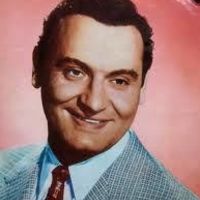
The biggest surprise for me upon Googling Frankie Laine is that he’s a pudgy white guy. His voice makes it sound for all the world like he’s black. I can’t explain it, and wouldn’t want to get into some weird, racial vocal-profiling discussion, but listen and I’m sure you’ll agree. 1953 was Laine’s year on the UK singles chart, and he’ll go on to score another couple of chart toppers before this year’s out.

Anyway. This was a song that I knew, or knew of, but had never really listened to. And it’s very good. It sounds like the sort of song that should have stayed at number one for weeks on end. So often the general public get it wrong, sending utter turds to the top and letting genuine classics languish below. But they got it right here. And if someone came along tomorrow and gave ‘I Believe’ a tropical house makeover, with a verse from Justin Bieber, it would probably work. Not that I’m suggesting anyone tries that anytime soon…

But it should be so much more famous. Its chart run was broken twice, on both occasions just for a single week, and because of that Bryan Adams has all the glory and has passed into chart folklore. And that’s just not fair. #justiceforfrankie.

7. ‘Broken Wings’, by The Stargazers

very-rare-1953-uk-1-the-stargazers-78-broken-wings-make-it-soon-decca-f10047-ex_3724722

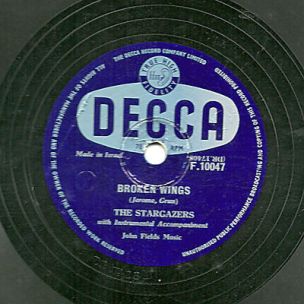
Broken Wings, by The Stargazers (their 1st of three #1s)

1 week, from 10th to 17th April 1953

And so, in one fell swoop, we have our first ever British chart-toppers! And our first ever group! Hurrah! Now, if only there was something interesting to write about this landmark hit…

Unfortunately, there isn’t. This is dull. Dull, dull, dull… To think of all the British acts – all the huge, legendary acts – that we will go on to cover in this countdown. And it all begins with this. From every little acorn, as they say. I’m sorry, though. If this acorn were drinking alone at a bar, you’d give it a very wide berth. He would more than likely be suicidal, and wanting to tell you all about his ex-wife’s newer, younger, less-balding husband. This is slow. This is hymnal. Nay, this is a dirge.

Picture an old, run-down working man’s club. In Doncaster, perhaps. A couple of wrinkled geezers sup their ale in the corner. A door opens, and a band steps onstage. No one claps. Someone coughs. A lonely Hammond organ strikes up. The drummer picks out the simplest rhythm imaginable. The Stargazers, with their hit song ‘Broken Wings’.

A-1239803-1408994226-1406.jpeg

With broken wings, no bird can fly… The premise of the song is that your lover’s infidelities leave you broken: broken-hearted, broken-winged, just… broken. The singers don’t sound like they’re enjoying themselves at all. They sound broken. There in your eyes, I saw lies in disguise, you broke my heart in two… And then, just as you think it cannot get any sadder, a desolate trumpet parps out a miserable little solo. The saddest solo ever. Remember when I was asking for heartbreak, when all these glossy American singers were singing about love lifting you up, stars getting in your eyes, and bluebirds? I regret it now.

Looking back at the previous six number ones, I can see why they were all chart-toppers. Whether they were good (Kay Starr, Perry Como), silly (Guy Mitchell) or simply over the top (Al Martino) they all sounded like big hits. This doesn’t. How this became the biggest selling single for a week in April 1953 I simply can’t understand.

But then, I wasn’t around then. These were days of smog and rationing and fears that the commies were going to start yet another world war. People needed some escapism, no? And they did so mainly through buying glamorous songs by sexy US stars. But every once in a while, being British, they needed to indulge their miserable sides, and buy a record that sounded like their grandparents, or Clement Attlee, or that lonely old guy down the pub.

So the Stargazers obliged with this morose anthem. Featuring a Hammond organ. And is there anything more British than that?

4. ‘Outside of Heaven’, by Eddie Fisher

eddie-fisher-outside-of-heaven-his-masters-voice

Outside of Heaven, by Eddie Fisher (his 1st of two #1s)

1 week, from 30th January to 6th February 1953

We wanted heartbreak, and boy do we get it here…

Eddie Fisher passes by the house where his sweetheart lives, and stands outside the church where she is getting married. He is ‘outside of heaven’ – literally, if you count a church as the place where God resides, and metaphorically, as his version of heaven would be at the dining room table eating his wife’s stew. Kinda clever, when you think about it.

This is what I imagined the pre-rock number ones to sound like. And I don’t like it very much. The sultry Jo Stafford and the saucy Kay Starr give way, for a week, to some very over the top moping. I pass your house, with misty eyes, there stands the gate to paradise, but you don’t hear the heart that cries, outside of heaven… Or if that’s not melodramatic enough for you: On your wedding day, I stood in the crowd, I could hardly keep, from crying out loud… It’s comparable to ‘Here in My Heart’, as it’s operatic and dramatic, like it could be the closing song in the first act of a Rogers & Hammerstein. But whereas Al Martino sang with enough power to carry the day, Fisher doesn’t have the voice. The ending especially – why was I meant, to walk alone, outside of heaven…? makes your hairs stand on end, and not in a good way. In the song’s favour, as far as I’m concerned, is that it does feature a guitar solo – the first #1 to do so. However, it’s possibly one of the least dynamic solos ever recorded – it sounds like the guitarist is scared to get his instrument too worked up, as if it might bite.

So, a pause, to take stock… If the first four chart toppers are anything to go by, female artists in early 1953 were allowed to be fun, playful, even a little bit sexy. But the record buying public wanted stoically heartbroken men: sad and lonely and not afraid to sing about it. Very loudly.

Eddie_Fisher_-_still

Perhaps this song is even more of a disappointment as I had heard of Eddie Fisher, and his reputation as something of a shagger. He was married five times – to Debbie Reynolds (with whom he fathered Carrie Fisher) and Elizabeth Taylor (he was husband number four of eight for her) amongst others. Taylor was Reynold’s close friend, and he married her not long after her previous husband had died in an air crash. Juicy stuff… So maybe I had hoped he’d be singing something a little funkier, a little more rousing, than this. But – and this is a big but that should be applied to many of the acts in this list – BUT, songs that are most successful in the charts are not always the most representative of an artist’s entire oeuvre (cf. Chuck Berry, 1972). Perhaps I’m being unfair on Eddie. He has one further number one coming up soon – let’s hope it’s a balls-to-the-wall rocker.

A couple more observations: Eddie Fisher was, again, an American. We still await our first ever British #1. And he lived to the ripe old age of eighty-two, passing away just seven years ago. Who will be the first chart topper to die tragically young…?

1. ‘Here In My Heart’, by Al Martino

Picture the scene. It’s November 1952. It’s cold. Smoggy. A real pea-souper. You’ve just popped down to Smiths and bought a copy of New Musical Express, the hot music magazine that’s been hitting newsstands these past few months.

What’s this? A chart? Of the top selling singles in the country? There’s Nat King Cole, and Rosemary Clooney. Bing Crosby’s at number four. Vera Lynn has three songs in the top ten! (And people say the charts these days are dominated by a few big names…)

You think it’d be a cracking idea to pass by the record store on your way home and pick up the number one record on this chart, which you’ve never heard before, but by golly you’ll have to watch your step. How you wish they’d hurry up and sort out all the piles of rubble in the street, it’s been seven blinking years since VE day!

Back home, you pull the record from it’s sleeve. ‘Here in my Heart’, by Al Martino. Some new crooner from the States. His first disc, apparently. The needle crackles and pops.

al-martino-here-in-my-heart-capitol-78-s

Here in My Heart, by Al Martino (his 1st and only #1)

9 weeks, from 14th November 1952 to 16th January 1953

Al Martino had no idea, I presume, that his debut single was going to be the first ever UK Number One. I assume that the NME hadn’t been advertising it for weeks: 12 records wanted for the first ever record retailers chart! Can you be the Top-Seller!? Can anyone stop Vera Lynn??

But ‘Here in my Heart’ is the perfect song to have topped the first ever chart. From the minute the intro kicks in, it’s clear that this is a song not ready to settle for second place. A ten second crescendo peaks with Al belting out the title… Here in his heart, he’s lonely…

It’s old-fashioned, sure, but that doesn’t make it unlistenable. The strings (or, rather, the full-blown orchestra) aren’t that far removed from an Adele or a Sam Smith record. The strangest thing about it is actually Martino’s voice. He enunciates every syllable in a way that you just don’t hear anymore, outside musical theatre. Surely, you know, I need your love, so badly… And the way in which, at the start of the song at least, he delivers the second half of each line in a much subtler way, compared to the bombastic first halves, is quite effective. I can imagine my Gran (God rest her) praising the record as one in which you can actually make out the words. Unlike any record released post 1967. Incidentally, my Gran would have been nineteen when this record hit number one. We are talking here about a seriously long time ago.

A-266267-1129103707.jpeg

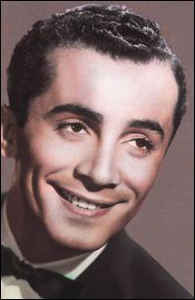
Looking at pictures of Al Martino in the 1950s, he looks like a standard Italian-American, rat-pack crooner. Louche, grinning, eyes that suggest he’s done a bit of living… But whereas Sinatra, Davis, et al delivered their lines with the minimum of fuss, Martino is going for it here. Nothing is left on the bench. If he belted out the closing line – Please be mine, and stay here… in… my…………… heart ‘neath his lover’s window, she would have no choice but to shout ‘Oh yes, Al. Yes!’

I’d never really heard of Al Martino, beyond it being the name of the guy who had the first ever UK Number One. But, to give him his due, ‘Here in My Heart’ still holds record for the joint-seventh longest stay at the top of the UK charts. Plus, he starred in both The Godfather and The Godfather Part III (singing the theme for the former), and had a huge hit in the mid-70s with ‘Spanish Eyes’ – one of those songs that you think you’ve never heard until you hear it. And one which holds a special place in my heart as the second ever song I mastered on the keyboard (and by ‘mastered’, I mean I made it sound vaguely recognisable), aged eleven. The first ever song I mastered was Rock Around the Clock, the guitars and drums of which sound a world away from this, the first ever UK chart topper.