949. ‘Beautiful’, by Christina Aguilera

In a presumably intentional move, Christina goes from ‘dirrty’ to ‘beautiful’…

Beautiful, by Christina Aguilera (her 4th and final #1)

2 weeks, 2nd – 16th March 2003

She knew what she was doing, representing all the facets of freshly-‘Stripped’ Xtina (the album’s third single was ‘Fighter’). And sonically, this is completely different from ‘Dirrty’s mucky synths and horny beats. It’s a pretty, piano-led ballad, very Beatlesy, with growing strings lending some orchestral grandeur.

It’s very pleasant, very grown-up, and a worthy riposte to those who tut-tutted after hearing its predecessor. This is one tune that everyone from primary school kids to grandma could sing along to. It also stands out in the charts of early 2003, as clearly being recorded on actual instruments, with little to no obvious electronic embellishment. And Christina manages to reign in her over-singing fairly well. It’s still there in dribs and drabs throughout, because she can’t help herself, but when she finally does let rip in the middle-eight, it’s an almost triumphant moment.

It’s the words of this song that, ironically, bring me down today. Yes, ‘Beautiful’ has gone down as a modern anthem of empowerment, still very well regarded by the LGBT community; but in walking the tightrope between ‘affecting’ and ‘trite’, I’d say this topples over more towards the latter. You are beautiful, No matter what they say… Maybe I’m just immune to the charms of this sort of song, as I’ve mentioned before, but I struggle to see how lyrics so basic could make anyone feel anything.

The video was more thought-provoking, featuring characters struggling with anorexia, and racism, as well as their gender and sexuality. In fact, this is two number ones in a row to feature a gay kiss in the video. The future is well and truly here! I was seventeen when this came out (a few months before I, too, came out), surely a prime age to be inspired by its message. But what I remember most was squirming with embarrassment when the video came on, worried that friends would make a connection between the two guys kissing and me.

Like Lady Gaga’s ‘Born This Way’ almost a decade later, the people that are left feeling the most positive from songs like this are the artists performing them, who get a nice sense of self-satisfaction. And as much as I like Christina, and love Gaga, and think both songs are good, the messages behind them are the least impactful aspects for me. Though it is worth noting, perhaps, that in 2002 Christina couldn’t actually use words like ‘gay’ and ‘transgender’ in her lyrics, whereas Gaga could in 2011.

As with several of the songs on ‘Stripped’, ‘Beautiful’ was written by Linda Perry, of 4 Non Blondes fame. Perry had previously worked with Pink, and had intended this song for her, but was blown away by Christina’s demo. This added to a growing beef between Pink and Aguilera, who had already argued over a chair on the set of the ‘Lady Marmalade’ video. And in all honesty, two pop divas fighting over furniture probably has much resonance within the gay community than lyrics about being ‘beautiful no matter what they say’…

This was Christina’s final UK number one, but she was good for ten further Top 10 singles through to the mid-2010s, including three more from ‘Stripped’. And for those of you who see her over-singing as a fun quirk rather than a criminal act, may I point you towards the album’s final single, the caterwauling ‘The Voice Within’, which made #9 towards the end of 2003.

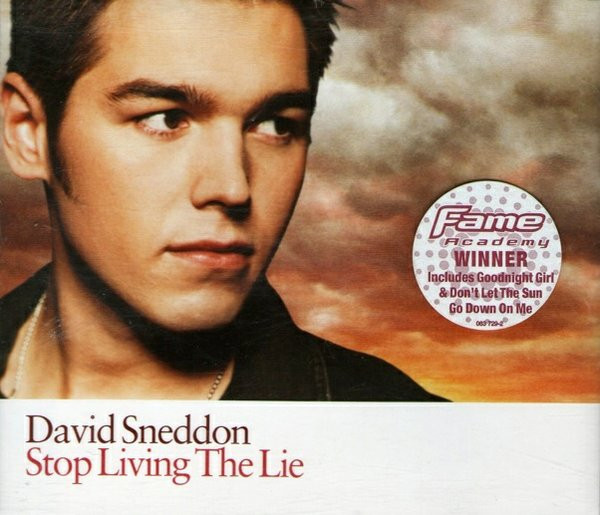
947. ‘Stop Living the Lie’, by David Sneddon

2002, the year reality TV took over the singles chart, ends. And 2003 begins with more reality TV fodder…

Stop Living the Lie, by David Sneddon (his 1st and only #1)

2 weeks, 19th January – 2nd February 2003

And this is fodder, especially compared to the classic it knocked off the #1 spot. David Sneddon was the winner of ‘Fame Academy’, the BBC’s attempt at getting in on the singing contest craze, after ‘Pop Idol’, ‘Popstars’ and ‘Popstars – The Rivals’ had all aired on ITV.

And in the best tradition of Auntie Beeb, ‘Fame Academy’ was promoted as a slightly higher brow sort of singing contest. The contestants were called ‘students’, they worked on their craft, they were encouraged to write their own songs. There would be no pratting around in ponytails, over-singing to ‘Baby One More Time’ here.

Which meant that it produced a winning single as dull as ‘Stop Living the Lie’, and a winner as dull as David Sneddon. Even his name is dull. David Sneddon is a plumber from Paisley, not a pop star from Paisley. I’m sure he was a nice boy. I’m sure he was talented to a certain extent. And he does have a cute boyishness to him. But Lord, this is such earnest claptrap, plodding and po-faced, with profoundly teenage lyrics about people not living their authentic lives. Who is going to save her, No-one wants to know her…

I don’t think pop stardom is something that can be taught. Sure, you can refine a kid’s dancing technique, and give them a new haircut; but there has to be something there in the first place. The X-Factor, as it were. Simon Cowell and Louis Walsh, for all their faults, knew this. They knew that cute young people singing basic but catchy tunes sold. There was a reason Gareth Gates didn’t write his own songs. I go back to the argument I made when writing about Darius’s ‘Colourblind’, that just because a song has been written by the person singing it does not automatically make it a good song.

The album version of ‘Stop Living the Lie’ has a much more rousing electric guitar riff, which gave me cause to sit up when I played it. Sadly the single remix removed this guitar, presumably because of worries that the sort of people who’d be buying this record couldn’t cope with that much rock.

David Sneddon lasted for four singles, each one charting lower than the one before, then moved into songwriting. He’s written for (predictably) X-Factor winner Matt Cardle and Westlife’s Shane Filan, and (less predictably) Lana Del Rey. And in fairness to the format, ‘Fame Academy’ did produce two other charting artists: runner up Sinead Quinn and 3rd placed Lemar, the latter of whom went on to have genuine chart success for much of the rest of the decade.

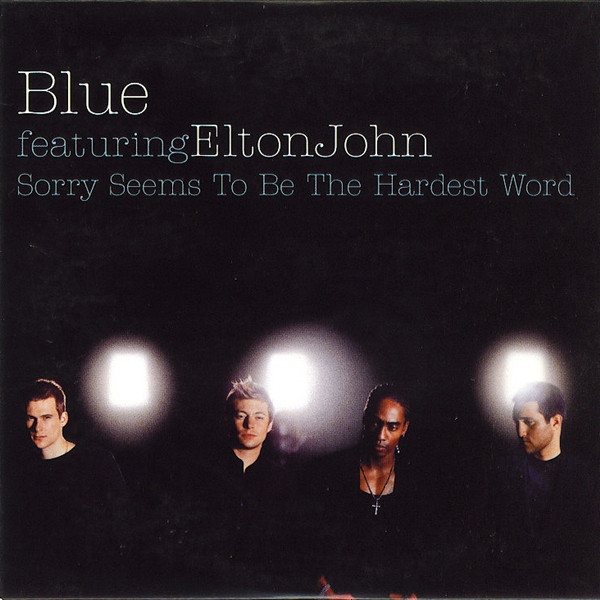
945. ‘Sorry Seems to Be the Hardest Word’, by Blue ft. Elton John

This number one marks the beginning, and the end, of two eras. It is the last chart-topper from ‘the Golden Era of Boybands’ (1989-2002). It is also the start of a strange late-career run for Elton John, in which he will be remixed, duet with dead rappers, and commit atrocities in the name of charity…

Sorry Seems to Be the Hardest Word, by Blue (their 3rd and final #1) ft. Elton John (his 5th of ten #1s)

1 week, 15th – 22nd December 2002

Compared to some of those records to come, I like this take on Elton’s 1976 #11 hit. It’s true enough to the original, with Elton’s piano coming through loud and clear, and keeps the Parisian sidewalk feel of the solo (swapping the accordion for a harmonica), with enough modern dressing for it to fit in and be a 21st century success. Starting songs with a vinyl crackle was apparently very hot in late 2002.

I will say that the addition of a modern R&B drumbeat, and a slightly faster tempo, means that this version is far less desolate than the original, and therefore loses some of its emotional heft. And I will also say that it is interesting to contrast the polished, technically very good, boyband voices of Blue with Elton’s gruff authenticity, and to wonder how far Reg Dwight might have got had he auditioned in front of Simon Cowell and the other ‘Pop Idol’ judges…

So, I like this, and liked it at the time, but I’m not sure deep down if it’s really much good. Is it just working with good source material? Is it given credibility thanks to Elton performing on it? I suppose it’s not much different to him and George Michael doing ‘Don’t Let the Sun Go Down on Me’ a decade earlier.

Like I said, this is it for boybands at the top of the charts, for a while anyway. Busted and McFly will dominate the next few years, but for my money they were boys in a band rather than ‘boybands’. It’s an important distinction! Therefore this is the end of a lineage that started with NKOTB thirteen years earlier, past Take That’s slow climb to credibility, Boyzone’s dullness, 5ive’s fun, Westlife’s relentlessness… I make it twelve boybands in total, with around forty chart-toppers, totals that could increase depending on how we class Boyz II Men, Hanson, and Blazin’ Squad. Disparage them if you will, but they were pretty much the sound of the charts for an entire generation.

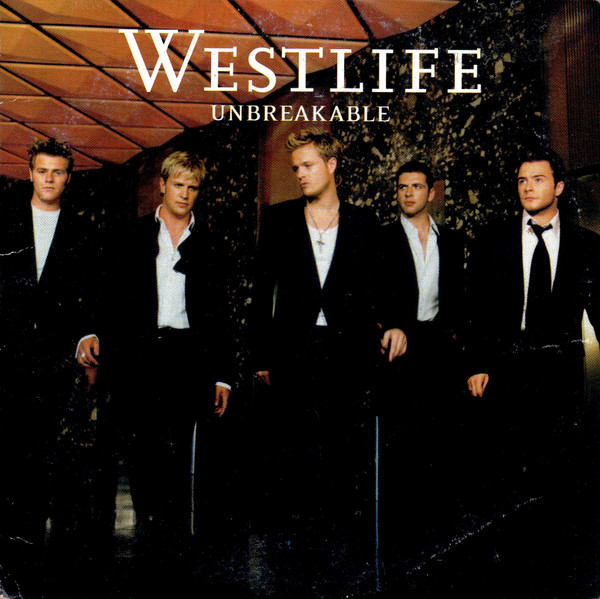
941. ‘Unbreakable’, by Westlife

Westlife’s eleventh number one in three and a half years. How are we all holding up…?

Unbreakable, by Westlife (their 11th of fourteen #1s)

1 week, 10th – 17th November 2002

My patience, for one, is well and truly shot. With each successive ballad, Westlife get more and more turgid. Is this any worse than their early hits? I think it is, but who can tell. When you get to number eleven then the law of diminishing returns has well and truly set in. The worst thing is, their last chart-topper, ‘World of Our Own’, was an upbeat bop. We’ve had hints, glimpses that it could have been so different.

‘Unbreakable’ starts off slowly, with a beat and tempo bastardised from ‘Hero’ and ‘Unchained Melody’. Yes, two of 2002’s previous big ballad hits. Call me cynical… To compound the lack of originality, the video was filmed on the same beach as ‘If I Let You Go’. By the end we’re soaring, or at least lumbering like a drunken buffalo, to a dramatic finish, complete with sleigh bells because it is almost Christmas after all.

And of course, there’s a gigantic key change. But even that lacks the fun, the charm, of their earlier key changes, because you know it’s coming. It arrives slowly, with a huge drawing of breath, like the tide going out before a gigantic tsunami that nobody is ever going to outrun.

The overriding feeling here is of a group going through the motions. This was the lead single from Westlife’s first greatest hits album, and it draws a line under the boyband part of their career. Their final three number ones will be covers of MOR classics, from the likes Barry Manilow and Bette Midler. Probably wisely, they knew that the twelve-year-olds that had bought their singles in 1999 were now sixteen-year-olds who had moved on. From here on they were shooting squarely for the mum, and grandma, market.

All of which ties into something I wrote a few posts ago, that we’re reaching the end of the golden age of the boyband, an era that has stretched from the late-eighties right through the nineties, past the good (Take That, 5ive), the bad (Boyzone, Westlife) and the ugly (911… oops)

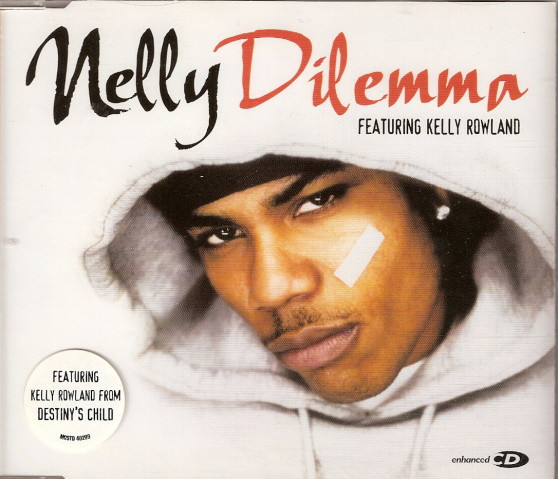
939. ‘Dilemma’, by Nelly ft. Kelly Rowland

Our next number one was a huge hit, a very popular song then that remains so now. Many of its lyrics and hooks are familiar to me, despite not listening to the song very often in the intervening twenty years or so. And yet…

Dilemma, by Nelly (his 1st of four #1s) ft. Kelly Rowland (her 1st of two solo #1s)

2 weeks, 20th October – 3rd November 2002

And yet, I can’t quite figure out why this was such a big song. And I don’t really know how to approach it. Is it cheesy? It is an unabashed love song… Or is it cool? One third of Destiny’s Child and the year’s big breakout rapper should equal pretty cool… Or is it a novelty? Any song that rhymes ‘boo’ with ‘you’ could be filed under that category… None of this is to say I dislike it. It’s smooth, it’s memorable, it’s so very rooted in my memories of my final year at high school. I just struggle to place it.

Maybe the best way to view is as classic hip-hop, an old-school slow jam in the tradition of LL Cool J. The crackly vinyl in the intro, the record scratches, the nursery rhyme melody, the cheesy lyrics, all become acceptable if this is a loving nod back to the hip hop of the eighties and the nineties. It’s strange though. Tracks like this were ten-a penny on top of the Billboard charts, but in the UK this type of hip-hop rarely had as big an impact as this.

In fact, still, even in 2002, the number of hip-hop chart-toppers has been limited. Eminem, sure, and some rapped verses in pop songs. Was Afroman rap? Shaggy? There’s UK garage too, like So Solid Crew, but that’s slightly different. The last pure US hip-hop #1 was arguably Run-D.M.C, way back in 1998, and that was a remix of an old tune. Beyond that there was Puff Daddy, and LL himself, in 1997.

And yes, the number one is only one record out of a whole chart, and rap songs had been featuring in the Top 40 for decades by this point, but still. If this was a blog on the US charts (where it was #1 for ten weeks) then ‘Dilemma’ wouldn’t stand out at all. But in the UK it does feel like a slight outlier among the talent show pop, the boybands and the dance. A nice outlier, though. A smooth palate cleanser after our usual fare.

‘Dilemma’ probably did better than your average rap single because of the first appearance of a solo Destiny’s Child star (although Beyoncé had released a song for an ‘Austin Powers’ soundtrack a few months before, this song’s success caused her to push back the release date of her debut album so as not to have to compete with her bandmate). Nelly too had just been responsible for one of the songs of that summer, the funky ‘Hot in Herre’. So momentum was behind both of them, leading to the biggest non-Pop Idol opening sales of the year, and 2002’s fourth highest-selling single.

It also seems to live on to this day, or has been rediscovered by Gen Z, as I see it crop up in reels where the ‘ahhs’ are synced with a variety of weird and wonderful things. And then there’s the now-infamous scene in the video, where Kelly appears to be using an Excel spreadsheet to write a text message, which has been doing the rounds online for years. As a songwriter you presumably want your songs to live on, but you have no control over the reasons for why they do…

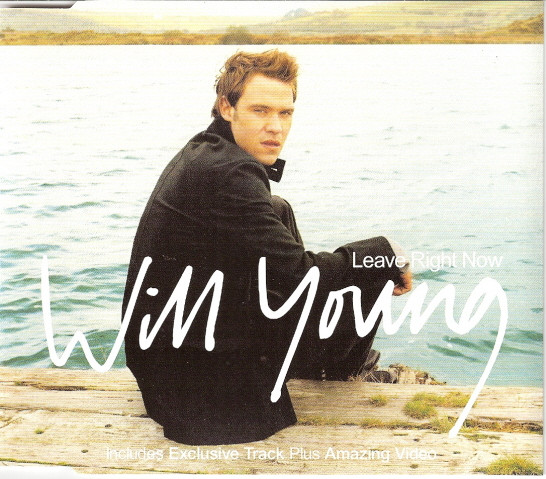
937. ‘The Long and Winding Road’ / ‘Suspicious Minds’, by Will Young & Gareth Gates

After two solo number ones apiece, it was surely inevitable that a Pop Idol Top Two duet was on its way…

The Long and Winding Road / Suspicious Minds, by Will Young & Gareth Gates (their 3rd of four #1s each)

2 weeks, from 29th September – 13th October 2002

And after two solo number ones apiece that I’ve tried to make the best of, and in some cases quite enjoyed, it was surely inevitable that my patience would run out. It’s not just that it’s the sixth Pop Idol #1 in barely six months, and it’s not just that they’re desecrating both the Beatles and Elvis. It’s both those things, but also the fact that both these songs are sooo very dull.

Their take on ‘The Long and Winding Road’ starts off as the sort of lounge-pop that male-female duos perform in the background of posh hotel buffets, under strict instructions to be as bland and inoffensive as possible so as not to distract people from their lobster. It picks up a little, and the harmonies are nice, but I’m not sure I’ve ever heard it before. Which is odd for a two-week number one in 2002, when I was amid one of my chart-watching phases. Or it’s entirely possible that I’ve just forgotten.

Interestingly – potentially the only interesting thing about this record – that song is a duet while the other is left entirely over to Gareth. His cover of ‘Suspicious Minds’ featured on the soundtrack to Disney’s ‘Lilo & Stitch’, and is bad in a completely different way. Although Gareth Gates is not vocally on a par with Elvis (newsflash!), it is upbeat, it is perky, and it sounds like he is having fun. But it has that classic, syrupy, karaoke production that reality TV singing shows will became famous for, with any potential edge polished away to nothing.

I’m not one for venerating the sacred cows of pop. I say have at them. One of my favourite covers of a Beatles song is Tiffany’s clattering ‘I Saw Her Standing There’. And of course Elvis’ and the Beatles’ back-catalogues is filled with covers, of varying quality. But for God’s sake, do something interesting. Add something to the conversation, for better or worse. It’s not as if ‘The Long and Winding Road’ is many people’s favourite Beatles’ song in the first place. And while ‘Suspicious Minds’ is an undisputed classic, Fine Young Cannibals proved that it was possible to reimagine it and not piss off too many people. Hell, even Will Young’s cover of a cover of ‘Light My Fire’ had something interesting about it.

But then ‘something interesting’ isn’t often in the remit of Simon Cowell and his production team. You do wonder if the choice of artists being covered here was intentional trolling, but I suspect it was just further proof of a lack of imagination. We’ll do Elvis and, um, The Beatles! This was still actually quite avant-garde for a Cowell release. If he had his way, he’d probably be happy with a never-ending parade of ‘Unchained Melody’ covers.

I imagine Gareth was happier than Will when doing these covers, but that’s probably based on the direction their careers went in the years after Pop Idol. 2003 will bring one final chart-topper for both, and these songs will give a clearer indication of what lay in store for either boy.

926. ‘If Tomorrow Never Comes’, by Ronan Keating

Instead of writing a proper intro for this next number one, I’d like you to instead picture me letting out a long, world-weary sigh…

If Tomorrow Never Comes, by Ronan Keating (his 3rd and final solo #1)

1 week, from 12th – 19th May 2002

For we have to, once again, grapple with the cultural contributions of Ronan Keating. With Groanin’ Ronan’s admittedly admirable dedication to releasing dull music. Not bad music. Not offensive. Not ugly. Just… dull. But at least his reign of blandness comes to an end here.

‘If Tomorrow Never Comes’ is a nice enough, country-tinged ballad. It had originally been a hit for King of Country Garth Brooks in 1989, whose version I prefer. I do wish Keating’s producers hadn’t dialled back the yee-haw. They presumably thought that a British audience couldn’t cope with too much Nashville-style production. And they were probably right, though it leads to a very characterless record.

Lyrically it’s a twist on the idea of a dead loved one. The singer is not singing about a fear of their lover dying; but is questioning how their lover would feel if they were the one to suddenly perish. Which is an interesting, if slightly self-centred, take on the theme. In the staggeringly bad video, Keating falls, in cringey slo-mo, in front of a car. At the same time, his still-sleeping girlfriend grips her bedsheets in terror (thought to me this could easily be confused with orgasmic pleasure). See Ronan, you assume she’ll be racked with grief, but maybe she’ll quickly move on to someone who hasn’t made it his life’s mission to inflict on mankind the most boring songs imaginable.

Having said that, I did give his first two solo number ones a decent write-up. ‘When You Say Nothing at All’ is a cover of a much better late-eighties country ballad than this, while ‘Life Is a Rollercoaster’ is a minor millennial classic. But of the nine chart-toppers he enjoyed, both solo and as a part of Boyzone, between 1996 and 2002, the majority have been boring. Plus, he helped Louis Walsh create Westlife, so he technically has fourteen more #1s of dubious quality to answer for.

Ronan may be leaving top spot alone, but he still enjoyed several more years of UK hits, including covers of ‘We’ve Got Tonight’ (with Lulu), ‘Father and Son’ (with Cat Stevens himself), and Goo Goo Dolls’ ‘Iris’. Again, I let out a long old sigh. Groanin’ Ronan Keating covering ‘Iris’ feels as grimly inevitable as societal collapse brought on by the climate crisis. I don’t want to come over all Carrie Bradshaw, yet I can’t help but wonder… Did he really ever enjoy his recording career? Did he actually arrive at the studio every day, ready to lay down vocals for yet another plodding cover, and think ‘this is the life’…?

922. ‘Unchained Melody’, by Gareth Gates

The winner of Pop Idol gets knocked off number one… by the runner-up. Yes, roll your eyes, it’s an understandable reaction; but you’d better get used to this level of domination.

Unchained Melody, by Gareth Gates (his 1st of four #1s)

4 weeks, from 24th March – 21st April 2002

Gareth Gates had been the frontrunner for much of the first series of Pop Idol, and was the bookies’ favourite going into the final. But I’d say that the public chose the right winner on the night. Will Young has a memorable voice, one you can pick out of a crowd. Gates has the voice of a decent-enough pub karaoke singer.

Luckily for him, his debut single was ripped right from Simon Cowell’s karaoke playbook. ‘Unchained Melody’ is either an inspired choice – it had worked for Robson & Jerome, and if it ain’t broke – or the most mind-numbingly unimaginative one. Why did we need yet another cover of it, the third one to top the charts in less than twelve years? At least Will Young was given a couple of ‘originals’, even if they were very dull. Although if one thing’s clear after the age of X-Factor, it’s that Simon Cowell has a very limited, if indeed any, imagination.

At least the song is shuffled around a little, starting with the lonely rivers bit. It means it does catch the ears, at first. But as soon as the tune comes in properly, it dissolves into mush. Is this better or worse than the R&J version? Or is that question moot as long as you can put on the Righteous Brothers instead? There was of course another number one version, Jimmy Young’s 1955 hit, which was literally the melody from the movie ‘Unchained’. This record of four different chart-topping versions of a song still stands, though it has since been matched by two other tunes.

I will have to admit that this record, when I was sixteen, was the first time I had really encountered ‘Unchained Melody’. I’m sure I already knew it, but the radio airplay of this version really hammered the song home. And I did quite like this version… For a week or two, at most, I assure you.

What’s interesting to see is that, in truth, and unlike later singing contest series, it didn’t matter whether Gareth Gates or Will Young won the final. They both enjoyed the success of winners, matching one another hit for hit, at least for the first year or two of their careers. Gates was only seventeen when he made the final, and he had the now contractually obliged reality TV sob-story: a stammer that only went away when he sang. Though I don’t want to belittle a genuine affliction, it does amuse me that his oblivious parents gave him the possibly the worst name ever given to someone with a stammer.

921. ‘Anything Is Possible’ / ‘Evergreen’, by Will Young

A year on from Hear’Say, we meet our second reality TV pop star. And there have been few bigger stars to come from reality TV than Will Young.

Anything Is Possible / Evergreen, by Will Young (his 1st of four #1s)

3 weeks, from 3rd – 24th March 2002

And unlike Hear’Say, whose auditions and journey to stardom were left in the hands of a trio of judges, Will Young won ‘Pop Idol’ after a public vote – the highest ever public vote across any of the subsequent singing contest formats. His debut single, both songs from which Young had performed in the live final, became the fastest selling single of all time, selling almost half a million copies in its first day, and 1.1 million by the end of its first week.

A landmark single, then. Which begs the all-important question. Is it any good? Well, no. Not really. ‘Anything Is Possible’ sets the lyrical template for winners singles, with lyrics about overcoming obstacles and never giving up. I’m flying high, Like the wind, Reaching the impossible, I’ll never doubt again… Blah, blah, blah.

Musically it is bland and predictable, and already dated, with the tempo and smooth beats of a mid-nineties ballad (the intro smacks of ‘2 Become 1’). It had been written to order in three hours by Cathy Dennis and Chris Braide, after Simon Cowell had enjoyed their work on S Club 7’s ‘Have You Ever’. I’m not sure I hear much of HYE in ‘Anything Is Possible’, and despite not giving that one much a write-up when it made #1, it is an infinitely better tune.

Strangely, despite ‘Anything Is Possible’ (I keep mistakenly typing ‘everything is ‘pissible’ – is there such a thing as a Freudian finger-slip?) being listed first, I only remember ‘Evergreen’ getting played at the time. And that’s fair, because it is the better song. It has a chorus that you actually remember, and a certain soaring quality to it. Maybe it wasn’t pushed as much due to the fact that it had appeared on Westlife’s most recent album. The boys in Westlife claimed it as one of the weakest songs on the LP, though maybe that was just sour grapes at Young having such a big hit with it.

It also has a Westlife-grade key change, and a huge final chorus. Will Young had just won a singing contest, and so he does obviously have a good, clear voice. It’s a voice you can instantly identify, though I find it a little nasal at times. He, inevitably, has gone on record multiple times to say how much he dislikes both of these songs, and how he will never perform them again without being paid lots and lots of money. To be fair, it would be hard to imagine one of Britain’s most famous gay men singing a line like you’re the only girl that I need…

Despite this marking the start of the X-Factor Age (I know he won ‘Pop Idol’, but it’s a catchier title), it’s hard to apportion much of the blame to Will Young, who has gone on to make some good pop music, to carve out a twenty-year career in the industry, and who seems like a nice guy. At the same time, the heart sinks to realise that this is the first of seven reality TV #1s we’ll meet in 2002 alone… Starting with the young lad with a stammer who finished narrowly behind Young, up next.

919. ‘Hero’, by Enrique Iglesias

I press play on our next number one, and I start to feel the bile rising the second Enrique Iglesias whispers: Let me be your hero…

Hero, by Enrique Iglesias (his 1st and only #1)

4 weeks, from 27th January – 24th February 2002

I’ve never liked this song, right from the time it was spending an interminable month on top of the charts. There may be external reasons for this hate, which we’ll get to shortly, but even before those external reasons came along I thought this was overwrought garbage. It feels like a leftover nineties power-ballad; even though it isn’t a power-ballad, at least not until the final chorus. Beef it up a bit, though, and it’s ‘Always’ by Bon Jovi. And there are few worse insults than that, in my book.

For most of its runtime, ‘Hero’ is a Spanish-guitar tinged love song. Enrique delivers it in a tremulous, hiccupping manner he must have thought would make him sound overcome with emotion, but to me it sounds like he’s gagging over the words, like a cat hacking up a big hairball. Though to be fair, gagging is the reasonable response to this bilge.

The best bit is the understated Latin guitar solo, which is not a sound we hear very often on top of the charts. Note that it is also the bit where Enrique shuts up. The funny thing is, I quite like some of his songs. He tended to be pretty listenable, and fun, when he kept things upbeat. ‘Hero’ though, remains his signature song, for English-speakers at least.

I remember the video quite well too, and Enrique cavorting with Jennifer Love-Hewitt before being beaten to death by Mickey Rourke. He had a habit of casting beautiful women in his videos, with tennis player Anna Kournikova appearing in the follow-up ‘Escape’. To be fair, they’ve been in a relationship ever since, which will have ruined Enrique’s chances of equalling his father’s body count (over 3000, apparently). But, they do here become the first father and son to top the UK charts, Julio having made it twenty years earlier with ‘Begin the Beguine’.

The other reason why I can’t stand ‘Hero’, and which may be clouding my judgement of an undoubtedly popular song, is that it will forever remind me of the death of a school friend. He died suddenly, when we were nineteen, and this played as we left the funeral service. Thing is, there is no way he would have chosen this song for his funeral. He’d probably never once thought about what song he’d want played at his funeral. What nineteen-year-old would? It was clearly just a CD of mood-appropriate music owned by the crematorium. (The other song I remember playing was Aerosmith’s ‘Don’t Wanna Miss a Thing’, another one I now cannot stand). I think that’s incredibly sad, having a song you don’t like played at your funeral. Better to have silence. Ever since, though I’ve not made an official list, I’ve dropped regular hints to those who listen that I’d like certain songs played at my funeral. I won’t say what they are here, not wanting to tempt fate, but rest assured if Enrique Iglesias’s ‘Hero’ is played, whoever is responsible will be getting haunted, mercilessly.