952. ‘You Said No’, by Busted

I’d better come clean from the off. I really liked Busted back in the day. And was ready to head off down a rabbit hole of reminiscence this afternoon…

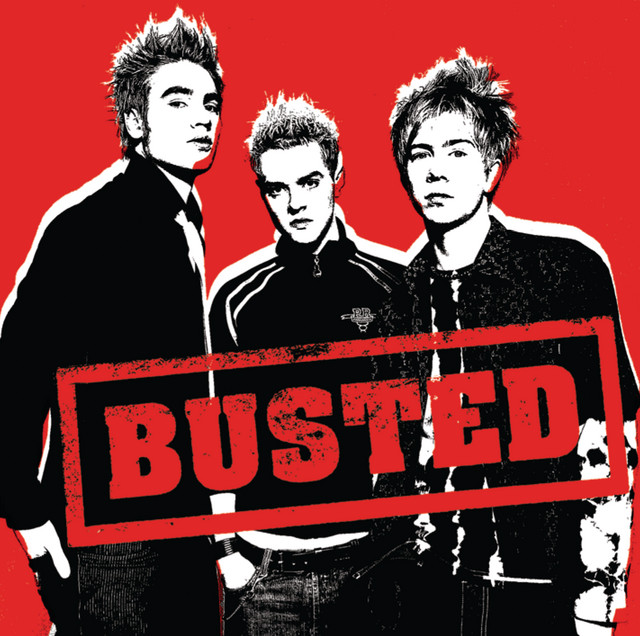
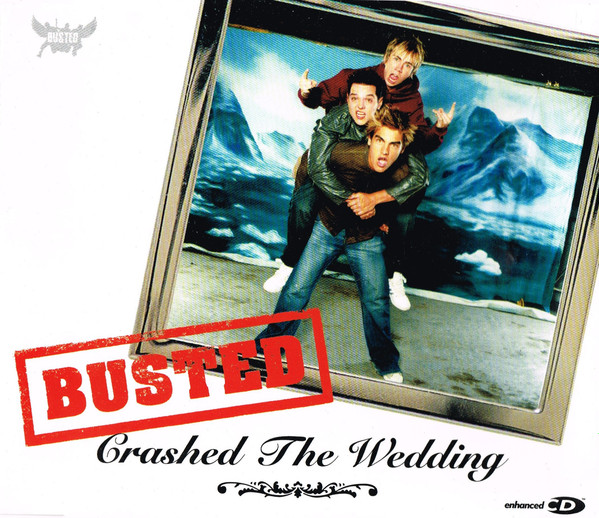
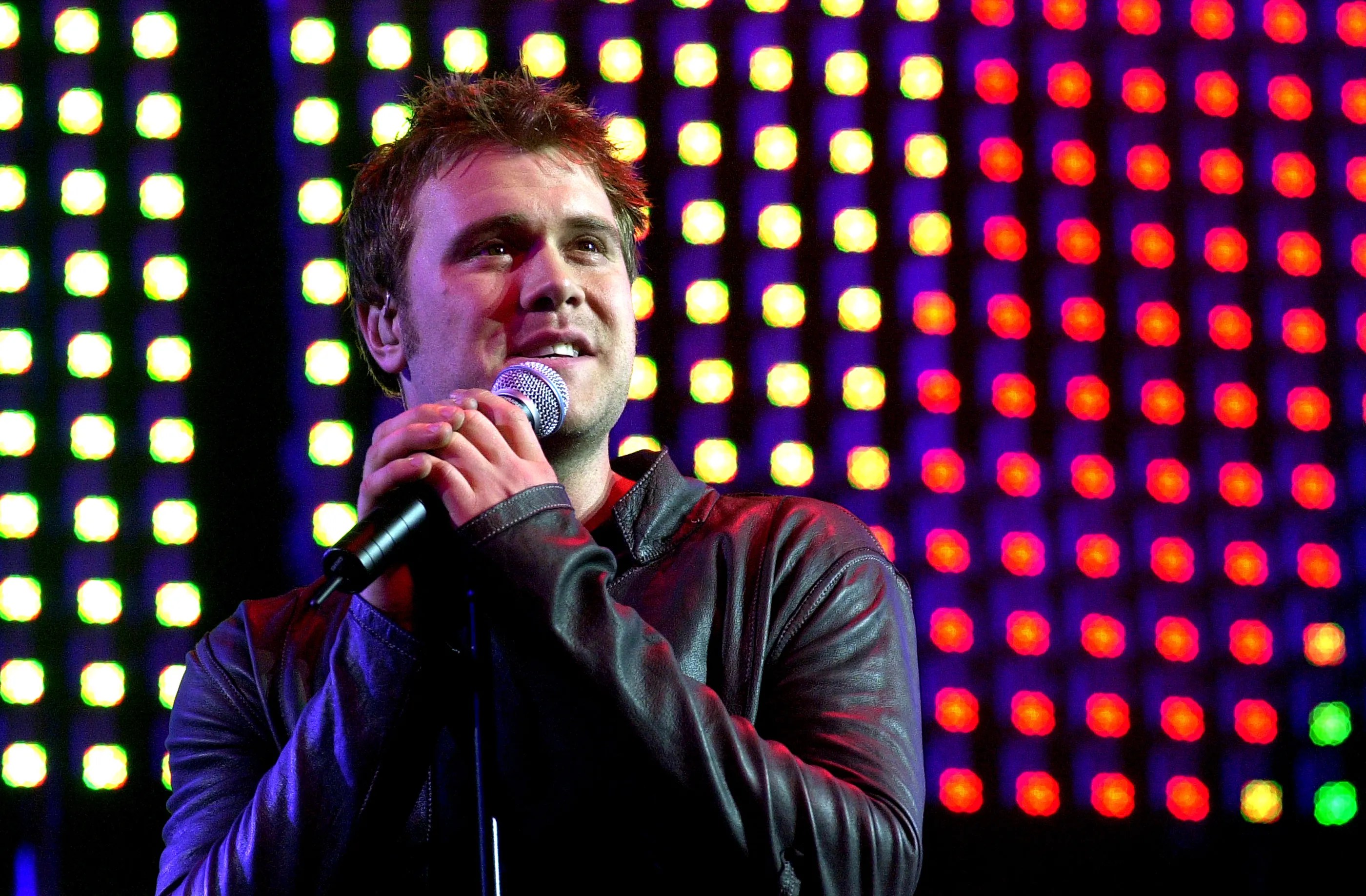
You Said No, by Busted (their 1st of four #1s)

1 week, 27th April – 4th May 2003

But listening to their first number one now, it sounds very lightweight. It sounds very processed, very studio engineered. Their faux-American accents grate. The lyrics, in which they whine like a bunch of snotty incels about the girl that turned them down (You’re so fit, And you know it, And I only dream of you, Cause my life’s such a bitch…) jar. What happened?

I’m reminded of an article I read at the time in a friend’s ‘proper’ rock magazine – ‘Guitar World’, maybe – which claimed to have studied and proved that the opening riff from ‘You Said No’ couldn’t possibly have been played on a real guitar. Now, to be fair, magazines like ‘Guitar World’ had a bit of an agenda against pop punk puppets like Busted, but they had a point. Is this how rock music had to debase itself to be a relevant chart force in the year 2003?

It’s still a catchy song, and isn’t without its charms. The na-na-nanas and the chorus are earworms, and it really has a sound that is very much of its time. Busted were the biggest male pop group in Britain between 2003 and 2004, and it’s right that they feature on top of the charts. But it isn’t hard to argue that this was a belated #1 – a ‘shadow #1’ I’ve called them, in previous posts – after their signature tune, and genuine pop culture moment, ‘Year 3000’ (which had stalled at #2 behind David Sneddon). It did guarantee, though, that Busted became the first act to have their first three singles enter the charts in ascending order: #3, #2, #1…

Maybe it’s just age. I was seventeen when this made number one (admittedly already several years beyond their target audience) and I am approaching a big birthday starting with four as I write this. Maybe it’s also because Busted, for all their charms, were to soon be eclipsed by their prodigies McFly, who started out in the same pop-punk mould but who proved to be a far more expansive band.

One final question that needs answering before we move on: were Busted a boyband? Well, the lyrics to ‘Year 3000’ show that they certainly didn’t think so, and I agree. They wrote their own songs, in part at least. They held (and presumably did sometimes play) their own instruments. And they didn’t have dance routines, or key changes. So no. What they do represent is how the mid-noughties indie and rock revival, which will start to feature eventually at the top of the charts, had filtered down to pop acts. And in my book any guitar, computer-enhanced or not, is always welcome on top of the charts.

951. ‘Make Luv’, by Room 5 ft. Oliver Cheatham

Cast your minds back to 2013, when ‘Get Lucky’ by Daft Punk’s Pharrell and Nile Rodgers-featuring ‘Get Lucky’ was everywhere…

Make Luv, by Room 5 ft Oliver Cheatham (their 1st and only #1s)

4 weeks, 30th March – 27th April 2003

Well, I always thought that mega-hit was just a poor man’s ‘Make Luv’. Ten years earlier, Italian producer Room 5 had sampled US R&B singer Oliver Cheatham’s 1983 hit ‘Get Down Saturday Night’, had it featured in an advert for Lynx deodorant, and enjoyed one of those huge, slightly random, hits that 2003 would be remembered for.

This is the other side of mid-noughties dance, away from the trance heavy beats of DJ Sammy: an old sample, tarted up with some swooshes, drops and fades. There’s not much to it, and lyrics like I like to party, Everybody does… were never likely to win an Ivor Novello, but it doesn’t take much detective work to see why it was such a big hit. It is catchy, just the right side of cheesy, and remixed with a lightness of touch that lets it float by. Plus, it has that all-important multi-generational appeal.

And if this isn’t yet another disco revival! We’ve only just got past the turn-of-the-century disco revival, to the point that we should probably just acknowledge that disco never really needed reviving. ‘Make Luv’s success won’t lead to many other disco chart-toppers in the near future, but the charts of 2003-2006 were stacked with fairly cheap knock-offs. Oliver Cheatham found himself co-writer of another similar hit the year after this, for example: Michael Gray’s #7 smash ‘The Weekend’.

Who was Oliver Cheatham, the man who had only ever featured once before on the UK singles chart, when the original from which this was sampled made #38? He’d been recording throughout the eighties, with little chart success, and had spent much of the nineties as a backing singer for various artists. He was fifty-five by the time this became an unexpected #1 smash, and he embraced it with gusto, appearing with Room 5 as they promoted it. I believe this made him the third-oldest (living) male to top the charts, behind Elton John and Louis Armstrong. 2003, in fact, will be a year of old men making number one…

Room 5, meanwhile, also struggled for further hits, teaming up again with Cheatham for a much less successful (and very similar sounding) follow-up ‘Music & You’. He had more success as his alter-ego Junior Jack, and scored a number of Top 30 and Top 20 hits under that name, before and after his one and only chart-topper.

950. ‘Spirit in the Sky’, by Gareth Gates with special guests The Kumars

Sounding our biannual Comic Relief charity record warning klaxon…

Spirit in the Sky, by Gareth Gates (his 4th and final #1) with special guests ‘The Kumars’

2 weeks, 16th – 30th March 2003

Yes, every two years (or more often, if Children In Need also get in on the act) we have to suspend taste and decency in the name of charity. Recent efforts have been a bit more ‘straight’ – Boyzone, Westlife, S Club – but for the 2003 telethon, the Comic Relief producers went back to their roots…

And as with all charity #1s, I’ll try not to be too down on it because it was for a good cause and blah blah blah. I do like the Indian touches – the sitars, the backing vocals – and I do like ‘Spirit in the Sky’ as a song. The previous chart-topping versions – Norman Greenbaum’s original and Doctor & the Medics’ eighties reboot – are a lot better, mind you. Still, it remains a good song.

Unfortunately, Gareth Gates’ voice sounds at its reediest here. He did okay on his earlier chart-topping ballads, but this suffers from the same problems as his ‘Suspicious Minds’ cover. He just doesn’t have a rock voice – sounding too boyish – which means, along with the goofy production, this starts to sound like something you’d hear at Butlins.

Also unfortunately, the comic asides from the Kumars are not very funny. It’s hard to be funny in song. Very few #1 singles could be described as ‘funny’. The Kumars are in character, from their comedy chat show of the time, but their contributions are largely asinine. I thought we got reincarnated… Is it driving distance…? Maybe the fear of mocking both Christianity and Hinduism restricted them, but the only genuinely funny line is when one of them replies to the Gotta have a friend in Jesus… with Or Vishna! Oh, and the creepy I want to come back as Gareth’s hair gel…

This maybe could have been more of a moment, as one of the few appearances for British Indians at the top of the pop charts. Except that gets lost in the unfunny gloop. Which means this record is more memorable for being the final chart-topper of Gareth Gates’ whirlwind post-‘Pop Idol’ year. (He had two further Top 10 singles, before moving into musical theatre and television. Nowadays he is part of a stripping troupe known as ‘Boyband in the Buff’…)            

This was also notable for being ‘Spirit in the Sky’s third chart-topping appearance, as mentioned earlier, tying it with ‘You’ll Never Walk Alone’ and pulling it one behind four-time ‘Unchained Melody’. It’s probably telling that Gareth Gates had a hand in two of those three, and that lack of originality isn’t helpful if you want to have a long career in pop.

949. ‘Beautiful’, by Christina Aguilera

In a presumably intentional move, Christina goes from ‘dirrty’ to ‘beautiful’…

Beautiful, by Christina Aguilera (her 4th and final #1)

2 weeks, 2nd – 16th March 2003

She knew what she was doing, representing all the facets of freshly-‘Stripped’ Xtina (the album’s third single was ‘Fighter’). And sonically, this is completely different from ‘Dirrty’s mucky synths and horny beats. It’s a pretty, piano-led ballad, very Beatlesy, with growing strings lending some orchestral grandeur.

It’s very pleasant, very grown-up, and a worthy riposte to those who tut-tutted after hearing its predecessor. This is one tune that everyone from primary school kids to grandma could sing along to. It also stands out in the charts of early 2003, as clearly being recorded on actual instruments, with little to no obvious electronic embellishment. And Christina manages to reign in her over-singing fairly well. It’s still there in dribs and drabs throughout, because she can’t help herself, but when she finally does let rip in the middle-eight, it’s an almost triumphant moment.

It’s the words of this song that, ironically, bring me down today. Yes, ‘Beautiful’ has gone down as a modern anthem of empowerment, still very well regarded by the LGBT community; but in walking the tightrope between ‘affecting’ and ‘trite’, I’d say this topples over more towards the latter. You are beautiful, No matter what they say… Maybe I’m just immune to the charms of this sort of song, as I’ve mentioned before, but I struggle to see how lyrics so basic could make anyone feel anything.

The video was more thought-provoking, featuring characters struggling with anorexia, and racism, as well as their gender and sexuality. In fact, this is two number ones in a row to feature a gay kiss in the video. The future is well and truly here! I was seventeen when this came out (a few months before I, too, came out), surely a prime age to be inspired by its message. But what I remember most was squirming with embarrassment when the video came on, worried that friends would make a connection between the two guys kissing and me.

Like Lady Gaga’s ‘Born This Way’ almost a decade later, the people that are left feeling the most positive from songs like this are the artists performing them, who get a nice sense of self-satisfaction. And as much as I like Christina, and love Gaga, and think both songs are good, the messages behind them are the least impactful aspects for me. Though it is worth noting, perhaps, that in 2002 Christina couldn’t actually use words like ‘gay’ and ‘transgender’ in her lyrics, whereas Gaga could in 2011.

As with several of the songs on ‘Stripped’, ‘Beautiful’ was written by Linda Perry, of 4 Non Blondes fame. Perry had previously worked with Pink, and had intended this song for her, but was blown away by Christina’s demo. This added to a growing beef between Pink and Aguilera, who had already argued over a chair on the set of the ‘Lady Marmalade’ video. And in all honesty, two pop divas fighting over furniture probably has much resonance within the gay community than lyrics about being ‘beautiful no matter what they say’…

This was Christina’s final UK number one, but she was good for ten further Top 10 singles through to the mid-2010s, including three more from ‘Stripped’. And for those of you who see her over-singing as a fun quirk rather than a criminal act, may I point you towards the album’s final single, the caterwauling ‘The Voice Within’, which made #9 towards the end of 2003.

948. ‘All the Things She Said’, by t.A.T.u

Up next, on UK Number Ones Blog. Schoolgirls…! Lesbians…! Russians…! Are you ready to clutch your pearls??

All the Things She Said, by t.A.T.u (their 1st and only #1)

4 weeks, 2nd February – 2nd March 2003

I well remember the furore about t.A.T.u, about this song, and about the video. And we’ll get to the furore in a minute. But it’s a shame that this song is remembered for the fact that it featured ‘lesbian’ schoolgirls, and that there were bans left, right and centre, and not because it’s a great pop song.

Because it really is. It’s an electro-grunge-dance mashup, with crunching power chords, at least two great synth riffs, and a brilliant shoutalong chorus. It’s cool, edgy, and yet retains a catchy Eurotrash edge. The two girls’ voices have a fairy-like high pitch, and a memorable way of pronouncing the English lyrics, AKA the ABBA-effect. It’s brilliant fun to yell out Have I lost my mind… mimicking the Russian accent (the original version is called ‘Ya Soshla S Uma’ in Russian – the lyrics were re-written but retained the lesbian content). The man responsible for the re-write, and the production, was synth pop royalty Trevor Horn, who of course gave us the Buggles, but who has also had input on chart-toppers from Frankie Goes to Hollywood, Boyzone, to LeAnn Rimes.

This, plus ‘Sound of the Underground’, as well as ‘Dirrty’, and Sugababes’ two 2002 #1s, were all part of the vanguard, dragging pop away from millennial bubblegum and glitchy R&B and into a future of big beefy power chords, and big beefy choruses. (It’s perhaps no coincidence that while listening to ‘All the Things She Said’ when writing this post, Spotify auto-played Lady Gaga’s 2011 hit ‘Judas’ straight after). I’d say that this record was overshadowed by a couple of other, huge pop tunes that come later on this year, but I’d also say that the controversy it created also didn’t help it retain credibility. (It is on its way back, though, and is poised to re-enter the charts following a feature on the ‘Heated Rivalry’ soundtrack.)

Predictably, conservative outlets criticised the song and the video for promoting homosexuality and paedophilia. The two members of t.A.T.u were fifteen at the time, but they do little more than kiss in the video. Cultural figures like Richard and Judy were moved to campaign against it, though. Meanwhile, more liberal voices criticised the fact that t.A.T.u – Lena Katina and Julia Volkova – were just playing at being gay as a record-shifting gimmick, a fact given credence by the fact that both women have since denied being in a relationship, while Volkova has made anti-gay statements (though that’s potentially a sensible career move in Putin’s Russia).

Perhaps surprisingly, t.A.T.u were not one-hit wonders. They remain the only Russian act to have topped the UK singles chart. The shouty drum ‘n’ bass of ‘Not Gonna Get Us’ made #7 later in the year, and the lead single from their follow-up album ‘All About Us’ made #8 in 2005. They also did Eurovision. I actually bought that second album, and can attest to the quality of that single and one of the follow-ups, ‘Loves Me Not’, both of which were similarly angsty electro-grunge. t.A.T.u were certainly one-trick ponies – shouty faux-lesbian electro – but it just so happens that shouty faux-lesbian electro is right up my street.

947. ‘Stop Living the Lie’, by David Sneddon

2002, the year reality TV took over the singles chart, ends. And 2003 begins with more reality TV fodder…

Stop Living the Lie, by David Sneddon (his 1st and only #1)

2 weeks, 19th January – 2nd February 2003

And this is fodder, especially compared to the classic it knocked off the #1 spot. David Sneddon was the winner of ‘Fame Academy’, the BBC’s attempt at getting in on the singing contest craze, after ‘Pop Idol’, ‘Popstars’ and ‘Popstars – The Rivals’ had all aired on ITV.

And in the best tradition of Auntie Beeb, ‘Fame Academy’ was promoted as a slightly higher brow sort of singing contest. The contestants were called ‘students’, they worked on their craft, they were encouraged to write their own songs. There would be no pratting around in ponytails, over-singing to ‘Baby One More Time’ here.

Which meant that it produced a winning single as dull as ‘Stop Living the Lie’, and a winner as dull as David Sneddon. Even his name is dull. David Sneddon is a plumber from Paisley, not a pop star from Paisley. I’m sure he was a nice boy. I’m sure he was talented to a certain extent. And he does have a cute boyishness to him. But Lord, this is such earnest claptrap, plodding and po-faced, with profoundly teenage lyrics about people not living their authentic lives. Who is going to save her, No-one wants to know her…

I don’t think pop stardom is something that can be taught. Sure, you can refine a kid’s dancing technique, and give them a new haircut; but there has to be something there in the first place. The X-Factor, as it were. Simon Cowell and Louis Walsh, for all their faults, knew this. They knew that cute young people singing basic but catchy tunes sold. There was a reason Gareth Gates didn’t write his own songs. I go back to the argument I made when writing about Darius’s ‘Colourblind’, that just because a song has been written by the person singing it does not automatically make it a good song.

The album version of ‘Stop Living the Lie’ has a much more rousing electric guitar riff, which gave me cause to sit up when I played it. Sadly the single remix removed this guitar, presumably because of worries that the sort of people who’d be buying this record couldn’t cope with that much rock.

David Sneddon lasted for four singles, each one charting lower than the one before, then moved into songwriting. He’s written for (predictably) X-Factor winner Matt Cardle and Westlife’s Shane Filan, and (less predictably) Lana Del Rey. And in fairness to the format, ‘Fame Academy’ did produce two other charting artists: runner up Sinead Quinn and 3rd placed Lemar, the latter of whom went on to have genuine chart success for much of the rest of the decade.