759. ‘Ain’t Nobody’, by LL Cool J

Five weeks into 1997, and we’ve had five different number ones (if you count ‘2 Become 1’, leftover from the year before). Dance, indie, rock, and now…

Ain’t Nobody, by LL Cool J (his 1st and only #1)

1 week, from 2nd – 9th February 1997

One of hip-hops OGs. Ladies Love Cool James, or just LL Cool J to his friends. I’m the best when it comes to making love all night… LL announces in this record’s opening lines… Go deep till the full moon turns to sunlight… before commencing on a four-minute rap Kama Sutra, full of lines about bodies intertwining, animal attraction, all that jazz.

It’s based around ‘80s classic ‘Ain’t Nobody’, and I did wonder if it was a full-blown sample, meaning that Chaka Khan could grab a second #1 by association. But no, it’s an interpolation (one day I’ll have to work out the difference). The chorus is sung by an uncredited lady, who doesn’t have Chaka’s pipes, but LL does a neat little reference to ‘I Feel for You’, as he freestyles towards the end.

I’ve talked for a long time about hip-hop gradually coming of age, especially in recent years with hits from Coolio and the Fugees. I’d add this one to the pile. The rapping is tighter, faster, and obsessed with sex. Still no swearing (the Outhere Brothers remain an outlier), though we’re slowly getting saucier: see the lines above, as well as treats like I’m exploring your body and your erogenous zones, Like a black tiger caged up till you come home… And I’m sure he didn’t mean it, but the refrain of You can take it girl, Stop runnin’, Uh… sure does sound a bit dubious to today’s ears.

Other than that, the sample (sorry, interpolation!) works well. I don’t love the song as a whole, and it’s not a patch on the original, but wouldn’t leave the dancefloor if it came on. Plus it sounds like a modern pop song, once again, furthering my argument that late ’96 / early ’97 marked one of those shifts that pop music goes through every decade or so.

This record, standard 90s hip-hop that it is, came from the unlikely source of the soundtrack to ‘Beavis and Butt-head Do America’, which I haven’t seen, and cannot imagine how it fits into the plot. The ‘B’-side was called ‘Come to Butt-head’, which seems much more appropriate.

Despite rap still being a relatively new chart-topping genre, LL Cool J had been around since the early ‘80s, which is seriously early in hip-hop terms. ‘I Need Love’, his slow-jam from 1987, was one of the first fully-rapped songs to be a chart hit in the UK, reaching #8 (meaning LL had a UK Top 10 several years before he managed one on the Billboard 100). ‘Ain’t Nobody’ was his third, and it set him up for a decade’s worth of regular hit making. And before I go, I’ll give a shout out to one of his other 1997 hits, which should have been the #1, ‘the frenetically funky ‘Phenomenon’.

758. ‘Beetlebum’, by Blur

Continuing with our run of quirky number ones…

Beetlebum, by Blur (their 2nd and final #1)

1 week, from 26th January – 2nd February 1997

On the one hand, there’s nothing very quirky about Britain’s second biggest band scoring their second chart-topper, with the lead single from their highly anticipated fifth album. And yet… ‘Beetlebum’ isn’t Blur at their most accessible – a fuzzy, droning number about taking heroin. It would actually make a good pub quiz question: name Blur’s two UK number ones. Everyone remembers ‘Country House’ because of the hoo-haa around the Battle of Britpop. But I doubt many casual fans would name this one over ‘Parklife’, or ‘Song 2’.

At the time, ‘Beetlebum’ was seen as a disappointment by some, and it’s hard to imagine this now, as it effectively signalled the start of Blur MK II, the Blur we’ve known for the past two decades. But until now, most of their singles had been laddish and upbeat, delivered with a knowing wink. ‘Beetlebum’ is a much rawer beast, perhaps the first song to mark the comedown from Britpop’s highs.

Damon Albarn was at first reluctant to admit what the song was about, but lines like And when she lets me slip away… Nothing is wrong, I just slip away and I am gone… Plus a whole minute of He’s on, He’s on, He’s on it… give the game away pretty quickly. The song neither glamourises, nor demonises the drug; more gives the feel of what it is like to be under its influence. ‘Sleepy, and sexy’, according to Albarn.

I remember reading a line – though I don’t remember where – describing ‘Beetlebum’ as ‘bum Beatles’. Which is harsh, even if the comparisons to White Album/Abbey Road-era Beatles are obvious, especially in the chorus harmonies. Perhaps because of the Beatles’ influence, Noel Gallagher went on record naming this as the one Blur song he wishes he had written.

And I think nowadays, now that people have got over the disappointment of it not being ‘Girls and Boys Part II’, we can agree that ‘Beetlebum’ is a great song, and if you listen carefully you can hear that it’s as full of hooks as any of their other hits, culminating in one of the creepiest endings to a #1 single – a full minute’s worth of that droning riff, weird noises, effects and alarms, ending with one final click. It’s definitely worthy of being Blur’s ‘other’ chart-topper. Plus, I’ve always had a more personal soft spot for the record, as it was my 11th birthday number one.

They have no further chart-toppers to come, sadly. Follow-up ‘Song 2’, their biggest hit outside the UK, stalled somewhat appropriately at number two, and the lead single from their next album, ‘Tender’, will famously be held off the top by Britney Spears. Damon will be back, though, as the mastermind behind Gorillaz. Two #1s for the best Britpop band (something I’ve just decided this very second, but it feels right) is pretty paltry, so I’ll do a Blur ‘Best of the Rest’ sometime soon.

757. ‘Your Woman’, by White Town

In my last post I promised you something quirky. Is this quirky enough for you? Are you not quirked??

Your Woman, by White Town (his 1st and only #1)

1 week, from 19th – 26th January 1997

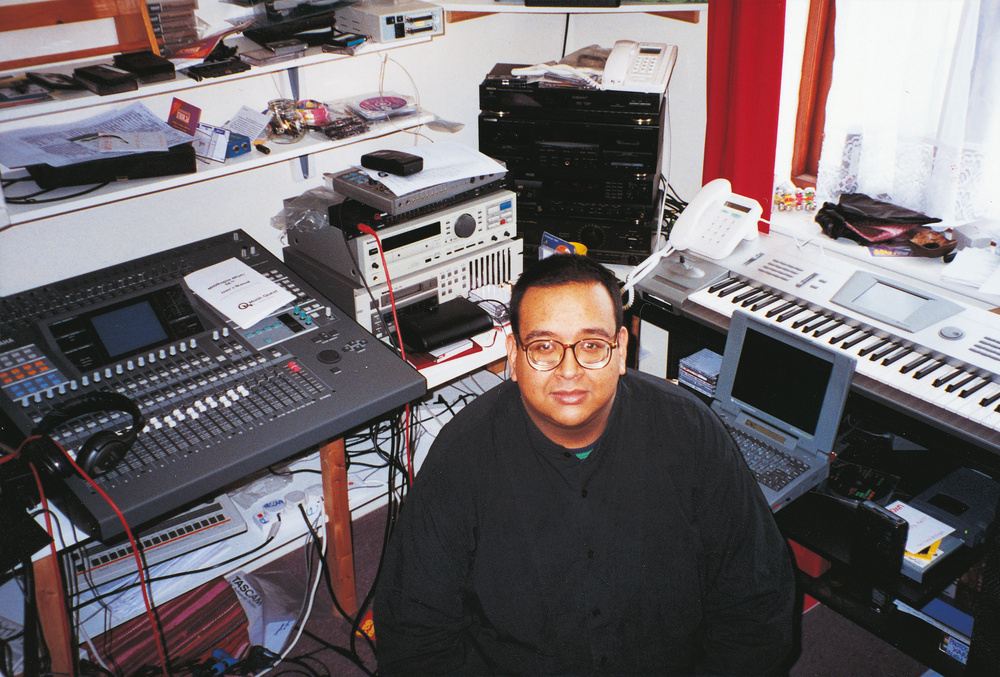
A gender-bending tale, centred around a trumpet sample from the 1930s, all written , recorded and produced by a fairly geeky looking chap in his bedroom. And catchy. I should also mention that it’s incredibly catchy.

It’s also very hard to describe. Is it dance, funk, indie, Britpop…? Is it lo-fi, hip-hop… boom bap?? (I have no idea what ‘boom bap’ is – Wikipedia suggested it, and I just liked the sound of it.) It’s at times creepy – the horn sample sounds like a haunted gramophone – but also quite funny – the middle eight with the plinky-plonky Game Boy sound effect is brilliant, my favourite part of the song, but also surely a musical piss-take.

Most of all it’s pretty subversive. Musically so, because number one singles aren’t meant to be recorded by nerds in their bedroom. And lyrically, because it sounds at first like our most explicitly gay chart-topper since ‘Relax’. A clipped, very English-sounding man delivering lines like: Well I guess what you say is true, I could never be the right kind of boy for you, I could never be your woman… The man behind it has said that it’s not explicitly queer though, more just about loving someone who isn’t right for you, when love and lust get mixed with your highbrow ideals…

The man behind White Town being Jyoti Mishra, born in India and raised in Derby, who had been in bands since the late 1980s and was well-known in underground scenes. ‘Your Woman’ was pushed heavily by Radio 1, leading to it entering the charts at the top, but Mishra struggled to follow it up. Having signed with EMI, he felt a loss of creative freedom, as well as frustration at his sudden fame. Frustrating for me is the fact that the follow-up to ‘Your Woman’ managed to scrape to #57, meaning that White Town isn’t strictly a one-hit wonder.

I mentioned above that the trumpet hook came from the ‘30s, more specifically ‘My Woman’, a 1932 hit written by Bing Crosby. (The music video nicely plays with the 1930s theme, aping the pratfalls and scene fades of old silent films.) The version sampled by Mishra is a different version, still from 1932, by Lew Stone & His Monseigneur Band. It’s been used since by rapper Naughty Boy and, probably most famously, by Dua Lipa on her 2020 song ‘Love Again’. It’s also been suggested that the original trumpet riff inspired one of the world’s most famous pieces of film score: the ‘Imperial March’ from Star Wars.

Jyoti Mishra and White Town were quickly dropped by EMI, and went back to recording independently, releasing their most recent album last year. For the 20th anniversary of ‘Your Woman’, he re-recorded the song using instruments commonly used in 1917. Because why not. Back in 1997, the tune was such a smash that it made its way onto ‘Now That’s What I Call Music 36’, which was the first edition of the series I ever bought, on cassette, probably with my 11th birthday money. And I’m not just inventing a cute ending for this post when I say that back then ‘White Town’ was my favourite track across the whole four sides… It really was.

756. ‘Professional Widow (It’s Got to Be Big)’, by Tori Amos

1997, then. The late ’90s! And we get off to a banging start…

Professional Widow (It’s Got to Be Big), by Tori Amos (her 1st and only #1)

1 week, from 12th – 19th January 1997

‘Professional Widow’ was a track from singer-songwriter Tori Amos’s third studio album, ‘Boys for Pele’, which had made #2 exactly a year before this. It had been released as the album’s third single, making #20. It’s a woozy, rude, barroom stomper of a song, driven by a harpsichord, and Amos’s Kate Bush like vocals. It’s ear-catching, but it does nothing to prepare you for the remix that would eventually top the chart.

The word ‘remix’ doesn’t feel sufficient here. A remix is a song rearranged, extended, or stretched out over a new beat. This is a song completely reimagined, huge chunks chopped off it, with very little of the original remaining. One line is repeated over and over: Honey bring it close to my lips… while the other line – It’s gotta be big – must be somewhere in the original, even if I can’t quite hear it.

It’s amazing how Armand Van Helden, the DJ responsible, could hear the opening harpsichord riff and reimagine it as a modern disco bassline. Some remixes are fairly lazy, with few changes of any note; but not this. It almost samples the original, the riff and the two lines, and creates a completely different song. Van Helden is American, and the track is more house-influenced than our recent dance #1s, but there’s hints of the Prodigy and the Chemical Brothers in the big chunky beats, in the creepy background noises, and the sudden break halfway through.

The ‘Professional Widow’ of the title is apparently a snide reference to Courtney Love, something that Amos has neither confirmed nor outright denied. She had nothing to do with the remix – she was contractually obliged to approve them – but in interviews she has said she enjoys Van Helden’s version. It brought about the biggest hit of her long career, anyway – surpassing the #4 peak of the folksy ‘Cornflake Girl’ from 1994 – and is, to date, Amos’s last visit to the UK Top 10. Armand Van Helden was just getting started, and will go on to be one of the biggest dance producers of all time. He’ll be back at number one, fully credited, fairly soon.

We can’t finish without mentioning the misheard lyric – one of pop’s filthiest mondegreens – where It’s gotta be big becomes… Well, I won’t write it out. Safe to say, once you hear it you can’t unhear it. Misheard or not, it does fit in fairly well with the bawdy original.

You could say that this is a classic January #1 – a fairly random remix sneaking a week at the top in the post-Christmas lull. In fact, January 1997 is one of the best examples the phenomenon, with a run of fun and quirky one-weekers coming up that I’m looking forward to getting into.