704. ‘Everything Changes’, by Take That

For their fourth #1 in nine months, Take That once again take turns at lead-vocal duty. We’ve had two Garys, one from Mark, and now a Robbie…

Everything Changes, by Take That (their 4th of twelve #1s)

2 weeks, from 3rd – 17th April 1994

Which gives a fairly throwaway pop song, a chart-topper more because of the band singing it than because of any innate quality the song might have, some significance. For here is the voice of the biggest British star of the coming decade… Though you might not have realised it at first, given the strange American accent he puts on for the album version’s intro…

On the single edit that bit is cut out, and we are rushed straight into another disco-tinged piece of retro-pop; the skinnier, sickly brother of ‘Relight My Fire’. I did wonder if ‘Everything Changes’ might have been a cover, as nobody under the age of sixty has ever used the term ‘taxicab’, but no – it’s a Gary Barlow (plus guests) writing credit. I guess they just needed the extra syllable to make it scan…

It’s perfectly serviceable pop. There’s nothing wrong with it (if we overlook the dated sax solo…) but neither is there much particularly memorable about it, apart perhaps from the for-ev-er… hook. There’s a reason why it was the fifth and final single from the band’s second album. There’s also a reason why it still made number one for a fortnight despite everyone already owning a copy of said album: Take That were bloody huge by this point.

While it might not have been his first lead vocals on a Take That single (I have little inclination to go back through their discography and check) it was definitely Robbie Williams’ first lead vocals on a #1. On their previous three, he very much took a back-seat. It felt strange to see him dancing gamely behind Barlow and Owen, knowing that he would go on to be bigger than any of them. But then, at the time, his departure was unexpected, and nobody would have bet on him having the success that he did.

Anyway, we’re getting ahead of ourselves. They’ve got a few more hits, and a few more chart-toppers, before he strikes out alone. And of the Take That #1s that have gone before, I’m starting to think I was a bit harsh on ‘Pray’… It’s head and shoulders above their other chart-toppers so far – as fun as ‘Relight My Fire’ was, and as strange as ‘Babe’ was. Quite possibly one of their very best…?
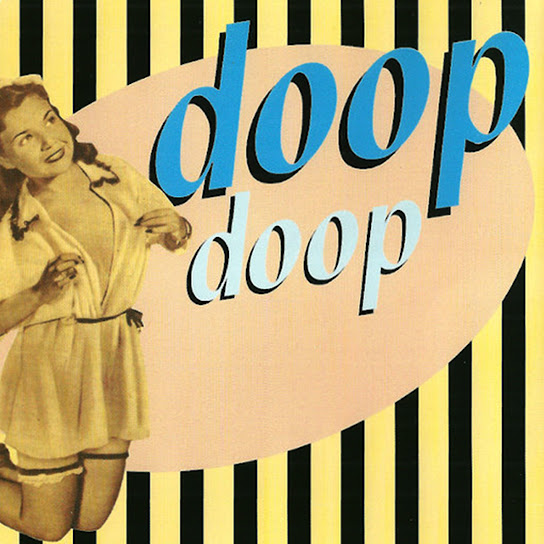
703. ‘Doop’, by Doop

And now for something a little different… Eurodance meets the Charleston.

Doop, by Doop (their 1st and only #1)

3 weeks, from 13th March – 3rd April 1994

More impressively, Eurodance meets the Charleston, and the results aren’t a complete disaster. ‘Doop’s merging of wildly disparate musical eras works. It’s fast, catchy, and fun – a novelty for sure, but not too irritating. It works its way right into your brain, thanks to its frenetic pace and puppy dog energy, and stays there…

It’s a completely instrumental track, apart from the doopy-doopy-do-do-doos which give the song its name. It’s the last instrumental number one since… I’m not sure, to be honest, but it’s been a good while. It’s also probably one of the last, as they’ve become rarer and rarer since their heyday in the late fifties-early sixties.

There’s not much to it – a big band sample stretched out over a techno beat. With the aforementioned doops, of course. The most complex thing about this record is how many remixes there were, and working out which one was actually getting airplay at the time. They all have a varying techno-to-Charleston ratio. The ‘Official Video’ on YouTube is the most modern, a dance beat interspersed with trumpet blasts. I prefer the more big band-heavy versions, such as the Sidney Berlin Ragtime Band mix, from the Maxi-CD release, or the Urge-2-Merge radio edit.

The best mixes are also the ones that keep proceedings down to the three-minute mark for, as fun as this tune is, it can get a little repetitive when stretched over seven minutes. Short and sweet is the order of the day here. Doop were, you’ll be shocked to realise, from the Netherlands, the one country that can rival masters Germany for Europop cheese. And let’s be honest, giving your debut single the same name as your band (or vice-versa) suggests that you’re quite happy in aiming for one-hit wonder status.

In fairness, Doop did manage a #88 follow-up hit with ‘Huckleberry Jam’, in which they tried the same trick using an old blues riff, while an earlier incarnation of the group, Hocus Pocus, made #1 in Australia with a song called ‘Here’s Johnny!’ Really though, this is real one-hit wonder stuff: a flash in the pan, bottled lightning moment, and I’m not sure this track has been played on the radio for years.

It was a trend-setter of sorts, though. I can’t think of many dance tracks that sampled pre-rock and roll music before Doop, but I can think of a few that came afterwards, including at least a couple of number ones. Anyway, I like it, as throwaway as it is. The NME disagree, though, naming it among their ‘25 most annoying songs ever’… Which seems rich given some of the crap they’ve championed over the years.

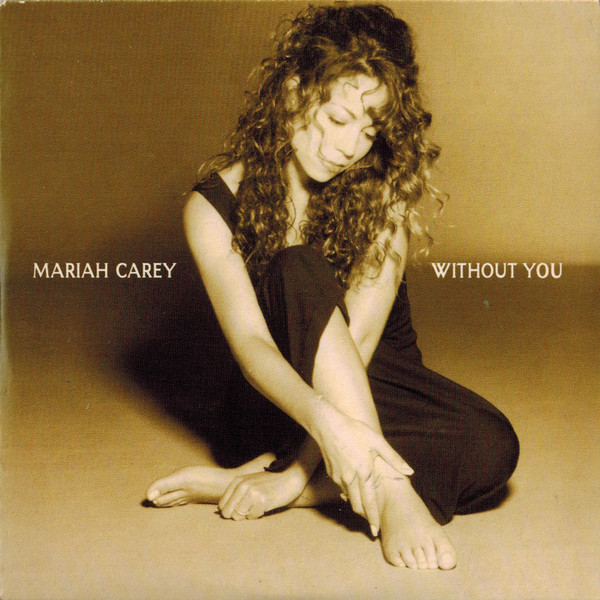
702. ‘Without You’, by Mariah Carey

Mariah Carey, one of the biggest-selling stars of the 1990s, is very poorly served in terms of the UK number ones she scored in that decade. Just the one, in fact. This one.

Without You, by Mariah Carey (her 1st of four #1s)

4 weeks, from 13th February – 13th March 1994

And I have to say, as much as I have a soft spot for ‘Mariah’ the camp icon – the ‘Cribs’ appearance, the ‘I don’t know her’ meme, all that nonsense – the fact that she didn’t dominate the British charts in the same way she took over the Billboard Hot 100 can only be a good thing. Yes, she can sing. No question. She takes Nilsson’s 1972 #1, and sings the absolute bejeezus out of it.

At one point, towards the end of this track, she extends the I can’t give any more… line for a full sixteen seconds, in a display of aggressive melisma. I can barely hold my breath for sixteen seconds, let alone belt out a succession of different musical notes for that length of time, and in purely technical terms it is very impressive. And yet, it’s these sorts of vocal gymnastics that ruin the song.

The same charges that were laid out against Whitney Houston as she whooped and hollered her way through ‘One Moment in Time’ and ‘I Will Always Love You’, can be made against Mariah here. Technically good singing will only get you so far, if you don’t mean what you’re howling about. Not in every song – plenty of decent pop songs can be churned out half-arsed – but in a torch song like this, with such a heartfelt original to compare it to, the difference shows. (Nilsson’s version, of course, wasn’t the original, but it is the version to which everyone compared Carey’s.)

Another comparison I can make between Mariah and Whitney is that I’ve always enjoyed Carey’s poppier moments more than her monster ballads. ‘Fantasy’, ‘Dreamlover’ and ‘Heartbreaker’ are all solid nineties pop tunes. What we also have to take into account, before complaining about her endless stream of ballads, is that she was tied in to a pretty controlling contract, and a pretty nasty relationship, with her manager Tommy Mottola.

I was under the impression that Harry Nilsson had died when this cover of his most famous hit was at #1, and was going to make a cheap joke about his cause of death. Except he had died a month before, in January 1994, at the very young age of fifty-two. I assume that Carey’s cover was already recorded by then, and wasn’t intended as a tribute, even if it did in the end become one. She had already had eight chart-toppers in the US, though ‘Without You’ stalled at #3 over there.

Younger readers may be surprised to discover that Mariah Carey actually had a recording career beyond a certain Christmas song, the name of which I dare not type out in case I accidentally get it stuck in my head. In truly shameless Mariah fashion, she’s really lent into her ‘Queen of Christmas’ alter-ego in recent years and, even as I sit here in late October, I’m counting down the days until her annual assault on the charts, and on our ears…

701. ‘Things Can Only Get Better’, by D:Ream

There’s a niche category of number one singles, one I’m going to name ‘much loved chart-toppers that I don’t really get’ (catchy, isn’t it?) Our next #1 belongs to this category…

Things Can Only Get Better, by D:Ream (their 1st and only #1)

4 weeks, from 16th January – 13th February 1994

I don’t dislike ‘Things Can Only Get Better’; I just don’t quite see why people love it. I think the problem is the intro, the overwrought vocals and weighty piano chords gradually building, very slowly getting to the point. Is this a gospel track? A spiritual? No, it’s just a dance tune, and once the synths and the funky bassline come in, and you know where you stand, things improve.

I have a deep suspicion for songs that could be described as ‘motivational’, which is probably where my issues with this tune lie. ‘Motivational’ means ‘uplifting’, and the next step on the ladder from that is ‘spiritual’, or ‘religious’, and I’m someone who believes very strongly in the separation of church and pop. It’s not just this song – there is a strain of thought (or clever marketing) that positions dance music as a sort of religion, with nightclubs as churches, and the Ministry of Sound as some sort of Holy Father… Religious ecstasy taking on a new meaning in this case…

But then I sit down, and properly listen to the lyrics to ‘Things Can Only Get Better’, and wonder if they aren’t to do with accepting who you are, and holding your head up through scorn and insult… Burn the bridges as you’ve gone, I’m too weak to fight you, I’ve got my personal hell to deal with… Maybe it even alludes to those with AIDS (I must learn to live with this disease…), and I’m starting to feel bad for writing this song off as mindless motivational nonsense.

My favourite part of the song is the ending (and I don’t mean that sarcastically) as the entire song deconstructs, the horn riff goes wonky, and the lyrics taper off. I still don’t love it, but I think I’m beginning to appreciate it a little more. I can see it as a musical sibling of Yazz’s ‘The Only Way Is Up’, which is every bit as positive, but doesn’t quite wear its heart on its sleeve like this one.

D:Ream were the brainchild of Peter Cunnah, a Northern Irish singer-songwriter, who sings the vocals on this track. He sounds a bit like George Michael, actually – one moment light and airy, the next hitting a throaty growl. The other members changed fairly regularly, but one of their more famous alumni is the now TV-scientist Brian Cox, who famously played keyboards when the band performed ‘Things…’ on Top of the Pops.

This was their first big hit, but D:Ream had been plugging away for a few years before breaking through. This track had been released a year earlier, making #24, but its popularity in the clubs kept growing, leading to this re-release. In many ways, this is one of the chart-toppers that sum up the mid-to-late nineties: Britpop, Cool Britannia, Noel’s union jack guitar, Geri’s dress, all that razzamatazz. It was used as a campaign song by the great political hope of the age, New Labour, as they swept to victory in the 1997 general election. It all seems like a very long time ago, now…

700. ‘Twist and Shout’, by Chaka Demus & Pliers with Jack Radics & Taxi Gang

The 700th UK number one single. My word, haven’t we come far! Not only that, it’s the first #1 of 1994 – officially the mid-90s. Bring. It. On!

Twist and Shout, by Chaka Demus & Pliers with Jack Radics & Taxi Gang (their 1st and only #1s)

2 weeks, from 2nd – 16th January 1994

And it’s pretty fitting that this landmark chart-topper is a reggae song. For all the dance tunes, boyband pop, and the Britpop hits yet to come, I’ve already made the argument that reggae was the sound of 1993-5. And what I like about this, as with Shaggy’s ‘Oh Carolina’, is that it’s pretty uncompromising reggae. This isn’t dub, as heard recently from Ace of Base or UB40; it’s a proper sweaty dancehall track.

‘Twist and Shout’ is a fairly well known tune, mostly in the frantic version the Beatles’ released on their debut album, featuring a famous vocal performance from John Lennon. And so you could be forgiven for wondering if we really needed a reggae version. We definitely do, though. As with all the best cover versions, Chaka Demus and Pliers (a Jamaican DJ and singer) turn it into a completely different song.

The bare bones are still there: the chorus and, most importantly, the ascending aaahs that lead us to it. But beyond that there’s lots of toasting and rapping that neither Lennon, nor the Isley Brothers (who first had a hit with ‘Twist and Shout’ in 1962), could have imagined. Get up and move your body… One time… Pliers sings… Ooh man you drivin’ me crazy… The purists may have frowned, but I think it’s charming, and a lot of fun.

You couldn’t have picked a less likely time of year for this to be a hit, with it reaching the top the day after New Year’s. But we all need a bit of tropical escapism, don’t we, especially in a miserable British January? Plus, Chaka Demus & Pliers had already made the Top 5 twice in 1993 (tease me, tease me… till I lose control…) and this cemented them as Britain’s favourite reggae act.

For the recording, they roped in Jack Radics, who I believe is the gruffer voice you hear on the chorus, and Taxi Gang, a rhythm section associated with Jamaican music legends Sly & Robbie. This gives the song’s credits a very modern look, with four different artists attributed (I think this might have been a record at the time). It was Chaka Demus and Plier’s last big hit in the UK, though they would carry on until 1997, and still get together every now and again.

Every time we reach a century of #1s, it’s always good to take stock. Do they tell us anything about the styles of the time…? Well, in this case, yes. Reggae was enjoying a big resurgence in the charts. It’s certainly more relevant than the 500th #1 (Eurovision cheese from Nicole), or the 400th (Julie Covington’s ‘Don’t Cry for Me Argentina’). The most ‘of its time’, though, remains the 200th: the Beatles’ ‘Help’.