689. ‘All That She Wants’, by Ace of Base

Enter Sweden’s 3rd biggest-selling pop act… (Answers for 2nd place on a postcard… I’ll reveal it at the end of the post!)

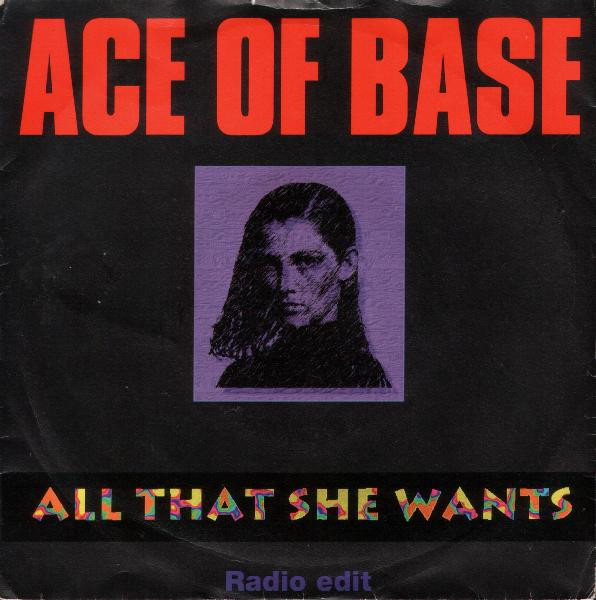
All That She Wants, by Ace of Base (their 1st and only #1)

3 weeks, from 16th May – 6th June 1993

And in the grand Swedish tradition, it’s a male-female combo – two men, two women (though as far I can tell no marriages) – Ace of Base. With what I’ve always thought to be a deeply strange pop song.

There’s the sparse, ghostly intro, for example. And all the empty spaces in the song, where it’s just nothing more than a drum machine and a lumbering synth riff, and the low-key ending. It’s not your normal pop smash, even if it has more than a hint of dub-reggae – soon to be one of the dominant chart sounds – in the steady, hypnotic beat. And that’s before we dissect the lyrics…

All that she wants, Is another baby, She’s gone tomorrow boy… They tell the tale of a femme fatale, who prowls an unnamed beach looking for men… She’s the hunter, You’re the fox… And in that respect it’s great. Girl power! Fifteen years ago Brotherhood of Man told the story of a holiday resort lothario in ‘Figaro’, but Ace of Base flip it on its head. If it were sung by men it might be a bit cliched, but no. Go girls!

The problem I have with the lyrics is the fact that, as a kid, I took them literally. All that she wants, Is another baby… I thought she was wandering the beach looking for a man to get her pregnant. Which is weird, and I apologise; but having done some research I find I’m not alone. “As far as I can remember, ‘All That She Wants’ by Ace of Base is the only hit single ever to talk about a lady who uses men for stud service so that she can become an unwed mother,” said LA Weekly at the time. I like to think Ace of Base knew what they were doing, keeping the lyrics intentionally vague and menacing. Either way, I feel seen.
‘All That She Wants’ is definitely a grower. Even now, on my fourth or fifth listen, I’m remembering why it is such a good pop tune. I’m not sure what the hooks are – or perhaps it’s because there are so many it’s hard to pinpoint them – but it worms its way in and stays there. Just like Sweden’s biggest pop group, the one it’s impossible not to compare Ace of Base to… It’s not out of the question to imagine that, had ABBA been around in 1993, they might have been making records like this. And, like Agnetha and Frida, the girls here have similarly accented, idiosyncratic, but still very alluring, English.

This was only Ace of Base’s second chart hit, and what a hit. A number one across Europe, presumably unavoidable at beach bars from Faro to Faliraki in the summer of ’93, and a #2 in the US. It set them up for a run of Top 10s through the 1990s, including US #1 ‘The Sign’ and a cover of ‘Don’t Turn Around’, which Aswad had taken to the top in 1988. But permit me to give a shout out to my favourite Ace of Base tune, ‘Always Have, Always Will’, which takes everything you love about ABBA, Motown, sixties girl groups, and serves it up in pop perfection. Its #12 peak be damned!

This would be their only visit to the top of the charts, but they remain Sweden’s 3rd most successful act. ABBA are obviously the 1st, but what of the runners-up…? Well, it’s Roxette (another male-female act!), who never made it higher than #3 in the UK. Personally I’d have named garage rock loons The Hives as my second favourite Swedish act, but they’ve never come close to troubling the top of the charts.
688. ‘Five Live E.P.’, by George Michael & Queen with Lisa Stansfield

I have to admit my heart sinks each time I see an EP coming along. It’s hard enough writing about double-‘A’s (in fact, it can be hard writing about some of the standalone number ones…), but when it’s four songs to get through? Cancel my three o’clock…

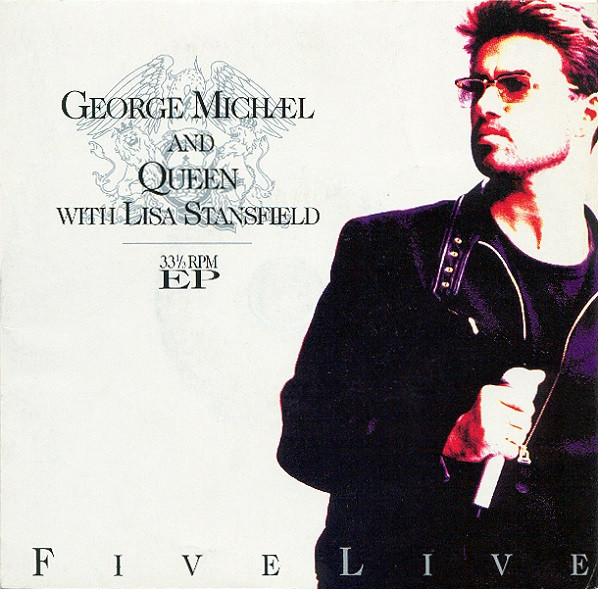
Five Live E.P., by George Michael (his 5th of seven #1s) & Queen (their 5th of six #1s) with Lisa Stansfield (her 2nd and final #1)

3 weeks, from 25th April – 16th May 1993

Luckily for me, the final EP to top the British singles chart has five whole tracks to get through! Five live tracks (hence the name) by George Michael, with assistance from Queen on two of them, and Lisa Stansfield on one. Let’s not tackle them in order, but take the two Queen covers first, recorded at the famous Freddie Mercury Tribute Concert a year earlier.

First up, George has a good old crack at ‘Somebody to Love’. It’s a thankless task, trying to do Freddie Mercury, singing one of his signature songs. But GM gives it a bloody good go. It might be the most impressive vocal performance of all seven of his solo #1s, especially given that it was recorded live. It’s a straightforward cover, but a decent one. And it takes to number one a Queen song that should, like many of their post-Bo Rap singles, have got there first time around. One wonders if this was where Brian May got the idea to start touring again, eventually, with the likes of Paul Rodgers and Adam Lambert.

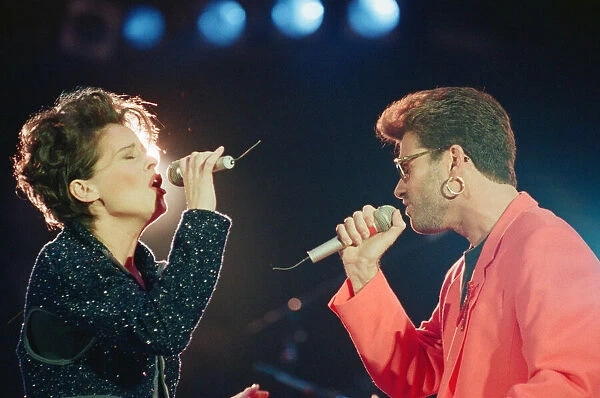
The other Queen cover is ‘These Are the Days of Our Lives’, the track that had made #1 in the immediate wake of Mercury’s death. George is joined by Lisa Stansfield, who he welcomes on stage remarking that she hasn’t any hoover or curlers (presumably referring to her performance of ‘I Want to Break Free’ earlier that night, and not just being sexist…) Again it’s fine, excellently sung – particularly by Stansfield, who didn’t really get to show off her vocal chops on ‘All Around the World’. I don’t imagine it was easy going on stage with George Michael in full flow and holding your own, but she manages. Yet this track isn’t as enjoyable, because a) it was #1 barely a year before and b) it’s not as good as ‘Somebody to Love’ in the first place.

The three other tracks are George Michael solo efforts, recorded in March 1991, again at Wembley (from the same tour that gave us his ‘Don’t Let the Sun Go Down on Me’ duet with Elton John). According to the records, he covered both Adamski’s ‘Killer’ and The Temptations’ ‘Papa Was a Rolling Stone’, but both tracks are hard to, well, track down. Luckily on the British version of the EP he used a shortened, medley version, and again it’s… OK. You’d need a good ear to hear these tracks as a medley, but it works.

However, I refer you back to my comments on Michael’s earlier live #1: live versions being rarely better than the originals and, unless you were actually at the concert, the crowd noises are little more than a distraction. It’s like modern-day shaky camera phone footage, but better produced. Still it was for charity, which is always good, benefiting the Mercury Phoenix Trust, an AIDS fund set up by the remaining members of Queen, their manager Jim Beach, and Mercury’s former partner Mary Austin.

Did we need a fifth track though, making this the longest record to ever make #1 (a milestone that is now almost impossible to break)? Not really. This is where we tip into real self-indulgence, something that George Michael was always prone to, with a cover of ‘Calling You’, originally recorded by soul singer Jevetta Steele for the film ‘Bagdad Café’. I hadn’t heard of it, although the crowd’s reaction suggests that some of them had, at least. And in fairness it did win the Best Original Song Oscar for 1988. The vocals are amazing, from both George and his backing singers, especially again considering it was recorded live. But… It does go on. It unfolds at a snail’s pace, over five minutes. My patience is well and truly tried.

The history of EPs – longer than singles but shorter than LPs – on the UK singles chart is hard to pin down. In the sixties, their heyday, they sold very well and had their own chart. Between the 70s and 90s they fell out of fashion, but could chart alongside the singles. We’ve had three earlier EP #1s, from Erasure, The Specials and Demis Roussos. ‘Five Live’ was the last one to make the top, and maybe this sprawling beast of a record helped to kill them off. Nowadays the closest we’ve got to an EP is a Maxi-CD, or a digital bundle, but since the download/streaming era individual tracks can simply chart in their own right. The same fate has also befallen the double-‘A’ record, though we’ve still got a few more of them to come before then…

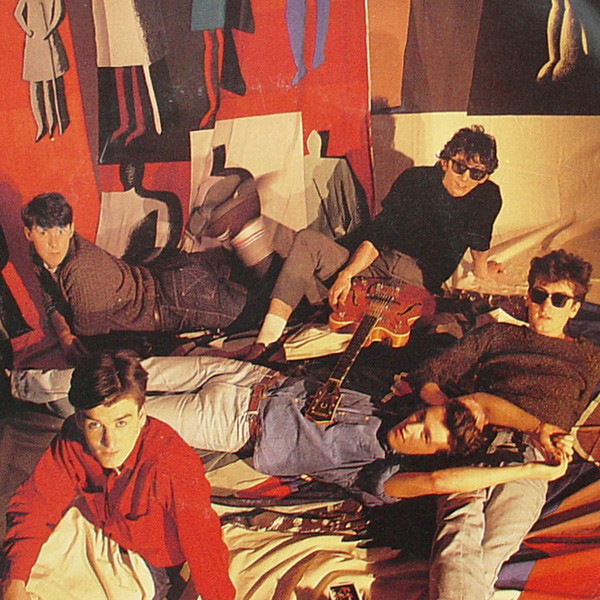
687. ‘Young at Heart’, by The Bluebells

If we thought ‘Oh Carolina’ was an unpolished step away from the usual sounds of the early nineties, then what to make of this folksy jig…?

Young at Heart, by The Bluebells (their 1st and only #1)

4 weeks, from 28th March – 25th April 1993

We need to sound the ‘random re-release’ klaxon, one that has been honked fairly often during these past few chart years, for the success of this record was not completely organic. ‘Young at Heart’ was originally a #8 hit, in 1984, for Scottish jangle-pop act The Bluebells. It was their biggest hit, from the only studio album they released before disbanding in 1985. Fast-forward nearly a decade, and the song is being featured in a commercial for Volkswagen (not Levi’s, for once!)… Hey presto. Number one.

And aren’t we glad that it was! It’s distinctive, bordering on strange, and yet oh so catchy. Banjos, harmonicas, and most of all violins – the solo has to be one of the most ‘out there’ moments in a #1 for many a year – come together at the barn dance for a tale of young love: They married young, For love at last, Was their only crime…

It’s always hit me as a sort of ‘Come On Eileen’ Part II, both in terms of the Celtic sounds and the subject matter. Plus at its heart, despite all the country dressing, it has a pure pop bridge and a soaring chorus, which hint at an interesting origin story. I’ll let you in on a secret, one that raised my eyebrows when I found it out barely five minutes ago… The reason this song has such strong pop credentials is because it was written, and originally recorded by, Bananarama! I know, right…!

They recorded it for their debut album in 1983 – it was actually co-written by Siobhan Fahey (sort of giving her a second non-Bananarama number one) and the band’s guitarist Bobby Bluebell (not his real name) – and, if we’re honest, their version is fairly bland. In fact, The Bluebells’ take is a lesson in how to do a cover version right: changing the tone, the tempo, the genre, to the point where you’d have to be listening pretty closely to notice that they were the same song.

The Bluebells reformed especially for the TOTP performance brought about by the record’s unexpected success, and have continued to come back together on and off over the years. One of their former members is a lecturer in music business, while another is a golf correspondent for The Guardian.

Sadly, I make this the final ‘random re-release’ we’ll see, for a while at least. There are plenty more to come, especially in the 21st century, but this is the end of that golden spell in the late-eighties and early-nineties, when Ben E King, Jackie Wilson, The Clash, The Righteous Brothers, The Hollies and The Steve Miller Band all scored belated, sometimes posthumous, chart-toppers thanks to films, TV shows and, more often than not, adverts for Levi’s jeans. Let’s salute them, then, these random re-releases, for spicing up the charts, and breaking up all the SAW, the dance, and the movie soundtrack power ballads.

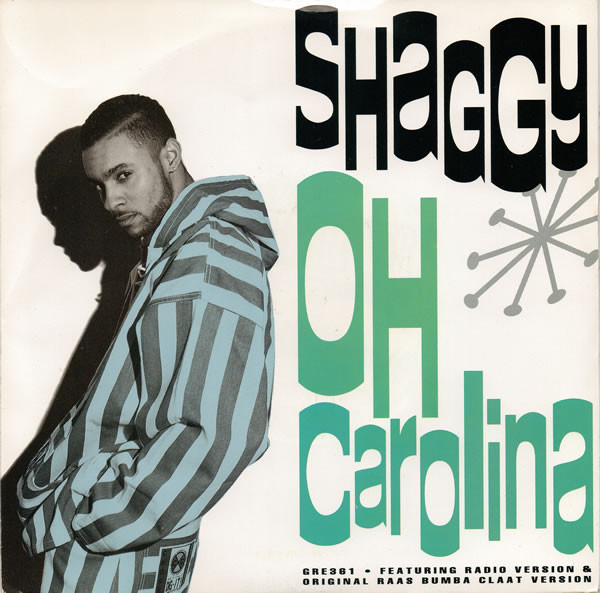
686. ‘Oh Carolina’, by Shaggy

There’s so much to unpack with this next number one… How did this unknown Jamaican, who growls and slurs his way through his breakthrough smash, go on to become one of the longer-lasting hitmakers of the decade? Why did this summery smash, that sounds like its coming to you live from a beach bar in Montego Bay, make #1 in March? And just why is reggae the chart genre that refuses to die…?

Oh Carolina, by Shaggy (his 1st of four #1s)

2 weeks, from 14th – 28th March 1993

Let’s address that last question first. For this is the purest reggae, not the pop version of UB40, or the watered down offering of Boris Gardner. It’s ragga, its dancehall; it’s rough and grimy, so much so that you almost have to wipe the sweat from the stereo after playing it. It’s a cover of an old ska song from the early sixties, by the Folkes Brothers, the opening riff of which is sampled on Shaggy’s version, giving this a folksy, distinctive edge, a world away from the polished beats of the 1990s. This doesn’t in any way answer why reggae keeps coming back to the top of the charts – other than the fact it is impossible not to dance to songs like this – but we’re entering what is perhaps the most reggae-heavy period in chart history, between 1993 and the middle of the decade.

Once the main rhythm, and the up to date production rolls in, the song still doesn’t lose its edge. And that’s mostly thanks to Shaggy’s gruff toasting. I have no idea what he’s saying, but it all sounds pretty filthy… I believe Carolina moves her body just like a squirrel, can jump and prance… And at one point I think Shaggy claims to love how she shag… (I could just Google the lyrics, but I have no desire to prove myself wrong.)

As to why it made #1 months ahead of schedule? Well aside from a need for some escapism from a misty, miserable March, it was included on the soundtrack to the movie ‘Sliver’, starring Sharon Stone (15% on Rotten Tomatoes). Whether that helped or not I don’t know, but if it did I’m glad. This is a rough and ready song, with a wonderfully raw feel. It’s certainly Shaggy’s forgotten chart-topper, but it’s probably his most credible.

Which brings us on to the very first question I posed. ‘Oh Carolina’ has one-hit wonder written all over it, and yet… I can’t adequately explain the subsequent career of Shaggy (AKA Mr Boombastic, AKA Mr Lover-Lover), even though I lived through it. He’s somehow cool – he is an ex-Marine after all – and yet completely ludicrous. By the time of his turn-of-the-century, biggest hit (you know, the one about ‘banging on the bathroom floor’) he was basically a cartoon character. He duetted with Ali G, for Pete’s sake!

Anyway, we can address all this in good time. For now, let’s enjoy his first chart-topper, in all its raunchy, mumbling glory. (I think it helps to enjoy Shaggy when you don’t understand what he’s saying…) And, for the third chart-topper in a row, I have specific memory attached to this record. A primary school friend had a (highly unrequited) crush on a girl called Caroline. Cut to our Primary 4 disco, where we requested this song on his behalf, made sure the DJ announced who it was for, and an entertaining meltdown ensued…

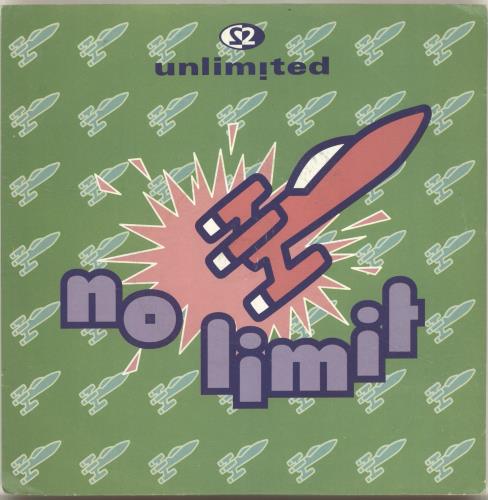
685. ‘No Limit’, by 2 Unlimited

I know that, in the real world, people don’t usually buy records just to get rid of the previous number one. They buy them because they like the song, or they like the singer, or because they found them in the Woolies’ bargain bin… But, after Whitney Houston had set up camp at the summit for the entire winter of 1992-93, the record that finally replaced it feels refreshingly… different.

No Limit, by 2 Unlimited (their 1st and only #1)

5 weeks, from 7th February – 14th March 1993

Let me hear you say yeah! Booting Whitney out the way is a proper slab of early nineties techno (or should that be ‘techno, techno, techno, techno’?) A sledgehammer synth riff, a breakneck tempo, minimalist lyrics, and a rap. Wham, bam, thank you ma’am. Job’s a good ‘un.

No, no, no, no, no, no, no, no, no, no, no, no, There’s no limit… I may have claimed in my post on Snap!’s ‘Rhythm Is a Dancer’ that dance tunes don’t need deep lyrics. But the lyrics to ‘No Limit’ make most dance tunes sound like ‘American Pie’. Lots of ‘no no’s, and a bit about reaching for the sky. The UK release even deleted the rap – a bit too wordy – and replaced it with some more ‘oh’s, and some ‘techno’s.

Is it wrong that I like this more than some (most…) of the earlier dance number ones? Records like ‘Rhythm Is a Dancer’, ‘Killer’, and ‘Ride on Time’ are lauded as classics, while ‘No Limit’ is hidden under the carpet like an embarrassing stain. Well I’m here to reclaim this song. Yes, it’s simplistic, bordering on moronic – three notes and a lot of shouting – but, damn it, it’s fun. I like dance music best when it has the aggression and energy of rock ‘n’ roll and, replace the synths with scuzzy guitars here and you’ve got yourself something pretty punk.

And I admit, I have a soft spot for this tune, because it’s one of the first pop songs that I was aware of at the time. I have distinct memories of this being sung, over and over, in my school playground. 1993 was the year I turned seven, and the songs that made number one started becoming more and more relevant to me. I apologise in advance for any self-indulgence as we head on through the tunes of my childhood, and will try to keep the reminiscing to a minimum…

I’d have put good money on 2 Unlimited being German. Something about the sheer relentlessness of the beat, the ruthless efficiency of the lyrics… National stereotypes aside, most of the finest Europop (think Boney M, Falco and Snap!) has also been of Germanic origin. And I was close! They were Dutch/Belgian, and followed the Snap! formula of a male rapper and a female singer. Between 1991 and 1994 they scored eight UK Top 10s. I’m not sure any are better than ‘No Limit’ – they certainly had a formula, and stuck to it – so it feels right that this was their one and only chart-topper.