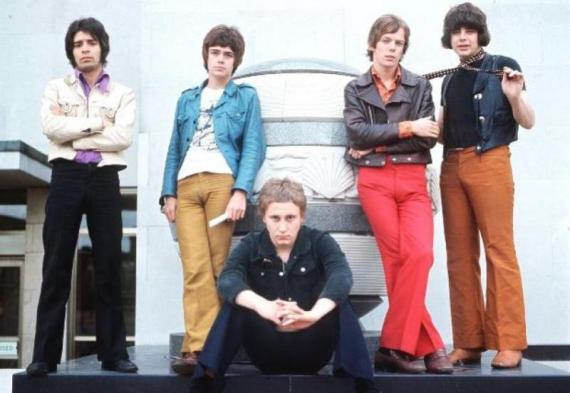
250. ‘Young Girl’, by The Union Gap ft. Gary Puckett

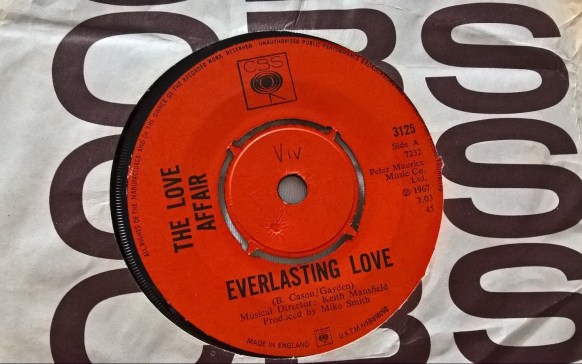
We’re back on fine late-sixties form, with our grooviest, swingingest chart-topper since The Love Affair’s soaring ‘Everlasting Love’. Brass section? Check. Strings? Check? Floaty backing vocals? Check. A soulful lead singer? Check, check, and check.
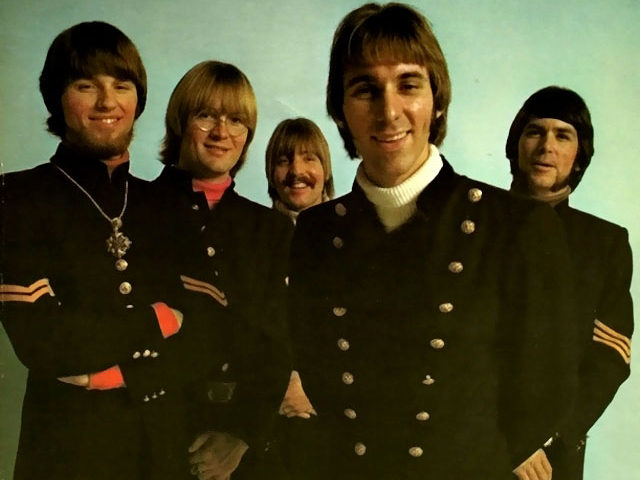
gary-puckett-and-union-gap-1-640x480

Young Girl, by The Union Gap ft. Gary Puckett (their 1st and only #1)

4 weeks, from 22nd May – 19th June 1968

Throw in the horn solo and we’ve got a cute and catchy sounding #1 hit. A little cheesy at times, a little saccharine in its chord-progressions maybe, but overall a fun and breezy pop record. Shall we just wrap it up there…?

No. For we haven’t mentioned the lyrics yet. And what lyrics… Young girl, Get out of my mind, My love for you is way outta line, Better run girl, You’re much too young, girl…… It’s a song that sets its creepy stall out from the start, and then just gets creepier. Take your pick from lines like: With all the charms of a woman, You’ve kept the secret of your youth… or, Beneath your perfume and make-up, You’re just a baby in disguise… which leads on to the beautiful: And though you know, That it’s wrong to be, Alone with me, That come-on look is in your eyes…

I keep thinking that I must be coming at this with my super-woke, 2020 glasses on, and that I should be cutting a song recorded over fifty years ago some slack; but pretty much every line is a doozy. The final verse, in which the singer urges the girl to run back to her momma, could easily be shouted by a sweat-drenched serial killer who’s come to his senses just in time. Get outta here, he yells, Before I have the time, To change my mind…

He does, at least, realise that his feelings towards the girl are inappropriate. Credit where credit’s due. But all the blame is put on her… She’s the one who should stop what she’s doing! Typical eh, ladies? That’s probably the thing that dates ‘Young Girl’ the most – the idea that she’s a teenage temptress, an underage siren, who knows exactly what she’s doing. The song it reminds me of the most is ‘Does Your Mother Know?’, by ABBA. But that record somehow stays the right side of creepy, maybe because it’s half-sung by two women, or because Benny and Bjorn look like cuddly teddies… There’s also ‘U16 Girls’ by Travis, but they at least have a sense of guilt in that song, and take responsibility for themselves: ‘so make sure that she’s old enough, before you blow your mind…’
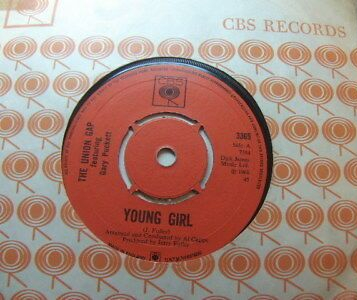
Union-Gap-featuring-Gary-Puckett-–-Young-Girl

The Union Gap were an American band formed, and led, by Gary Puckett. (Strangely, they were usually know as Gary Puckett & The Union Gap, but this record was released – in the UK at least – as The Union Gap featuring Gary Puckett.) They only had one further Top 10 hit in the UK – though they had a few more in the States – and they disbanded as the decade ended.

I don’t know. One the one hand it’s a catchy pop song; on the other it is creepy. A quick go on your search engine of choice matches ‘Young Girl’ with articles like ‘Nine Songs That Just Aren’t OK Anymore’, ‘Secretly Horrifying Song Lyrics’ and the bluntly put ‘Top 10 Jailbait Songs’. With 2020 vision, this is an uncomfortable listen. But… Isn’t that the problem with our modern day, woke, cancel-culturing, Twitter-storm world? That we apply the social standards of now to cultural products of bygone ages? From copies of ‘Huckleberry Finn’ being banned from public libraries to millennials being horrified by episodes of ‘Friends’…

I don’t have an answer to any of that. All I’d suggest is that you enjoy listening to ‘Young Girl’ from the privacy of your own home or earphones, and perhaps don’t bust it out at the next office karaoke night…

249. ‘What a Wonderful World’ / ‘Cabaret’, by Louis Armstrong

*Insert now standard comment about 1968 being an eclectic year* The eclecticism continues with the oldest chart-topper yet, a jazz trumpeter who was a veteran even before the charts, before rock ‘n’ roll, before popular music as we know it. Ladies and Gentlemen, Mr. Louis Armstrong.

Louis Armstrong1968

What a Wonderful World / Cabaret, by Louis Armstrong (his 1st and only #1)

4 weeks, from 24th April – 22nd May 1968

‘What a Wonderful World’ is the sort of song for which the word ‘timeless’ was invented. It hit #1 in 1968, but it could have similarly done so in 1948, or ’88, or in 2168. It will hit the top spot again, in a different version, in 2007. It’s a song that you all know, one that doesn’t need me to dissect and examine it…

But still, that’s kind of why I’m doing this. It drifts in on a lullaby’s melody, before Louis begins to sing, listing all the things that he sees – trees of green, red roses too – which remind him of just how wonderful the world is. The colours of the rainbow, So pretty in the sky… There’s a tremble in his voice at the end of every line, either from age or from emotion, that is beautiful.

You could be cynical, and remind yourself of all the things he must not be seeing – the litter on the street, the homeless person sleeping on the bench – but no. What would that achieve? Despite its simplicity and childlike optimism, this is a song whose opening chords cannot fail to make you go all warm inside. It is pop music as hymn, the closest comparison in terms of previous number ones would be Frankie Laine’s ‘I Believe’. It’s an old man looking back on life with the weight of experience… I especially love the I hear babies crying, I watch them grow, They’ll learn much more, Than I’ll ever know… line. The fact that Armstrong died just three years after recording this record, and was already in declining health, makes it even more touching.

He ends with an Oh yes…, which lingers as you consider that the babies of 1968 are now well into middle age, while the babies of 2020 are being born into a world that may not exist for much longer… But hey-ho. Before we depress ourselves completely, let’s flip the disc and enjoy the other side of this double-‘A’.

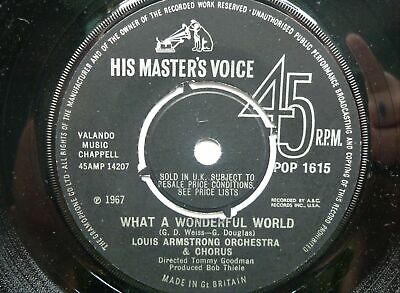
Louis-Armstrong-What-A-Wonderful-World-7-HMV

For all the loveliness of ‘What a Wonderful World’, it is nothing like the music that Satchmo had spent the previous forty years recording. His cover of ‘Cabaret’, though, is a lot more jazzy. His voice, the exact same voice which was a second ago trembling with emotion, now flirts and tempts: Come taste the wine, Come hear that band, Yes it’s time for celebratin’, Right this way your table’s waitin’…

It is, of course, the theme from the musical of the same name, the one made much more famous by Liza Minelli. Life is a cabaret, Old chum… So come to the cabaret… (Though it omits the verses about Elsie the whore/corpse…) It makes for the perfect double-‘A’ disc, the yin to ‘Wonderful World’s yang. And Armstrong’s famous trumpet gets an outing here, as it simply had to at some point on his sole chart-topper.

It’s always good to have some jazz at #1, and I make this the 3rd jazz-based chart-topper of the year, after ‘The Ballad of Bonnie and Clyde’ and ‘Cinderella Rockefella’. Though, honestly, it feels a bit wrong to mention those discs in the same breath as this. Not that it’s Louis Armstrong’s most influential moment or anything, but still… Perhaps I’m biased. The first CD I ever bought, aged seven or so, was a discount box-set of Satchmo’s Greatest Hits, from the thirties through to the fifties. Completely true – I’m not making that up to sound precocious (while The Spice Girls would soon come along to ruin my taste in music). I even went through a wanting-to-be-a-saxophonist phase, though my parents – probably quite sensibly – never shelled out and bought me one.

Neither ‘What a Wonderful World’ or ‘Cabaret’ featured on those CDs, because come the sixties Armstrong had changed record labels and become a pop star, scoring #1s on either side of the Atlantic. His bio is too long and storied to go into in any sort of detail. A jazz icon, he was one of the first black artists to enter the white public’s consciousness. He released his first single in 1923 (!), was born in 1901 – as close as we’ll come to a chart-topper being born in the nineteenth century – and was the oldest ever chart-topper, at sixty-seven, until Tom Jones popped up again and spoiled it a few years ago. The term ‘legend’ is overused, but we’ll make an exception here, for the one and only Louis Armstrong. Take it away, Satch…

All the #1 singles so far in one place:

248. ‘Congratulations’, by Cliff Richard

Just what we needed – a bit of Cliff. 1968 has so far been a year in which everything and everyone has had a go at #1, and Sir Clifford doesn’t need to be asked twice before claiming his ninth number one single.

13aa6fc88a28837e7323cce44c8ecde2

Congratulations, by Cliff Richard (his 9th of fourteen #1s)

2 weeks, from 10th – 24th April 1968

I’d say that this, along with ‘Summer Holiday’ and ‘Mistletoe and Wine’, are the quintessential Cliff hits. The ones that people would go for if you shoved a microphone in their face and yelled ‘Name a Cliff Richard song!’ I know without even checking that this was one of the songs he sang during that rain delay at Wimbledon. Peak Cliff.

It goes without saying that ‘Congratulations’ is complete and utter cheese. It blasts into life with a goofy grin, all horns and handclaps, sounding like the theme song to the campest game show never commissioned. Congratulations, And celebrations, When I tell everyone that you’re in love with me… It also goes without saying that it’s pretty irresistible.

The big drums, the whimsical strings, the jaunty guitar, the music hall horns… It’s pop at its most disposable; yet also at its purest. ‘Congratulations’ is a song that exists to make people smile and tap their feet – a song that would get a reaction out of anyone aged between seven and ninety-seven. Congratulations, And jubilations, I want the world to know how happy I can be…

And, unlike some of the snoozers Cliff was releasing towards the end of his imperial phase – ‘The Next Time’, ‘The Minute You’re Gone’ and the like – at least it’s upbeat. I especially like when it slows down and Cliff starts doing the can-can (in my mind at least…) I do wish they’d kept it up and gone for a big, bawdy brass finish.

71ZBB6s7+dL._SL1280_

It’s tempting to see this as a comeback for Cliff – his 1st #1 in three years. But that would be to rewrite history. Between ‘The Minute You’re Gone’ and ‘Congratulations’ he had managed to score six Top 10s. Just because he wasn’t topping the charts with every release doesn’t mean he had gone anywhere. He was a still huge presence, and would continue to be for the next forty-odd years. But, after a year in which Engelbert, Petula Clark, Tom Jones et al had taken easy-listening back to the top of the charts, perhaps he felt safe enough to stop trying to catch The Beatles and to just settle into middle-of-the-road comfort. Maybe this is the exact moment that Cliff the rocker finally is laid to rest, and Cliff the housewives’ favourite is born?

‘Congratulations’ was famously the British entry to the Eurovision Song Contest in ’68, in which they were defending the crown won by Sandie Shaw’s ‘Puppet on a String’ the year before. It was the hot favourite, but was beaten at the last by the Spanish entry ‘La La La’. Rumours abounded that the result had been fixed on the orders of Franco himself! But still, ‘Congratulations’ was a huge hit across Europe – #1 from Norway to Belgium, to Spain itself.

Looking back, we’ve only gone nine years since Cliff’s first chart-topper ‘Living Doll’, but so, so much has changed. Rock ‘n’ roll has died, been revived, died again… Merseybeat, R&B, Soul and Folk have all been the order of the day. Meanwhile, Cliff has stayed afloat just by being Cliff. Fortunately / Unfortunately (delete as appropriate) we won’t hear from him now for another eleven years…

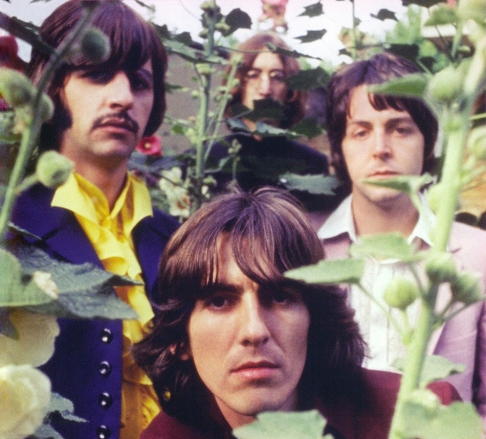
247. ‘Lady Madonna’, by The Beatles

Ah, the Beatles. Bringing some sense and stability to the top of the UK singles charts, after a few months of wackiness. But actually, even this, a famous hit record from the most famous band in the world, stands out. It’s nowhere as weird as we’ve heard this year, but it’s still different…

original

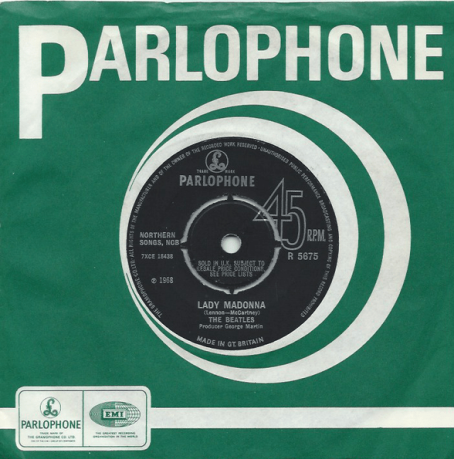
Lady Madonna, by The Beatles (their 14th of seventeen #1s)

2 weeks, from 27th March – 10th April 1968

For a start, ‘Lady Madonna’ is a piano driven song, which is pretty rare for a Beatles’ single. It’s well-known as a tribute to Fats Domino, which means it’s already the second 1968 #1 to reference the famous pianist, after Georgie Fame’s ‘Ballad of Bonnie and Clyde’. Fats scored his biggest hit for a while by releasing his own version later in the year. Incidentally, I just discovered that he only ever had one (!) UK Top 10, which for a founding pillar of rock ‘n’ roll seems scandalous…

Anyway, as good as the piano riff is here, I love it when McCartney’s bass kicks, and even better when the main guitar kicks in for the second verse, growling like a pit-bull. And then comes the saxophone, another instrument that The Fab Four didn’t often use. It’s a song with a swagger and a swing to it. Anyone attempting it at karaoke would have to finish their performance with a mic toss.

In the back of my mind, I know what the song’s about. I’ve read, somewhere and sometime, just who Lady Madonna was. But before I Google and confirm, here’s my interpretation after listening to it for the first time in ages. She’s poor (Wonder how you manage to make ends meet…) with kids (Baby at your breast…), lots of kids (Wonders how you manage to feed the rest…). She’d like to escape (Lady Madonna, Lying on the bed, Listen to the music playing in your head…) but is trapped in a life of drudgery (Thursday night your stockings needed mending…)

f.jwwb.nl_public_m_a_s_temp-hvwbspxqkwxrxgiraevm_xsbo1v_lady1

It’s a kind of ‘Eleanor Rigby’ part II, and again Lennon and McCartney – though by this point they were largely writing separately, this being a Paul composition – prove themselves able to go way beyond the regular confines of pop music. ‘Madonna’ gives the woman in the song saintly connotations and – yes, I remembered correctly! – McCartney was inspired to write the song by a picture of a breastfeeding tribeswoman in a copy of National Geographic. The music here might be back-to-basics rock ‘n’ roll, but the lyrics are some of The Beatles most cutting. See how they run… What’s ‘running’? The kids? The years? The people that see this poor mother in the street…?

On a far more frivolous note, the use of ‘Madonna’ in the title also opens up a fascinating sub-genre: #1 hits that reference other chart-topping artists! Obviously, they weren’t referencing Madonna Ciccone, who was a good fifteen years away from releasing anything, but still… To be honest, I’m struggling to think of others… ‘Moves Like Jagger’ never quite made it to the top. ‘Rock Me Amadeus’, maybe, as had the charts been around in the 1700s Mozart would have done alright… In ‘Return of the Mack’ Mark Morrison was singing about himself… Let me know if you can think of any other. It’s fascinating, but completely pointless. Anyway.

Anyway, anyway, anyway… All of a sudden, we are approaching the end of The Beatles’ chart-topping careers. This was their fourteenth #1, and there are only three more to go! Luckily, two of them are stone-cold classics. The other is, well… We’ll cross that bridge when we come to it.

246. ‘The Legend of Xanadu’, by Dave Dee, Dozy, Beaky, Mick & Tich

Just what on earth was being pumped into the British water supply in early 1968? Trad jazz, Bonnie and Clyde, Eskimos and yodelling duos… Something pretty heavy duty was being passed around, by both record makers and record buyers, to induce this carnival of craziness. And it shows no signs yet of letting up. For we’re off to Xanadu!

61eoLpiILKL._SY355_

The Legend of Xanadu, by Dave Dee, Dozy, Beaky, Mick & Tich (their 1st and only #1)

1 week, from 20th – 27th March 1968

We open on a dusty Andalucian plain. Spanish guitars tremble, somebody mumbles something something esta es… Then wham. A whip cracks. Or somebody shoots a B-movie ray-gun. Whatever it is, it wakes up both you and this song. We’re in cartoon soundtrack territory. Imagine Scooby Doo on a far-away planet that looks a lot like Mexico. That sentence might sound crazy, but that’s where we are right now, with #1 single 246.

You’ll hear my voice, On the wind, ‘Cross the sand… For all the zaniness of the extra bits – the sound effects, the Mariachi band and what have you – the main melody of the song is pretty traditional. Old-fashioned even – something with a hint of 1961 about it. If you should return, To that black, barren land that bears the name of… Xanadu!

The lyrics, as far as I can follow, are about a spurned lover destined to see out his days in a forgotten land. I’m listening carefully, to see if there might be a metaphor hidden away in there – that the singer is actually just imagining himself in this black, barren land – but I can’t find any. This is literally a song about a far-off place called Xanadu, and a lonely man who lives there.

We arrive, of course we do, at a spoken word section that makes this song feel even more like a theme-tune. What was it to you that a man laid down his life for your love…? So wait… he’s dead? And Xanadu is some kind of afterlife? It ends with a question: Will you find your way back someday, To Xanadu…?

71vwdmJYYML._SL1280_

Not if I can help it, mate… I jest. I like this song. It’s grown on me over the past four or five listens. I now find myself swaying and shaking imaginary maracas as it ends. ‘The Legend of Xanadu’ is crazy – the craziest record yet this year (and that’s a high bar!) But I’m going to have to do some research to find out what on earth inspired this hit single and got it all the way to the top of the charts…

It’s not from a movie, nor is it the theme to a cartoon. It’s a stand-alone pop single by an already established band. More on them later. Research into ‘Xanadu’ takes you all the way to Inner Mongolia in the late 13th Century – a capital of China, used as a residence by the Khans and ‘discovered’ by Marco Polo, via the biggest private estate in the world from the movie ‘Citizen Kane’. In both these examples, Xanadu was an example of opulence and splendour; whereas in ‘The Legend of…’ it’s painted as a wasteland, a place of exile. And, famously, this won’t be the last chart-topping single to name-check it…

Dave Dee, Dozy, Beaky, Mick and Tich (with a name like that you couldn’t expect them to release normal music) were several years into their careers by this point, their biggest hits having been ‘Bend It!’, the superb, and really heavy for its time ‘Hold Tight!’, and ‘Zabadak!’ (which makes ‘Xanadu’ sound conventional.) They seem fun, loved an exclamation mark in their titles, and are a band I’m keen to listen to more of. Wiki lists them as ‘Freakbeat’, which I think sums up this song perfectly. Like so many bands we have met these past few years, Dave Dee and Co.’s chart success ended as the sixties drew to a close.

So we forge on, past the Eskimos, the Rockefellas and the Cinderellas, across the sands of Xanadu, to find out what 1968 has in store for us next. Whatever it is, it surely won’t be dull…

245. ‘Cinderella Rockefella’, by Esther & Abi Ofarim

Why, isn’t 1968 just turning into the most eclectic year? Ballads about infamous crime duos, folk-pop about Eskimos… and now this.

OFARIM2

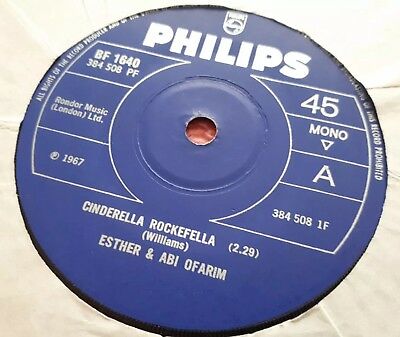
Cinderella Rockefella, by Esther & Abi Ofarim (their 1st and only #1)

3 weeks, from 28th February – 20th March 1968

We start off with a trad-jazz vibe – woozy pianos, banjos and illicit cocktails – and I’m enjoying it because I’m genetically programmed to like this kind of music hall silliness. But then the yodelling starts. Yodelladayodalladay… Pure Alpine throat-bending, which turns out to actually be saying You’re the lady, You’re the lady that I love… I’m the lady, The lady whooooo…

But before the Frank Ifield flashbacks really hit, thankfully they start singing more normally. A man and a woman. Woman: I love your touch… Man: Thank you so much… The lyrics aren’t up to a great deal (Man: I love your chin… Woman: Say it again…), but at least they aren’t being yodelled.

The man, Abi, and the woman, Esther are wooing one another, in a speakeasy. Musically, this could be from the soundtrack to ‘Chicago’ – minus the yodelling – and it means that half of this year’s #1 singles so far have had a retro-jazz vibe to them. Though, for my money ‘The Ballad of Bonnie and Clyde’ was far superior to this. It’s a song that doesn’t really go anywhere, and one that raises plenty of questions… What? Who? Why?

Esther-Abi-Ofarim-Cinderella-Rockefella-Uk

That ‘What?’ first. Rockefeller is the New York magnate responsible for The Rockefeller Centre. Cinderella is, well, Cinderella. Cinderella is beautiful and JD Rockefeller was rich ergo = the perfect couple. ‘Cinderella Rockefeller’, I know, is a school musical staple – though one I’ve neither been involved in nor seen. Any song list from the musical that I can find online does not list ‘Cinderella Rockefella’ as one of its songs. And the Wiki page for the song doesn’t mention the musical…

On to the ‘Who?’ Esther and Abi Ofarim were an Israeli husband and wife duo – the one and only Israeli act to top the British charts. Abi sings low; Esther sings high. She’s very shrill. The song had been performed on various US variety shows before they picked it up.

And the ‘Why?’ I really don’t know. Novelty hits are novelty hits and often come out of nowhere. Maybe you had to have been there, in the spring of ’68. Maybe people were getting sick of all the high-brow, forward facing, boundary pushing pop of the recent years and were ready to embrace some cheesy tosh.

I can’t say I hate it. It’s kind of fun, and I do love the musical arrangement. But… the yodelling. If, before starting this blog, someone had asked me how many #1 hits would feature yodelling I would have answered with a flat zero. But no. Slim Whitman, old Frank and now this. It’s a record that’s 20% intriguing, and 80% irritating. One things for sure, in my next recap it’s going to be difficult to choose the weirdest chart-topper from this most recent bunch…

Listen to every #1 hit so far:

244. ‘Mighty Quinn’, by Manfred Mann

Our next #1 single starts with what sound suspiciously like pan-pipes. I leave that there as a word of warning. (It’s not actually pan-pipes, it’s a flute, but the tone has been set….)

1a4c5e804afbef83a43b798ba7ff7b22

Mighty Quinn, by Manfred Mann (their 3rd and final #1)

2 weeks, from 14th – 28th February 1968

Come on without, Come on within, You’ll not see nothing like the Mighty Quinn… It’s a swaying chorus that greets us as the song proper gets underway. A chorus that I knew, without ever really having listened to the song in full. A chorus that begs a question – just who is the Mighty Quinn?

He is, naturally, an Eskimo. What else? To give the song its’ full title – ‘Quinn the Eskimo.’ And when Quinn the Eskimo gets here, Everybody’s gonna jump with joy… And why will Quinn’s arrival be greeted with such jubilation? To be honest, I’m now on listen number three and I’m still not sure.

The verses have a verve and swagger to them, that really really reminds of something else that I just can’t quite put my finger on. It’s very frustrating. Anyway… Everybody’s building ships and boats, Some are building monuments, Others are jotting down notes… It seems like a comment on modernity, and the fact that something is missing from modern life. Nobody can get no sleep, There’s someone on everyone’s toes, But when Quinn the Eskimo gets here, Everybody’s gonna want a dose… Or is it ‘a doze’, as in a nap? Either way, this is pretty abstract stuff.

Boiled down, it seems like Quinn is some kind of Messiah figure, who’s going to calm everyone down and chill everyone out (as well as gathering all the pigeons around him…) Bob Dylan – for yes, ‘tis he who wrote this – has claimed that the song is nothing more than a nursery rhyme. But that’s what the writers of strange and obscure lyrics always say, isn’t it? His version is much more folky and laid-back, and wouldn’t be released until several years after Manfred Mann’s.

2f7c48bc-7c6c-43a4-8ef5-5d63d6802c51

I’m not sure what to make of this one. On the one hand it is interesting. There can’t have been many #1 singles about Eskimos. On the other it just doesn’t quite work for me. It’s Dylan’s 2nd chart-topper as a songwriter and it is certainly not anywhere near the level of his previous one, ‘Mr. Tambourine Man’.

And what of Manfred Mann? They sign off on their chart-topping account, having hit the top spot with three very different records. The Beat-pop swing of ‘Do Wah Diddy Diddy’, the sweet ‘Pretty Flamingo’ and now this. A #1 in ’64, ’66 and now ’68. A band for even-numbered years. A 2nd-tier, perhaps slightly underrated sixties band? They were soon to become Manfred Mann’s Earth Band, and to go pretty heavy on the prog-rock. They’ve kept ‘The Mighty Quinn’ as part of their concerts, and apparently live versions can go on for a good ten minutes… I’m not sure if that sounds brilliant, or terrifying…

To be honest, my first exposure to this record was probably miles away from Manfred Mann and the 1960s pop charts. Irish football fans used to sing a version of this song for their big striker, Niall Quinn. The nickname stuck to such an extent that he even named his autobiography – you guessed it – ‘The Mighty Quinn.’

Top 10s – Dusty Springfield

A new feature I’m trying out this year. I take one chart-topping artist that we’ve met so far on this countdown and rank my personal Top 10 from their discography.

The only requirements are: for a song to feature it has to have been released, and to have charted, in the UK singles charts.

So, without further ado, my first ever Top 10… Dusty! The Queen of British soul. The Queen of the Beehive and the eye-shadow. Hands down the best UK born female singer, ever… I’m still annoyed that I will only ever get to write one post about her in this countdown, and that’s why she’s featuring first here.

46703

First up, the notable absences… Classics such as ‘The Look of Love’, ‘You Don’t Own Me’, ‘Wishin’ and Hopin’ and ‘Breakfast in Bed’ were never released in the UK and so cannot feature. The record that came closest to being in my top 10 was her debut hit, ‘I Only Want to Be With You’. A classic, but not the real Dusty… Here we go, then.

10. ‘Son of a Preacher Man’, 1968 – peaked at #9.

Surprisingly low? It’s great and all, and is probably her signature tune, but one I’ve always appreciated rather than loved…

9. ‘Give Me Time’, 1967 – peaked at #24

A trademark Dusty ballad, with some very sixties production and percussion. Only reached #24? Criminal.

8. ‘In the Middle of Nowhere’, 1965 – peaked at #8

Pure pop Dusty. Not her usual sound, but I love the ‘Hey, Hey, Heys!’ Gone for a live version here. The sound’s not great, but she looks amazing.

7. ‘What Have I Done to Deserve This?’ with the Pet Shop Boys, 1987 – peaked at #2

Every great Diva needs at least one triumphant comeback… By the mid eighties, Dusty wasn’t in great shape and neither was her career. Neil Tennant and Chris Lowe brought her in for this duet and brought her voice to a whole new generation. It’s much huskier here, but perfectly suits the more minimal late-eighties sound. The Pet Shop Boys would go on to produce her next album. More on that in a bit…

6. ‘I Close My Eyes and Count to Ten’, 1968 – peaked at #4

Not really a ballad, not just a pop song, sounds like a Bond theme… Brilliant. Love the video here, not so sure about the dress…

5. ‘I Just Don’t Know What to Do With Myself’, 1964 – peaked at #3

Dusty started off her solo career with a handful of bouncy pop singles… Then she released this bad boy. I’d say that this is when Dusty became Dusty. The White Stripes cover isn’t bad either…

4. ‘In Private’, 1989 – peaked at #14

One of Dusty’s gay anthems. The lyrics are written from the POV of a woman having an affair with a man, but we can all read between the lines… Following her Pet Shop Boys duet, Dusty came back with a full PSB produced album, including this banger. A song I’ve only recently come to, but one that instantly ranks alongside her greatest.

She may have excelled at soul, dance and pure pop, but I love her ballads the most, and it’s been very hard to choose between this top 3…

3. ‘You Don’t Have to Say You Love Me’, 1966 – peaked at #1

Her one and only UK #1 – read my original post on it here.

2. ‘Losing You’, 1964, peaked at #9

Near impossible to choose between my top two…

1. ‘All I See Is You’, 1966, peaked at #9

In fact, I’m still not sure. I think ‘All I See Is You’ has just a touch more of Dusty’s trademark defiant heartbreak. She’s devastated by the loss of her love, but you know that she’ll carry on. The ending soars, almost operatic.

There you have it. Let me know if you agree or not… Ten classics, only one of which made #1!  I had fun doing that, and will do it with another artist very soon.

243. ‘Everlasting Love’, by The Love Affair

As the new year chimes ring, the musicologists of Britain gather to ponder what the ‘sound of’ the coming year will be. The BBC even runs a ‘Sound Of’ poll every January – recent winners including Adele, Sam Smith and, um, 50 Cent. Anyway… the point being that if you were to wonder what the ‘sound of’ 1968 might be, you could do worse than checking out this next #1.

AFF

Everlasting Love, by The Love Affair (their 1st and only #1)

2 weeks, from 31st January – 14th February 1968

Because ‘Everlasting Love’ sounds very sixties – you could place it straight away – but it also sounds fresh and new, an update on what’s gone before. It’s soulful, with heavy hints of Motown, and a loveable garage feel to it. And it’s a record that blasts in at full speed…

We soar on drums, and horns, and then a very funky bass riff. Hearts go astray, Leaving hurt when they go… The singer has ended things too early with his love, and now he’s begging to be taken back. Open up your eyes, Then you’ll realise, Here I stand with my, Everlasting love… It’s the hit single equivalent of someone standing drunk under your window at 2am… Need you by my side, Girl to be my bride…

But whereas someone singing drunkenly under your window at 2am is rarely a pleasant experience, ‘Everlasting Love’ is a lot of fun. It’s a relentless disc, one that grabs you and brings you along with it, never once letting up. You could accuse it of being cheesy, and a little saccharine, but you can’t get a word in. So you give up and just enjoy the ride. It’s that kind of song. It’s basically one big chorus from start to finish.

The most interesting bits of the song are musical – the little fills in-between lines. The blasts of horn, the bass and the drum rolls, and the snatch of what sounds like a flute and a triangle (I’m probably very wrong about that) before the glorious fade-out. ‘Everlasting Love’ was originally recorded in a Motown style by Robert Knight, in the US. Listen to his version here – it’s good, but doesn’t have anywhere near as much Ooomph as the Love Affair version.

the-love-affair-uk-cbs-45-everlasting-love-1st-issue-1967-ex_40826652

The Love Affair were yet another British soul group, following in the steps of Georgie Fame, The Foundations and The Small Faces. I listed the Small Faces last there as Love Affair’s lead singer, Steve Ellis, sounds a lot like Steve Marriot. The band later admitted that Ellis was the only member to actually feature on this recording – all the instruments were played by session musicians. Controversy! But, we are not here to judge how ‘real’ a record is. We are here to enjoy, and this is a very enjoyable record regardless of who played on it.

Love Affair had a few more Top 10s – this was their first big hit – before fading from view as the decade ended. Ellis left in 1969 and the rest split up in the early seventies. ‘Everlasting Love’ has made more of a lasting impression – it’s been a Top 40 hit, in a variety of versions, in the ‘60s, ‘70s, ‘80s, ‘90s and ‘00s. Sadly, it seems that it couldn’t be revived in the 2010s…

So, after a bit of a false start from Georgie Fame and two infamous serial killers, 1968 is a go-go. I can’t quite explain it, but there’s something very forward-facing and modern sounding about this disc, something that says ‘Welcome to the late-sixties!’ And I’m here for it!

242. ‘The Ballad of Bonnie and Clyde’, by Georgie Fame

Happy New Year! We step into 20… I mean 1968, but if you were expecting the penultimate year of the sixties to bring daring news sounds to the top of the UK charts… then keep waiting. The first #1 of the year is a step back in time. To the saloon bars of 1920s America…

p01g89hr

The Ballad of Bonnie and Clyde, by Georgie Fame (his 3rd and final #1)

1 week, from 24th – 31st January 1968

We’ve got banjos, trombones, honky-tonk pianos, an intro with very strong hints of Fats Domino… To be honest, I love it from the get-go. It’s fun, it’s kinda dumb… It’s a history lessons at number one!

Bonnie and Clyde, Were pretty lookin’ people, But I can tell you people, They were the devil’s children… Georgie Fame’s back for one final moment of glory, but he’s traded the blue-eyed soul for some trad-jazz. He lists the famous duo’s crimes – robbing stores, stealing cars, before they made the graduation into the banking business – and sounds like he’s having a load of fun in doing so.

It’s a chart-topping record with a hefty body count – the bloodiest #1 since ‘Mack the Knife’. Sample line: They left him lyin’ in a pool of blood, And laughed about it all the way home… And it’s a chart-topping record with sound-effects! Getaway cars, sirens and, best of all, a round of carbines as the heroes of the tale meet their end. Yep, Fame sticks to the facts – no riding off into the sunset for Bonnie and Clyde here. And very few #1 singles will ever feature lines like: Actin’ upon, Reliable information, A federal deputation laid a deadly ambush…

It’s odd, isn’t it? A chart-topping single that so glorifies two serial killers. There’s a glamour to Bonnie and Clyde, though, isn’t there? The romance, the fast cars, the cigars… You can’t imagine ‘The Ballad of Harold Shipman’ being such a smash… The famous movie starring Warren Beatty and Faye Dunaway had been a hit the previous year. ‘The Ballad…’ hadn’t featured in the film, but Fame had been inspired to write the song after seeing it.

Georgie+Fame+The+Ballad+Of+Bonnie+And+Clyde-652822

The record, fittingly, ends on a melodramatic note. A long drawn out coda, in which the duo draw their last breath. And finally together, They died… A few years back, any mention of death in a hit single seemed guaranteed to cause controversy. The Everly Brothers, Ricky Valance and co. all got airplay bans for their ‘death-discs’. Society has clearly moved on during the sixties, in more ways than one. (Though this was apparently censored in the US thanks to the machine-gun sound effects.)

I like it. A completely random interlude to the swinging sixties, the sort of bizarre post-Christmas number one that the charts can sometimes throw up as they wait for the first big hits of the year. Though perhaps we should class Georgie Fame as a ‘big’ artist. This is, after all, his third #1. The same total as The Kinks, The Searchers, Sandie Shaw and other sixties royalty. Two more than Dusty! Three more than The Who and Dylan! Somehow, though, he’s kind of slipped under the radar, with his soulful, bluesy, Latin-tinged hits. I do love the fact that he never had a top ten hit that didn’t make #1. All or nothing for Mr. Fame. He’s now seventy-six, and still performs from time to time. The pop charts of the 1960s were a better place for his sporadic appearances at the top.

1968 is off with a bang, then. Literally, what with the mass shooting that ends this record. I made a point in the last post about 1967 having no one-week chart-toppers, and now the first one of this year has lasted only seven days. Here’s to what’s looking like an eclectic year! Onwards…

Listen to the first fourteen (and a bit) years’ of #1 singles with my handy playlist: